



Virtual Labs For Stem Education Market Size and Growth Forecast 2026-2030
The Virtual Labs For Stem Education Market size was valued at USD 2.73 billion in 2025 growing at a CAGR of 15.3% during the forecast period 2026-2030.
North America accounts for 37.1% of incremental growth during the forecast period. The Simulation tools segment by Type was valued at USD 1.02 billion in 2024, while the Higher education segment holds the largest revenue share by Application.
The market is projected to grow by USD 4.15 billion from 2020 to 2030, with USD 2.84 billion of the growth expected during the forecast period of 2025 to 2030.

Get Key Insights on Market Forecast (PDF) Request Free Sample
Virtual Labs For Stem Education Market Overview
The virtual labs for STEM education market is expanding as educational institutions prioritize scalable solutions that offer practical scientific exposure without the logistical and financial burdens of physical facilities. This evolution is driven by the demand for STEM competencies, addressed by experiential learning technology. Platforms provide high-fidelity simulation of complex experiments, with immersive learning environments enhancing comprehension. North America is a significant contributor to this expansion, accounting for over 37% of the market's incremental growth, fueled by investment in digital infrastructure. For instance, a multi-campus university system implementing a biology simulation platform and virtual chemistry labs for its introductory science courses can effectively manage high enrollment and provide consistent remote laboratory access. This approach improves student engagement metrics and allows for better pedagogical integration by using analytics to track student progress, ensuring a standardized, high-quality learning experience across all locations and overcoming the physical constraints of traditional labs. The adoption of such solutions is critical for modern STEM curriculum development.
Drivers, Trends, and Challenges in the Virtual Labs For Stem Education Market
The strategic cost-benefit analysis of virtual vs physical labs is a central consideration for procurement decision-makers. While physical labs incur high recurring costs for materials and maintenance, virtual lab platforms for corporate technical training and higher education offer a scalable alternative.
A key debate involves comparing open-source vs commercial virtual lab software; open-source options offer flexibility, but commercial platforms often provide better support for integrating virtual labs with existing LMS platforms and ensuring compliance with digital accessibility standards in virtual labs.
For institutions focusing on virtual lab solutions for higher education STEM, assessing student performance in virtual lab environments through embedded analytics is a critical feature. The impact of AI on personalized STEM education is profound, with generative AI for creating dynamic lab scenarios offering tailored learning paths.
In K-12, AR and VR applications in K-12 science labs are being explored, though there are challenges in deploying virtual labs in developing regions due to infrastructure gaps. The role of cloud computing in scalable virtual labs cannot be overstated, though it introduces cybersecurity considerations for cloud-based virtual labs.
Advanced applications include haptic technology integration in engineering simulations and digital twin technology for advanced engineering labs, enabling virtual reality training for industrial applications and using virtual labs for remote scientific collaboration. Developing gamified content for virtual chemistry labs enhances engagement, while measuring learning outcomes in immersive VR labs provides data on efficacy.
Ultimately, adopting best practices for hybrid learning with virtual labs is essential for successful implementation, supported by initiatives like Germany's DigitalPakt Schule.

Primary Growth Driver: The rising demand for remote and hybrid learning environments serves as a key driver for market growth, compelling institutions to adopt flexible, location-independent instructional formats.
The primary market driver is the global educational shift toward flexible hybrid learning models, which necessitates solutions providing remote laboratory access.
This is particularly evident in North America, which accounts for over 37% of the market's incremental growth, as institutions seek to accommodate diverse student populations.
A second major driver is educational resource optimization; virtual labs offer significant cost savings over physical labs by eliminating the need for expensive equipment.
Technological innovation further fuels growth, with advancements in high-fidelity simulation, VR, AR, and haptic feedback interfaces making the digital experience more realistic and pedagogically effective, bridging the gap between virtual and physical experimentation with tools like virtual scientific instruments.
Emerging Market Trend: The integration of generative AI and intelligent tutoring systems is an emerging market trend, transforming static simulations into dynamic, interactive mentoring environments.
Market trends are shifting from static simulations to dynamic, intelligent platforms. The integration of generative AI tutoring systems is a primary development, offering students real-time, personalized guidance that enhances critical thinking. Another key trend is the move toward spatial computing platforms and interactive 3D environments, which use VR and AR to improve retention of complex spatial information.
In regions like South America, which shows a steady growth rate of 14.3%, there is a notable shift toward gamification and competency-based assessment. This approach uses interactive challenges and digital credentialing to measure proficiency, directly boosting student engagement metrics and transforming how learners perceive STEM subjects by making them more interactive and accessible for hands-on simulation training.
Key Industry Challenge: High initial implementation costs and significant infrastructure barriers present a key challenge, hindering widespread market adoption and affecting industry growth.
Significant challenges restrain market growth, led by high initial implementation costs and infrastructure barriers. Many institutions lack the funding for high-end hardware or a robust technical support infrastructure. A second major challenge is pedagogical resistance and difficulties with curriculum alignment, particularly in regions like Europe.
Many educators remain skeptical about the ability of virtual labs to replace the tactile experience of physical labs, slowing pedagogical integration. Furthermore, disparities in digital literacy standards among instructors and students can lead to underutilization of advanced features.
Ensuring data privacy in education on cloud-based platforms also presents a complex compliance hurdle for institutions worldwide, adding another layer of difficulty to widespread virtual lab accessibility.
Explore Full Market Dynamics Analysis Request Free Sample
Virtual Labs For Stem Education Market Segmentation
The virtual labs for stem education industry research report provides comprehensive data including region-wise segment analysis, with forecasts and analysis for the period 2026-2030, as well as historical data from 2020-2024 for the following segments.
Type Segment Analysis
The simulation tools segment is estimated to witness significant growth during the forecast period.
Simulation tools represent the largest and most foundational segment in the virtual labs for STEM education market.
These platforms provide mathematical replicas of physical systems, operating on computational models that allow students to manipulate variables and observe outcomes in a controlled digital setting.
The high accessibility of these browser-based cloud-based simulations is a key adoption driver, enabling institutions to provide remote laboratory access without significant hardware investment.
In disciplines like physics and engineering, physics simulation software and engineering simulation tools are critical for visualizing abstract concepts. The integration of real-time data processing allows for immediate feedback, reinforcing learning loops.
As hybrid learning models become standard, these simulation tools serve as a vital bridge between theoretical instruction and practical application for STEM workforce development.

The Simulation tools segment was valued at USD 1.02 billion in 2024 and showed a gradual increase during the forecast period.

Virtual Labs For Stem Education Market by Region: North America Leads with 37.1% Growth Share
North America is estimated to contribute 37.1% to the growth of the global market during the forecast period.

North America represents the most mature market, driven by heavy investment in hybrid learning models and a robust ed-tech infrastructure.
The region contributes over 37% of the market's incremental growth, with the US alone representing a significant portion of market value.
In contrast, the APAC region is projected to exhibit the fastest growth, with a CAGR of 16.4%, fueled by government initiatives aimed at STEM workforce development and overcoming a lack of physical lab infrastructure.
In this region, scalable educational technology like mobile-first cloud-based virtual labs is crucial.
The adoption of advanced tools like augmented reality overlays is also gaining momentum in APAC's technical training sectors, preparing students for advanced manufacturing roles and closing the skills gap with more developed economies.
Customer Landscape Analysis for the Virtual Labs For Stem Education Market
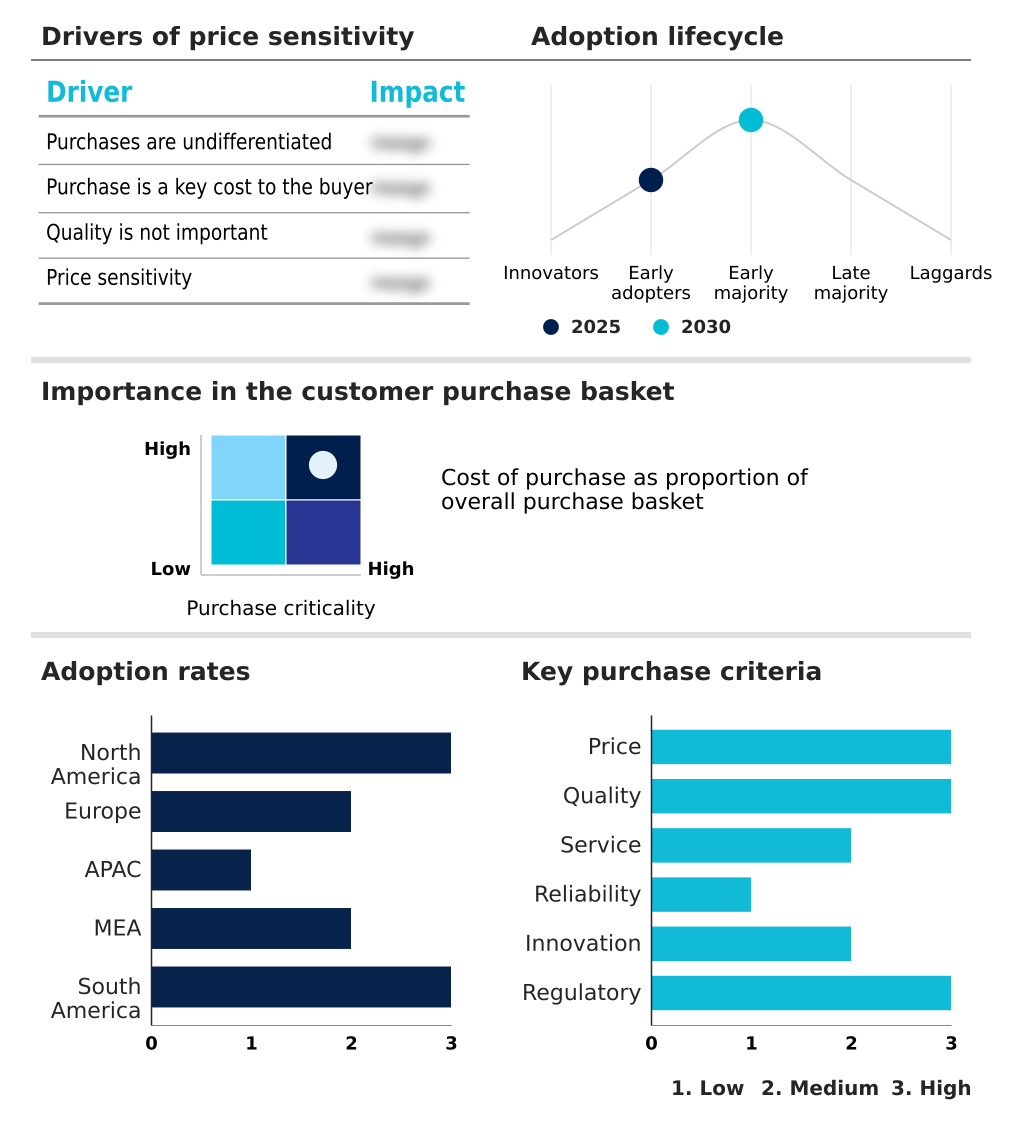
The virtual labs for stem education market forecasting report includes the adoption lifecycle of the market, covering from the innovator’s stage to the laggard’s stage. It focuses on adoption rates in different regions based on penetration. Furthermore, the virtual labs for stem education market report also includes key purchase criteria and drivers of price sensitivity to help companies evaluate and develop their market growth analysis strategies.
Competitive Landscape of the Virtual Labs For Stem Education Market
Companies are implementing various strategies, such as strategic alliances, partnerships, mergers and acquisitions, geographical expansion, and product/service launches, to enhance their presence in the virtual labs for stem education market industry.
Beyond Labz Inc. - Beyond Labz Inc. offers immersive, open-ended virtual lab simulations, featuring realistic environments and curriculum-aligned activities for chemistry, physics, and biology.
The industry research and growth report includes detailed analyses of the competitive landscape of the market and information about key companies, including:
- Beyond Labz Inc.
- Carolina Biological Supply Co.
- Cengage Learning Inc.
- CloudLabs
- Flinn Scientific Inc.
- GIGXR Inc.
- HoloPundits
- Kognity AB
- Labster Group ApS
- McGraw Hill LLC
- MyJoVE Corp.
- Nanome Inc.
- PASCO Scientific Inc.
- Pearson Plc
- PraxiLabs
- Science Interactive Group LLC
- Vernier Science Education
- VictoryXR Inc.
- VRLAB ACADEMY LTD.
- Wards Science.
Qualitative and quantitative analysis of companies has been conducted to help clients understand the wider business environment as well as the strengths and weaknesses of key industry players. Data is qualitatively analyzed to categorize companies as pure play, category-focused, industry-focused, and diversified; it is quantitatively analyzed to categorize companies as dominant, leading, strong, tentative, and weak.
Recent Developments in the Virtual Labs For Stem Education Market
- In March, 2025, a prominent public university system in California integrated a comprehensive virtual laboratory framework into its distance learning curriculum for life sciences, allowing thousands of students to complete practical requirements remotely.
- In May, 2025, a major state university system in the United States introduced a generative AI assistant within its virtual biology laboratories to help students troubleshoot complex genetic sequencing experiments, providing tailored methodological suggestions.
- In August, 2025, a major technology corporation based in Seoul introduced a new haptic-feedback interface designed to work with engineering simulations, allowing students to feel the resistance of virtual materials and tools.
- In September, 2025, a leading technical college in South Korea inaugurated a spatial computing center for virtual aeronautical engineering labs, enabling students to collaboratively examine and disassemble virtual jet engines in a shared digital space.
Research Analyst Overview: Virtual Labs For Stem Education Market
Boardroom-level decisions on educational technology investment are increasingly focused on the total cost of ownership and pedagogical integration of virtual labs. The market is moving beyond basic physics simulation software toward immersive learning environments that incorporate virtual reality headsets and haptic feedback interfaces.
For institutions, the choice between deploying a dedicated biology simulation platform or a broad-spectrum suite with virtual chemistry labs and engineering simulation tools hinges on strategic curriculum goals. A critical consideration, governed by regulations like GDPR, is how cloud-based virtual labs manage student data from adaptive learning pathways.
The adoption of hybrid learning models makes remote laboratory access a necessity, driving demand for platforms offering high-fidelity simulation. Technologies such as 3D molecular modeling, augmented reality overlays, virtual microscopy, and digital twin simulations are no longer niche but are becoming key differentiators.
The rise of gamified learning modules and generative AI tutoring systems for online STEM learning requires platforms with robust real-time data processing capabilities to provide competency-based assessment while ensuring a secure experience on spatial computing platforms.
Dive into Technavio’s robust research methodology, blending expert interviews, extensive data synthesis, and validated models for unparalleled Virtual Labs For Stem Education Market insights. See full methodology.
| Market Scope | |
|---|---|
| Page number | 296 |
| Base year | 2025 |
| Historic period | 2020-2024 |
| Forecast period | 2026-2030 |
| Growth momentum & CAGR | Accelerate at a CAGR of 15.3% |
| Market growth 2026-2030 | USD 2839.3 million |
| Market structure | Fragmented |
| YoY growth 2025-2026(%) | 14.6% |
| Key countries | US, Canada, Mexico, UK, Germany, France, Italy, Spain, The Netherlands, China, India, Japan, Australia, South Korea, Indonesia, Saudi Arabia, UAE, South Africa, Israel, Turkey, Brazil, Argentina and Colombia |
| Competitive landscape | Leading Companies, Market Positioning of Companies, Competitive Strategies, and Industry Risks |
Virtual Labs For Stem Education Market: Key Questions Answered in This Report
-
What is the expected growth of the Virtual Labs For Stem Education Market between 2026 and 2030?
-
The Virtual Labs For Stem Education Market is expected to grow by USD 2.84 billion during 2026-2030, registering a CAGR of 15.3%. Year-over-year growth in 2026 is estimated at 14.6%%. This acceleration is shaped by rising demand for remote and hybrid learning environments, which is intensifying demand across multiple end-use verticals covered in the report.
-
-
What segmentation does the market report cover?
-
The report is segmented by Type (Simulation tools, VR and AR based labs, AI based STEM education, and Others), Application (Higher education, K-12 education, Online STEM learning platforms, and Corporate training), Deployment (Cloud based, and On premises) and Geography (North America, Europe, APAC, Middle East and Africa, South America). Among these, the Simulation tools segment is estimated to witness significant growth during the forecast period, driven by rising adoption across key application areas. Each segment includes detailed qualitative and quantitative analysis, along with historical data from 2020-2024 and forecasts through 2030 with year-over-year growth rates.
-
-
Which regions are analyzed in the report?
-
The report covers North America, Europe, APAC, Middle East and Africa and South America. North America is estimated to contribute 37.1% to market growth during the forecast period. Country-level analysis includes US, Canada, Mexico, UK, Germany, France, Italy, Spain, The Netherlands, China, India, Japan, Australia, South Korea, Indonesia, Saudi Arabia, UAE, South Africa, Israel, Turkey, Brazil, Argentina and Colombia, with dedicated market size tables and year-over-year growth for each.
-
-
What are the key growth drivers and market challenges?
-
The primary driver is rising demand for remote and hybrid learning environments, which is accelerating investment and industry demand. The main challenge is high initial implementation costs and infrastructure barriers, creating operational barriers for key market participants. The report quantifies the impact of each driver and challenge across 2026 and 2030 with comparative analysis.
-
-
Who are the major players in the Virtual Labs For Stem Education Market?
-
Key vendors include Beyond Labz Inc., Carolina Biological Supply Co., Cengage Learning Inc., CloudLabs, Flinn Scientific Inc., GIGXR Inc., HoloPundits, Kognity AB, Labster Group ApS, McGraw Hill LLC, MyJoVE Corp., Nanome Inc., PASCO Scientific Inc., Pearson Plc, PraxiLabs, Science Interactive Group LLC, Vernier Science Education, VictoryXR Inc., VRLAB ACADEMY LTD. and Wards Science.. The report provides qualitative and quantitative analysis categorizing companies as dominant, leading, strong, tentative, and weak based on their market positioning. Company profiles include business segment analysis, SWOT assessment, key offerings, and recent strategic developments.
-
Virtual Labs For Stem Education Market Research Insights
Market dynamics are shaped by institutional needs for both educational efficacy and operational efficiency. The higher education segment dominates adoption, leveraging virtual labs to manage large student cohorts in foundational science courses. A key operational consideration is seamless learning management system (LMS) integration, which allows for streamlined grade reporting and personalized learning analytics.
As institutions adopt these platforms, compliance with standards like GDPR becomes critical, especially for cloud-based deployments handling student data, influencing decisions around data privacy in education.
Furthermore, the trend toward digital credentialing for completed lab modules requires robust curriculum alignment, ensuring that skills verified in a virtual environment are recognized by academic and professional bodies, thereby enhancing the value proposition for both students and institutions.
We can help! Our analysts can customize this virtual labs for stem education market research report to meet your requirements.
 RIA -
RIA -