


Sustainable Consumer Goods Market Size and Growth Forecast 2026-2030
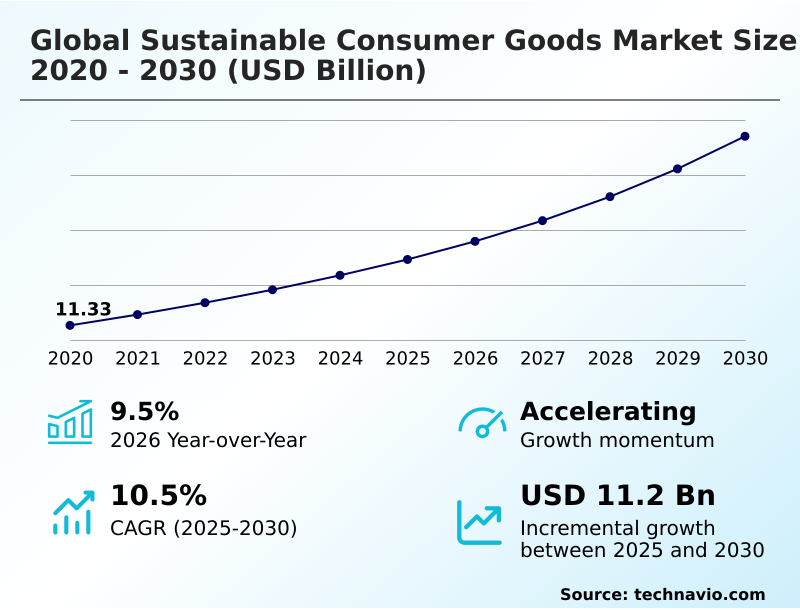
The Sustainable Consumer Goods Market size was valued at USD 17.32 billion in 2025 growing at a CAGR of 10.5% during the forecast period 2026-2030.
North America accounts for 35.9% of incremental growth during the forecast period. The Food and beverages segment by Product was valued at USD 4.87 billion in 2024, while the Organic materials segment holds the largest revenue share by Material.
The market is projected to grow by USD 17.20 billion from 2020 to 2030, with USD 11.20 billion of the growth expected during the forecast period of 2025 to 2030.
Get Key Insights on Market Forecast (PDF) Request Free Sample
Sustainable Consumer Goods Market Overview
The sustainable consumer goods market is driven by a fundamental reevaluation of production and consumption, with APAC projected to be a significant growth center. The shift towards circular business models is compelling companies to innovate beyond single-use products. In the sustainable fashion textiles sector, this means designing for disassembly and recycled content integration. A key operational shift is visible in personal care, where waterless product formulation reduces logistics costs and the need for plastic packaging. For instance, a household cleaning products company adopting concentrated formulas and biodegradable packaging materials can reduce its shipping-related carbon emissions by over 50%. This transition is supported by technologies like a blockchain supply chain for ensuring transparency in ethical sourcing standards. As North America is poised to contribute a significant portion of the market's incremental growth, regulatory pressure and consumer demand for eco-friendly home care and regenerative agriculture practices will continue to shape corporate strategy, forcing a move toward carbon neutral manufacturing.
Drivers, Trends, and Challenges in the Sustainable Consumer Goods Market
Corporate strategies for achieving net-zero are reshaping the competitive landscape, with a focus on managing supply chain complexity for sustainable goods and overcoming high costs of sustainable production. The impact of circular economy on consumer goods is profound, fueling the growth of resale and refurbishment business models.
A key challenge remains in addressing consumer skepticism towards green claims, making verifiable data crucial. This is where blockchain for supply chain transparency in fashion becomes critical, as does the importance of digital product passports for electronics, which are mandated under frameworks like the European Commission's Ecodesign for Sustainable Products Regulation.
The consumer demand for ethically sourced products is a primary driver, particularly for sustainable sourcing in the beauty industry. Here, the benefits of waterless personal care products are notable; a cosmetics firm can reduce shipping weight by over 80%, directly contributing to reducing carbon footprint.
Similar innovation is seen in advancing green chemistry in consumer products and reducing carbon footprint in household cleaning products. The transition to plant-based meat alternatives and the role of regenerative agriculture in food sustainability are also key trends.
For example, new production technologies have demonstrated the ability to lower the carbon footprint of plant-based proteins by more than one-third compared to previous methods. Despite progress, challenges in scaling biodegradable packaging persist. Trends in sustainable apparel and footwear are pushing for innovation in recycled material, while integrating AI for sustainable product design helps optimize resource use from the outset.
Ultimately, regional policies driving sustainable manufacturing will continue to enforce accountability and accelerate these transformations.
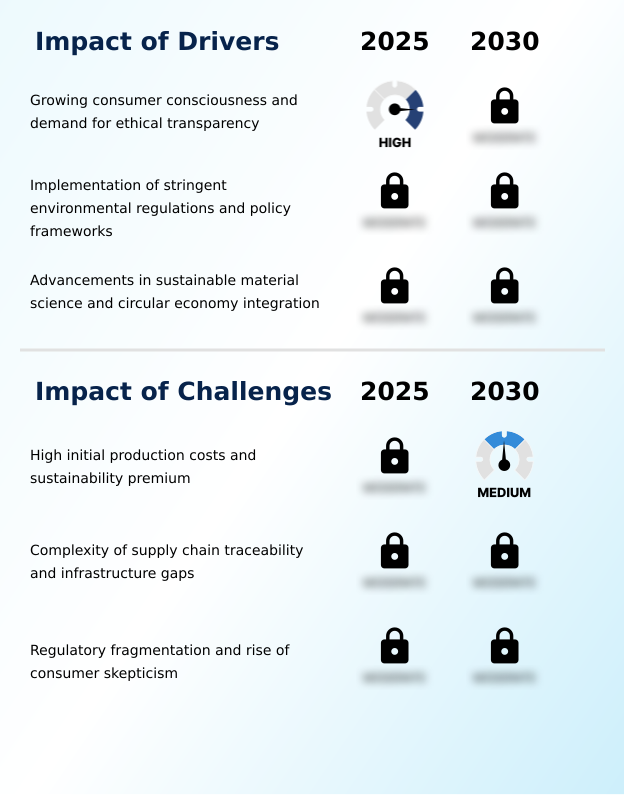
Primary Growth Driver: Growing consumer consciousness and a strong demand for ethical transparency throughout the supply chain are the primary drivers of market growth.
The market is primarily propelled by a combination of heightened consumer environmental awareness and stringent regulatory frameworks.
Governments worldwide are mandating regulatory compliance for sustainability, including extended producer responsibility and limits on single-use plastics, creating a level playing field and incentivizing green manufacturing.
This regulatory push is complemented by strong consumer demand for transparent supply chains and products made from sustainable materials. The rapid adoption of plant-based alternatives in the food sector exemplifies this shift.
In regions like APAC, which is experiencing growth exceeding 11%, these drivers are particularly potent, as a growing middle class demands safer, more eco-friendly products, forcing both local and multinational companies to innovate and align their offerings with global sustainability standards.
Emerging Market Trend: A key market trend is the expansion of circular business models and the rise of the resale revolution, signaling a structural shift away from linear consumption patterns.
A defining trend is the mainstream adoption of circular business models, moving beyond niche applications to become a core strategic focus. This is particularly evident in the growth of resale and refurbishment programs, which are enabled by modular product design that facilitates repair and component replacement.
The food and beverage segment, which accounts for a significant portion of the market, is seeing a push towards regenerative inputs. Concurrently, the personal care sector is being reshaped by waterless product formulation, which reduces packaging waste and transportation emissions, aligning with a zero-waste lifestyle.
Underpinning these trends is the integration of digital traceability, where tools like a blockchain supply chain provide consumers with verifiable proof of a product's origin and ethical journey, building trust and combating greenwashing.
Key Industry Challenge: High initial production costs and the resulting sustainability premium for consumers present a key challenge affecting the market's growth trajectory.
Significant challenges restrain market growth, led by the high costs of sustainable production and the complexity of global supply chains. Sourcing certified materials and ensuring ethical labor practices elevate operational expenses, often creating a price premium that limits mass adoption, particularly in price-sensitive regions like South America.
Managing supply chain complexity for sustainable goods is another major hurdle, as verifying recycled content standards or the provenance of biodegradable packaging materials across multiple tiers of suppliers is difficult. This lack of transparency contributes to consumer skepticism towards green claims, as greenwashing erodes trust.
Furthermore, infrastructure gaps, such as the lack of industrial composting facilities, can negate the environmental benefits of innovative materials, hindering the transition to a fully circular economy.
Explore Full Market Dynamics Analysis Request Free Sample
Sustainable Consumer Goods Market Segmentation
The sustainable consumer goods industry research report provides comprehensive data including region-wise segment analysis, with forecasts and analysis for the period 2026-2030, as well as historical data from 2020-2024 for the following segments.
Product Segment Analysis
The food and beverages segment is estimated to witness significant growth during the forecast period.
The food and beverages segment is pivotal, shaped by a significant shift toward sustainable agriculture and conscious consumerism. Demand for plant-based alternatives is accelerating, with an emphasis on plant-based protein production to mitigate the environmental impact of traditional livestock farming.
Companies are implementing regenerative agriculture practices to enhance soil health and biodiversity, a move that also supports overall carbon footprint reduction. Innovation extends to utilizing upcycled agricultural residue, transforming waste streams into valuable inputs.
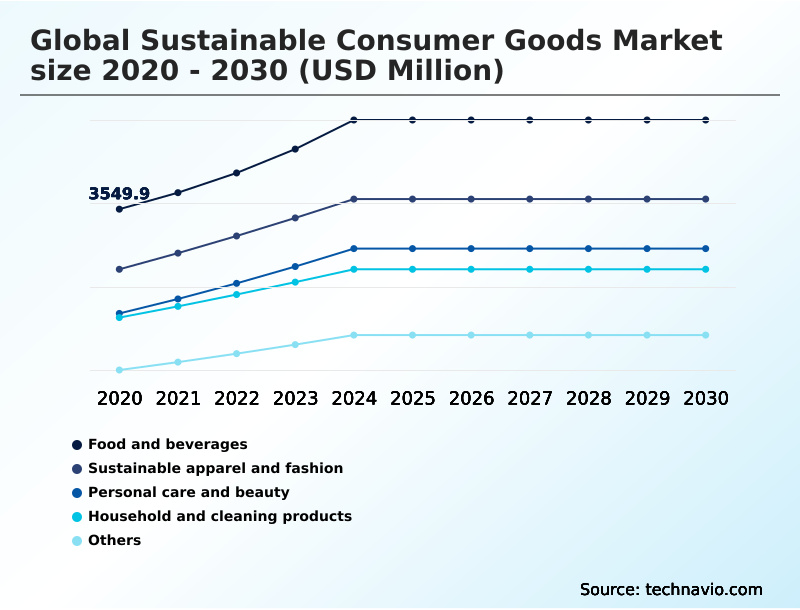
This sector, which is projected to be valued at over 7,798.8 million in 2025, is increasingly defined by carbon labeling and transparent sourcing, enabling consumers to make informed decisions based on the ecological cost of their food choices.
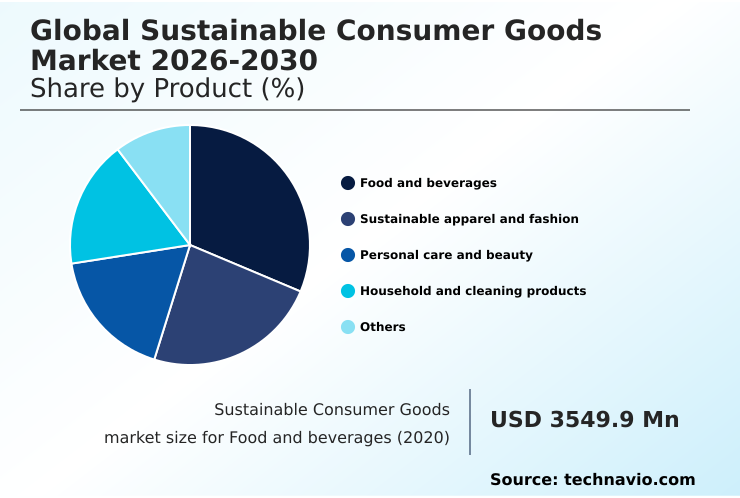
The Food and beverages segment was valued at USD 4.87 billion in 2024 and showed a gradual increase during the forecast period.
Sustainable Consumer Goods Market by Region: North America Leads with 35.9% Growth Share
North America is estimated to contribute 35.9% to the growth of the global market during the forecast period.
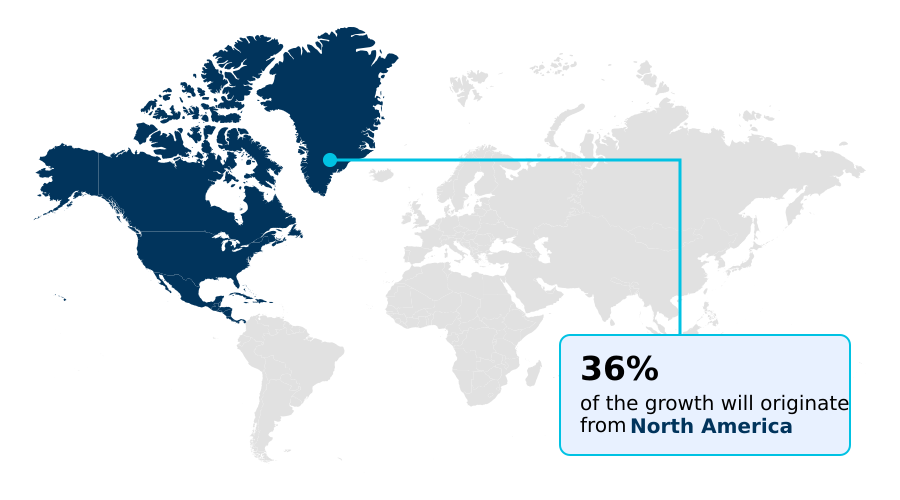
The geographic landscape of the sustainable consumer goods market is diverse, with North America representing the largest opportunity, accounting for nearly 36% of growth potential.
This region, along with Europe, is characterized by strong regulatory compliance for sustainability and high consumer awareness, driving demand for eco-friendly products.
Companies are pursuing corporate sustainability goals focused on carbon footprint reduction and establishing transparent supply chains to meet stakeholder expectations.
In APAC, which accounts for over 27% of the opportunity, the focus is on addressing plastic waste and promoting sustainable materials in rapidly urbanizing economies.
Across all regions, the principles of environmental stewardship and social responsibility are becoming integral to market strategy, pushing brands to innovate in both product design and operational transparency to maintain a competitive edge.
Customer Landscape Analysis for the Sustainable Consumer Goods Market
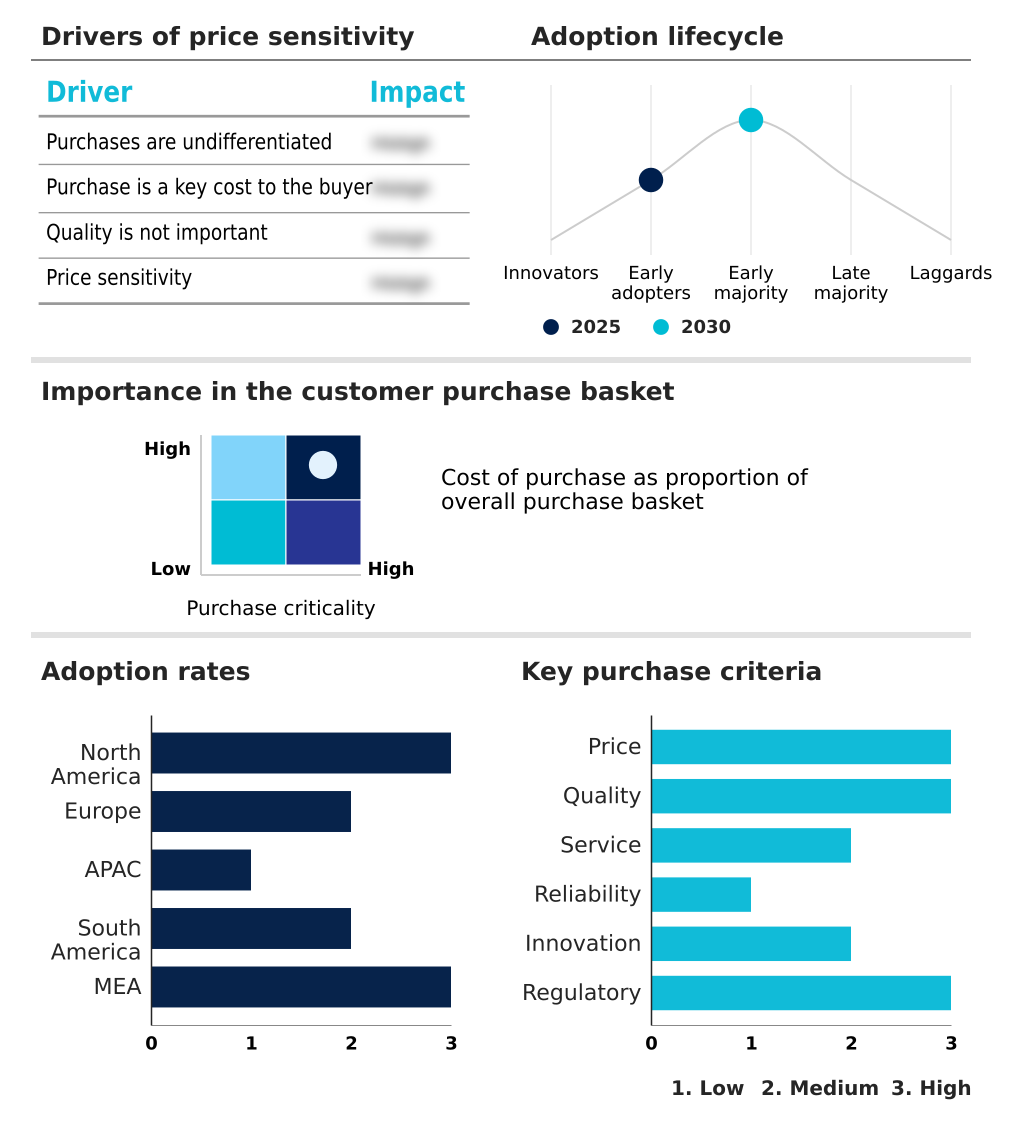
The sustainable consumer goods market forecasting report includes the adoption lifecycle of the market, covering from the innovator’s stage to the laggard’s stage. It focuses on adoption rates in different regions based on penetration. Furthermore, the sustainable consumer goods market report also includes key purchase criteria and drivers of price sensitivity to help companies evaluate and develop their market growth analysis strategies.
Competitive Landscape of the Sustainable Consumer Goods Market
Companies are implementing various strategies, such as strategic alliances, partnerships, mergers and acquisitions, geographical expansion, and product/service launches, to enhance their presence in the sustainable consumer goods market industry.
Allbirds Inc. - Key offerings include sustainable footwear and apparel, utilizing innovative natural materials to meet consumer demand for eco-conscious products.
The industry research and growth report includes detailed analyses of the competitive landscape of the market and information about key companies, including:
- Allbirds Inc.
- Beyond Meat Inc.
- Burts Bees
- Danone SA
- Dr. Bronners Magic Soaps
- Grove Collaborative Inc.
- Impossible Foods Inc.
- Inter IKEA Holding BV
- Interface Inc.
- Kering SA
- Natura and Co. Holding SA
- Oatly Group AB
- Patagonia Inc.
- People Against Dirty Holdings Ltd.
- Procter and Gamble Co.
- Seventh Generation Inc.
- Lush Retail Ltd.
- Stella McCartney Ltd.
- The Body Shop International
- Unilever PLC
Qualitative and quantitative analysis of companies has been conducted to help clients understand the wider business environment as well as the strengths and weaknesses of key industry players. Data is qualitatively analyzed to categorize companies as pure play, category-focused, industry-focused, and diversified; it is quantitatively analyzed to categorize companies as dominant, leading, strong, tentative, and weak.
Recent Developments in the Sustainable Consumer Goods Market
- In October 2024, Beyond Meat Inc. introduced a pioneering production technology using high-moisture extrusion and upcycled agricultural residues, creating plant-based proteins with a 40% lower carbon footprint.
- In November 2024, Inter IKEA Holding BV inaugurated a regional circularity hub in Sao Paulo, Brazil, to serve as a centralized facility for the professional refurbishment and resale of used furniture across South America.
- In April 2025, the BMW Group implemented a standardized blockchain-based platform for the end-to-end tracking of raw materials, providing a technological blueprint for ensuring ethical sourcing of minerals and recycled plastics.
- In May 2025, Unilever PLC announced a strategic adjustment to its procurement program in Europe after experiencing a 15% increase in the cost of certified sustainable surfactants derived from plant-based sources.
Research Analyst Overview: Sustainable Consumer Goods Market
Operational decisions are now intrinsically linked to sustainability metrics, moving far beyond marketing claims. Boardroom discussions center on the capital expenditure required for carbon neutral manufacturing and the total cost of ownership for technologies enabling circular business models.
For example, a CPG firm evaluating a shift to waterless product formulation must weigh the R&D investment against long-term logistics savings and alignment with extended producer responsibility schemes like those under the EU's Green Deal.
The integration of digital product passports is becoming a prerequisite for market access, forcing companies to deploy blockchain supply chain solutions to validate ethical sourcing standards and fair trade certification. This pressure drives innovation in areas like plant-based surfactant technology and the use of upcycled agricultural residue.
For instance, an apparel brand's decision to invest in developing mycelium-based leather is no longer just about brand image; it's a strategic move to de-risk its supply chain from volatile commodity prices and meet recycled content integration mandates, ultimately impacting long-term profitability and investor confidence.
Dive into Technavio’s robust research methodology, blending expert interviews, extensive data synthesis, and validated models for unparalleled Sustainable Consumer Goods Market insights. See full methodology.
| Market Scope | |
|---|---|
| Page number | 315 |
| Base year | 2025 |
| Historic period | 2020-2024 |
| Forecast period | 2026-2030 |
| Growth momentum & CAGR | Accelerate at a CAGR of 10.5% |
| Market growth 2026-2030 | USD 11201.6 million |
| Market structure | Fragmented |
| YoY growth 2025-2026(%) | 9.5% |
| Key countries | US, Canada, Mexico, Germany, UK, France, Italy, Spain, The Netherlands, China, Japan, India, Australia, South Korea, Indonesia, Brazil, Argentina, Chile, Saudi Arabia, UAE, South Africa, Turkey and Israel |
| Competitive landscape | Leading Companies, Market Positioning of Companies, Competitive Strategies, and Industry Risks |
Sustainable Consumer Goods Market: Key Questions Answered in This Report
-
What is the expected growth of the Sustainable Consumer Goods Market between 2026 and 2030?
-
The Sustainable Consumer Goods Market is expected to grow by USD 11.20 billion during 2026-2030, registering a CAGR of 10.5%. Year-over-year growth in 2026 is estimated at 9.5%%. This acceleration is shaped by growing consumer consciousness and demand for ethical transparency, which is intensifying demand across multiple end-use verticals covered in the report.
-
-
What segmentation does the market report cover?
-
The report is segmented by Product (Food and beverages, Sustainable apparel and fashion, Personal care and beauty, Household and cleaning products, and Others), Material (Organic materials, Recycled materials, Biodegradable materials, Carbon neutral material, and Others), Distribution Channel (Offline, and Online) and Geography (North America, Europe, APAC, South America, Middle East and Africa). Among these, the Food and beverages segment is estimated to witness significant growth during the forecast period, driven by rising adoption across key application areas. Each segment includes detailed qualitative and quantitative analysis, along with historical data from 2020-2024 and forecasts through 2030 with year-over-year growth rates.
-
-
Which regions are analyzed in the report?
-
The report covers North America, Europe, APAC, South America and Middle East and Africa. North America is estimated to contribute 35.9% to market growth during the forecast period. Country-level analysis includes US, Canada, Mexico, Germany, UK, France, Italy, Spain, The Netherlands, China, Japan, India, Australia, South Korea, Indonesia, Brazil, Argentina, Chile, Saudi Arabia, UAE, South Africa, Turkey and Israel, with dedicated market size tables and year-over-year growth for each.
-
-
What are the key growth drivers and market challenges?
-
The primary driver is growing consumer consciousness and demand for ethical transparency, which is accelerating investment and industry demand. The main challenge is high initial production costs and sustainability premium, creating operational barriers for key market participants. The report quantifies the impact of each driver and challenge across 2026 and 2030 with comparative analysis.
-
-
Who are the major players in the Sustainable Consumer Goods Market?
-
Key vendors include Allbirds Inc., Beyond Meat Inc., Burts Bees, Danone SA, Dr. Bronners Magic Soaps, Grove Collaborative Inc., Impossible Foods Inc., Inter IKEA Holding BV, Interface Inc., Kering SA, Natura and Co. Holding SA, Oatly Group AB, Patagonia Inc., People Against Dirty Holdings Ltd., Procter and Gamble Co., Seventh Generation Inc., Lush Retail Ltd., Stella McCartney Ltd., The Body Shop International and Unilever PLC. The report provides qualitative and quantitative analysis categorizing companies as dominant, leading, strong, tentative, and weak based on their market positioning. Company profiles include business segment analysis, SWOT assessment, key offerings, and recent strategic developments.
-
Sustainable Consumer Goods Market Research Insights
Market dynamics are increasingly influenced by regulatory frameworks and a profound shift toward ethical consumption. Corporate sustainability goals are no longer optional, with an emphasis on creating transparent supply chains and investing in green manufacturing to reduce environmental impact. While Europe demonstrates mature, steady growth, the APAC region is expanding more rapidly, driven by rising consumer environmental awareness.
Frameworks like the EU’s Ecodesign for Sustainable Products Regulation mandate circular economy solutions and end-of-life product management, pushing companies toward innovations like plastic-free packaging and products designed for a sustainable product lifecycle. This regulatory pressure, combined with consumer demand, forces a comprehensive reevaluation of procurement, design, and distribution strategies globally.
We can help! Our analysts can customize this sustainable consumer goods market research report to meet your requirements.
 RIA -
RIA -