



Surface Coatings Market Size and Growth Forecast 2026-2030
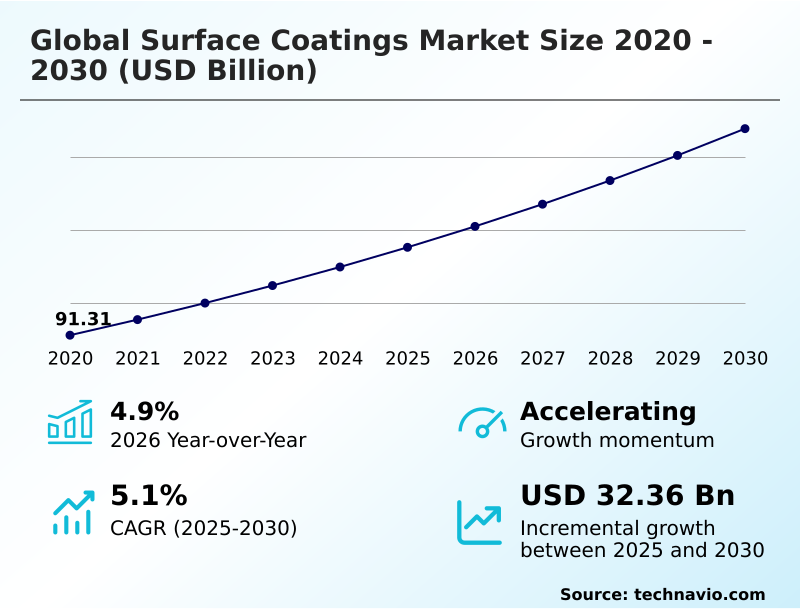
The Surface Coatings Market size was valued at USD 115.28 billion in 2025 growing at a CAGR of 5.1% during the forecast period 2026-2030.
APAC accounts for 46.9% of incremental growth during the forecast period. The Acrylic resins segment by Type was valued at USD 34.55 billion in 2024, while the Decorative coatings segment holds the largest revenue share by Application.
The market is projected to grow by USD 56.33 billion from 2020 to 2030, with USD 32.36 billion of the growth expected during the forecast period of 2025 to 2030.
Get Key Insights on Market Forecast (PDF) Request Free Sample
Surface Coatings Market Overview
The surface coatings market is defined by a continuous push toward material efficiency and regulatory compliance, with an innovation focus on functional and sustainable solutions. The APAC region is poised to contribute nearly 47% of the market's incremental growth, driven by massive infrastructure and automotive manufacturing expansion. This demand necessitates advanced coating formulation techniques to create high-performance industrial coatings and decorative coatings that meet diverse climatic and operational needs. A key driver is the transition to low-VOC coatings, including waterborne coatings and powder coatings, to adhere to standards like those set by the EPA. In a typical scenario, an automotive OEM coatings facility integrates robotic coating application methods for a new EV line, using specialized electrocoating for corrosion resistance on the chassis and advanced thermal management coatings for battery enclosures. This shift not only ensures compliance but also improves transfer efficiency, reduces waste, and enhances the final product's durability and safety, reflecting the industry's strategic alignment of performance, sustainability, and manufacturing excellence.
Drivers, Trends, and Challenges in the Surface Coatings Market
The strategic landscape of the global surface coatings market is increasingly defined by navigating the technical and economic trade-offs inherent in advanced material science. For instance, developing a surface coating for EV battery thermal management requires balancing dielectric properties with long-term heat dissipation, a challenge that pushes the boundaries of current polymer chemistry.
Similarly, formulating a compliant low-VOC waterborne acrylic architectural paint that delivers the durability of solvent-based predecessors involves complex additive packages to control drying times and film integrity. In the heavy industrial space, the selection of an epoxy resin for heavy-duty marine corrosion protection is a critical asset integrity decision, governed by standards from organizations like NACE International.
For a shipyard in South Korea, choosing a coating with a 15-year service life over one with a 10-year life, even at a 20% higher upfront cost, can reduce total lifecycle maintenance expenses by over 30%.
The development of a polyurethane topcoat for automotive scratch resistance and a durable powder coating for outdoor metal furniture durability further exemplifies the need for targeted R&D to meet specific performance and aesthetic demands, while the creation of a radar-transparent coating for autonomous vehicle sensors opens new revenue streams tied to next-generation mobility.
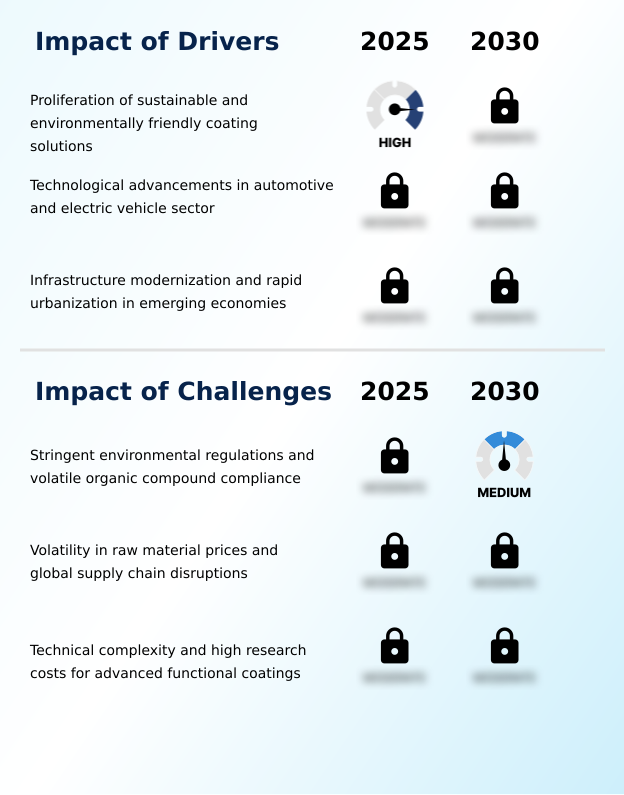
Primary Growth Driver: The proliferation of sustainable and environmentally friendly coating solutions, driven by stringent regulations and consumer demand, is a primary driver of market growth.
A primary driver is the global mandate for sustainability, which is accelerating the adoption of low-VOC coatings, particularly waterborne coatings and powder coatings.
This transition is most evident in the automotive and architectural sectors, where regulations demand reduced environmental impact without compromising performance.
Growth is also fueled by rapid urbanization and infrastructure development in emerging economies, especially in the APAC region, creating sustained demand for both decorative coatings and heavy-duty protective coatings.
The automotive industry's evolution, including the rise of electric vehicles, introduces new requirements for specialized solutions like thermal management coatings and lightweight, durable automotive OEM coatings, ensuring a consistent pipeline of R&D and market expansion.
Emerging Market Trend: The rapid development and adoption of smart coatings, which respond to external stimuli, are transforming surface protection. These materials are moving beyond passive barriers to become intelligent systems that add significant functional value.
The market is rapidly advancing beyond simple surface protection, with a pronounced shift toward smart coatings and functional coatings. These materials incorporate responsive properties such as self-healing capabilities to extend the service life of infrastructure, or antimicrobial agents for use in healthcare and public spaces.
The integration of nanotechnology coatings is key to this evolution, enabling enhanced durability and new functionalities. Concurrently, the industry is transitioning to sustainable, bio-based coatings derived from renewable resources, moving away from petrochemical dependence.
This trend is driven by both regulatory pressure and corporate sustainability goals, fostering innovation in resin chemistry and creating new value propositions centered on environmental performance and circular economy principles.
Key Industry Challenge: Stringent environmental regulations and the complexities of volatile organic compound (VOC) compliance present a key challenge affecting industry growth.
A formidable challenge facing the market is the increasing stringency of environmental regulations, such as the EPA's rules on VOC emissions, which necessitates costly and complex coating formulation. Developing high-performance alternatives to traditional solvent borne coatings that maintain properties like corrosion resistance and adhesion requires significant R&D investment, a burden for many manufacturers.
Volatility in raw material prices, particularly for petrochemical-derived resins and pigments like titanium dioxide, creates supply chain instability and pressure on profit margins. Furthermore, the technical complexity and high cost associated with developing advanced functional coatings, such as radar-transparent finishes, can slow the pace of innovation and limit adoption to high-end applications.
Explore Full Market Dynamics Analysis Request Free Sample
Surface Coatings Market Segmentation
The surface coatings industry research report provides comprehensive data including region-wise segment analysis, with forecasts and analysis for the period 2026-2030, as well as historical data from 2020-2024 for the following segments.
Type Segment Analysis
The acrylic resins segment is estimated to witness significant growth during the forecast period.
Acrylic resins constitute a significant market portion, driven by their versatility and performance in architectural and industrial applications. The transition from solvent-borne to water-borne acrylic systems is accelerating, mandated by stringent environmental regulations concerning volatile organic compounds.
These advanced coating formulation chemistries maintain color stability and gloss under prolonged UV exposure, making them a preferred choice for exterior architectural finishes. Innovations in resin chemistry have enhanced film formation and adhesion properties on diverse substrates.
Representing nearly 38% of the market, the segment's growth is tied to sustainable construction and the demand for low-VOC coatings. Developments in self-cleaning acrylics and improved corrosion resistance further secure their role in providing durable, eco-friendly solutions across various sectors.
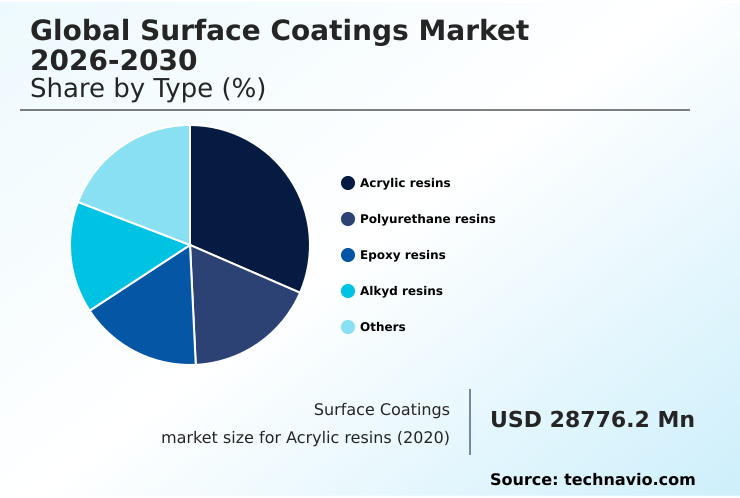
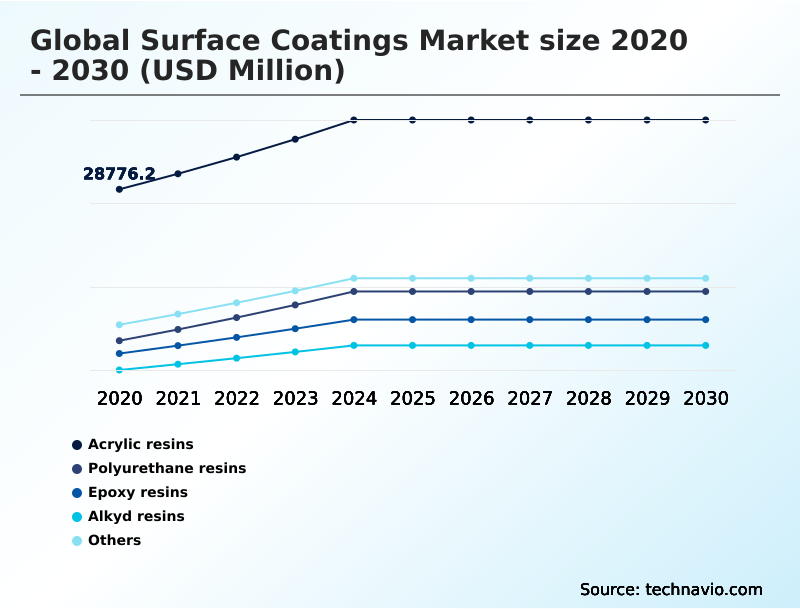
The Acrylic resins segment was valued at USD 34.55 billion in 2024 and showed a gradual increase during the forecast period.
Surface Coatings Market by Region: APAC Leads with 46.9% Growth Share
APAC is estimated to contribute 46.9% to the growth of the global market during the forecast period.
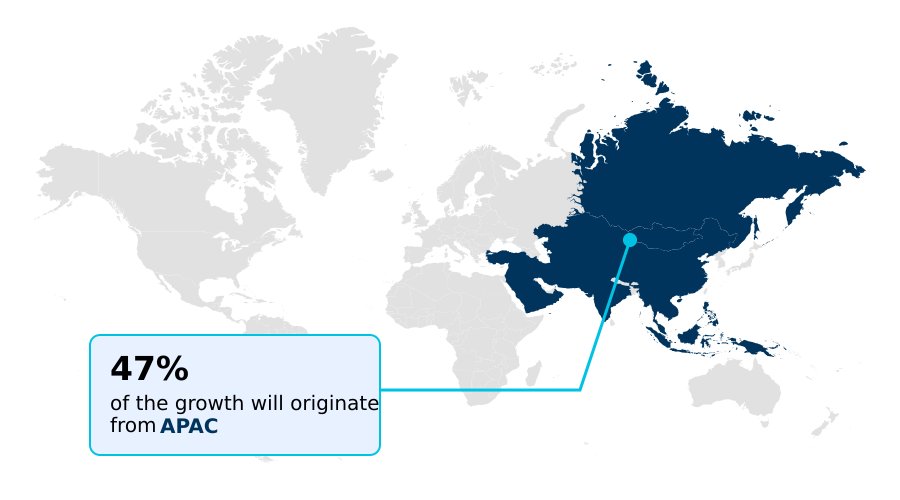
The geographic landscape is dominated by the APAC region, which is set to account for approximately 47% of incremental market growth, fueled by rapid urbanization and industrialization in China and India.
This expansion drives substantial demand for architectural finishes in new construction and a wide array of industrial coatings for manufacturing and infrastructure.
In contrast, the mature markets of North America and Europe, while growing at a slower pace, are hubs for innovation in high-value segments.
These regions focus on developing advanced protective coatings and specialty coatings that comply with stringent environmental standards such as the EPA regulations.
The demand here is for sophisticated solutions like antimicrobial coatings for healthcare settings and radar-transparent finishes for the automotive sector, reflecting a focus on technological advancement over volume.
Customer Landscape Analysis for the Surface Coatings Market
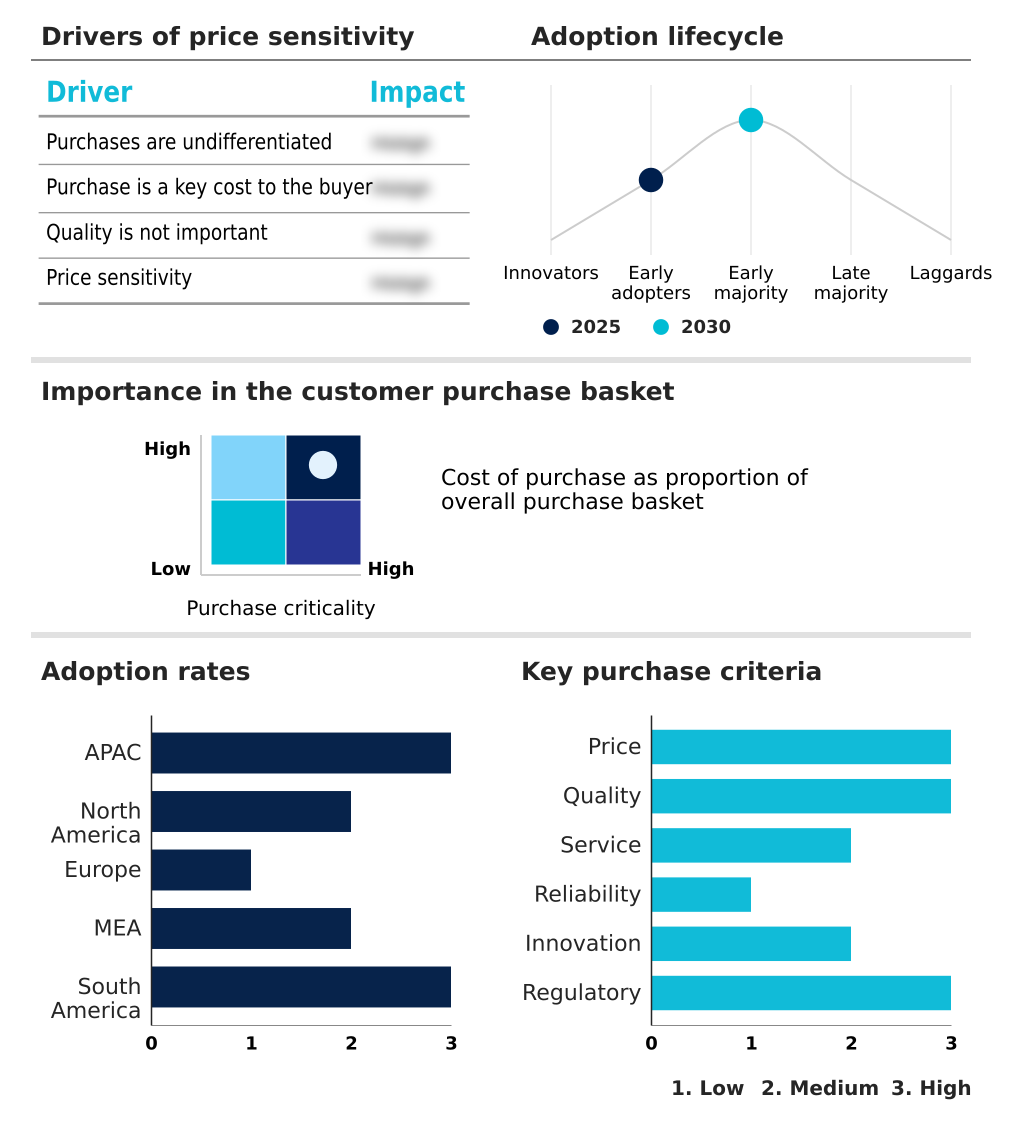
The surface coatings market forecasting report includes the adoption lifecycle of the market, covering from the innovator’s stage to the laggard’s stage. It focuses on adoption rates in different regions based on penetration. Furthermore, the surface coatings market report also includes key purchase criteria and drivers of price sensitivity to help companies evaluate and develop their market growth analysis strategies.
Competitive Landscape of the Surface Coatings Market
Companies are implementing various strategies, such as strategic alliances, partnerships, mergers and acquisitions, geographical expansion, and product/service launches, to enhance their presence in the surface coatings market industry.
Akzo Nobel NV - The company provides a diversified portfolio of advanced surface coating solutions for decorative, protective, and industrial applications, enhancing asset longevity and aesthetic value.
The industry research and growth report includes detailed analyses of the competitive landscape of the market and information about key companies, including:
- Akzo Nobel NV
- Asian Paints Ltd.
- Axalta Coating Systems Ltd.
- BASF SE
- Beckers Group
- Behr Process LLC
- Benjamin Moore and Co.
- Cloverdale Paint Inc.
- DAW SE
- Diamond Vogel
- Hempel AS
- Jotun AS
- Kansai Paint Co. Ltd.
- Nippon Paint Holdings Co Ltd.
- PPG Industries Inc.
- RPM International Inc.
- Sika AG
- Teknos Group Oy
- The Sherwin Williams Co.
- TIGER Coatings GmbH and Co. KG
Qualitative and quantitative analysis of companies has been conducted to help clients understand the wider business environment as well as the strengths and weaknesses of key industry players. Data is qualitatively analyzed to categorize companies as pure play, category-focused, industry-focused, and diversified; it is quantitatively analyzed to categorize companies as dominant, leading, strong, tentative, and weak.
Recent Developments in the Surface Coatings Market
- In May 2025, PPG Industries Inc. announced the commercial launch of a new series of heat-sensitive smart coatings designed for industrial transport pipes that change color to provide a visual indication of potential overheating or localized structural stress.
- In April 2025, PPG Industries Inc. expanded its decorative paint plant in Europe to significantly increase the production capacity of water-based architectural coatings, addressing the surging demand for green building materials.
- In March 2025, The Sherwin Williams Co. officially inaugurated its new global headquarters and a specialized research and development center in Cleveland, Ohio, which is dedicated to the advancement of sustainable polymer science and next-generation coating formulations.
- In March 2025, Akzo Nobel NV finalized the acquisition of a specialized industrial coatings manufacturer in Europe to bolster the organization's presence in the niche wood finishes segment.
Research Analyst Overview: Surface Coatings Market
The trajectory of the surface coatings market is being reshaped by the convergence of digitalization and stringent sustainability mandates under frameworks like the European Green Deal. This is compelling a strategic pivot in R&D investment away from incremental improvements in traditional solvent borne coatings toward foundational shifts in resin chemistry for bio-based coatings and functional coatings.
The development of nanotechnology coatings, including self-healing coatings and antimicrobial coatings, is no longer a niche pursuit but a core competitive differentiator, with market growth reflecting this at a 4.9% year-over-year rate.
Boardroom decisions on capital expenditure now weigh the total cost of ownership, including carbon pricing and regulatory risk, when evaluating new production lines for advanced materials like radiation-cured coatings and high-solids coatings.
For example, qualifying a new generation of waterborne coatings or powder coatings for an automotive OEM coatings supply chain requires extensive validation to meet performance standards, directly impacting supply chain agility and product launch timelines. This environment favors vendors that can integrate smart coatings and functional additives into their core offerings.
Dive into Technavio’s robust research methodology, blending expert interviews, extensive data synthesis, and validated models for unparalleled Surface Coatings Market insights. See full methodology.
| Market Scope | |
|---|---|
| Page number | 325 |
| Base year | 2025 |
| Historic period | 2020-2024 |
| Forecast period | 2026-2030 |
| Growth momentum & CAGR | Accelerate at a CAGR of 5.1% |
| Market growth 2026-2030 | USD 32361.0 million |
| Market structure | Fragmented |
| YoY growth 2025-2026(%) | 4.9% |
| Key countries | China, India, Japan, South Korea, Indonesia, Australia, US, Canada, Mexico, Germany, UK, France, Italy, Spain, The Netherlands, Saudi Arabia, UAE, South Africa, Turkey, Egypt, Brazil, Argentina and Colombia |
| Competitive landscape | Leading Companies, Market Positioning of Companies, Competitive Strategies, and Industry Risks |
Surface Coatings Market: Key Questions Answered in This Report
-
What is the expected growth of the Surface Coatings Market between 2026 and 2030?
-
The Surface Coatings Market is expected to grow by USD 32.36 billion during 2026-2030, registering a CAGR of 5.1%. Year-over-year growth in 2026 is estimated at 4.9%%. This acceleration is shaped by proliferation of sustainable and environmentally friendly coating solutions, which is intensifying demand across multiple end-use verticals covered in the report.
-
-
What segmentation does the market report cover?
-
The report is segmented by Type (Acrylic resins, Polyurethane resins, Epoxy resins, Alkyd resins, and Others), Application (Decorative coatings, Industrial coatings, Automotive and transportation, Protective and marine coatings, and Others), Technology (Waterborne coatings, Solvent borne coatings, Powder coatings, and Others) and Geography (APAC, North America, Europe, Middle East and Africa, South America). Among these, the Acrylic resins segment is estimated to witness significant growth during the forecast period, driven by rising adoption across key application areas. Each segment includes detailed qualitative and quantitative analysis, along with historical data from 2020-2024 and forecasts through 2030 with year-over-year growth rates.
-
-
Which regions are analyzed in the report?
-
The report covers APAC, North America, Europe, Middle East and Africa and South America. APAC is estimated to contribute 46.9% to market growth during the forecast period. Country-level analysis includes China, India, Japan, South Korea, Indonesia, Australia, US, Canada, Mexico, Germany, UK, France, Italy, Spain, The Netherlands, Saudi Arabia, UAE, South Africa, Turkey, Egypt, Brazil, Argentina and Colombia, with dedicated market size tables and year-over-year growth for each.
-
-
What are the key growth drivers and market challenges?
-
The primary driver is proliferation of sustainable and environmentally friendly coating solutions, which is accelerating investment and industry demand. The main challenge is stringent environmental regulations and volatile organic compound compliance, creating operational barriers for key market participants. The report quantifies the impact of each driver and challenge across 2026 and 2030 with comparative analysis.
-
-
Who are the major players in the Surface Coatings Market?
-
Key vendors include Akzo Nobel NV, Asian Paints Ltd., Axalta Coating Systems Ltd., BASF SE, Beckers Group, Behr Process LLC, Benjamin Moore and Co., Cloverdale Paint Inc., DAW SE, Diamond Vogel, Hempel AS, Jotun AS, Kansai Paint Co. Ltd., Nippon Paint Holdings Co Ltd., PPG Industries Inc., RPM International Inc., Sika AG, Teknos Group Oy, The Sherwin Williams Co. and TIGER Coatings GmbH and Co. KG. The report provides qualitative and quantitative analysis categorizing companies as dominant, leading, strong, tentative, and weak based on their market positioning. Company profiles include business segment analysis, SWOT assessment, key offerings, and recent strategic developments.
-
Surface Coatings Market Research Insights
Market dynamics are increasingly shaped by the interplay between regulatory pressures and technological advancements in resin chemistry. The shift away from traditional solvent borne coatings is compelling manufacturers to master the complexities of waterborne systems, focusing on pigment dispersion and viscosity control to achieve comparable film formation and finish quality.
Adherence to regulations like the EU's REACH directive is non-negotiable, driving investment in alternative curing mechanisms and bio-based coatings. This transition impacts all coating application methods, from architectural spray systems to industrial coil coating lines.
Consequently, procurement decisions for industrial maintenance coatings and OEM coatings are now heavily influenced by lifecycle environmental impact, not just initial cost and performance metrics like abrasion resistance.
We can help! Our analysts can customize this surface coatings market research report to meet your requirements.
 RIA -
RIA -