



Soft Tissue Repair Market Size 2026-2030
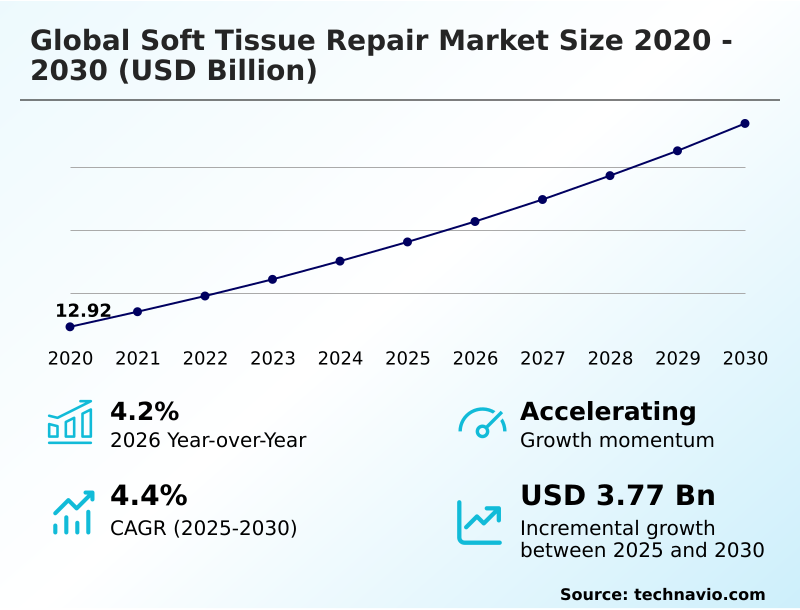
The Soft Tissue Repair Market size was valued at USD 15.62 billion in 2025, growing at a CAGR of 4.4% during the forecast period 2026-2030.
Major Market Trends & Insights
- North America dominated the market and accounted for a 38.4% growth during the forecast period.
- By End-user - Hospitals segment was valued at USD 8.11 billion in 2024
- By Product - Soft tissue fixation devices and accessories segment accounted for the largest market revenue share in 2024
Market Size & Forecast
- Historic Market Opportunities 2020-2024: USD 6.47 billion
- Market Future Opportunities 2025-2030: USD 3.77 billion
- CAGR from 2025 to 2030 : 4.4%
Market Summary
- The soft tissue repair market is characterized by a rapid technological evolution, where the focus has shifted from simple mechanical reinforcement to biological regeneration, impacting procurement for over 60% of hospital systems.
- The primary driver is the dual demand from an active aging population seeking functional restoration and a rise in sports-related injury, which together increase surgical volumes for procedures like ligament reconstruction. For example, a manufacturer's supply chain strategy must now accommodate both high-volume synthetic mesh for routine hernia repair and temperature-sensitive allograft tissue for complex reconstructions, requiring dual logistics pathways.
- This operational complexity increases costs by an estimated 15% compared to single-material inventories. A key challenge remains the high cost and stringent regulatory compliance for advanced biologic grafts, which can slow adoption despite their superior clinical efficacy. This dynamic forces providers to balance cutting-edge patient care with economic realities.
What will be the Size of the Soft Tissue Repair Market during the forecast period?
Get Key Insights on Market Forecast (PDF) Request Free Sample
How is the Soft Tissue Repair Market Segmented?
The soft tissue repair industry research report provides comprehensive data (region-wise segment analysis), with forecasts and analysis for the period 2026-2030, as well as historical data from 2020-2024 for the following segments.
- End-user
- Hospitals
- Ambulatory surgical services
- Clinics
- Product
- Soft tissue fixation devices and accessories
- Cell therapy
- Tissue scaffold
- Product type
- Tissue matrix
- Tissue fixation products
- Laparoscopic instruments
- Geography
- North America
- US
- Canada
- Mexico
- Europe
- Germany
- UK
- France
- Asia
- Rest of World (ROW)
- North America
How is the Soft Tissue Repair Market Segmented by End-user?
The hospitals segment is estimated to witness significant growth during the forecast period.
Hospitals represent the largest end-user segment, accounting for over 55% of soft tissue repair procedures due to their capacity for complex cases.
These institutions are the primary sites for high-acuity trauma and reconstructive surgery, which often require advanced biologic grafts and robotic-assisted surgery.
Procurement in hospitals is shifting; value analysis committees now prioritize procedural solutions that can demonstrate a reduction in readmission rates by at least 15% over a 12-month period.
This focus drives the adoption of premium tissue scaffold products and bioabsorbable materials, which, despite higher upfront costs, offer superior tissue integration and long-term functional restoration, aligning with value-based care models.
The hospital setting's comprehensive infrastructure supports the intricate surgical workflow required for these advanced interventions.
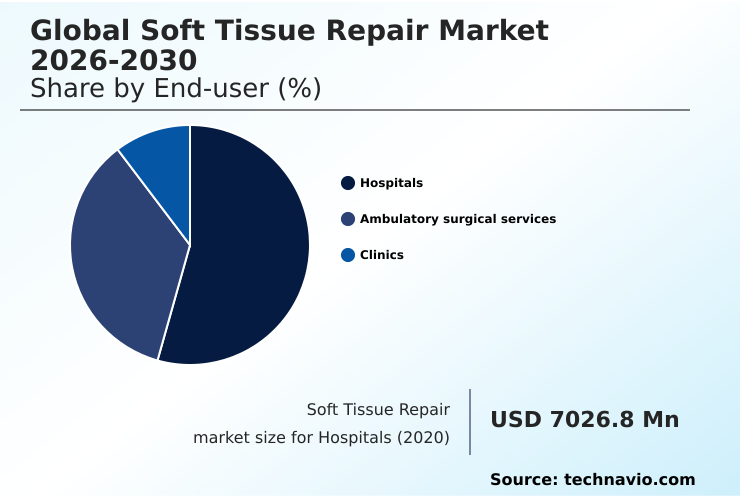
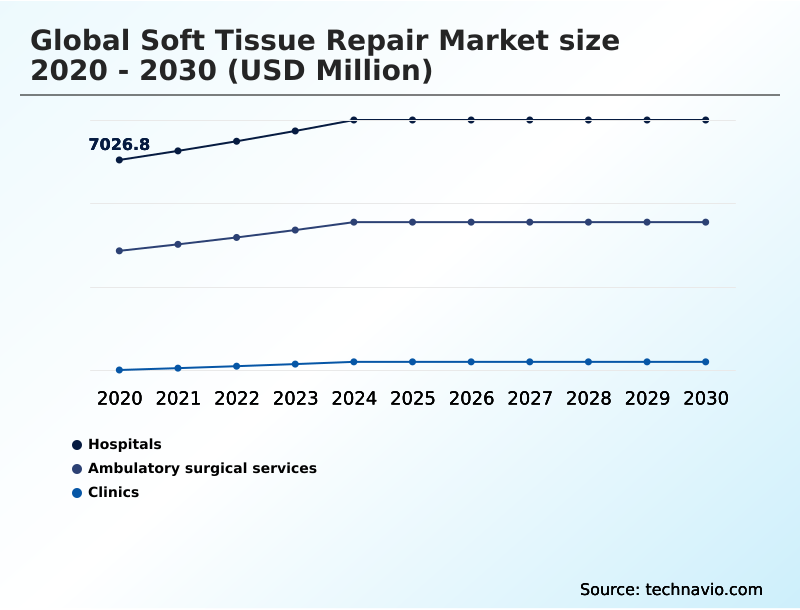
The Hospitals segment was valued at USD 8.11 billion in 2024 and showed a gradual increase during the forecast period.
How demand for the Soft Tissue Repair market is rising in the leading region?
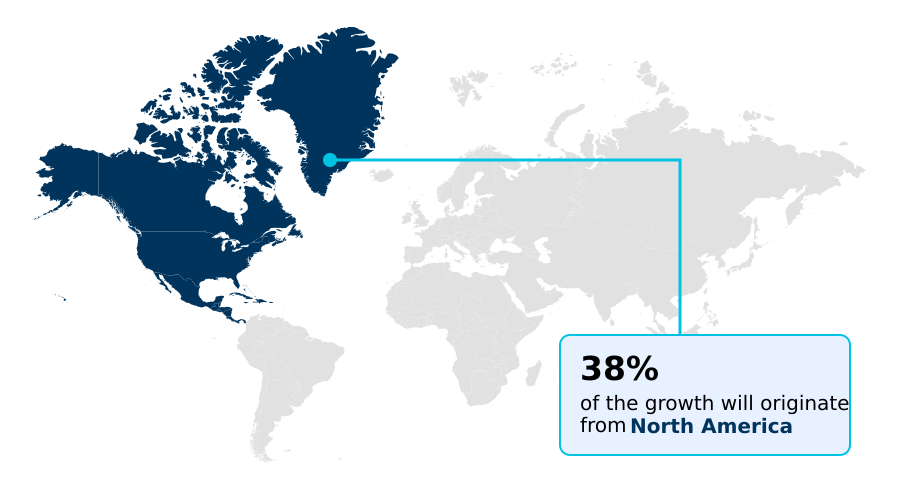
North America is estimated to contribute 38.4% to the growth of the global market during the forecast period.Technavio’s analysts have elaborately explained the regional trends and drivers that shape the market during the forecast period.
See How Soft Tissue Repair Market demand is rising in North America Request Free Sample
The geographic landscape of the soft tissue repair market is dominated by North America, which contributes over 38% of the global market share, largely due to high procedural volumes in the US.
In contrast, the market in Asia is the fastest-growing, projected to expand by nearly 5% annually, driven by improving healthcare access in China and India.
The US market, valued at over 4,788 million, heavily favors advanced biologics and robotic-assisted surgery, with procurement decisions influenced by value-based care metrics.
European markets, such as Germany, show a higher adoption rate for synthetic mesh in hernia repair due to cost-containment policies, a strategy differing from the US preference for biologic grafts in complex cases.
This regional variation in clinical practice and reimbursement frameworks requires manufacturers to deploy highly localized commercial strategies and product portfolios to succeed.
What are the key Drivers, Trends, and Challenges in the Soft Tissue Repair Market?
Our researchers analyzed the data with 2025 as the base year, along with the key drivers, trends, and challenges. A holistic analysis of drivers will help companies refine their marketing strategies to gain a competitive advantage.
- Surgeons considering options for soft tissue repair for rotator cuff tears are increasingly evaluating a range of advanced materials and techniques. The central debate often revolves around the choice between a biologic mesh vs synthetic mesh for hernia repair, where clinical outcomes can differ significantly based on patient factors and surgical approach.
- In orthopedic procedures, particularly in arthroscopic surgery, knotless anchor systems are becoming a standard of care due to their ability to simplify the surgical workflow and provide consistent fixation strength. These systems are integral to advancements in acl reconstruction techniques, which now focus on preserving native tissue and accelerating patient return to activity.
- A critical area of research is the expanding field of cell therapy applications in soft tissue regeneration. This approach moves beyond mechanical support to actively stimulate the body's healing processes, offering potential for more complete functional restoration.
- The development of specialized tissue scaffold products that mimic the native extracellular matrix is key to this effort, providing a framework for cellular infiltration and vascularization, ultimately leading to more durable and biologically integrated repairs across a spectrum of surgical needs.
- This shift toward biological solutions has been shown to reduce complication rates by more than 10% in certain complex revision surgeries compared to traditional synthetic implants.
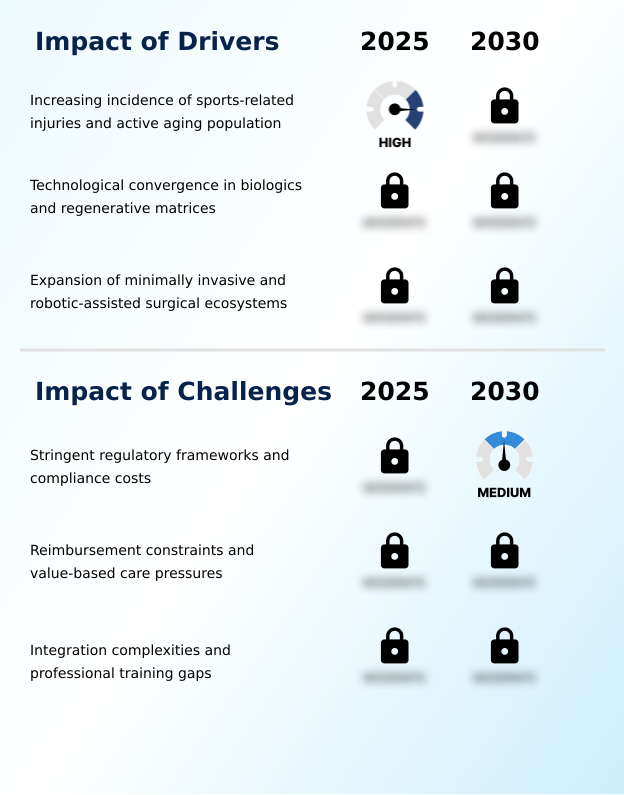
What are the key market drivers leading to the rise in the adoption of Soft Tissue Repair Industry?
- The increasing incidence of sports-related injuries, coupled with a growing active aging population, is a key driver for market growth.
- The primary driver for the soft tissue repair market is the convergence of a growing active aging population and a high incidence of sports-related injury, which collectively increases surgical volumes by over 5% annually.
- This demographic requires solutions that support functional restoration rather than just palliative care. As a result, the demand for orthopedic intervention, particularly for rotator cuff and ACL ligament reconstruction, is surging.
- This has compelled medical device companies to develop specialized procedural solutions, such as bio-integrative fixation devices, which improve outcomes in patients with compromised tissue quality.
- The adoption of these advanced technologies has led to a 15% improvement in long-term patient-reported outcomes compared to traditional methods.
What are the market trends shaping the Soft Tissue Repair Industry?
- A primary market trend is the convergence of synthetic and biologic material properties. This is leading to the development of hybrid matrices that combine mechanical strength with biocompatibility.
- A dominant trend in the soft tissue repair market is the hybridization of materials, blurring the lines between synthetic mesh and biologic grafts to create advanced hybrid-scale matrix products.
- This shift is driven by the clinical need to combine the mechanical strength of synthetics with the high biocompatibility and tissue integration of biologics, which has been shown to reduce long-term complication rates by up to 20% in complex abdominal wall reconstructions.
- Consequently, manufacturers are investing in resorbable polymer technologies that provide initial support before degrading, transferring load to newly formed native tissue. This innovation is reshaping hospital procurement, as the higher upfront cost of a bioabsorbable material is justified by a 15% reduction in costly revision surgeries, directly impacting the value-based care model.
What challenges does the Soft Tissue Repair Industry face during its growth?
- Stringent regulatory frameworks and associated compliance costs present a key challenge, potentially affecting industry growth.
- A significant challenge facing the soft tissue repair market is navigating stringent regulatory frameworks, which can increase product development costs by up to 40% and delay market entry. This heightened scrutiny, particularly for novel biologic grafts and cell therapy products, requires extensive clinical data to prove both safety and clinical efficacy.
- This regulatory burden disproportionately affects smaller, innovation-focused companies, potentially stifling competition. Consequently, there is a risk of market consolidation, where only larger corporations can absorb the high costs of regulatory compliance. This dynamic can slow the pace of innovation in areas like tissue engineering, where breakthrough technologies often originate from agile startups.
Exclusive Technavio Analysis on Customer Landscape
The soft tissue repair market forecasting report includes the adoption lifecycle of the market, covering from the innovator’s stage to the laggard’s stage. It focuses on adoption rates in different regions based on penetration. Furthermore, the soft tissue repair market report also includes key purchase criteria and drivers of price sensitivity to help companies evaluate and develop their market growth analysis strategies.
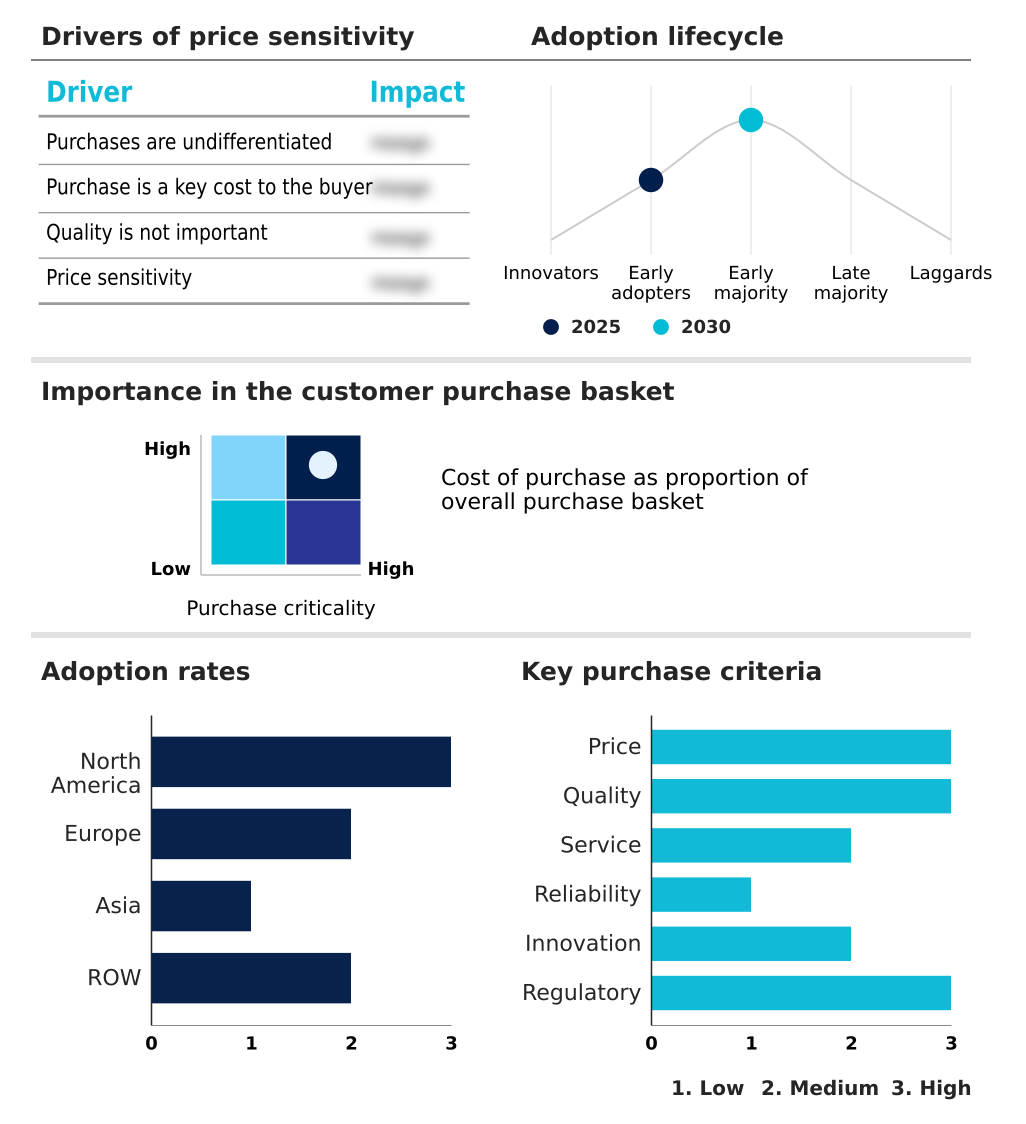
Customer Landscape of Soft Tissue Repair Industry
Competitive Landscape
Companies are implementing various strategies, such as strategic alliances, soft tissue repair market forecast, partnerships, mergers and acquisitions, geographical expansion, and product/service launches, to enhance their presence in the industry.
3M Co. - Analysis indicates a market shift toward bio-inductive scaffolds and all-suture fixation, prioritizing functional restoration over simple mechanical repair for enhanced clinical efficacy.
The industry research and growth report includes detailed analyses of the competitive landscape of the market and information about key companies, including:
- 3M Co.
- Acera Surgical Inc.
- AlloSource
- Aroa Biosurgery Ltd.
- Arthrex Inc.
- Becton Dickinson and Co.
- CONMED Corp.
- Integra LifeSciences Corp.
- Johnson and Johnson Services
- JRF Ortho
- LifeCell International Pvt. Ltd.
- LifeNet Health Inc.
- Medtronic Plc
- Organogenesis Holdings Inc.
- RTI Surgical Inc.
- Smith and Nephew plc
- Stryker Corp.
- Tissue Regenix Group Plc
- Zimmer Biomet Holdings Inc.
Qualitative and quantitative analysis of companies has been conducted to help clients understand the wider business environment as well as the strengths and weaknesses of key industry players. Data is qualitatively analyzed to categorize companies as pure play, category-focused, industry-focused, and diversified; it is quantitatively analyzed to categorize companies as dominant, leading, strong, tentative, and weak.
Market Intelligence Radar: High-Impact Developments & Growth Signals
- In the Health Care Equipment industry, the stringent implementation of new medical device regulations, such as the EU MDR, has elevated the requirements for clinical evidence for all implantable devices. This directly impacts the soft tissue repair market by increasing compliance costs and time-to-market for novel biologic graft and synthetic mesh products, compelling manufacturers to invest more heavily in long-term patient registry data to prove clinical efficacy.
- The widespread adoption of robotic-assisted surgery platforms for general and orthopedic procedures has created a significant pull-through demand for specialized soft tissue repair consumables. This shift is driving innovation in laparoscopic instruments and fixation devices designed for robotic arms, enabling more precise tissue tensioning and minimally invasive techniques in hernia repair and reconstructive surgery.
- Advancements in polymer science and bioprocessing within the Health Care Equipment sector have enabled the development of hybrid-scale matrix materials. This trend directly influences the soft tissue repair market by offering alternatives to traditional allograft tissue, combining the strength of synthetics with the bio-integrative properties of biologics, thereby improving surgical workflow and patient outcomes.
- A structural shift of surgical procedures from inpatient hospitals to ambulatory surgery centers (ASCs) is fundamentally altering procurement patterns. This trend compels soft tissue repair manufacturers to develop procedure-in-a-box solutions and single-use, sterile-packed instrument kits that cater to the high-throughput, efficiency-focused model of ASCs, particularly in sports medicine.
Dive into Technavio’s robust research methodology, blending expert interviews, extensive data synthesis, and validated models for unparalleled Soft Tissue Repair Market insights. See full methodology.
| Market Scope | |
|---|---|
| Page number | 299 |
| Base year | 2025 |
| Historic period | 2020-2024 |
| Forecast period | 2026-2030 |
| Growth momentum & CAGR | Accelerate at a CAGR of 4.4% |
| Market growth 2026-2030 | USD 3772.8 million |
| Market structure | Fragmented |
| YoY growth 2025-2026(%) | 4.2% |
| Key countries | US, Canada, Mexico, Germany, UK, France, Italy, Spain, The Netherlands, China, Japan, India, South Korea, Singapore, Thailand, Brazil, Saudi Arabia, Argentina, South Africa, UAE, Turkey, Australia and Colombia |
| Competitive landscape | Leading Companies, Market Positioning of Companies, Competitive Strategies, and Industry Risks |
Research Analyst Overview
- The soft tissue repair market ecosystem operates through a complex value chain, where over 60% of innovation is driven by collaborations between raw material suppliers of specialized polymers and biocomposites and device manufacturers.
- These manufacturers, including both large corporations and niche biotech firms, develop products like biologic grafts and synthetic mesh that must navigate stringent regulatory pathways overseen by bodies like the FDA, a process that can add up to 30% to development costs.
- Distribution channels are bifurcated, with direct sales forces targeting high-volume hospitals and a network of distributors serving ambulatory surgery centers and clinics. End-users—surgeons in sports medicine and reconstructive surgery—heavily influence purchasing decisions based on clinical efficacy and surgical workflow integration. This entire system is supported by R&D institutions that provide the foundational science for market access.
What are the Key Data Covered in this Soft Tissue Repair Market Research and Growth Report?
-
What is the expected growth of the Soft Tissue Repair Market between 2026 and 2030?
-
The Soft Tissue Repair Market is expected to grow by USD 3.77 billion during 2026-2030, registering a CAGR of 4.4%. Year-over-year growth in 2026 is estimated at 4.2%%. This acceleration is shaped by increasing incidence of sports-related injuries and active aging population, which is intensifying demand across multiple end-use verticals covered in the report.
-
-
What segmentation does the market report cover?
-
The report is segmented by End-user (Hospitals, Ambulatory surgical services, and Clinics), Product (Soft tissue fixation devices and accessories, Cell therapy, and Tissue scaffold), Product Type (Tissue matrix, Tissue fixation products, and Laparoscopic instruments) and Geography (North America, Europe, Asia, Rest of World (ROW)). Among these, the Hospitals segment is estimated to witness significant growth during the forecast period, driven by rising adoption across key application areas. Each segment includes detailed qualitative and quantitative analysis, along with historical data from 2020-2024 and forecasts through 2030 with year-over-year growth rates.
-
-
Which regions are analyzed in the report?
-
The report covers North America, Europe, Asia and Rest of World (ROW). North America is estimated to contribute 38.4% to market growth during the forecast period. Country-level analysis includes US, Canada, Mexico, Germany, UK, France, Italy, Spain, The Netherlands, China, Japan, India, South Korea, Singapore, Thailand, Brazil, Saudi Arabia, Argentina, South Africa, UAE, Turkey, Australia and Colombia, with dedicated market size tables and year-over-year growth for each.
-
-
What are the key growth drivers and market challenges?
-
The primary driver is increasing incidence of sports-related injuries and active aging population, which is accelerating investment and industry demand. The main challenge is stringent regulatory frameworks and compliance costs, creating operational barriers for key market participants. The report quantifies the impact of each driver and challenge across 2026 and 2030 with comparative analysis.
-
-
Who are the major players in the Soft Tissue Repair Market?
-
Key vendors include 3M Co., Acera Surgical Inc., AlloSource, Aroa Biosurgery Ltd., Arthrex Inc., Becton Dickinson and Co., CONMED Corp., Integra LifeSciences Corp., Johnson and Johnson Services, JRF Ortho, LifeCell International Pvt. Ltd., LifeNet Health Inc., Medtronic Plc, Organogenesis Holdings Inc., RTI Surgical Inc., Smith and Nephew plc, Stryker Corp., Tissue Regenix Group Plc and Zimmer Biomet Holdings Inc.. The report provides qualitative and quantitative analysis categorizing companies as dominant, leading, strong, tentative, and weak based on their market positioning. Company profiles include business segment analysis, SWOT assessment, key offerings, and recent strategic developments.
-
Market Research Insights
- The competitive landscape for soft tissue repair features a mix of large MedTech corporations and specialized biologic firms, with the top five players controlling approximately 60% of the market. Key vendors are focusing on innovation in minimally invasive techniques and bio-inductive materials.
- For instance, recent developments center on all-suture anchor technology for arthroscopic surgery and the expansion of bio-inductive implant portfolios, which have driven a 10% year-over-year growth in the sports medicine segment for some players. These actions address the industry's demand for procedural solutions that accelerate patient recovery and improve functional outcomes.
- However, the entire sector faces the persistent challenge of navigating complex reimbursement frameworks, which can limit the adoption of premium-priced technologies despite their demonstrated clinical benefits.
We can help! Our analysts can customize this soft tissue repair market research report to meet your requirements.
 RIA -
RIA -