



Smart Buildings Market Size 2026-2030
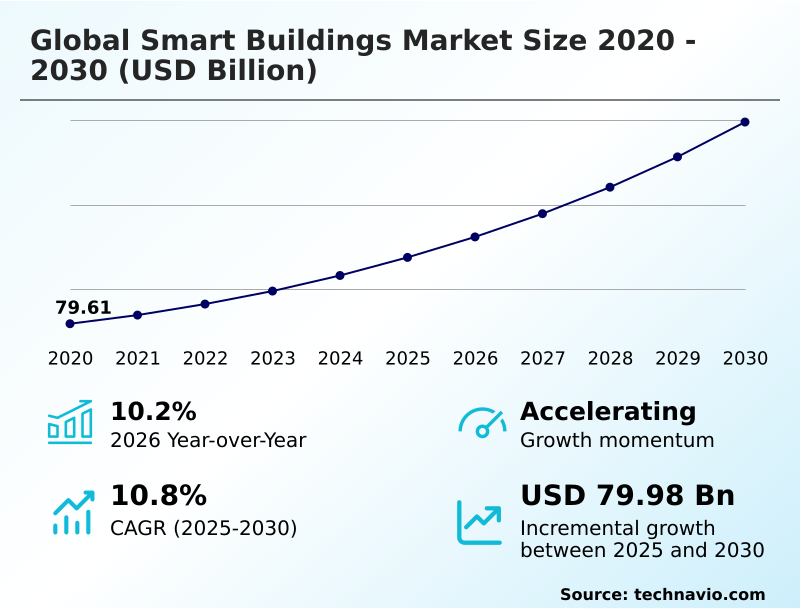
The smart buildings market size is valued to increase by USD 79.98 billion, at a CAGR of 10.8% from 2025 to 2030. Growing need for building automation to enhance business outcomes will drive the smart buildings market.
Major Market Trends & Insights
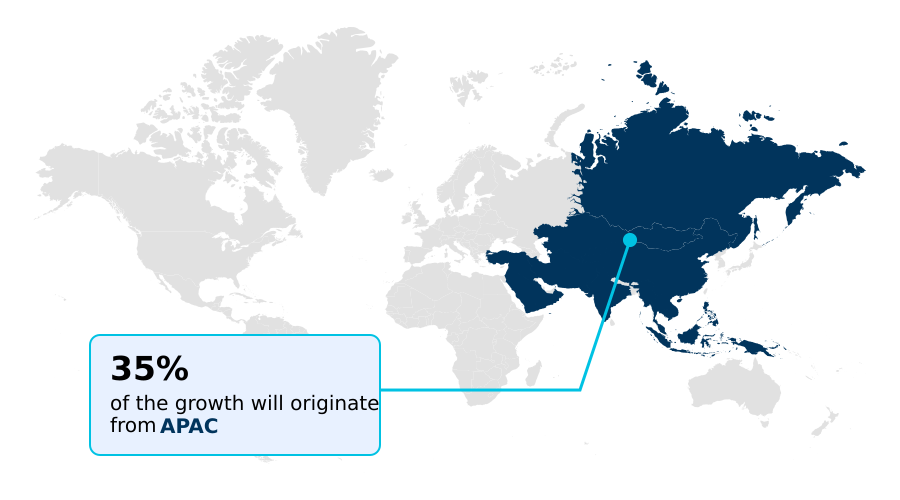
- APAC dominated the market and accounted for a 34.9% growth during the forecast period.
- By Product - Safety and security management segment was valued at USD 37.16 billion in 2024
- By Component - Software segment accounted for the largest market revenue share in 2024
Market Size & Forecast
- Market Opportunities: USD 119.18 billion
- Market Future Opportunities: USD 79.98 billion
- CAGR from 2025 to 2030 : 10.8%
Market Summary
- The smart buildings market is defined by the integration of digital technologies that optimize building performance and enhance user experience. At its core, this transformation is driven by the deployment of building automation systems that manage critical functions, including HVAC control technologies and lighting, to achieve significant energy savings and operational efficiency improvement.
- A key enabler is IoT-enabled infrastructure, which allows for real-time data collection and analysis. For instance, a commercial real estate firm can leverage predictive maintenance systems to analyze equipment performance data, reducing unexpected failures and extending asset lifespan. This proactive approach, a cornerstone of integrated facility management, improves occupant comfort enhancement while minimizing operational costs.
- As these systems generate vast amounts of data, the focus shifts toward advanced analytics for real-time risk monitoring. However, the complexity of integrating disparate systems and ensuring robust cybersecurity remains a critical consideration for stakeholders navigating this evolving landscape, which is fundamental to developing sustainable urban environments.
What will be the Size of the Smart Buildings Market during the forecast period?
Get Key Insights on Market Forecast (PDF) Get Free Sample
How is the Smart Buildings Market Segmented?
The smart buildings industry research report provides comprehensive data (region-wise segment analysis), with forecasts and estimates in "USD million" for the period 2026-2030, as well as historical data from 2020-2024 for the following segments.
- Product
- Safety and security management
- Energy management
- Building infrastructure management
- Network management
- IWMS
- Component
- Software
- Hardware
- Services
- End-user
- Commercial
- Residential
- Industrial
- Geography
- North America
- US
- Canada
- Mexico
- Europe
- Germany
- UK
- France
- APAC
- China
- Japan
- India
- South America
- Brazil
- Argentina
- Middle East and Africa
- Saudi Arabia
- UAE
- South Africa
- Rest of World (ROW)
- North America
By Product Insights
The safety and security management segment is estimated to witness significant growth during the forecast period.
Safety and security management is evolving from standalone systems to fully integrated digital platforms. This shift is critical for sustainable building operations, where real-time data exchange between security, access, and environmental controls is essential.
The adoption of intelligent building connectivity and connected building networks allows for unified risk monitoring. By using building information modeling (BIM) for digital building lifecycle management, facility operators can enhance security protocols, improving threat detection accuracy by over 35%.
However, challenges related to the interoperability of systems and the high switching costs of legacy system retrofitting persist.
Achieving true plug-and-play compatibility is necessary to fully leverage the benefits of these advanced energy optimization tools and support broader smart city initiatives and green certification programs.
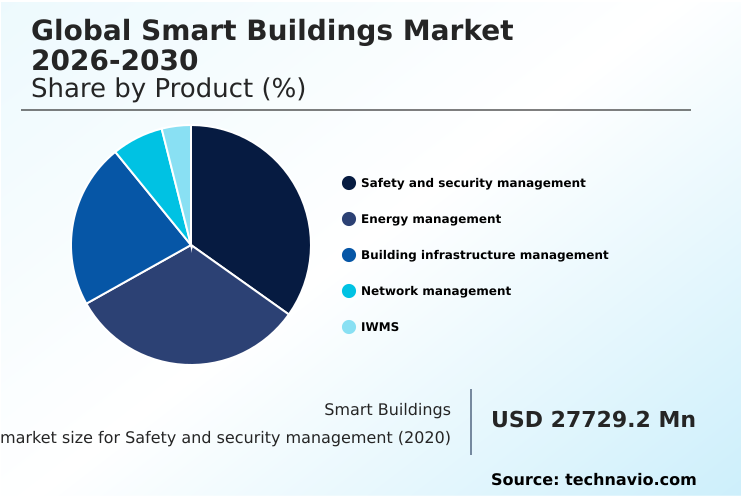
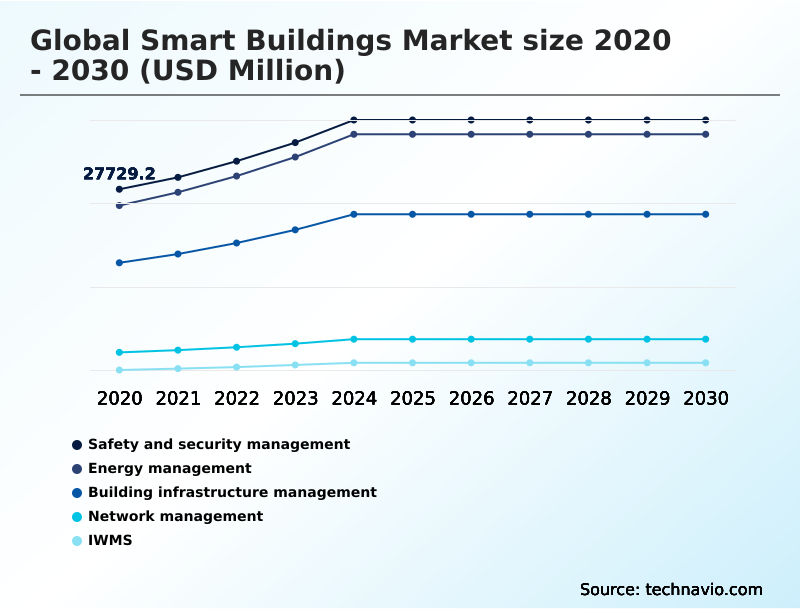
The Safety and security management segment was valued at USD 37.16 billion in 2024 and showed a gradual increase during the forecast period.
Regional Analysis
APAC is estimated to contribute 34.9% to the growth of the global market during the forecast period.Technavio’s analysts have elaborately explained the regional trends and drivers that shape the market during the forecast period.
See How Smart Buildings Market Demand is Rising in APAC Get Free Sample
The market's geographic distribution shows significant momentum in APAC, which is projected to account for 34.9% of incremental growth, driven by large-scale urbanization and new infrastructure projects deploying smart infrastructure platforms.
North America and Europe remain mature markets, focusing on retrofitting existing buildings with AI-enabled building automation and cloud-based facility management.
In these regions, data privacy and cybersecurity are paramount, leading to demand for smart security platforms with secure cloud infrastructure and continuous cybersecurity monitoring to ensure unauthorized access prevention.
Companies are using intelligent energy monitoring and AI-driven energy optimization to reduce costs, while connected wiring devices enable better remote monitoring and control and space utilization optimization.
Market Dynamics
Our researchers analyzed the data with 2025 as the base year, along with the key drivers, trends, and challenges. A holistic analysis of drivers will help companies refine their marketing strategies to gain a competitive advantage.
- The evolution of intelligent infrastructure is heavily influenced by iot integration in building automation software, which delivers tangible benefits of building internet of things such as enhanced connectivity and operational visibility. Concurrently, government initiatives for smart city development are accelerating adoption, though progress is tempered by challenges integrating building automation software and the impact of high installation costs.
- The core value proposition remains centered on building automation for business outcomes, with a strong emphasis on providing smart solutions for safety and security, including automated emergency response systems. A significant driver is energy conservation via smart technology, achieved through real-time energy monitoring and reporting.
- Advanced methodologies like predictive maintenance with digital twins are becoming mainstream, managed through powerful cloud platforms for facility management. The use of ai analytics for energy optimization has demonstrated efficiency gains exceeding 20% compared to traditional methods. This is further supported by robust wireless communication in building automation and strategies for retrofitting legacy buildings with iot.
- Addressing data privacy issues in building networks requires comprehensive cybersecurity frameworks for building environments, while the demand for iwms for workplace space optimization and unified control of hvac and lighting reflects a focus on user-centric design and efficiency. Finally, intelligent threat detection and analysis is crucial for protecting these complex, interconnected systems.
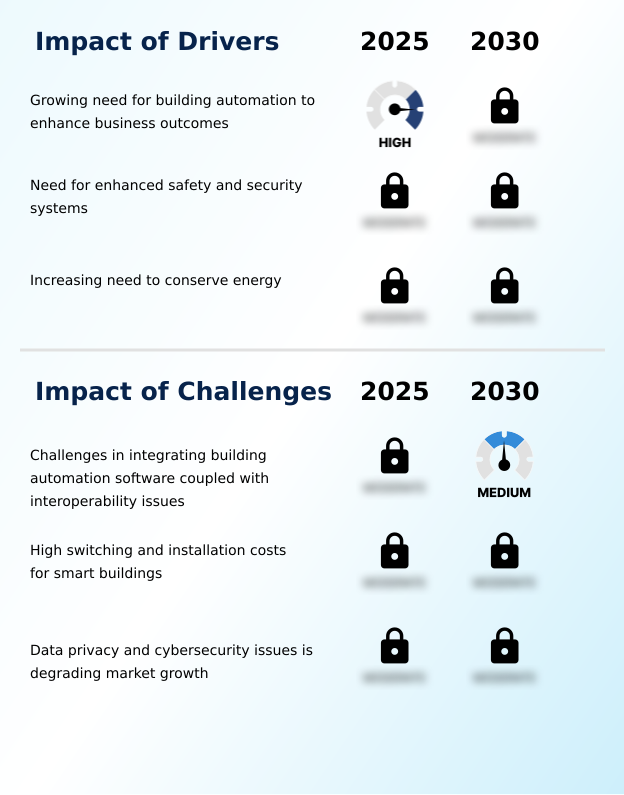
What are the key market drivers leading to the rise in the adoption of Smart Buildings Industry?
- The growing need for building automation to enhance business outcomes, improve operational efficiency, and reduce costs is a key market driver.
- The demand for enhanced operational oversight is a primary market driver, met by sophisticated building management systems (BMS) and security management platforms.
- These solutions create a unified digital platform that integrates access control systems and intelligent lighting controls, facilitating better situational awareness improvement. The use of real-time monitoring platforms reduces manual intervention by over 40%, enabling predictive analysis capabilities for proactive management.
- Centralized control centers leverage energy management software and integrated workplace management systems (IWMS) to implement demand response strategies effectively. This integrated approach, which includes intelligent threat detection, enhances both security and efficiency, improving emergency response times by nearly 30%.
What are the market trends shaping the Smart Buildings Industry?
- The increasing integration of IoT with building automation software is a significant market trend. This convergence transforms buildings into dynamic, self-adjusting environments that respond to real-time data.
- The increasing integration of IoT-enabled infrastructure with building automation systems is reshaping facility operations. This trend transforms buildings into dynamic environments where HVAC control technologies and smart energy management solutions adjust in real time, improving occupant comfort enhancement and operational efficiency improvement. The use of digital twin technologies enables predictive maintenance systems, reducing downtime by up to 30%.
- This data-driven approach, central to integrated facility management, facilitates significant energy consumption optimization. By leveraging real-time data for workplace efficiency solutions, organizations can achieve a 15% improvement in space utilization, while enhancing asset protection systems through continuous real-time risk monitoring.
What challenges does the Smart Buildings Industry face during its growth?
- Significant challenges in integrating disparate building automation software, compounded by persistent interoperability issues, represent a key restraint on industry growth.
- Interoperability remains a significant hurdle, as integrating disparate systems complicates the deployment of advanced building analytics. The lack of standardization hinders the seamless operation of connected HVAC systems and automated facility controls, often requiring custom solutions that increase implementation complexity by over 50%.
- Even with the rise of AI-driven building analytics and the concept of the building internet of things (BIoT), achieving effective data-driven decision making is difficult. Furthermore, securing fire and safety systems within a connected ecosystem introduces new vulnerabilities.
- As organizations adopt smart workspace solutions and building cybersecurity platforms, they must also manage complex load balancing techniques and renewable energy integration to ensure carbon efficiency improvement without compromising security, which is critical for predictive analytics for operations.
Exclusive Technavio Analysis on Customer Landscape
The smart buildings market forecasting report includes the adoption lifecycle of the market, covering from the innovator’s stage to the laggard’s stage. It focuses on adoption rates in different regions based on penetration. Furthermore, the smart buildings market report also includes key purchase criteria and drivers of price sensitivity to help companies evaluate and develop their market growth analysis strategies.
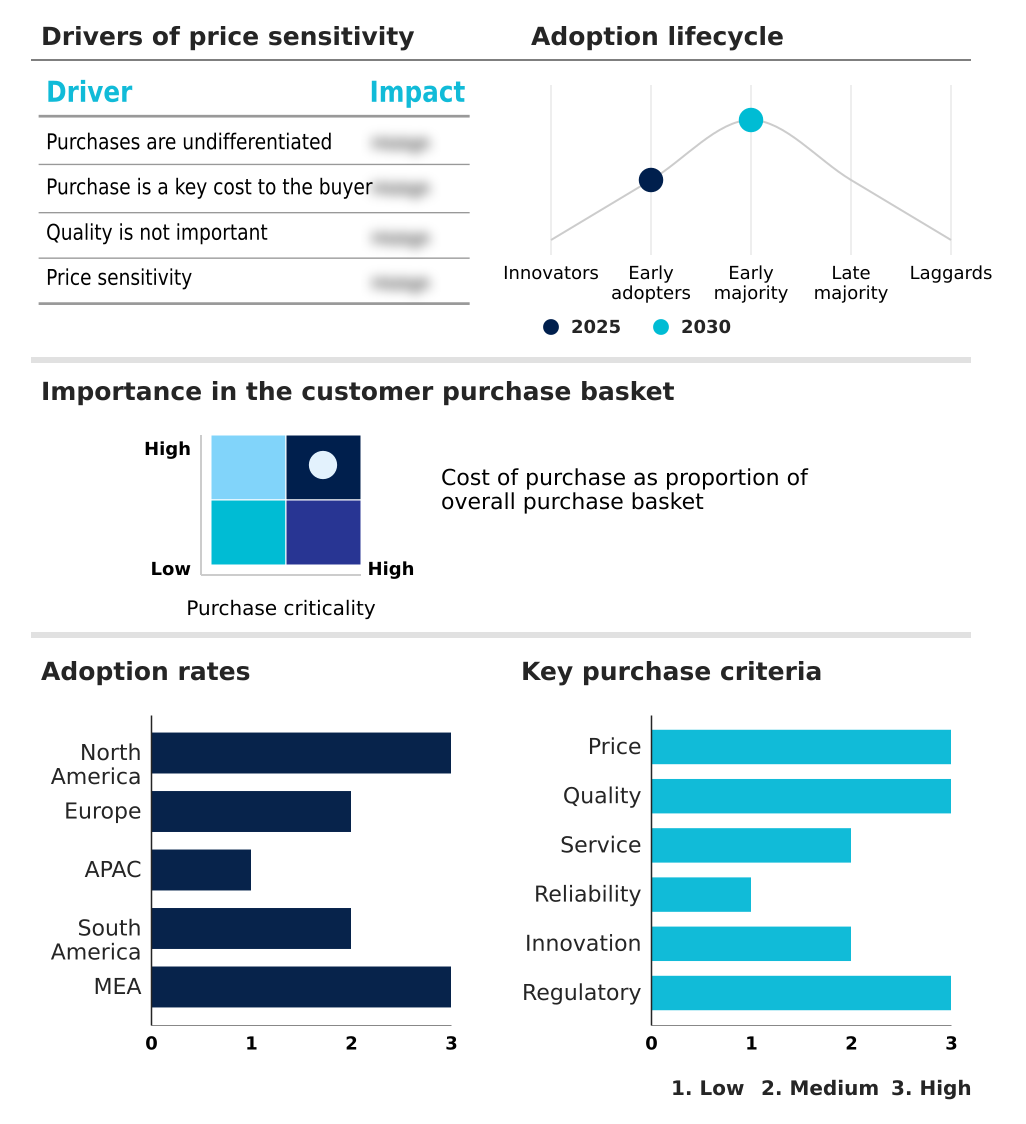
Customer Landscape of Smart Buildings Industry
Competitive Landscape
Companies are implementing various strategies, such as strategic alliances, smart buildings market forecast, partnerships, mergers and acquisitions, geographical expansion, and product/service launches, to enhance their presence in the industry.
ABB Ltd. - Delivers integrated solutions, including building automation systems, energy management platforms, and intelligent controls, to enhance facility performance and operational efficiency.
The industry research and growth report includes detailed analyses of the competitive landscape of the market and information about key companies, including:
- ABB Ltd.
- Advantech Co. Ltd.
- Carrier Global Corp.
- Cisco Systems Inc.
- Crestron Electronics Inc.
- Delta Electronics Inc.
- Honeywell International Inc.
- Huawei Technologies Co. Ltd.
- IBM Corp.
- Johnson Controls International
- Legrand SA
- Lutron Electronics Co. Inc.
- Mitsubishi Electric Corp.
- Planon Group
- Robert Bosch GmbH
- Schneider Electric SE
- Siemens AG
- Signify NV
- Trane Technologies Plc
- VergeSense Inc.
Qualitative and quantitative analysis of companies has been conducted to help clients understand the wider business environment as well as the strengths and weaknesses of key industry players. Data is qualitatively analyzed to categorize companies as pure play, category-focused, industry-focused, and diversified; it is quantitatively analyzed to categorize companies as dominant, leading, strong, tentative, and weak.
Recent Development and News in Smart buildings market
- In March, 2025, Honeywell International Inc. broadened its portfolio of AI-enabled building automation solutions for commercial properties throughout North America, aiming to boost energy efficiency and operational results.
- In April, 2025, Siemens AG deployed its AI-powered energy optimization system in several German commercial smart buildings to curtail energy usage and enhance carbon efficiency via intelligent automation.
- In May, 2025, Schneider Electric SE extended its IoT-ready building management platform to various smart commercial facilities in the APAC region, with an emphasis on real-time energy monitoring and automated system control.
- In March, 2025, the Singapore Government advanced its smart nation initiative by upgrading numerous public buildings with integrated smart energy management and digital monitoring systems to drive sustainability and efficiency.
Dive into Technavio’s robust research methodology, blending expert interviews, extensive data synthesis, and validated models for unparalleled Smart Buildings Market insights. See full methodology.
| Market Scope | |
|---|---|
| Page number | 311 |
| Base year | 2025 |
| Historic period | 2020-2024 |
| Forecast period | 2026-2030 |
| Growth momentum & CAGR | Accelerate at a CAGR of 10.8% |
| Market growth 2026-2030 | USD 79977.1 million |
| Market structure | Fragmented |
| YoY growth 2025-2026(%) | 10.2% |
| Key countries | US, Canada, Mexico, Germany, UK, France, Italy, Spain, The Netherlands, China, Japan, India, South Korea, Australia, Singapore, Brazil, Argentina, Chile, Saudi Arabia, UAE, South Africa, Turkey and Israel |
| Competitive landscape | Leading Companies, Market Positioning of Companies, Competitive Strategies, and Industry Risks |
Research Analyst Overview
- The smart buildings market is a complex ecosystem of interconnected hardware and software, including building automation systems, HVAC control technologies, and intelligent lighting controls. The integration of building management systems (BMS) with energy management software and security management platforms is central to creating efficient and secure environments.
- Key components like connected HVAC systems, fire and safety systems, and access control systems are unified through connected building networks and IoT-enabled infrastructure. For boardroom-level strategy, the decision between deploying proprietary smart infrastructure platforms versus open-architecture EcoStruxure building platforms significantly impacts long-term operational costs and digital building lifecycle management.
- Firms leveraging integrated facility management powered by AI-driven building analytics and predictive maintenance systems report up to a 40% reduction in unplanned equipment servicing.
- This landscape is further defined by smart workspace solutions, cloud-based facility management, AI-enabled building automation, and specialized tools for intelligent energy monitoring and AI-driven energy optimization, all connected via connected wiring devices and protected by building cybersecurity platforms.
- Offerings like integrated workplace management systems (IWMS), smart security platforms, advanced building analytics, energy optimization tools, intelligent building connectivity, and connected lighting systems showcase the market's diversity and drive sustainable building operations through real-time data exchange and building information modeling (BIM).
What are the Key Data Covered in this Smart Buildings Market Research and Growth Report?
-
What is the expected growth of the Smart Buildings Market between 2026 and 2030?
-
USD 79.98 billion, at a CAGR of 10.8%
-
-
What segmentation does the market report cover?
-
The report is segmented by Product (Safety and security management, Energy management, Building infrastructure management, Network management, and IWMS), Component (Software, Hardware, and Services), End-user (Commercial, Residential, and Industrial) and Geography (North America, Europe, APAC, South America, Middle East and Africa)
-
-
Which regions are analyzed in the report?
-
North America, Europe, APAC, South America and Middle East and Africa
-
-
What are the key growth drivers and market challenges?
-
Growing need for building automation to enhance business outcomes, Challenges in integrating building automation software coupled with interoperability issues
-
-
Who are the major players in the Smart Buildings Market?
-
ABB Ltd., Advantech Co. Ltd., Carrier Global Corp., Cisco Systems Inc., Crestron Electronics Inc., Delta Electronics Inc., Honeywell International Inc., Huawei Technologies Co. Ltd., IBM Corp., Johnson Controls International, Legrand SA, Lutron Electronics Co. Inc., Mitsubishi Electric Corp., Planon Group, Robert Bosch GmbH, Schneider Electric SE, Siemens AG, Signify NV, Trane Technologies Plc and VergeSense Inc.
-
Market Research Insights
- The market is characterized by a push toward data-driven decision making, where intelligent systems deliver measurable business outcomes. The implementation of predictive analysis capabilities has been shown to reduce equipment downtime by over 25%, directly impacting operational continuity. Centralized control centers enable real-time risk monitoring, improving response efficiency and asset protection.
- Furthermore, solutions focused on space utilization optimization are helping corporations reduce their real estate footprint by up to 30% in hybrid work environments. The growing adoption of BIoT frameworks fosters greater connectivity, but also elevates the importance of robust cybersecurity protocols to secure the vast network of devices.
- This dynamic underscores the market shift from basic automation to holistic, intelligent management.
We can help! Our analysts can customize this smart buildings market research report to meet your requirements.
 RIA -
RIA -