


Maritime Emissions Monitoring Systems Market Analysis, Size, and Forecast 2026-2030: Europe (Germany, UK, and France), APAC (China, Japan, and South Korea), North America (US, Canada, and Mexico), South America (Brazil, Argentina, and Chile), Middle East and Africa (UAE, Saudi Arabia, and South Africa), and Rest of World (ROW)

Maritime Emissions Monitoring Systems Market Analysis, Size, and Forecast 2026-2030:
Europe (Germany, UK, and France), APAC (China, Japan, and South Korea), North America (US, Canada, and Mexico), South America (Brazil, Argentina, and Chile), Middle East and Africa (UAE, Saudi Arabia, and South Africa), and Rest of World (ROW)

Published: May 2026 309 Pages SKU: IRTNTR81275

Market Overview at a Glance

$402.4 Mn
Market Opportunity
7.8%
CAGR 2025 - 2030
35.1%
APAC Growth
$499.5 Mn
Hardware segment 2024

Maritime Emissions Monitoring Systems Market Size and Growth Forecast 2026-2030

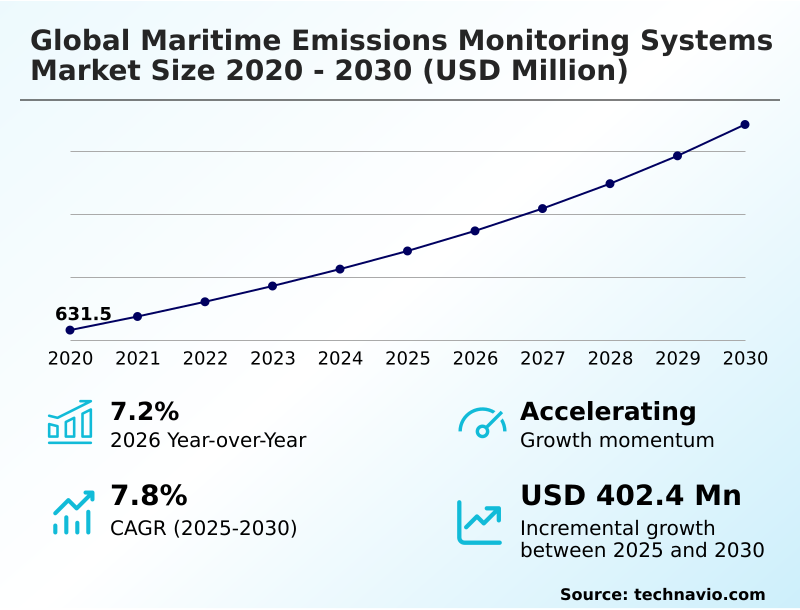
The Maritime Emissions Monitoring Systems Market size was valued at USD 883.3 million in 2025 growing at a CAGR of 7.8% during the forecast period 2026-2030.

APAC accounts for 35.1% of incremental growth during the forecast period. The Hardware segment by Component was valued at USD 499.5 million in 2024, while the Continuous emissions monitoring systems segment holds the largest revenue share by Technology.

The market is projected to grow by USD 654.2 million from 2020 to 2030, with USD 402.4 million of the growth expected during the forecast period of 2025 to 2030.
Get Key Insights on Market Forecast (PDF) Request Free Sample

Maritime Emissions Monitoring Systems Market Overview

The maritime emissions monitoring systems market is expanding as regulatory mandates and ESG pressures converge, making emissions data a critical operational asset. With APAC poised to contribute significantly to incremental growth, the industry is shifting from compliance as a cost center to data-driven optimization. A tangible example is a global container line retrofitting its fleet with continuous emissions monitoring system technology. By integrating Coriolis flow meter data with gas analyzer outputs, the company achieves precise fuel consumption monitoring. This real-time data acquisition feeds into a vessel performance optimization platform, which uses digital twin simulation to recommend voyage adjustments. This not only ensures nitrogen oxide compliance with MARPOL Annex VI but also improves the vessel's carbon intensity indicator rating, unlocking preferential financing under the Poseidon Principles and satisfying shipper demands for scope 3 emissions reporting. This illustrates the move from basic monitoring to a holistic environmental performance strategy.

Drivers, Trends, and Challenges in the Maritime Emissions Monitoring Systems Market

Navigating the complexities of maritime decarbonization requires a multi-faceted approach to emissions monitoring. For vessels equipped with scrubbers, CEMS integration for marine exhaust scrubbers is non-negotiable for proving compliance with MARPOL Annex VI sulfur oxide limits.

In contrast, the adoption of transitional fuels necessitates sophisticated software solutions, where PEMS for dual-fuel engine NOx prediction offers a less hardware-intensive method for ensuring nitrogen oxide compliance. A critical operational challenge is maintaining data integrity through routine onboard sensor calibration for SOx compliance, a process that is increasingly being streamlined via remote verification services.

The most significant strategic shift involves leveraging this data for efficiency gains; through AI-driven fuel optimization with emission data, operators can reduce fuel consumption by several percentage points compared to conventional noon-reporting methods.

Finally, from a regulatory standpoint, remote sensing for ECA enforcement, using technologies like airborne "sniffer" drones, acts as an external check, compelling the industry to maintain accurate onboard systems and ensuring a level playing field.
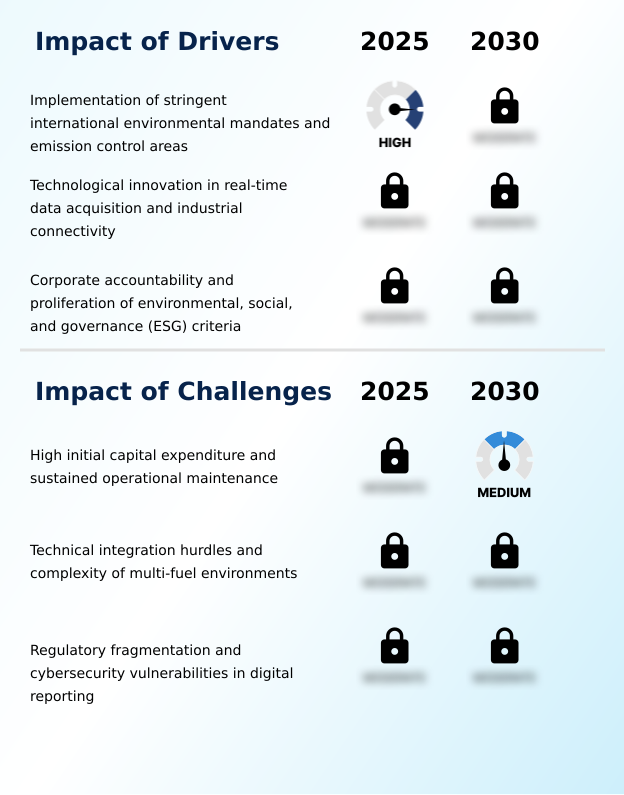
Primary Growth Driver: The implementation of stringent international environmental mandates and the designation of new emission control areas are the key drivers for market growth.

Market growth is fundamentally propelled by a stringent global regulatory framework and increasing pressure for corporate accountability.

The designation of new Emission Control Areas (ECAs) mandates adherence to strict sulfur oxide limits and drives investment in continuous emissions monitoring system technology.

Beyond compliance, the proliferation of environmental social and governance criteria pressures operators to provide verifiable data for scope 3 emissions reporting.

This market-based driver makes the installation of systems for fuel consumption monitoring and ensuring nitrogen oxide compliance a strategic financial advantage, especially as financiers link loan terms to environmental performance through frameworks like the Poseidon Principles.

These factors create a mandatory market for technologies enabling transparent and automated high-frequency data reporting.

Emerging Market Trend: The integration of AI and machine learning for predictive emissions analysis represents a significant upcoming market trend. This evolution is shifting the industry from reactive data logging to proactive environmental management.

Market evolution is characterized by the integration of AI and machine learning, transitioning from reactive data logging to proactive environmental management. A key trend is the use of a predictive emissions monitoring system to anticipate compliance breaches and optimize the carbon intensity indicator rating. For vessels with a dual-fuel engine, advanced algorithms now enable more precise methane slip measurement.

This software-defined approach is also expanding to include a predictive maintenance module, reducing operational costs by optimizing sensor calibration schedules. The development of digital twin simulation allows operators to model voyage emissions under various conditions, enhancing vessel performance optimization and supporting long-term decarbonization strategies in alignment with the IMO's GHG reduction targets.

Key Industry Challenge: The high initial capital expenditure required for system procurement, coupled with the costs of sustained operational maintenance, presents a key challenge affecting industry growth.

Key market challenges center on technical complexity and cost. The high initial capital expenditure for a high-precision continuous emissions monitoring system is a significant barrier, especially for smaller operators. Integrating diverse sensor arrays, including a specialized electrochemical sensor for new fuels like ammonia, into legacy vessel systems presents considerable technical hurdles.

The transition to a multi-fuel future complicates the landscape, as the chemical composition of exhaust from a dual-fuel engine is more difficult to measure accurately.

Furthermore, the increasing reliance on digital reporting platforms introduces significant cybersecurity risks, demanding robust data encryption and blockchain-secured monitoring to prevent tampering, especially when data is tied to carbon pricing mechanisms under regulations like the EU ETS.

Explore Full Market Dynamics Analysis Request Free Sample

Maritime Emissions Monitoring Systems Market Segmentation

The maritime emissions monitoring systems industry research report provides comprehensive data including region-wise segment analysis, with forecasts and analysis for the period 2026-2030, as well as historical data from 2020-2024 for the following segments.

Market Segment by Component
  • Hardware
  • Software
  • Services
Market Segment by Technology
  • Continuous emissions monitoring systems
  • Predictive emissions monitoring systems
  • Remote sensing systems
  • Others
Market Segment by End-user
  • Commercial ships
  • Passenger ships
  • Others
Market Segment by Geography
Europe
Germany, UK, France, Italy, Spain
APAC
China, Japan, South Korea, India, Australia, Indonesia
North America
US, Canada, Mexico
South America
Brazil, Argentina, Chile
Middle East and Africa
UAE, Saudi Arabia, South Africa, Egypt, Turkey

Component Segment Analysis

The hardware segment is estimated to witness significant growth during the forecast period.

The hardware segment, which accounted for a majority of the market in 2025, includes the essential physical instruments for emissions verification.

Procurement decisions are driven by the need for robust components like a gas analyzer and sample conditioning unit that can withstand harsh marine environments.

The adoption of an exhaust gas cleaning system or a selective catalytic reduction unit necessitates corresponding hardware for compliance validation. For instance, non-dispersive infrared technology is frequently employed for CO2 and SOx analysis.

The reliability of each particulate matter sensor and multi-gas sampling probe is critical, as equipment failure directly impacts a vessel's ability to operate within regulated emission control areas established under MARPOL Annex VI.
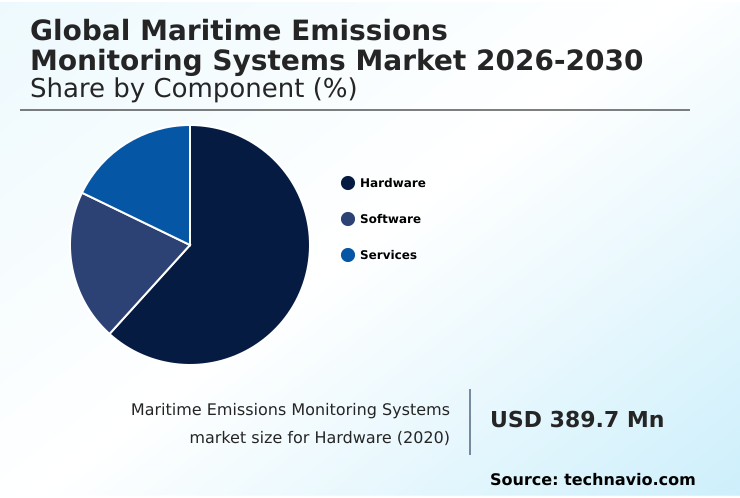
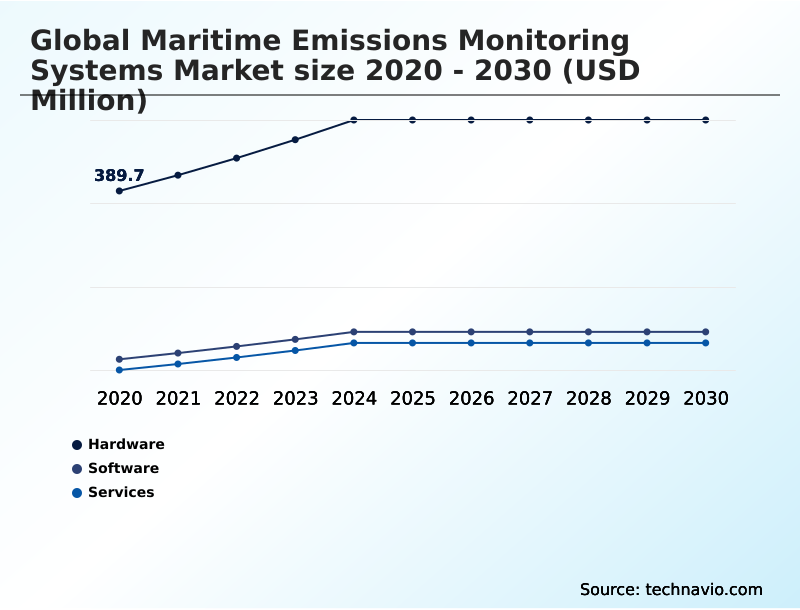
The Hardware segment was valued at USD 499.5 million in 2024 and showed a gradual increase during the forecast period.
Maritime Emissions Monitoring Systems Market by Region: APAC Leads with 35.1% Growth Share

APAC is estimated to contribute 35.1% to the growth of the global market during the forecast period.
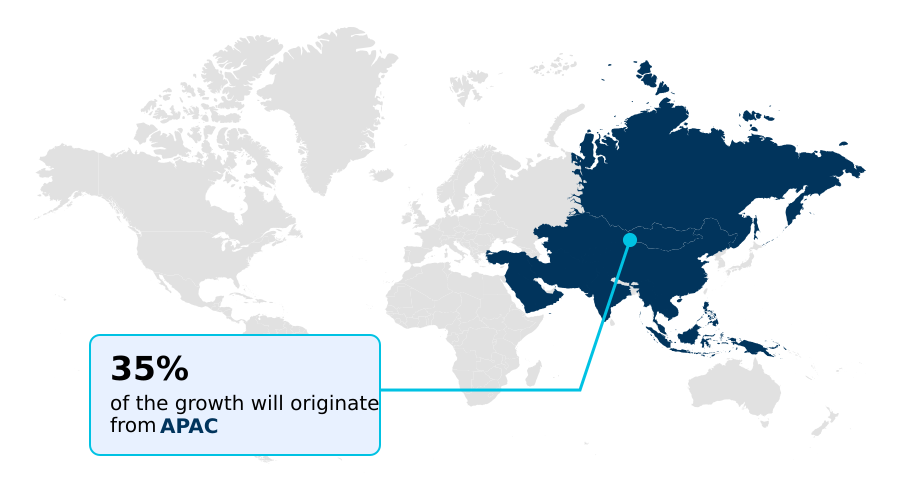
The geographic landscape is shaped by regional regulatory intensity, with Europe and APAC being key markets. APAC, contributing over 35% of incremental growth, is driven by its shipbuilding dominance and the implementation of domestic emission control areas in China.

In this region, new build specifications frequently include integrated systems for methane slip measurement from the outset.

Europe remains a regulatory vanguard, where the EU Emissions Trading System and FuelEU Maritime regulation compel investment in technologies enabling automated high-frequency data sharing.

North America's market, representing about 21% of the opportunity, focuses on green shipping corridors and local air quality, driving demand for advanced particulate matter sensor technology and systems that provide a remote verification service to satisfy both port authorities and ESG-focused cargo owners.

Customer Landscape Analysis for the Maritime Emissions Monitoring Systems Market

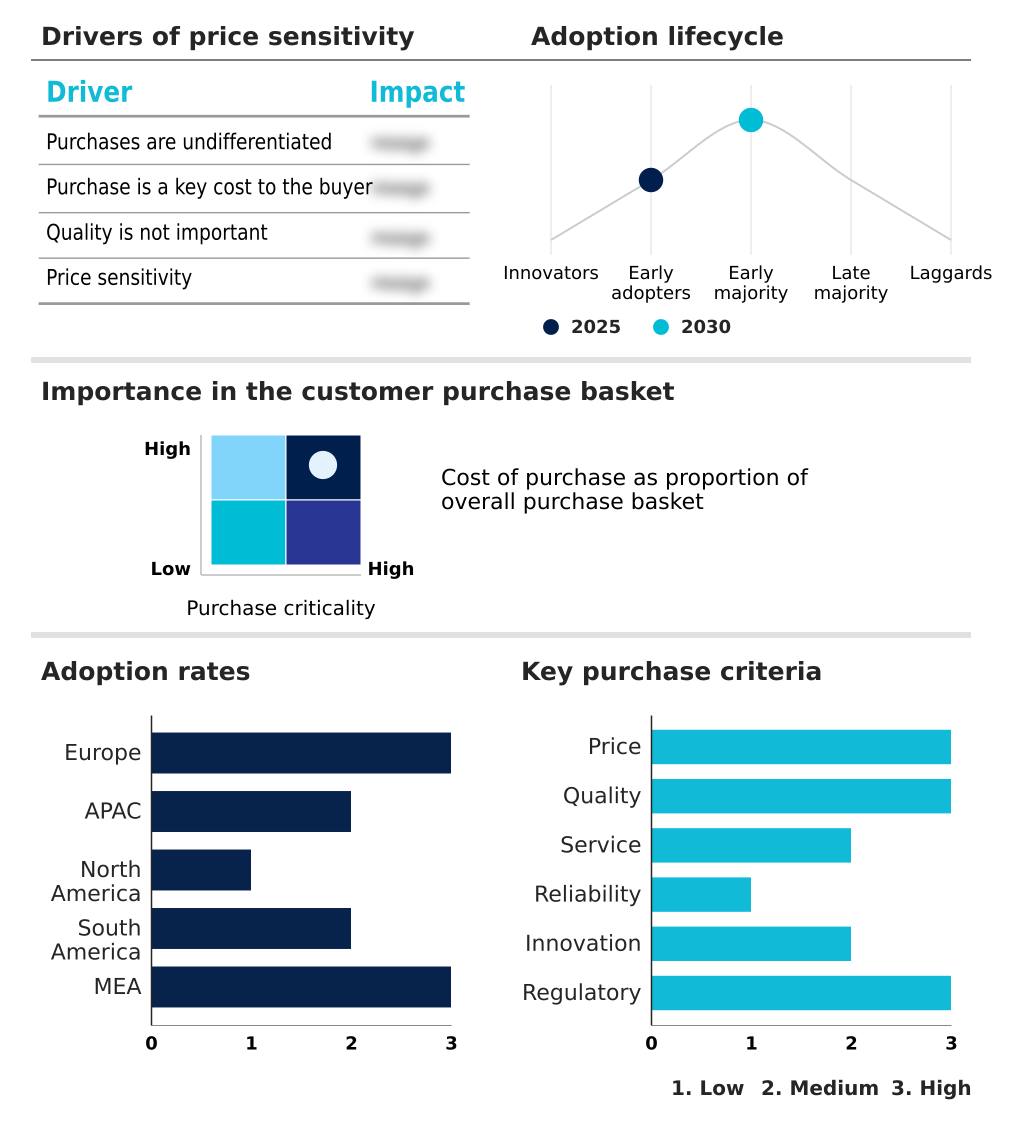
The maritime emissions monitoring systems market forecasting report includes the adoption lifecycle of the market, covering from the innovator’s stage to the laggard’s stage. It focuses on adoption rates in different regions based on penetration. Furthermore, the maritime emissions monitoring systems market report also includes key purchase criteria and drivers of price sensitivity to help companies evaluate and develop their market growth analysis strategies.
Competitive Landscape of the Maritime Emissions Monitoring Systems Market

Companies are implementing various strategies, such as strategic alliances, partnerships, mergers and acquisitions, geographical expansion, and product/service launches, to enhance their presence in the maritime emissions monitoring systems market industry.

ABB Ltd. - Provides maritime emissions monitoring systems for real-time gas pollutant measurement, supporting decarbonization and regulatory compliance.

The industry research and growth report includes detailed analyses of the competitive landscape of the market and information about key companies, including:

  • ABB Ltd.
  • Danfoss AS
  • DNV Group AS
  • Emerson Electric Co.
  • ENVEA
  • Fuji Electric Co. Ltd.
  • Honeywell International Inc.
  • HORIBA Ltd.
  • Kongsberg Gruppen ASA
  • KROHNE Group
  • Mettler Toledo Inc.
  • Parker Hannifin Corp.
  • Rockwell Automation Inc.
  • Servomex Group Ltd.
  • SICK AG
  • Siemens AG
  • Teledyne Technologies Inc.
  • Testo SE and Co. KGaA
  • Vaisala Oyj
  • Wartsila Corp.

Qualitative and quantitative analysis of companies has been conducted to help clients understand the wider business environment as well as the strengths and weaknesses of key industry players. Data is qualitatively analyzed to categorize companies as pure play, category-focused, industry-focused, and diversified; it is quantitatively analyzed to categorize companies as dominant, leading, strong, tentative, and weak.

Recent Developments in the Maritime Emissions Monitoring Systems Market

  • In August, 2024, HMM announced the completion of an extensive sensor installation program across its container fleet to provide real-time emissions data to its global customers, prompted by demand from large retail and industrial clients.
  • In March, 2025, ABB Marine and Ports launched an enhanced digital emissions suite that utilizes advanced sensors for real-time carbon dioxide and methane slip measurements with unprecedented accuracy.
  • In April, 2025, the International Maritime Organization approved new guidelines during the eighty-third session of the Marine Environment Protection Committee that specifically target methane slip from gas-fueled engines.
  • In May, 2025, the European Commission implemented a new digital registry requiring all data for the MRV system to be timestamped and encrypted using distributed ledger technology.

Research Analyst Overview: Maritime Emissions Monitoring Systems Market

The maritime emissions monitoring systems market is undergoing a fundamental shift from a hardware-centric compliance function to a software-driven strategic asset. While the hardware segment, including the core gas analyzer and sample conditioning unit, still represents the largest portion of the market, the true value is migrating to data analytics.

Boardroom decisions now hinge on optimizing a vessel's carbon intensity indicator rating, a metric directly influenced by data from these systems. A key development is the use of laser absorption spectroscopy in new optical sensor designs for precise methane slip measurement on vessels with a dual-fuel engine. This technology is critical for operators investing in LNG as a transitional fuel.

The move towards alternative fuels also drives demand for advanced sensor technologies like the electrochemical sensor for ammonia and robust particulate matter sensor technology.

The ability to integrate and interpret data from a continuous emissions monitoring system or a predictive emissions monitoring system is now a primary determinant of a fleet's commercial viability and its ability to meet tightening IMO 2023 GHG Strategy targets.

Dive into Technavio’s robust research methodology, blending expert interviews, extensive data synthesis, and validated models for unparalleled Maritime Emissions Monitoring Systems Market insights. See full methodology.

Request Free Sample

Market Scope
Page number 309
Base year 2025
Historic period 2020-2024
Forecast period 2026-2030
Growth momentum & CAGR Accelerate at a CAGR of 7.8%
Market growth 2026-2030 USD 402.4 million
Market structure Fragmented
YoY growth 2025-2026(%) 7.2%
Key countries Germany, UK, France, Italy, Spain, Russia, China, Japan, South Korea, India, Australia, Indonesia, US, Canada, Mexico, Brazil, Argentina, Chile, UAE, Saudi Arabia, South Africa, Egypt and Turkey
Competitive landscape Leading Companies, Market Positioning of Companies, Competitive Strategies, and Industry Risks

Maritime Emissions Monitoring Systems Market: Key Questions Answered in This Report

  • What is the expected growth of the Maritime Emissions Monitoring Systems Market between 2026 and 2030?

    • The Maritime Emissions Monitoring Systems Market is expected to grow by USD 402.4 million during 2026-2030, registering a CAGR of 7.8%. Year-over-year growth in 2026 is estimated at 7.2%%. This acceleration is shaped by implementation of stringent international environmental mandates and emission control areas, which is intensifying demand across multiple end-use verticals covered in the report.

  • What segmentation does the market report cover?

    • The report is segmented by Component (Hardware, Software, and Services), Technology (Continuous emissions monitoring systems, Predictive emissions monitoring systems, Remote sensing systems, and Others), End-user (Commercial ships, Passenger ships, and Others) and Geography (Europe, APAC, North America, South America, Middle East and Africa). Among these, the Hardware segment is estimated to witness significant growth during the forecast period, driven by rising adoption across key application areas. Each segment includes detailed qualitative and quantitative analysis, along with historical data from 2020-2024 and forecasts through 2030 with year-over-year growth rates.

  • Which regions are analyzed in the report?

    • The report covers Europe, APAC, North America, South America and Middle East and Africa. APAC is estimated to contribute 35.1% to market growth during the forecast period. Country-level analysis includes Germany, UK, France, Italy, Spain, Russia, China, Japan, South Korea, India, Australia, Indonesia, US, Canada, Mexico, Brazil, Argentina, Chile, UAE, Saudi Arabia, South Africa, Egypt and Turkey, with dedicated market size tables and year-over-year growth for each.

  • What are the key growth drivers and market challenges?

    • The primary driver is implementation of stringent international environmental mandates and emission control areas, which is accelerating investment and industry demand. The main challenge is high initial capital expenditure and sustained operational maintenance, creating operational barriers for key market participants. The report quantifies the impact of each driver and challenge across 2026 and 2030 with comparative analysis.

  • Who are the major players in the Maritime Emissions Monitoring Systems Market?

    • Key vendors include ABB Ltd., Danfoss AS, DNV Group AS, Emerson Electric Co., ENVEA, Fuji Electric Co. Ltd., Honeywell International Inc., HORIBA Ltd., Kongsberg Gruppen ASA, KROHNE Group, Mettler Toledo Inc., Parker Hannifin Corp., Rockwell Automation Inc., Servomex Group Ltd., SICK AG, Siemens AG, Teledyne Technologies Inc., Testo SE and Co. KGaA, Vaisala Oyj and Wartsila Corp.. The report provides qualitative and quantitative analysis categorizing companies as dominant, leading, strong, tentative, and weak based on their market positioning. Company profiles include business segment analysis, SWOT assessment, key offerings, and recent strategic developments.

Maritime Emissions Monitoring Systems Market Research Insights

Market dynamics are increasingly shaped by the need for verifiable data to meet both regulatory and commercial demands. While North America accounts for over 20% of the market, driven by strict Emission Control Area enforcement of sulfur oxide limits, the pressure from environmental social and governance criteria is a global force.

Charterers and financiers now demand access to granular vessel data, making systems that provide a remote verification service and automated high-frequency data essential for securing contracts. For instance, operators of vessels with a dual-fuel engine must provide accurate methane slip measurement data, a task requiring advanced sensor technology.

This shift transforms monitoring from a simple compliance tool into a key element of vessel performance optimization and a prerequisite for accessing green finance and premium cargo.

We can help! Our analysts can customize this maritime emissions monitoring systems market research report to meet your requirements.

Get in touch

1. Executive Summary

1.1 Market overview

Executive Summary - Chart on Market Overview
Executive Summary - Data Table on Market Overview
Executive Summary - Chart on Global Market Characteristics
Executive Summary - Chart on Market by Geography
Executive Summary - Chart on Market Segmentation by Component
Executive Summary - Chart on Market Segmentation by Technology
Executive Summary - Chart on Market Segmentation by End-user
Executive Summary - Chart on Incremental Growth
Executive Summary - Data Table on Incremental Growth
Executive Summary - Chart on Company Market Positioning

2. Technavio Analysis

2.1 Analysis of price sensitivity, lifecycle, customer purchase basket, adoption rates, and purchase criteria

2.2 Criticality of inputs and Factors of differentiation

Chart on Overview on criticality of inputs and factors of differentiation

2.3 Factors of disruption

Chart on Overview on factors of disruption

2.4 Impact of drivers and challenges

Chart on Impact of drivers and challenges in 2025 and 2030

3. Market Landscape

3.1 Market ecosystem

Chart on Parent Market
Data Table on - Parent Market

3.2 Market characteristics

Chart on Market characteristics analysis

3.3 Value chain analysis

Chart on Value chain analysis

4. Market Sizing

4.1 Market definition

Data Table on Offerings of companies included in the market definition

4.2 Market segment analysis

Market segments

4.3 Market size 2025

4.4 Market outlook: Forecast for 2025-2030

Chart on Global - Market size and forecast 2025-2030 ($ million)
Data Table on Global - Market size and forecast 2025-2030 ($ million)
Chart on Global Market: Year-over-year growth 2025-2030 (%)
Data Table on Global Market: Year-over-year growth 2025-2030 (%)

5. Historic Market Size

5.1 Global Maritime Emissions Monitoring Systems Market 2020 - 2024

Historic Market Size - Data Table on Global Maritime Emissions Monitoring Systems Market 2020 - 2024 ($ million)

5.2 Component segment analysis 2020 - 2024

Historic Market Size - Component Segment 2020 - 2024 ($ million)

5.3 Technology segment analysis 2020 - 2024

Historic Market Size - Technology Segment 2020 - 2024 ($ million)

5.4 End-user segment analysis 2020 - 2024

Historic Market Size - End-user Segment 2020 - 2024 ($ million)

5.5 Geography segment analysis 2020 - 2024

Historic Market Size - Geography Segment 2020 - 2024 ($ million)

5.6 Country segment analysis 2020 - 2024

Historic Market Size - Country Segment 2020 - 2024 ($ million)

6. Qualitative Analysis

6.1 The AI impact on global maritime emissions monitoring systems market

7. Five Forces Analysis

7.1 Five forces summary

Five forces analysis - Comparison between 2025 and 2030

7.2 Bargaining power of buyers

Bargaining power of buyers - Impact of key factors 2025 and 2030

7.3 Bargaining power of suppliers

Bargaining power of suppliers - Impact of key factors in 2025 and 2030

7.4 Threat of new entrants

Threat of new entrants - Impact of key factors in 2025 and 2030

7.5 Threat of substitutes

Threat of substitutes - Impact of key factors in 2025 and 2030

7.6 Threat of rivalry

Threat of rivalry - Impact of key factors in 2025 and 2030

7.7 Market condition

Chart on Market condition - Five forces 2025 and 2030

8. Market Segmentation by Component

8.1 Market segments

Chart on Component - Market share 2025-2030 (%)
Data Table on Component - Market share 2025-2030 (%)

8.2 Comparison by Component

Chart on Comparison by Component
Data Table on Comparison by Component

8.3 Hardware - Market size and forecast 2025-2030

Chart on Hardware - Market size and forecast 2025-2030 ($ million)
Data Table on Hardware - Market size and forecast 2025-2030 ($ million)
Chart on Hardware - Year-over-year growth 2025-2030 (%)
Data Table on Hardware - Year-over-year growth 2025-2030 (%)

8.4 Software - Market size and forecast 2025-2030

Chart on Software - Market size and forecast 2025-2030 ($ million)
Data Table on Software - Market size and forecast 2025-2030 ($ million)
Chart on Software - Year-over-year growth 2025-2030 (%)
Data Table on Software - Year-over-year growth 2025-2030 (%)

8.5 Services - Market size and forecast 2025-2030

Chart on Services - Market size and forecast 2025-2030 ($ million)
Data Table on Services - Market size and forecast 2025-2030 ($ million)
Chart on Services - Year-over-year growth 2025-2030 (%)
Data Table on Services - Year-over-year growth 2025-2030 (%)

8.6 Market opportunity by Component

Market opportunity by Component ($ million)
Data Table on Market opportunity by Component ($ million)

9. Market Segmentation by Technology

9.1 Market segments

Chart on Technology - Market share 2025-2030 (%)
Data Table on Technology - Market share 2025-2030 (%)

9.2 Comparison by Technology

Chart on Comparison by Technology
Data Table on Comparison by Technology

9.3 Continuous emissions monitoring systems - Market size and forecast 2025-2030

Chart on Continuous emissions monitoring systems - Market size and forecast 2025-2030 ($ million)
Data Table on Continuous emissions monitoring systems - Market size and forecast 2025-2030 ($ million)
Chart on Continuous emissions monitoring systems - Year-over-year growth 2025-2030 (%)
Data Table on Continuous emissions monitoring systems - Year-over-year growth 2025-2030 (%)

9.4 Predictive emissions monitoring systems - Market size and forecast 2025-2030

Chart on Predictive emissions monitoring systems - Market size and forecast 2025-2030 ($ million)
Data Table on Predictive emissions monitoring systems - Market size and forecast 2025-2030 ($ million)
Chart on Predictive emissions monitoring systems - Year-over-year growth 2025-2030 (%)
Data Table on Predictive emissions monitoring systems - Year-over-year growth 2025-2030 (%)

9.5 Remote sensing systems - Market size and forecast 2025-2030

Chart on Remote sensing systems - Market size and forecast 2025-2030 ($ million)
Data Table on Remote sensing systems - Market size and forecast 2025-2030 ($ million)
Chart on Remote sensing systems - Year-over-year growth 2025-2030 (%)
Data Table on Remote sensing systems - Year-over-year growth 2025-2030 (%)

9.6 Others - Market size and forecast 2025-2030

Chart on Others - Market size and forecast 2025-2030 ($ million)
Data Table on Others - Market size and forecast 2025-2030 ($ million)
Chart on Others - Year-over-year growth 2025-2030 (%)
Data Table on Others - Year-over-year growth 2025-2030 (%)

9.7 Market opportunity by Technology

Market opportunity by Technology ($ million)
Data Table on Market opportunity by Technology ($ million)

10. Market Segmentation by End-user

10.1 Market segments

Chart on End-user - Market share 2025-2030 (%)
Data Table on End-user - Market share 2025-2030 (%)

10.2 Comparison by End-user

Chart on Comparison by End-user
Data Table on Comparison by End-user

10.3 Commercial ships - Market size and forecast 2025-2030

Chart on Commercial ships - Market size and forecast 2025-2030 ($ million)
Data Table on Commercial ships - Market size and forecast 2025-2030 ($ million)
Chart on Commercial ships - Year-over-year growth 2025-2030 (%)
Data Table on Commercial ships - Year-over-year growth 2025-2030 (%)

10.4 Passenger ships - Market size and forecast 2025-2030

Chart on Passenger ships - Market size and forecast 2025-2030 ($ million)
Data Table on Passenger ships - Market size and forecast 2025-2030 ($ million)
Chart on Passenger ships - Year-over-year growth 2025-2030 (%)
Data Table on Passenger ships - Year-over-year growth 2025-2030 (%)

10.5 Others - Market size and forecast 2025-2030

Chart on Others - Market size and forecast 2025-2030 ($ million)
Data Table on Others - Market size and forecast 2025-2030 ($ million)
Chart on Others - Year-over-year growth 2025-2030 (%)
Data Table on Others - Year-over-year growth 2025-2030 (%)

10.6 Market opportunity by End-user

Market opportunity by End-user ($ million)
Data Table on Market opportunity by End-user ($ million)

11. Customer Landscape

11.1 Customer landscape overview

Analysis of price sensitivity, lifecycle, customer purchase basket, adoption rates, and purchase criteria

12. Geographic Landscape

12.1 Geographic segmentation

Chart on Market share by geography 2025-2030 (%)
Data Table on Market share by geography 2025-2030 (%)

12.2 Geographic comparison

Chart on Geographic comparison
Data Table on Geographic comparison

12.3 Europe - Market size and forecast 2025-2030

Chart on Europe - Market size and forecast 2025-2030 ($ million)
Data Table on Europe - Market size and forecast 2025-2030 ($ million)
Chart on Europe - Year-over-year growth 2025-2030 (%)
Data Table on Europe - Year-over-year growth 2025-2030 (%)
Chart on Regional Comparison - Europe
Data Table on Regional Comparison - Europe

12.3.1 Germany - Market size and forecast 2025-2030

Chart on Germany - Market size and forecast 2025-2030 ($ million)
Data Table on Germany - Market size and forecast 2025-2030 ($ million)
Chart on Germany - Year-over-year growth 2025-2030 (%)
Data Table on Germany - Year-over-year growth 2025-2030 (%)

12.3.2 UK - Market size and forecast 2025-2030

Chart on UK - Market size and forecast 2025-2030 ($ million)
Data Table on UK - Market size and forecast 2025-2030 ($ million)
Chart on UK - Year-over-year growth 2025-2030 (%)
Data Table on UK - Year-over-year growth 2025-2030 (%)

12.3.3 France - Market size and forecast 2025-2030

Chart on France - Market size and forecast 2025-2030 ($ million)
Data Table on France - Market size and forecast 2025-2030 ($ million)
Chart on France - Year-over-year growth 2025-2030 (%)
Data Table on France - Year-over-year growth 2025-2030 (%)

12.3.4 Italy - Market size and forecast 2025-2030

Chart on Italy - Market size and forecast 2025-2030 ($ million)
Data Table on Italy - Market size and forecast 2025-2030 ($ million)
Chart on Italy - Year-over-year growth 2025-2030 (%)
Data Table on Italy - Year-over-year growth 2025-2030 (%)

12.3.5 Spain - Market size and forecast 2025-2030

Chart on Spain - Market size and forecast 2025-2030 ($ million)
Data Table on Spain - Market size and forecast 2025-2030 ($ million)
Chart on Spain - Year-over-year growth 2025-2030 (%)
Data Table on Spain - Year-over-year growth 2025-2030 (%)

12.3.6 Russia - Market size and forecast 2025-2030

Chart on Russia - Market size and forecast 2025-2030 ($ million)
Data Table on Russia - Market size and forecast 2025-2030 ($ million)
Chart on Russia - Year-over-year growth 2025-2030 (%)
Data Table on Russia - Year-over-year growth 2025-2030 (%)

12.4 APAC - Market size and forecast 2025-2030

Chart on APAC - Market size and forecast 2025-2030 ($ million)
Data Table on APAC - Market size and forecast 2025-2030 ($ million)
Chart on APAC - Year-over-year growth 2025-2030 (%)
Data Table on APAC - Year-over-year growth 2025-2030 (%)
Chart on Regional Comparison - APAC
Data Table on Regional Comparison - APAC

12.4.1 China - Market size and forecast 2025-2030

Chart on China - Market size and forecast 2025-2030 ($ million)
Data Table on China - Market size and forecast 2025-2030 ($ million)
Chart on China - Year-over-year growth 2025-2030 (%)
Data Table on China - Year-over-year growth 2025-2030 (%)

12.4.2 Japan - Market size and forecast 2025-2030

Chart on Japan - Market size and forecast 2025-2030 ($ million)
Data Table on Japan - Market size and forecast 2025-2030 ($ million)
Chart on Japan - Year-over-year growth 2025-2030 (%)
Data Table on Japan - Year-over-year growth 2025-2030 (%)

12.4.3 South Korea - Market size and forecast 2025-2030

Chart on South Korea - Market size and forecast 2025-2030 ($ million)
Data Table on South Korea - Market size and forecast 2025-2030 ($ million)
Chart on South Korea - Year-over-year growth 2025-2030 (%)
Data Table on South Korea - Year-over-year growth 2025-2030 (%)

12.4.4 India - Market size and forecast 2025-2030

Chart on India - Market size and forecast 2025-2030 ($ million)
Data Table on India - Market size and forecast 2025-2030 ($ million)
Chart on India - Year-over-year growth 2025-2030 (%)
Data Table on India - Year-over-year growth 2025-2030 (%)

12.4.5 Australia - Market size and forecast 2025-2030

Chart on Australia - Market size and forecast 2025-2030 ($ million)
Data Table on Australia - Market size and forecast 2025-2030 ($ million)
Chart on Australia - Year-over-year growth 2025-2030 (%)
Data Table on Australia - Year-over-year growth 2025-2030 (%)

12.4.6 Indonesia - Market size and forecast 2025-2030

Chart on Indonesia - Market size and forecast 2025-2030 ($ million)
Data Table on Indonesia - Market size and forecast 2025-2030 ($ million)
Chart on Indonesia - Year-over-year growth 2025-2030 (%)
Data Table on Indonesia - Year-over-year growth 2025-2030 (%)

12.5 North America - Market size and forecast 2025-2030

Chart on North America - Market size and forecast 2025-2030 ($ million)
Data Table on North America - Market size and forecast 2025-2030 ($ million)
Chart on North America - Year-over-year growth 2025-2030 (%)
Data Table on North America - Year-over-year growth 2025-2030 (%)
Chart on Regional Comparison - North America
Data Table on Regional Comparison - North America

12.5.1 US - Market size and forecast 2025-2030

Chart on US - Market size and forecast 2025-2030 ($ million)
Data Table on US - Market size and forecast 2025-2030 ($ million)
Chart on US - Year-over-year growth 2025-2030 (%)
Data Table on US - Year-over-year growth 2025-2030 (%)

12.5.2 Canada - Market size and forecast 2025-2030

Chart on Canada - Market size and forecast 2025-2030 ($ million)
Data Table on Canada - Market size and forecast 2025-2030 ($ million)
Chart on Canada - Year-over-year growth 2025-2030 (%)
Data Table on Canada - Year-over-year growth 2025-2030 (%)

12.5.3 Mexico - Market size and forecast 2025-2030

Chart on Mexico - Market size and forecast 2025-2030 ($ million)
Data Table on Mexico - Market size and forecast 2025-2030 ($ million)
Chart on Mexico - Year-over-year growth 2025-2030 (%)
Data Table on Mexico - Year-over-year growth 2025-2030 (%)

12.6 South America - Market size and forecast 2025-2030

Chart on South America - Market size and forecast 2025-2030 ($ million)
Data Table on South America - Market size and forecast 2025-2030 ($ million)
Chart on South America - Year-over-year growth 2025-2030 (%)
Data Table on South America - Year-over-year growth 2025-2030 (%)
Chart on Regional Comparison - South America
Data Table on Regional Comparison - South America

12.6.1 Brazil - Market size and forecast 2025-2030

Chart on Brazil - Market size and forecast 2025-2030 ($ million)
Data Table on Brazil - Market size and forecast 2025-2030 ($ million)
Chart on Brazil - Year-over-year growth 2025-2030 (%)
Data Table on Brazil - Year-over-year growth 2025-2030 (%)

12.6.2 Argentina - Market size and forecast 2025-2030

Chart on Argentina - Market size and forecast 2025-2030 ($ million)
Data Table on Argentina - Market size and forecast 2025-2030 ($ million)
Chart on Argentina - Year-over-year growth 2025-2030 (%)
Data Table on Argentina - Year-over-year growth 2025-2030 (%)

12.6.3 Chile - Market size and forecast 2025-2030

Chart on Chile - Market size and forecast 2025-2030 ($ million)
Data Table on Chile - Market size and forecast 2025-2030 ($ million)
Chart on Chile - Year-over-year growth 2025-2030 (%)
Data Table on Chile - Year-over-year growth 2025-2030 (%)

12.7 Middle East and Africa - Market size and forecast 2025-2030

Chart on Middle East and Africa - Market size and forecast 2025-2030 ($ million)
Data Table on Middle East and Africa - Market size and forecast 2025-2030 ($ million)
Chart on Middle East and Africa - Year-over-year growth 2025-2030 (%)
Data Table on Middle East and Africa - Year-over-year growth 2025-2030 (%)
Chart on Regional Comparison - Middle East and Africa
Data Table on Regional Comparison - Middle East and Africa

12.7.1 UAE - Market size and forecast 2025-2030

Chart on UAE - Market size and forecast 2025-2030 ($ million)
Data Table on UAE - Market size and forecast 2025-2030 ($ million)
Chart on UAE - Year-over-year growth 2025-2030 (%)
Data Table on UAE - Year-over-year growth 2025-2030 (%)

12.7.2 Saudi Arabia - Market size and forecast 2025-2030

Chart on Saudi Arabia - Market size and forecast 2025-2030 ($ million)
Data Table on Saudi Arabia - Market size and forecast 2025-2030 ($ million)
Chart on Saudi Arabia - Year-over-year growth 2025-2030 (%)
Data Table on Saudi Arabia - Year-over-year growth 2025-2030 (%)

12.7.3 South Africa - Market size and forecast 2025-2030

Chart on South Africa - Market size and forecast 2025-2030 ($ million)
Data Table on South Africa - Market size and forecast 2025-2030 ($ million)
Chart on South Africa - Year-over-year growth 2025-2030 (%)
Data Table on South Africa - Year-over-year growth 2025-2030 (%)

12.7.4 Egypt - Market size and forecast 2025-2030

Chart on Egypt - Market size and forecast 2025-2030 ($ million)
Data Table on Egypt - Market size and forecast 2025-2030 ($ million)
Chart on Egypt - Year-over-year growth 2025-2030 (%)
Data Table on Egypt - Year-over-year growth 2025-2030 (%)

12.7.5 Turkey - Market size and forecast 2025-2030

Chart on Turkey - Market size and forecast 2025-2030 ($ million)
Data Table on Turkey - Market size and forecast 2025-2030 ($ million)
Chart on Turkey - Year-over-year growth 2025-2030 (%)
Data Table on Turkey - Year-over-year growth 2025-2030 (%)

12.8 Market opportunity by geography

Market opportunity by geography ($ million)
Data Tables on Market opportunity by geography ($ million)

13. Drivers, Challenges, and Opportunity

13.1 Market drivers

Implementation of stringent international environmental mandates and emission control areas
Technological innovation in real-time data acquisition and industrial connectivity
Corporate accountability and proliferation of environmental, social, and governance (ESG) criteria

13.2 Market challenges

High initial capital expenditure and sustained operational maintenance
Technical integration hurdles and complexity of multi-fuel environments
Regulatory fragmentation and cybersecurity vulnerabilities in digital reporting

13.3 Impact of drivers and challenges

Impact of drivers and challenges in 2025 and 2030

13.4 Market opportunities

Integration of AI and machine learning for predictive emissions analysis
Expansion of Monitoring capabilities to address methane slip and alternative marine fuels
Adoption of blockchain and standardized digital twins for transparent regulatory reporting

14. Competitive Landscape

14.1 Overview

14.2

Overview on criticality of inputs and factors of differentiation

14.3 Landscape disruption

Overview on factors of disruption

14.4 Industry risks

Impact of key risks on business

15. Competitive Analysis

15.1 Companies profiled

Companies covered

15.2 Company ranking index

15.3 Market positioning of companies

Matrix on companies position and classification

15.4 ABB Ltd.

ABB Ltd. - Overview
ABB Ltd. - Business segments
ABB Ltd. - Key news
ABB Ltd. - Key offerings
ABB Ltd. - Segment focus
SWOT

15.5 Danfoss AS

Danfoss AS - Overview
Danfoss AS - Product / Service
Danfoss AS - Key offerings
SWOT

15.6 Emerson Electric Co.

Emerson Electric Co. - Overview
Emerson Electric Co. - Business segments
Emerson Electric Co. - Key news
Emerson Electric Co. - Key offerings
Emerson Electric Co. - Segment focus
SWOT

15.7 Fuji Electric Co. Ltd.

Fuji Electric Co. Ltd. - Overview
Fuji Electric Co. Ltd. - Business segments
Fuji Electric Co. Ltd. - Key offerings
Fuji Electric Co. Ltd. - Segment focus
SWOT

15.8 Honeywell International Inc.

Honeywell International Inc. - Overview
Honeywell International Inc. - Business segments
Honeywell International Inc. - Key news
Honeywell International Inc. - Key offerings
Honeywell International Inc. - Segment focus
SWOT

15.9 HORIBA Ltd.

HORIBA Ltd. - Overview
HORIBA Ltd. - Business segments
HORIBA Ltd. - Key news
HORIBA Ltd. - Key offerings
HORIBA Ltd. - Segment focus
SWOT

15.10 Kongsberg Gruppen ASA

Kongsberg Gruppen ASA - Overview
Kongsberg Gruppen ASA - Business segments
Kongsberg Gruppen ASA - Key offerings
Kongsberg Gruppen ASA - Segment focus
SWOT

15.11 KROHNE Group

KROHNE Group - Overview
KROHNE Group - Product / Service
KROHNE Group - Key offerings
SWOT

15.12 Mettler Toledo Inc.

Mettler Toledo Inc. - Overview
Mettler Toledo Inc. - Business segments
Mettler Toledo Inc. - Key offerings
Mettler Toledo Inc. - Segment focus
SWOT

15.13 Parker Hannifin Corp.

Parker Hannifin Corp. - Overview
Parker Hannifin Corp. - Business segments
Parker Hannifin Corp. - Key offerings
Parker Hannifin Corp. - Segment focus
SWOT

15.14 Rockwell Automation Inc.

Rockwell Automation Inc. - Overview
Rockwell Automation Inc. - Business segments
Rockwell Automation Inc. - Key news
Rockwell Automation Inc. - Key offerings
Rockwell Automation Inc. - Segment focus
SWOT

15.15 SICK AG

SICK AG - Overview
SICK AG - Product / Service
SICK AG - Key offerings
SWOT

15.16 Siemens AG

Siemens AG - Overview
Siemens AG - Business segments
Siemens AG - Key news
Siemens AG - Key offerings
Siemens AG - Segment focus
SWOT

15.17 Teledyne Technologies Inc.

Teledyne Technologies Inc. - Overview
Teledyne Technologies Inc. - Business segments
Teledyne Technologies Inc. - Key offerings
Teledyne Technologies Inc. - Segment focus
SWOT

15.18 Wartsila Corp.

Wartsila Corp. - Overview
Wartsila Corp. - Business segments
Wartsila Corp. - Key offerings
Wartsila Corp. - Segment focus
SWOT

16. Appendix

16.1 Scope of the report

Market definition
Objectives
Notes and caveats

16.2 Inclusions and exclusions checklist

Inclusions checklist
Exclusions checklist

16.3 Currency conversion rates for US$

16.4 Research methodology

16.5 Data procurement

Information sources

16.6 Data validation

16.7 Validation techniques employed for market sizing

16.8 Data synthesis

16.9 360 degree market analysis

16.10 List of abbreviations

Research Methodology

Technavio presents a detailed picture of the market by way of study, synthesis, and summation of data from multiple sources. The analysts have presented the various facets of the market with a particular focus on identifying the key industry influencers. The data thus presented is comprehensive, reliable, and the result of extensive research, both primary and secondary.

INFORMATION SOURCES

Primary sources

  • Manufacturers and suppliers
  • Channel partners
  • Industry experts
  • Strategic decision makers

Secondary sources

  • Industry journals and periodicals
  • Government data
  • Financial reports of key industry players
  • Historical data
  • Press releases

DATA ANALYSIS

Data Synthesis

  • Collation of data
  • Estimation of key figures
  • Analysis of derived insights

Data Validation

  • Triangulation with data models
  • Reference against proprietary databases
  • Corroboration with industry experts

REPORT WRITING

Qualitative

  • Market drivers
  • Market challenges
  • Market trends
  • Five forces analysis

Quantitative

  • Market size and forecast
  • Market segmentation
  • Geographical insights
  • Competitive landscape

Interested in this report?

Get your sample now to see our research methodology and insights!

Download Now

Frequently Asked Questions

Maritime Emissions Monitoring Systems market growth will increase by USD 402.4 million during 2026-2030.

The Maritime Emissions Monitoring Systems market is expected to grow at a CAGR of 7.8% during 2026-2030.

Maritime Emissions Monitoring Systems market is segmented by Component (Hardware, Software, Services) Technology (Continuous emissions monitoring systems, Predictive emissions monitoring systems, Remote sensing systems, Others) End-user (Commercial ships, Passenger ships, Others)

ABB Ltd., Danfoss AS, DNV Group AS, Emerson Electric Co., ENVEA, Fuji Electric Co. Ltd., Honeywell International Inc., HORIBA Ltd., Kongsberg Gruppen ASA, KROHNE Group, Mettler Toledo Inc., Parker Hannifin Corp., Rockwell Automation Inc., Servomex Group Ltd., SICK AG, Siemens AG, Teledyne Technologies Inc., Testo SE and Co. KGaA, Vaisala Oyj, Wartsila Corp. are a few of the key vendors in the Maritime Emissions Monitoring Systems market.

APAC will register the highest growth rate of 35.1% among the other regions. Therefore, the Maritime Emissions Monitoring Systems market in APAC is expected to garner significant business opportunities for the vendors during the forecast period.

Germany, UK, France, Italy, Spain, Russia, China, Japan, South Korea, India, Australia, Indonesia, US, Canada, Mexico, Brazil, Argentina, Chile, UAE, Saudi Arabia, South Africa, Egypt, Turkey

  • Implementation of stringent international environmental mandates and emission control areas is the driving factor this market.

The Maritime Emissions Monitoring Systems market vendors should focus on grabbing business opportunities from the Component segment as it accounted for the largest market share in the base year.
RIA - Research AI Assistant
Ask RIA