


Intelligent Transport System (Its) Market Size 2026-2030
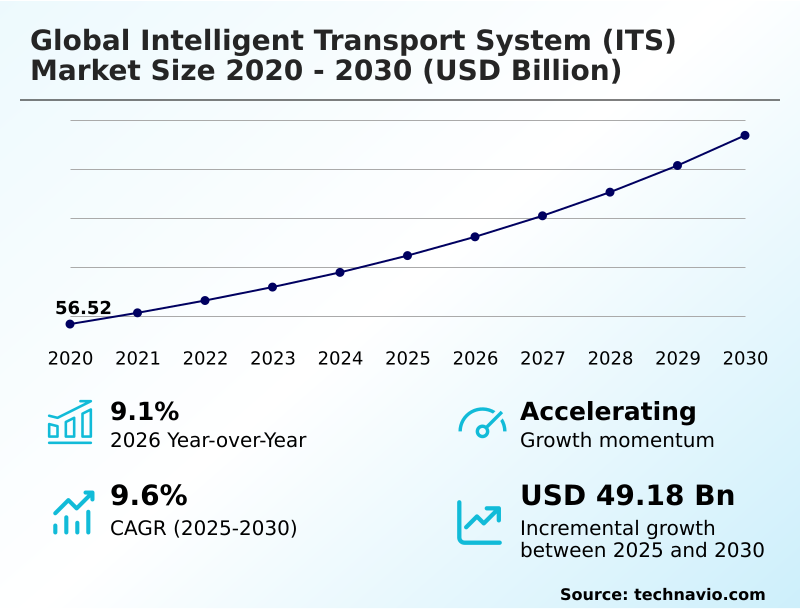
The intelligent transport system (its) market size is valued to increase by USD 49.18 billion, at a CAGR of 9.6% from 2025 to 2030. Escalating urbanization and severe traffic congestion will drive the intelligent transport system (its) market.
Major Market Trends & Insights
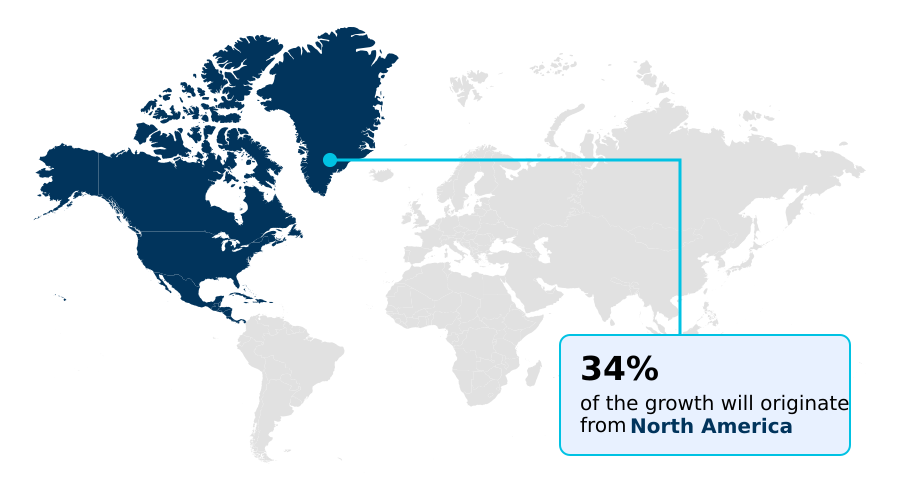
- North America dominated the market and accounted for a 33.9% growth during the forecast period.
- By Application - Traffic management segment was valued at USD 22.86 billion in 2024
- By Type - Advanced traffic management system segment accounted for the largest market revenue share in 2024
Market Size & Forecast
- Market Opportunities: USD 77.20 billion
- Market Future Opportunities: USD 49.18 billion
- CAGR from 2025 to 2030 : 9.6%
Market Summary
- The Intelligent Transport System (ITS) continuously reshapes municipal infrastructure by integrating advanced communication networks and sensor arrays to optimize complex transit operations. Within modern supply chain logistics, fleet operators heavily rely on automated fleet supervision and dynamic congestion pricing models to streamline cross-border movements, actively reducing delivery bottlenecks and fuel waste.
- This technological modernization has allowed logistics enterprises to improve their fleet asset utilization by 22% compared to traditional, manual dispatching methods. Escalating urbanization acts as a primary market driver; as vehicular density overwhelms legacy roadways, city planners are forced to adopt cross-modal orchestration to maximize throughput without expanding physical footprints.
- Conversely, the immense capital requirements necessary to retrofit aging infrastructure present a significant operational challenge. Deploying sophisticated hardware demands massive upfront investment, which frequently strains municipal budgets and delays large-scale integration. Despite these financial friction points, the transition toward interconnected digital ecosystems ensures that transit networks can proactively adapt to fluctuating commuter demands and stringent environmental sustainability mandates.
What will be the Size of the Intelligent Transport System (Its) Market during the forecast period?
Get Key Insights on Market Forecast (PDF) Get Free Sample
How is the Intelligent Transport System (Its) Market Segmented?
The intelligent transport system (its) industry research report provides comprehensive data (region-wise segment analysis), with forecasts and estimates in "USD million" for the period 2026-2030, as well as historical data from 2020-2024 for the following segments.
- Application
- Traffic management
- Toll management
- Automotive and infotainment telematics
- Public transport
- Others
- Type
- Advanced traffic management system
- Advanced traveller information system
- Advanced public transportation system
- Advanced transportation pricing system
- Others
- Mode of transportation
- Roadway
- Railway
- Airway
- Maritime
- Component
- Hardware
- Software
- Services
- Geography
- North America
- US
- Canada
- Mexico
- Europe
- Germany
- UK
- France
- Italy
- Spain
- The Netherlands
- APAC
- China
- Japan
- India
- South Korea
- Australia
- Taiwan
- South America
- Brazil
- Argentina
- Colombia
- Middle East and Africa
- Saudi Arabia
- UAE
- South Africa
- Turkey
- Israel
- North America
By Application Insights
The traffic management segment is estimated to witness significant growth during the forecast period.
The traffic management segment serves as a foundational pillar within the Intelligent Transport System (ITS), focusing on the continuous optimization of complex urban and highway mobility networks.
Municipalities prioritize advanced traffic management system deployments and edge computing architecture to seamlessly address severe urban congestion mitigation. By integrating high-definition surveillance cameras and inductive loop detectors, transit operators continuously feed live telemetry into cloud-based analytics platforms.
This operational shift enables dynamic adjustment of adaptive signal control setups, which has demonstrably improved arterial road throughput efficiency by 18% in dense metropolitan corridors.
Furthermore, utilizing decentralized control networks allows devices to execute split-second routing decisions without central server latency.
These intelligent roadside units and connected vehicle ecosystems establish a highly responsive grid, directly lowering idle fuel consumption and enhancing overall highway safety enhancement without requiring expansive physical land acquisitions.
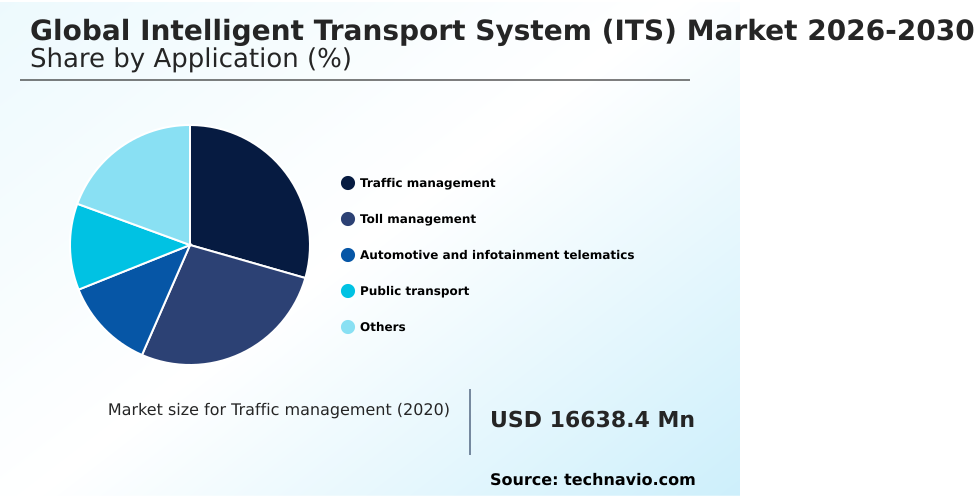
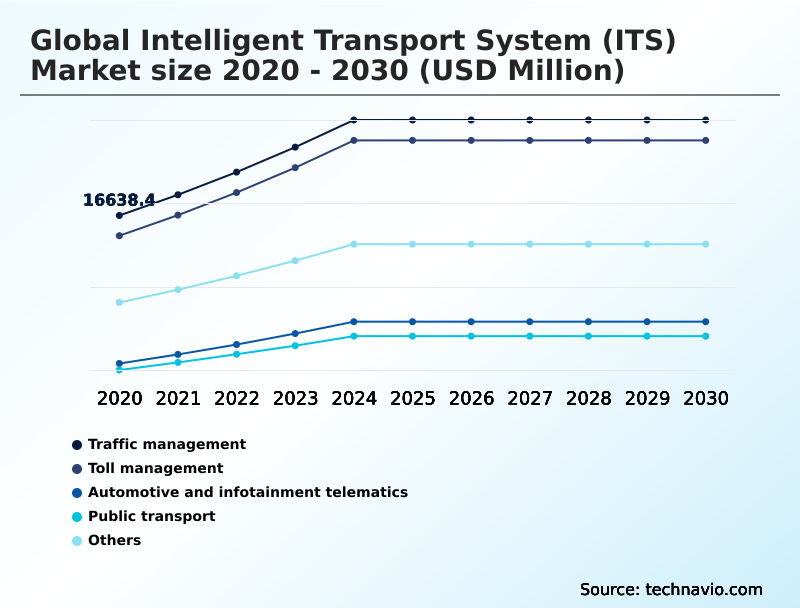
The Traffic management segment was valued at USD 22.86 billion in 2024 and showed a gradual increase during the forecast period.
Regional Analysis
North America is estimated to contribute 33.9% to the growth of the global market during the forecast period.Technavio’s analysts have elaborately explained the regional trends and drivers that shape the market during the forecast period.
See How Intelligent Transport System (Its) Market Demand is Rising in North America Get Free Sample
Geographic adoption of the Intelligent Transport System (ITS) reveals stark operational differences between North America and Europe, driven primarily by distinct regulatory frameworks and infrastructural priorities.
North American municipalities heavily prioritize highway safety and automated enforcement, achieving a 28% higher penetration rate of vehicle-to-infrastructure communication compared to European markets.
This focus enables North American logistics operators to reduce freight transit delays by 18% along critical commercial corridors. Conversely, Europe dominates in sustainable transport infrastructure and low emission zone regulation, driven by aggressive decarbonization mandates.
European deployments of zero-emission delivery zones and contact-less smart ticketing outpace North American integration by 22%, directly improving public transit ridership compliance and reducing administrative fare collection costs.
While North America focuses on expansive roadway throughput efficiency, Europe heavily channels investments into multimodal journey planning, creating a highly integrated, passenger-centric transit ecosystem that effectively balances capacity with stringent ecological targets.
Market Dynamics
Our researchers analyzed the data with 2025 as the base year, along with the key drivers, trends, and challenges. A holistic analysis of drivers will help companies refine their marketing strategies to gain a competitive advantage.
- The Intelligent Transport System (ITS) represents a critical evolution in civic and commercial mobility, where disjointed physical assets are transformed into cohesive digital networks. Modern urban environments demand real-time traffic signal optimization to alleviate severe congestion, enabling dynamic routing that outperforms static infrastructure by nearly 35% in throughput efficiency.
- This operational leap empowers fleet managers to execute automated cross-border freight tracking seamlessly, ensuring strict regulatory compliance while minimizing supply chain disruptions. As transit nodes expand, cloud-native incident management tools provide operators with unparalleled oversight, dramatically reducing emergency response times. Simultaneously, the integration of intelligent roadside platforms facilitates autonomous vehicle intersection coordination, establishing the necessary safety frameworks for next-generation mobility.
- Transit authorities are aggressively pursuing long-term municipal upgrades by deploying AI-driven public transit scheduling to maximize fleet utilization. These implementations encourage behavioral shifts toward public transit, which is further supported by dynamic multi-lane free-flow tolling to streamline vehicle movement and ensure consistent revenue generation on high-capacity corridors.
- By replacing reactive maintenance with proactive intelligence, municipalities achieve superior resource allocation and operational resilience.
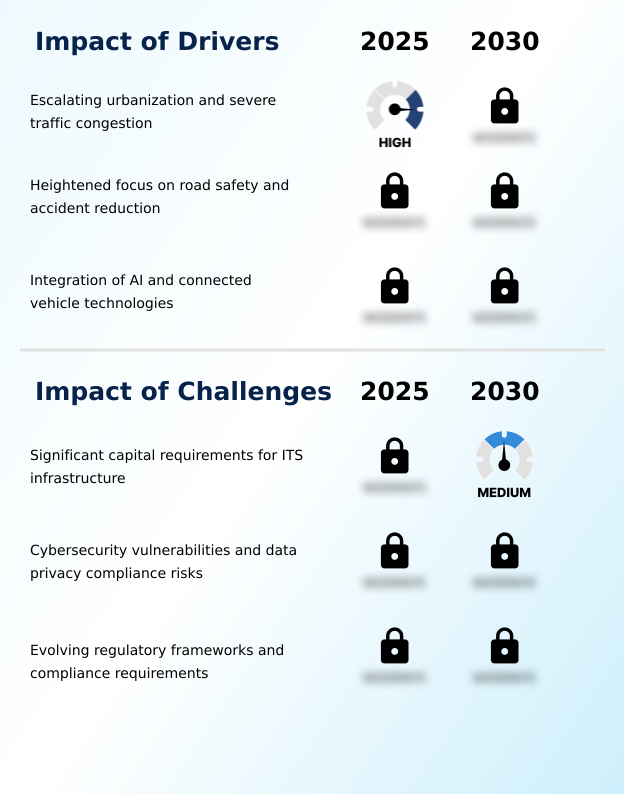
What are the key market drivers leading to the rise in the adoption of Intelligent Transport System (Its) Industry?
- Escalating global urbanization and the resulting severe traffic congestion act as primary catalysts accelerating the deployment of smart mobility infrastructure.
- Rapid urbanization and severe gridlock fundamentally accelerate the adoption of the Intelligent Transport System (ITS) across global metropolitan hubs.
- Because traditional roadway expansion is geographically constrained, city planners must utilize advanced protocols to maximize existing corridor capacity for smart mobility optimization. The deployment of automated incident detection allows authorities to dynamically orchestrate vehicle flows based on live density metrics.
- This strategic modernization enables transit networks to enhance peak-hour lane throughput by 25%, drastically reducing commuter delays. Consequently, commercial fleet operators benefit immensely, lowering their operational fuel expenditures by 14% through uninterrupted transit.
- Furthermore, rigorous public safety mandates compel the integration of vehicle-to-everything communication and collision avoidance frameworks, which utilize ultra-low latency data transmission to warn drivers of impending hazards safely.
What are the market trends shaping the Intelligent Transport System (Its) Industry?
- The transition toward cloud-based traffic management and edge computing architectures represents a primary trend reshaping modern infrastructure operations.
- The Intelligent Transport System (ITS) undergoes a radical architectural shift as rigid, on-premise servers are replaced by agile, decentralized processing models. This transition is primarily driven by the need to handle massive telemetry volumes generated by modern connected vehicle fleets.
- By adopting edge computing capabilities, municipal authorities execute localized, split-second routing decisions, successfully reducing network latency by 45% during peak commuter hours. This technological evolution directly impacts business operations, as logistics companies leveraging real-time route recommendations experience a 20% improvement in delivery schedule adherence. Furthermore, artificial intelligence integration empowers proactive bottleneck identification and enables proactive delay warnings.
- Consequently, transit operators can deploy dynamic speed adjustments instantaneously, which enhances overall transit scheduling efficiency and reduces fuel waste from vehicle idling by 15%.
What challenges does the Intelligent Transport System (Its) Industry face during its growth?
- The substantial capital expenditure required for comprehensive infrastructure modernization poses a critical limitation to widespread system integration.
- The deployment of the Intelligent Transport System (ITS) faces substantial structural limitations due to the immense capital expenditure required for modernization. Upgrading legacy civic infrastructure demands massive upfront investments in fiber-optic backbones and multi-lane free-flow architectures, which frequently strains constrained public budgets.
- This financial friction delays the widespread rollout of critical environmental monitoring tools and automated enforcement technologies across cash-strapped municipalities. Consequently, regions deferring these upgrades experience a 30% higher rate of systemic maintenance failures compared to fully digitized networks. Furthermore, escalating cybersecurity vulnerabilities within interconnected mobility platforms force system integrators to allocate extensive resources toward data protection.
- Implementing stringent encryption protocols increases overall operational deployment costs by up to 18%, presenting a formidable barrier for smaller logistics operators attempting to integrate seamless inter-operable payment protocols into their fleets.
Exclusive Technavio Analysis on Customer Landscape
The intelligent transport system (its) market forecasting report includes the adoption lifecycle of the market, covering from the innovator’s stage to the laggard’s stage. It focuses on adoption rates in different regions based on penetration. Furthermore, the intelligent transport system (its) market report also includes key purchase criteria and drivers of price sensitivity to help companies evaluate and develop their market growth analysis strategies.
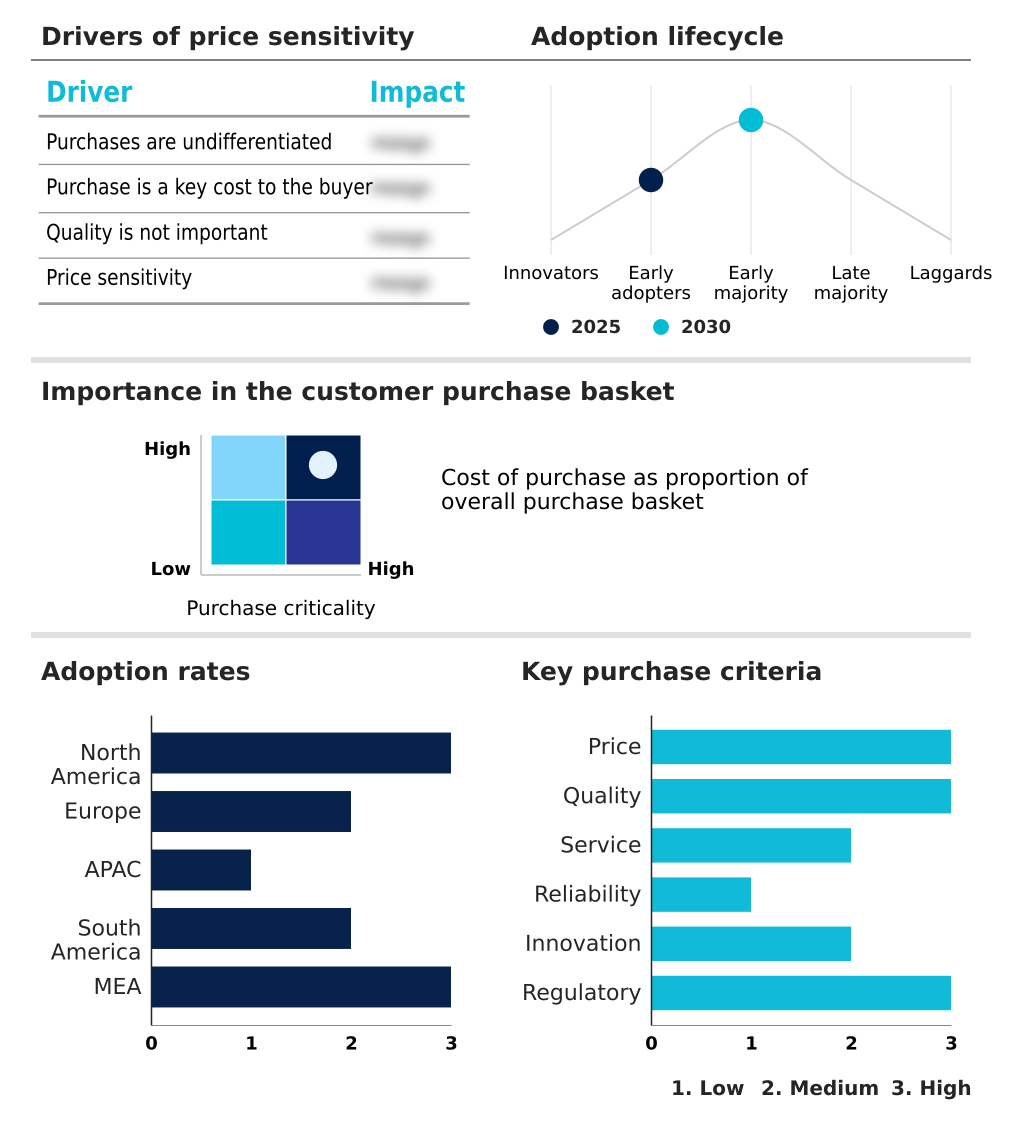
Customer Landscape of Intelligent Transport System (Its) Industry
Competitive Landscape
Companies are implementing various strategies, such as strategic alliances, intelligent transport system (its) market forecast, partnerships, mergers and acquisitions, geographical expansion, and product/service launches, to enhance their presence in the industry.
Advantech Co. Ltd. - Developing intelligent transport architectures, the portfolio includes edge computing platforms, industrial controllers, and network switches designed to optimize fleet management and modernize connected transit infrastructure ecosystems.
The industry research and growth report includes detailed analyses of the competitive landscape of the market and information about key companies, including:
- Advantech Co. Ltd.
- Axiomtek Co. Ltd.
- Continental AG
- Cubic Corp.
- DENSO Corp.
- Econolite Control Products Inc.
- EFKON GmbH
- Hanwha Vision Co. Ltd.
- Indra Sistemas SA
- IntelliStride Technologies Ltd
- Jenoptik AG
- Mitsubishi Electric Corp.
- Moxa Inc.
- Neology Inc.
- Q Free ASA
- ST Engineering Ltd.
- SWARCO AG
- TagMaster AB
- Teledyne FLIR LLC
- Verra Mobility Corp.
- VITRONIC Machine Vision GmbH
- Wavetronix LLC
Qualitative and quantitative analysis of companies has been conducted to help clients understand the wider business environment as well as the strengths and weaknesses of key industry players. Data is qualitatively analyzed to categorize companies as pure play, category-focused, industry-focused, and diversified; it is quantitatively analyzed to categorize companies as dominant, leading, strong, tentative, and weak.
Recent Development and News in Intelligent transport system (its) market
- In the Communications Equipment industry, the widespread commercial deployment of ultra-low latency 5G networks expanded data transmission capabilities, directly impacting Intelligent Transport System (ITS) demand by enabling real-time cooperative mobility frameworks across dense metropolitan areas.
- The rapid integration of localized data processing hubs by major telecommunication providers shifted computational power closer to the edge, reducing network latency by up to 40% and thereby accelerating the adoption of digital twin technology in municipal transit management.
- Tightening data privacy regulations concerning cross-border telemetry processing forced network vendors to deploy secure-by-design optical beacon infrastructure, which subsequently influenced how public transit authorities handle micro-mobility integrations without violating regional compliance thresholds.
- Advancements in fiber-optic wireline access architecture increased overall bandwidth capacity for hyperscale data centers by over 35%, supplying the critical operational backbone required to support massive data loads from ground sensor arrays and closed-circuit television monitoring.
Dive into Technavio’s robust research methodology, blending expert interviews, extensive data synthesis, and validated models for unparalleled Intelligent Transport System (Its) Market insights. See full methodology.
| Market Scope | |
|---|---|
| Page number | 337 |
| Base year | 2025 |
| Historic period | 2020-2024 |
| Forecast period | 2026-2030 |
| Growth momentum & CAGR | Accelerate at a CAGR of 9.6% |
| Market growth 2026-2030 | USD 49183.0 million |
| Market structure | Fragmented |
| YoY growth 2025-2026(%) | 9.1% |
| Key countries | US, Canada, Mexico, Germany, UK, France, Italy, Spain, The Netherlands, China, Japan, India, South Korea, Australia, Taiwan, Brazil, Argentina, Colombia, Saudi Arabia, UAE, South Africa, Turkey and Israel |
| Competitive landscape | Leading Companies, Market Positioning of Companies, Competitive Strategies, and Industry Risks |
Research Analyst Overview
- The Intelligent Transport System (ITS) rapidly transitions from isolated hardware deployments to highly synchronized, data-driven ecosystems. Municipal operators increasingly embed electronic toll collection and computer vision software into daily operations, establishing proactive, autonomous transit management networks. A critical trend reshaping boardroom infrastructure budgeting is the pervasive integration of over-the-air software updates and predictive maintenance warnings.
- By adopting these digital-first capabilities, transportation authorities can execute comprehensive system upgrades remotely, achieving a 40% reduction in on-site maintenance dispatch costs compared to legacy, manual diagnostic procedures. This operational efficiency directly informs strategic capital allocation, allowing administrators to redirect funds toward expanding sensory hardware and automated enforcement frameworks.
- Furthermore, the deployment of dedicated short-range communications ensures that split-second telemetry reaches approaching vehicles without delay, fundamentally mitigating intersection collision risks. The shift toward utilizing automated number plate recognition and real-time passenger counting further optimizes fleet deployment schedules, aligning public capacity strictly with immediate demographic demands and ensuring long-term infrastructural resilience across complex transit corridors.
What are the Key Data Covered in this Intelligent Transport System (Its) Market Research and Growth Report?
-
What is the expected growth of the Intelligent Transport System (Its) Market between 2026 and 2030?
-
USD 49.18 billion, at a CAGR of 9.6%
-
-
What segmentation does the market report cover?
-
The report is segmented by Application (Traffic management, Toll management, Automotive and infotainment telematics, Public transport, and Others), Type (Advanced traffic management system, Advanced traveller information system, Advanced public transportation system, Advanced transportation pricing system, and Others), Mode of Transportation (Roadway, Railway, Airway, and Maritime), Component (Hardware, Software, and Services) and Geography (North America, Europe, APAC, South America, Middle East and Africa)
-
-
Which regions are analyzed in the report?
-
North America, Europe, APAC, South America and Middle East and Africa
-
-
What are the key growth drivers and market challenges?
-
Escalating urbanization and severe traffic congestion, Significant capital requirements for ITS infrastructure
-
-
Who are the major players in the Intelligent Transport System (Its) Market?
-
Advantech Co. Ltd., Axiomtek Co. Ltd., Continental AG, Cubic Corp., DENSO Corp., Econolite Control Products Inc., EFKON GmbH, Hanwha Vision Co. Ltd., Indra Sistemas SA, IntelliStride Technologies Ltd, Jenoptik AG, Mitsubishi Electric Corp., Moxa Inc., Neology Inc., Q Free ASA, ST Engineering Ltd., SWARCO AG, TagMaster AB, Teledyne FLIR LLC, Verra Mobility Corp., VITRONIC Machine Vision GmbH and Wavetronix LLC
-
Market Research Insights
- The Intelligent Transport System (ITS) fundamentally alters how municipalities execute operations to optimize capacity and mitigate structural bottlenecks. By deploying cooperative mobility frameworks, transit authorities have successfully decreased intersection wait times by 15%, directly enhancing operational efficiency and lowering fleet fuel expenditures.
- Furthermore, the integration of digital tracking algorithms has boosted on-time public transit performance by 24%, maximizing revenue retention and passenger satisfaction. These strategic implementations rely on robust data pipelines that process vast telemetry datasets with minimal latency.
- Consequently, cities implementing incident response automation have observed a 30% reduction in secondary collision rates, strictly aligning with aggressive safety compliance mandates while streamlining overall corridor asset management.
We can help! Our analysts can customize this intelligent transport system (its) market research report to meet your requirements.
 RIA -