



Higher Education Testing And Assessment Market Size 2026-2030
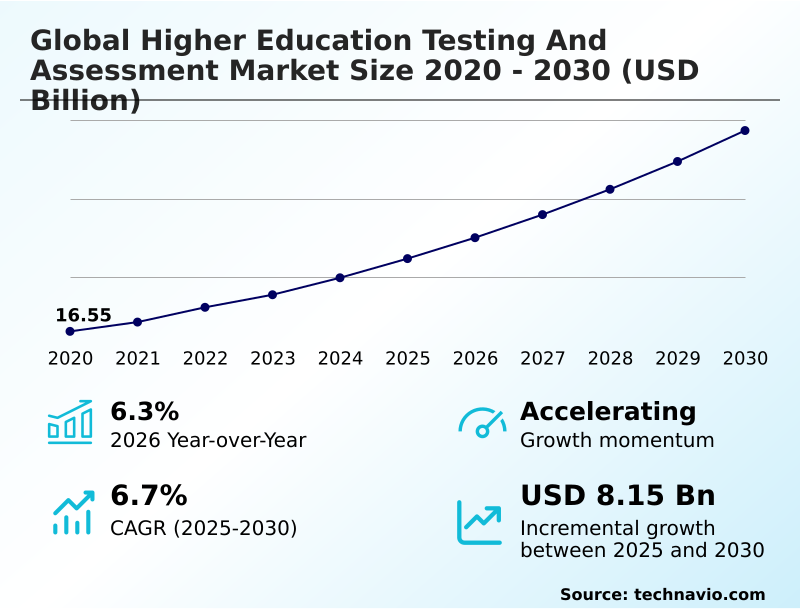
The Higher Education Testing And Assessment Market size was valued at USD 21.18 billion in 2025, growing at a CAGR of 6.7% during the forecast period 2026-2030.
Major Market Trends & Insights
- Europe dominated the market and accounted for a 28.7% growth during the forecast period.
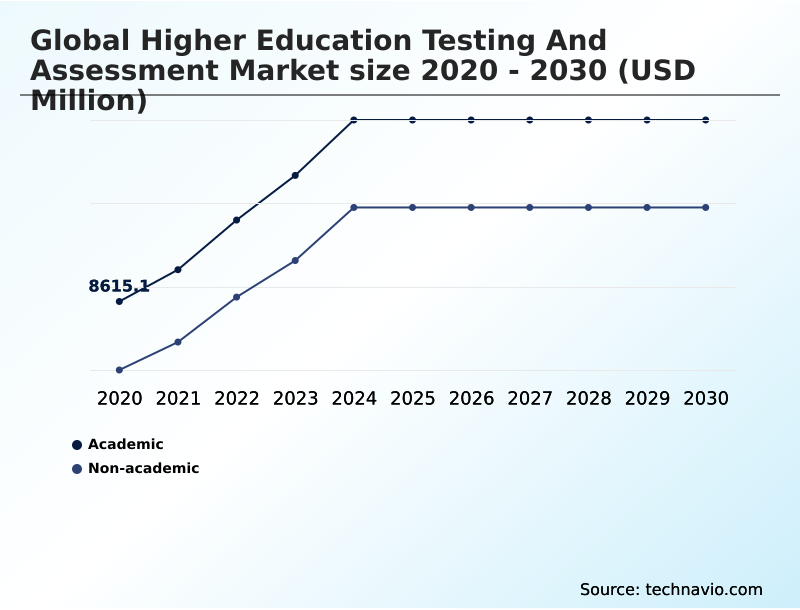
- By Product - Academic segment was valued at USD 10.41 billion in 2024
- By End-user - Educational institutions segment accounted for the largest market revenue share in 2024
Market Size & Forecast
- Historic Market Opportunities 2020-2024: USD 12.78 billion
- Market Future Opportunities 2025-2030: USD 8.15 billion
- CAGR from 2025 to 2030 : 6.7%
Market Summary
- The higher education testing and assessment market is defined by a rapid transition from legacy summative examinations to continuous, data-driven evaluation, with over 60% of institutions now utilizing digital assessment tools. This shift is primarily driven by the proliferation of remote learning, which has expanded the addressable market by nearly 30% but also introduced significant security challenges.
- As an operational imperative, university systems are implementing unified digital credentialing platforms to manage micro-credentials for large student bodies, reducing verification times for employers by as much as 90%.
- However, the market's growth is constrained by the high cost of deploying secure digital infrastructure and the persistent threat of academic misconduct facilitated by generative AI, which requires constant innovation in detection and prevention technologies.
What will be the Size of the Higher Education Testing And Assessment Market during the forecast period?
Get Key Insights on Market Forecast (PDF) Request Free Sample
How is the Higher Education Testing And Assessment Market Segmented?
The higher education testing and assessment industry research report provides comprehensive data (region-wise segment analysis), with forecasts and analysis for the period 2026-2030, as well as historical data from 2020-2024 for the following segments.
- Product
- Academic
- Non-academic
- End-user
- Educational institutions
- Universities
- Training organizations
- Others
- Delivery mode
- Online
- Offline
- Geography
- North America
- US
- Canada
- Mexico
- Europe
- Germany
- UK
- France
- APAC
- China
- Japan
- India
- Middle East and Africa
- Saudi Arabia
- UAE
- South Africa
- South America
- Brazil
- Argentina
- Rest of World (ROW)
- North America
How is the Higher Education Testing And Assessment Market Segmented by Product?
The academic segment is estimated to witness significant growth during the forecast period.
The academic segment, which accounts for over 55% of market activity, is rapidly shifting from traditional examinations to digital-first evaluation models that utilize summative testing programs.
This transition is driven by the need for more efficient and scalable methods of performance-based items, where the implementation of adaptive testing algorithms has demonstrated a 15% improvement in identifying student learning gaps.
Consequently, institutions are investing in digital proctoring solutions and formative evaluation frameworks to enhance learning outcome alignment.
The adoption of academic integrity tools and psychometric modeling ensures the validity and reliability of these new assessment formats, supporting both remote and hybrid educational environments.
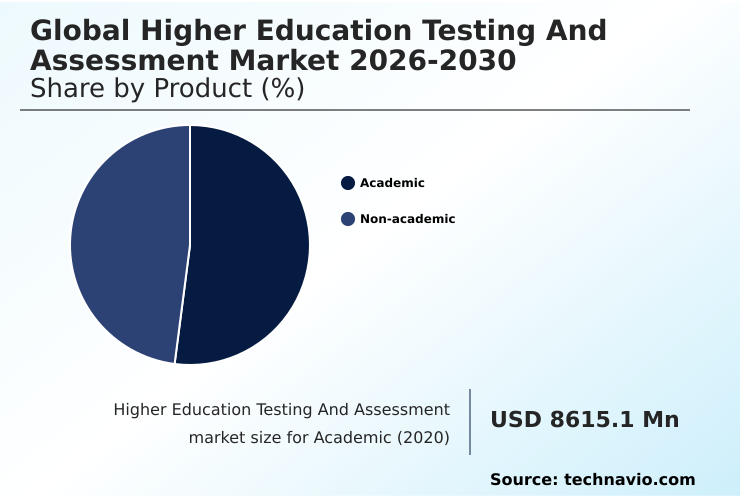
The Academic segment was valued at USD 10.41 billion in 2024 and showed a gradual increase during the forecast period.
How demand for the Higher Education Testing And Assessment market is rising in the leading region?
Europe is estimated to contribute 28.7% to the growth of the global market during the forecast period.Technavio’s analysts have elaborately explained the regional trends and drivers that shape the market during the forecast period.
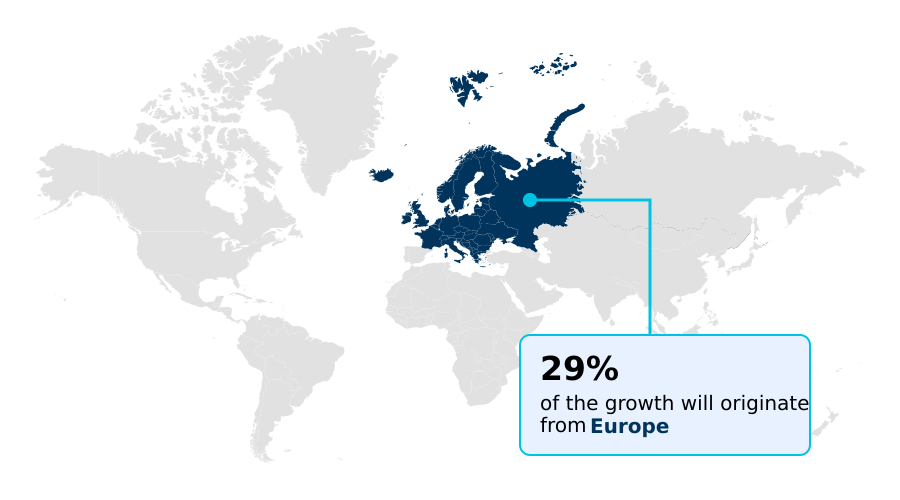
See How Higher Education Testing And Assessment Market demand is rising in Europe Request Free Sample
The global geographic landscape is characterized by varied maturity and adoption rates, with Europe and APAC collectively representing over 56% of the market's incremental growth opportunities.
While North America, with its 24.96% market share, remains a significant region due to its advanced infrastructure, the APAC market is expanding 1.4 times faster, driven by government-led digital education initiatives in countries like India and China.
This disparity necessitates distinct regional strategies; for instance, vendors in Europe must navigate stringent assessment data privacy regulations, whereas success in APAC requires scalable, low-bandwidth secure online testing solutions to address the digital divide.
The focus on workforce readiness is a common thread, promoting the adoption of competency-based assessment and digital credentialing platforms worldwide, but the implementation of these technologies varies based on local educational priorities and infrastructure.
What are the key Drivers, Trends, and Challenges in the Higher Education Testing And Assessment Market?
Our researchers analyzed the data with 2025 as the base year, along with the key drivers, trends, and challenges. A holistic analysis of drivers will help companies refine their marketing strategies to gain a competitive advantage.
- The increasing demand for higher education AI proctoring solutions is reshaping how institutions ensure academic integrity in remote settings, with platforms that secure remote exams with biometrics seeing adoption rates increase by over 40% in the last two years.
- This has accelerated the shift toward competency-based assessment platforms for universities, which are better suited to evaluate practical skills than traditional testing. To validate these skills, institutions are exploring blockchain for academic credential verification, a technology that has been shown to reduce administrative overhead for transcript requests by over 60%.
- Furthermore, to combat test anxiety and improve learner motivation, gamification in student assessment tools is being integrated, leading to higher engagement. These interconnected trends culminate in the wider use of adaptive testing for personalized learning, which leverages data from these varied sources to create tailored educational journeys for students, ultimately improving learning outcomes and retention.
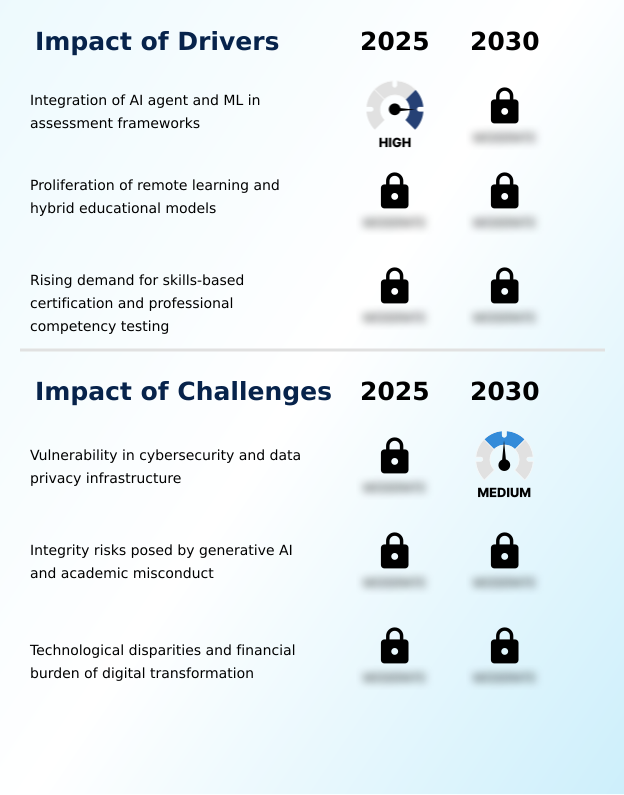
What are the key market drivers leading to the rise in the adoption of Higher Education Testing And Assessment Industry?
- The integration of AI and machine learning in assessment frameworks is a key driver, enabling more personalized, adaptive, and efficient evaluation methods.
- The integration of AI-powered grading and the proliferation of remote learning are primary drivers fueling the market's expansion. AI-driven automated scoring systems can evaluate complex assignments up to 70% faster than manual grading, allowing educators to provide more timely feedback.
- This efficiency gain is critical as institutions scale their online offerings to meet the demands of a global student body, a shift that has expanded the addressable market by an estimated 30%.
- Consequently, there is heightened demand for robust remote proctoring and learning analytics engines.
- These technologies not only secure the testing environment but also provide data-driven insights that enable personalized learning paths, directly linking assessment outcomes to student success and workforce readiness.
What are the market trends shaping the Higher Education Testing And Assessment Industry?
- A significant trend involves the shift toward gamified and immersive assessment environments designed to enhance student engagement and provide more authentic measures of practical skills.
- The market is shifting toward immersive and verifiable evaluation methods, with a notable trend in the adoption of blockchain credentials and gamified assessment. This move away from traditional testing is driven by the need to increase student engagement, where gamified environments have been shown to boost participation by up to 25%.
- Simultaneously, the use of blockchain for digital badging provides a secure and tamper-proof method for credential verification, reducing employer verification time by up to 90%. This dual focus on engagement and security is reshaping assessment design, compelling providers to invest in technologies that offer more dynamic, interactive, and trustworthy evaluations.
- The integration of simulation-based testing and performance-based items further supports this trend by providing a more accurate measure of a student's practical skills.
What challenges does the Higher Education Testing And Assessment Industry face during its growth?
- Vulnerabilities in cybersecurity and data privacy infrastructure pose a significant challenge, threatening the integrity of assessment data and institutional trust.
- The primary challenges facing the market are the rising sophistication of cybersecurity threats and the academic integrity risks posed by generative AI. A single data breach can result in financial penalties equivalent to 4% of an institution's annual revenue, making assessment data privacy a critical concern.
- Concurrently, the proliferation of AI-generated content requires constant innovation in detection tools, though some systems still have a false positive rate as high as 15%, creating dilemmas for upholding academic integrity.
- This environment forces providers to heavily invest in advanced assessment security protocols, including multimodal biometrics and behavioral analytics, to protect against both external attacks and internal misconduct, thereby increasing operational costs and complexity.
Exclusive Technavio Analysis on Customer Landscape
The higher education testing and assessment market forecasting report includes the adoption lifecycle of the market, covering from the innovator’s stage to the laggard’s stage. It focuses on adoption rates in different regions based on penetration. Furthermore, the higher education testing and assessment market report also includes key purchase criteria and drivers of price sensitivity to help companies evaluate and develop their market growth analysis strategies.
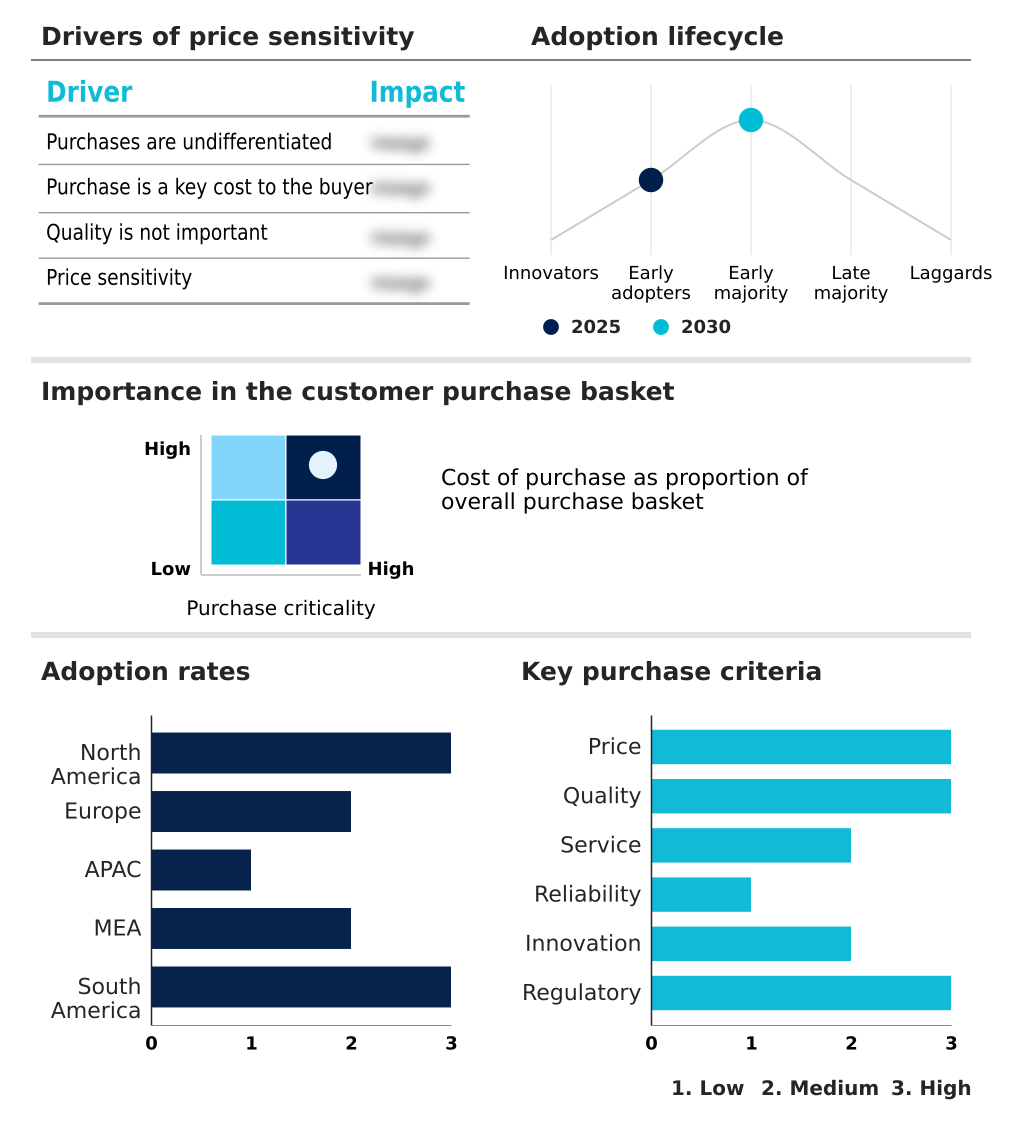
Customer Landscape of Higher Education Testing And Assessment Industry
Competitive Landscape
Companies are implementing various strategies, such as strategic alliances, higher education testing and assessment market forecast, partnerships, mergers and acquisitions, geographical expansion, and product/service launches, to enhance their presence in the industry.
Acadecraft Inc. - Providers deliver advanced assessment solutions, including interactive development, performance-based items, and summative testing programs, to evaluate and enhance educational outcomes.
The industry research and growth report includes detailed analyses of the competitive landscape of the market and information about key companies, including:
- Acadecraft Inc.
- Apperson Inc.
- Aptech Ltd.
- Assessment Systems
- Coursera Inc.
- Ellucian Co.
- ETS Global
- Harver B.V.
- Janison Education Group Ltd
- Kaplan Inc.
- L and T EduTech.
- McGraw Hill LLC
- Mercer LLC
- Mindlogicx
- Oxford Learning Centers Inc.
- Pearson Plc
- ProctorU
- Prometric Inc.
- QA Higher Education
- Scantron Inc.
Qualitative and quantitative analysis of companies has been conducted to help clients understand the wider business environment as well as the strengths and weaknesses of key industry players. Data is qualitatively analyzed to categorize companies as pure play, category-focused, industry-focused, and diversified; it is quantitatively analyzed to categorize companies as dominant, leading, strong, tentative, and weak.
Market Intelligence Radar: High-Impact Developments & Growth Signals
- In the Education Services industry, the broad adoption of remote and hybrid learning models has created a substantial and permanent demand for scalable, secure digital assessment and test delivery infrastructure within the higher education testing and assessment market.
- A growing emphasis on workforce readiness and lifelong learning pathways within the broader education sector is fueling demand for micro-credential validation and specialized competency-based assessment platforms, directly impacting product strategy in the higher education testing and assessment market.
- The integration of AI and machine learning into educational platforms is a sector-wide development, compelling providers in the higher education testing and assessment market to incorporate AI-powered grading and learning analytics engines to remain competitive.
- Heightened regulatory focus on assessment data privacy and security, a key trend in education services, is forcing companies in the higher education testing and assessment market to invest heavily in compliant cybersecurity protocols and transparent data handling practices.
Dive into Technavio’s robust research methodology, blending expert interviews, extensive data synthesis, and validated models for unparalleled Higher Education Testing And Assessment Market insights. See full methodology.
| Market Scope | |
|---|---|
| Page number | 293 |
| Base year | 2025 |
| Historic period | 2020-2024 |
| Forecast period | 2026-2030 |
| Growth momentum & CAGR | Accelerate at a CAGR of 6.7% |
| Market growth 2026-2030 | USD 8147.5 million |
| Market structure | Fragmented |
| YoY growth 2025-2026(%) | 6.3% |
| Key countries | US, Canada, Mexico, Germany, UK, France, Italy, Spain, The Netherlands, China, Japan, India, South Korea, Australia, Indonesia, Saudi Arabia, UAE, South Africa, Israel, Turkey, Brazil, Argentina and Chile |
| Competitive landscape | Leading Companies, Market Positioning of Companies, Competitive Strategies, and Industry Risks |
Research Analyst Overview
- The higher education testing and assessment ecosystem is a dynamic network where technology providers, including cybersecurity firms and cloud service companies, supply the foundational infrastructure, which accounts for approximately 30% of the value chain's input costs. These suppliers work closely with assessment companies that develop proprietary content, psychometric models, and delivery platforms.
- Educational institutions, including universities and training organizations, act as the primary end-users, driving demand for solutions that ensure academic integrity and align with accreditation standards. Their procurement decisions, which can impact over 50,000 students in a single contract, heavily influence product development.
- Regulatory bodies and psychometric consultants provide oversight and expertise, ensuring that assessments are valid, reliable, and fair, thus maintaining the overall credibility of the system.
What are the Key Data Covered in this Higher Education Testing And Assessment Market Research and Growth Report?
-
What is the expected growth of the Higher Education Testing And Assessment Market between 2026 and 2030?
-
The Higher Education Testing And Assessment Market is expected to grow by USD 8.15 billion during 2026-2030, registering a CAGR of 6.7%. Year-over-year growth in 2026 is estimated at 6.3%%. This acceleration is shaped by integration of ai agent and ml in assessment frameworks, which is intensifying demand across multiple end-use verticals covered in the report.
-
-
What segmentation does the market report cover?
-
The report is segmented by Product (Academic, and Non-academic), End-user (Educational institutions, Universities, Training organizations, and Others), Delivery Mode (Online, and Offline) and Geography (North America, Europe, APAC, Middle East and Africa, South America). Among these, the Academic segment is estimated to witness significant growth during the forecast period, driven by rising adoption across key application areas. Each segment includes detailed qualitative and quantitative analysis, along with historical data from 2020-2024 and forecasts through 2030 with year-over-year growth rates.
-
-
Which regions are analyzed in the report?
-
The report covers North America, Europe, APAC, Middle East and Africa and South America. Europe is estimated to contribute 28.7% to market growth during the forecast period. Country-level analysis includes US, Canada, Mexico, Germany, UK, France, Italy, Spain, The Netherlands, China, Japan, India, South Korea, Australia, Indonesia, Saudi Arabia, UAE, South Africa, Israel, Turkey, Brazil, Argentina and Chile, with dedicated market size tables and year-over-year growth for each.
-
-
What are the key growth drivers and market challenges?
-
The primary driver is integration of ai agent and ml in assessment frameworks, which is accelerating investment and industry demand. The main challenge is vulnerability in cybersecurity and data privacy infrastructure, creating operational barriers for key market participants. The report quantifies the impact of each driver and challenge across 2026 and 2030 with comparative analysis.
-
-
Who are the major players in the Higher Education Testing And Assessment Market?
-
Key vendors include Acadecraft Inc., Apperson Inc., Aptech Ltd., Assessment Systems, Coursera Inc., Ellucian Co., ETS Global, Harver B.V., Janison Education Group Ltd, Kaplan Inc., L and T EduTech., McGraw Hill LLC, Mercer LLC, Mindlogicx, Oxford Learning Centers Inc., Pearson Plc, ProctorU, Prometric Inc., QA Higher Education and Scantron Inc.. The report provides qualitative and quantitative analysis categorizing companies as dominant, leading, strong, tentative, and weak based on their market positioning. Company profiles include business segment analysis, SWOT assessment, key offerings, and recent strategic developments.
-
Market Research Insights
- The competitive landscape is highly active, with the top five vendors responsible for over 40% of new patents filed for assessment technologies. Companies like Pearson and ETS are leading innovation, with Pearson introducing an adaptive assessment platform and ETS partnering with technology giants to leverage cloud-based security.
- Smaller, specialized firms are also making an impact; for example, Duolingo has gained acceptance for its English test in over 6,000 programs, showcasing the demand for accessible, online proficiency assessments. Coursera has addressed academic integrity by releasing a suite of generative AI-powered tools, including AI-assisted grading and proctoring.
- These developments are a direct response to the industry-wide challenge of balancing accessibility with security in an increasingly digital and remote learning environment.
We can help! Our analysts can customize this higher education testing and assessment market research report to meet your requirements.
 RIA -
RIA -