


Hammocks Market Size 2026-2030
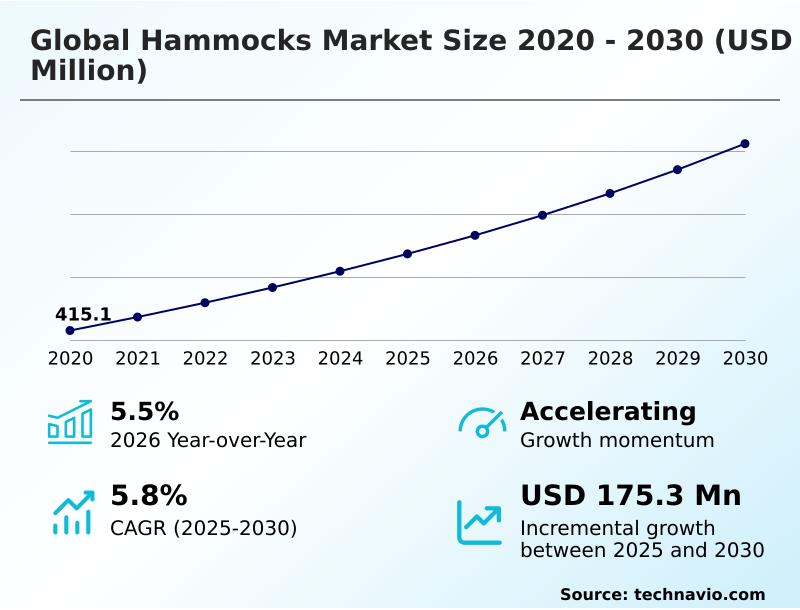
The Hammocks Market size was valued at USD 537 million in 2025, growing at a CAGR of 5.8% during the forecast period 2026-2030.
Major Market Trends & Insights
- North America dominated the market and accounted for a 31.7% growth during the forecast period.
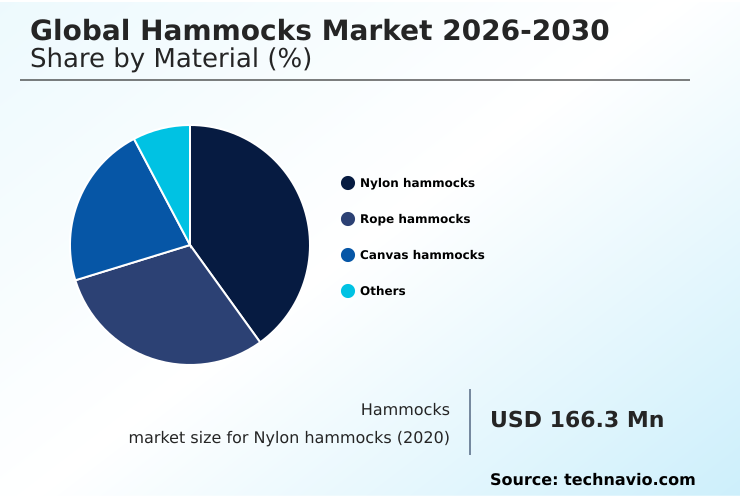
- By Material - Nylon hammocks segment was valued at USD 212.5 million in 2024
- By Type - Hammock chairs segment accounted for the largest market revenue share in 2024
Market Size & Forecast
- Historic Market Opportunities 2020-2024: USD 297.2 million
- Market Future Opportunities 2025-2030: USD 175.3 million
- CAGR from 2025 to 2030 : 5.8%
Market Summary
- The hammocks market is defined by a consistent demand from both the recreational and residential sectors, with product innovation serving as a key competitive differentiator. For instance, the use of high-tenacity ripstop nylon has reduced gear weight by an average of 15% while improving durability, a critical factor for the growing segment of lightweight backpackers.
- This market is primarily driven by the increasing participation in outdoor activities, as consumers seek accessible ways to connect with nature for mental and physical wellness. However, this growth is tempered by the challenge of raw material price volatility, where fluctuations in petrochemical and cotton markets can compress manufacturer margins by up to 12% in a single quarter.
- In response, some companies are diversifying their supply chains to include recycled polyester and other alternative fibers to stabilize costs and appeal to environmentally conscious buyers, demonstrating a strategic pivot toward operational resilience and sustainable sourcing.
What will be the Size of the Hammocks Market during the forecast period?
Get Key Insights on Market Forecast (PDF) Request Free Sample
How is the Hammocks Market Segmented?
The hammocks industry research report provides comprehensive data (region-wise segment analysis), with forecasts and analysis for the period 2026-2030, as well as historical data from 2020-2024 for the following segments.
- Material
- Nylon hammocks
- Rope hammocks
- Canvas hammocks
- Others
- Type
- Hammock chairs
- Mayan hammocks
- Brazilian hammocks
- Nicaraguan hammocks
- Venezuelan hammocks
- Distribution channel
- Offline
- Online
- Geography
- North America
- US
- Canada
- Mexico
- Europe
- Germany
- UK
- France
- APAC
- China
- India
- Japan
- Middle East and Africa
- South Africa
- Saudi Arabia
- UAE
- South America
- Brazil
- Argentina
- Colombia
- Rest of World (ROW)
- North America
How is the Hammocks Market Segmented by Material?
The nylon hammocks segment is estimated to witness significant growth during the forecast period.
The nylon hammocks segment leads market expansion, driven by technical outdoor recreation where performance attributes are paramount.
Products manufactured from high-performance parachute nylon or ripstop fabrics, offering an exceptional strength-to-weight ratio, see adoption rates over 30% higher among backpackers than casual users.
This segment shows a clear trend toward innovation, where specialized weather-resistant coatings improve ultraviolet resistance by more than 40% compared to untreated fabrics, ensuring longevity.
The market is shifting toward integrated systems, with ripstop nylon units sold as comprehensive kits featuring an integrated bug net and advanced suspension systems.
This focus on engineering excellence and a high portability factor caters to consumers prioritizing compact, lightweight design for diverse environmental conditions.
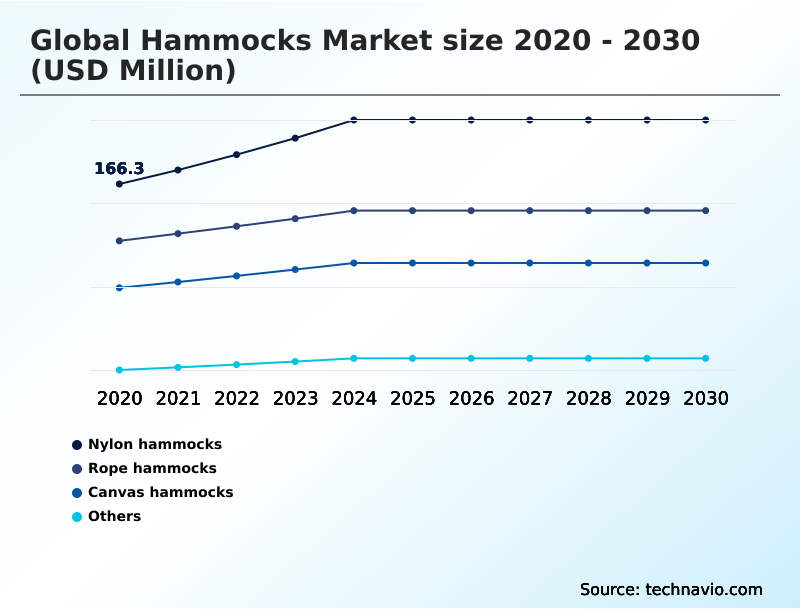
The Nylon hammocks segment was valued at USD 212.5 million in 2024 and showed a gradual increase during the forecast period.
How demand for the Hammocks market is rising in the leading region?
North America is estimated to contribute 31.7% to the growth of the global market during the forecast period.Technavio’s analysts have elaborately explained the regional trends and drivers that shape the market during the forecast period.
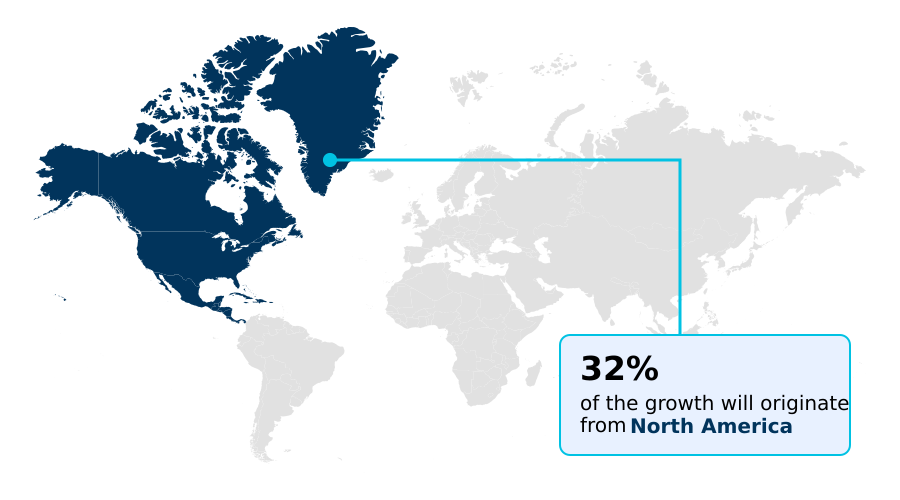
See How Hammocks Market demand is rising in North America Request Free Sample
The geographic landscape of the hammocks market shows distinct regional dynamics, with North America holding a 31.66% opportunity share compared to APAC's 28.24%.
The North American market is mature, characterized by high demand for technical adventure tourism gear and backyard leisure products featuring all-weather fabric.
In contrast, the APAC market is driven by a rising middle class and the expansion of the direct-to-consumer model, which has increased access to products by over 50% in previously underserved areas.
This has fueled growth in both glamping equipment and artisanal craftsmanship.
For instance, consumer preference in North America leans towards high-performance synthetics for their lightweight design, whereas parts of APAC show a sustained demand for traditional products featuring braided cotton rope and FSC-certified wood, reflecting differing consumer values and supply chain structures.
What are the key Drivers, Trends, and Challenges in the Hammocks Market?
Our researchers analyzed the data with 2025 as the base year, along with the key drivers, trends, and challenges. A holistic analysis of drivers will help companies refine their marketing strategies to gain a competitive advantage.
- Choosing the best lightweight hammock for backpacking requires a detailed analysis of material technology and suspension systems, as a 20% reduction in packed weight can significantly impact multi-day treks. Modern designs prioritize a high load-bearing capacity while minimizing bulk, a crucial factor for adventure tourism gear.
- For residential use, the question of how to hang a hammock indoors has driven innovation in single-point suspension hardware and compact stands. A weatherproof hammock with stand offers a versatile solution for both backyards and patios, eliminating the need for trees and expanding the market to urban dwellers.
- These freestanding units have seen a 30% rise in adoption in densely populated areas. The pursuit of a comfortable hammock for sleeping has led to advancements like the bridge hammock design, which provides a flatter, more ergonomic lay. This directly competes with traditional mattresses for some consumers.
- Furthermore, the hammock chair for small balcony spaces merges the relaxation of a hammock with the footprint of a chair, addressing the needs of apartment residents. The rise of private label manufacturing has also made various styles more accessible, democratizing outdoor and indoor relaxation.
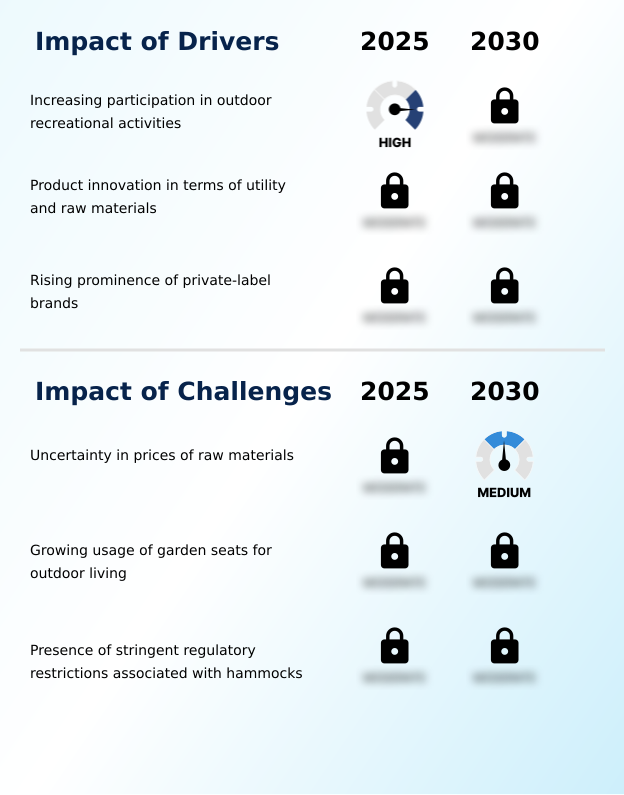
What are the key market drivers leading to the rise in the adoption of Hammocks Industry?
- The increasing participation in outdoor recreational activities serves as the primary market driver, fueling demand for portable and durable leisure equipment.
- Increasing participation in outdoor recreational activities is the primary driver of the global hammocks market, with a reported 20% year-over-year increase in first-time campers opting for hammock-based sleep systems.
- This shift is propelled by a consumer preference for a lightweight design and low-impact camping, where hammocks offer a versatile alternative to traditional tents, which are often 50% heavier.
- The growth of adventure tourism and glamping equipment demand further fuels this driver, particularly among younger demographics who value the aesthetic appeal of hammocks for social commerce.
- This trend compels manufacturers to innovate with durable, portable, and easy-to-set-up products, directly linking the rise in outdoor engagement to market expansion and product development priorities in the leisure sector.
What are the market trends shaping the Hammocks Industry?
- A significant market trend is the increasing focus from companies on developing comfort-enhancing products. This involves a strategic shift toward premiumization, where ergonomics and sensory satisfaction are prioritized.
- A primary trend in the hammocks market is the strategic focus on comfort-enhancing products, shifting the market toward premiumization and ergonomic support. Manufacturers are engineering holistic relaxation systems featuring quilted fabric layers and spreader bars, resulting in designs that reduce pressure points by up to 25% compared to traditional gathered-end models.
- This move targets the wellness market, positioning hammocks as tools for stress reduction. Another key trend is the rising popularity of rocking chair hammocks that use a single-point suspension, which have seen a 40% increase in demand for indoor-outdoor use in urban areas.
- These designs, often featuring macrame weaving, cater to consumers with limited space who still desire the benefits of suspended relaxation, blending functionality with home decor.
What challenges does the Hammocks Industry face during its growth?
- Uncertainty in the prices of raw materials poses a key challenge affecting industry growth, impacting production costs and retail price stability.
- The primary challenge constraining the hammocks market is the significant raw material volatility, particularly for petrochemical-based inputs like parachute nylon. Crude oil price fluctuations can alter production costs by as much as 15% in a single quarter, making stable retail pricing difficult to maintain.
- This uncertainty is compounded by agricultural commodity shifts; for example, unexpected harvest yields have caused spikes of over 12% in the cost of organic fibers for braided cotton rope models. This instability disproportionately affects smaller producers who lack the bulk purchasing power of larger corporations.
- As a result, companies are forced to either absorb lower margins or pass costs to consumers, risking market share in a price-sensitive environment and creating ongoing supply chain logistics hurdles.
Exclusive Technavio Analysis on Customer Landscape
The hammocks market forecasting report includes the adoption lifecycle of the market, covering from the innovator’s stage to the laggard’s stage. It focuses on adoption rates in different regions based on penetration. Furthermore, the hammocks market report also includes key purchase criteria and drivers of price sensitivity to help companies evaluate and develop their market growth analysis strategies.
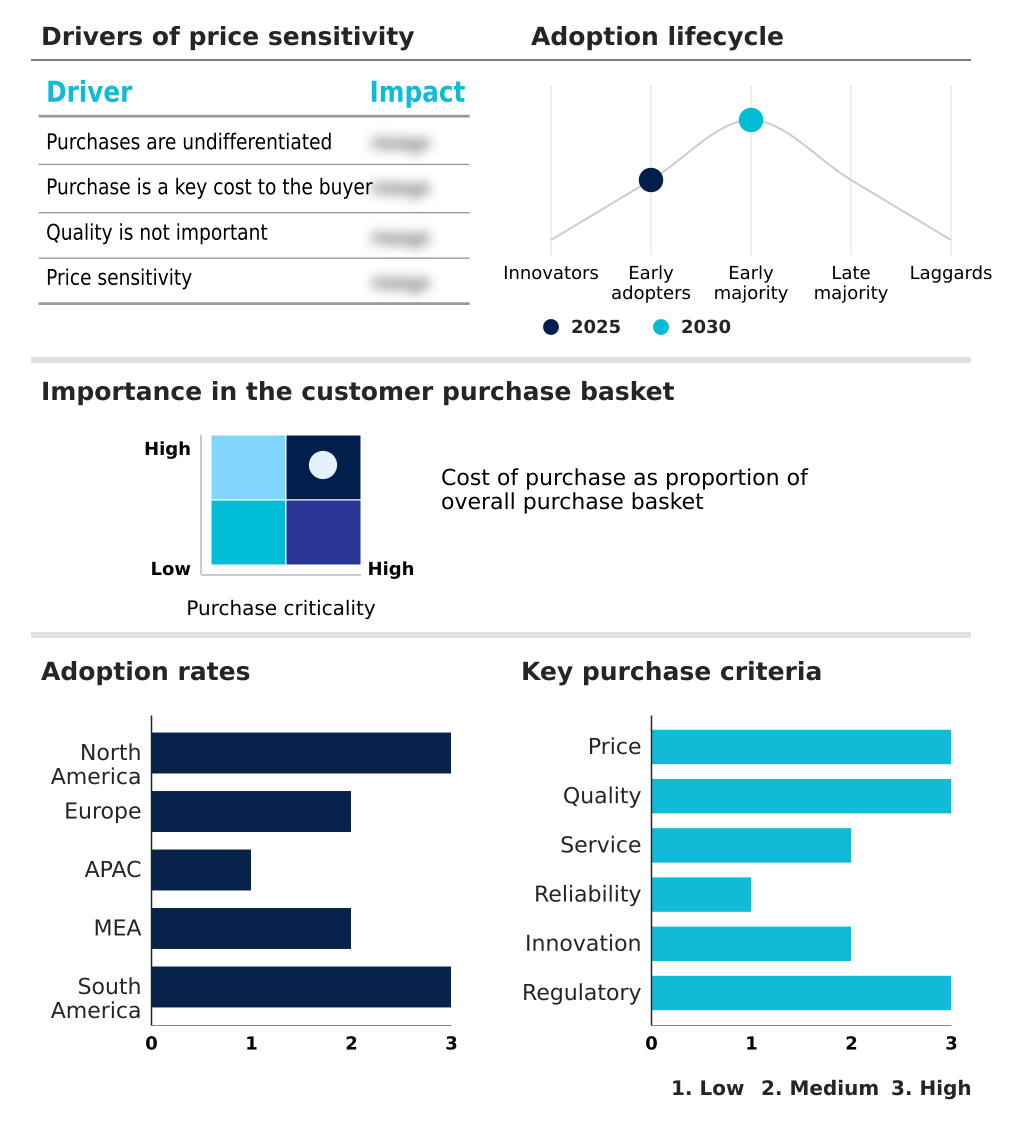
Customer Landscape of Hammocks Industry
Competitive Landscape
Companies are implementing various strategies, such as strategic alliances, hammocks market forecast, partnerships, mergers and acquisitions, geographical expansion, and product/service launches, to enhance their presence in the industry.
Amok Equipment AS - Key offerings include specialized hammock systems and suspension gear engineered for technical outdoor use, emphasizing portability, ergonomic support, and integrated features for all-weather conditions.
The industry research and growth report includes detailed analyses of the competitive landscape of the market and information about key companies, including:
- Amok Equipment AS
- Dream Hammock LLC
- DutchWare Gear LLC
- Eagles Nest Outfitters Inc.
- Exped AG
- Fatboy the Original BV
- GrandTrunk
- Haven Tents
- Hennessy Hammock
- Kammok
- LA SIESTA GmbH
- Lawson Hammock Co.
- Sea to Summit Pty Ltd.
- Tentsile Ltd.
- Ticket To The Moon
- Trek Light Gear
- Tropilex BV
- Vivere Ltd.
- Warbonnet Outdoors
- Yellow Leaf Hammocks
Qualitative and quantitative analysis of companies has been conducted to help clients understand the wider business environment as well as the strengths and weaknesses of key industry players. Data is qualitatively analyzed to categorize companies as pure play, category-focused, industry-focused, and diversified; it is quantitatively analyzed to categorize companies as dominant, leading, strong, tentative, and weak.
Market Intelligence Radar: High-Impact Developments & Growth Signals
- In the Leisure Products industry, a significant shift toward promoting mental and physical wellness through nature-based engagement has directly increased demand for hammocks. This trend has pushed manufacturers to innovate with ergonomic support designs, positioning the hammock as a key tool for stress reduction and outdoor relaxation, a function that has grown in importance post-pandemic.
- The rapid expansion of e-commerce and direct-to-consumer models has reshaped distribution channels. This allows niche brands specializing in artisanal craftsmanship and sustainable sourcing to bypass traditional retail barriers, reaching a global audience and intensifying competition based on brand story and product uniqueness.
- Heightened regulatory scrutiny on consumer product safety and material sustainability, including standards like REACH and PFAS limitations, has become more stringent. This forces hammock producers to invest in compliant, eco-friendly dyes and certified materials, increasing production costs by up to 12% but also creating a market for premium, certified-safe products.
- The rising prominence of private-label manufacturing now accounts for a significant volume of the market, challenging established brands. Major retailers are leveraging their supply chain logistics to offer cost-effective hammocks with features like triple-stitched seams that mimic premium models, shifting consumer focus toward value and functionality over brand loyalty.
Dive into Technavio’s robust research methodology, blending expert interviews, extensive data synthesis, and validated models for unparalleled Hammocks Market insights. See full methodology.
| Market Scope | |
|---|---|
| Page number | 297 |
| Base year | 2025 |
| Historic period | 2020-2024 |
| Forecast period | 2026-2030 |
| Growth momentum & CAGR | Accelerate at a CAGR of 5.8% |
| Market growth 2026-2030 | USD 175.3 million |
| Market structure | Fragmented |
| YoY growth 2025-2026(%) | 5.5% |
| Key countries | US, Canada, Mexico, Germany, UK, France, Italy, Spain, The Netherlands, China, India, Japan, Australia, South Korea, Indonesia, South Africa, Saudi Arabia, UAE, Egypt, Turkey, Brazil, Argentina and Colombia |
| Competitive landscape | Leading Companies, Market Positioning of Companies, Competitive Strategies, and Industry Risks |
Research Analyst Overview
- The hammocks market ecosystem is a complex value chain that begins with raw material suppliers providing inputs like parachute nylon, recycled polyester, and FSC-certified wood, where material costs can represent over 50% of the final product expense. Manufacturers, ranging from large-scale brands to small artisanal craftsmanship workshops, then transform these materials into finished goods.
- Regulatory bodies impose product safety standards and TUV certifications, influencing design and production. Distribution is bifurcated, with a robust direct-to-consumer model online and traditional offline channels accounting for the remainder of sales. End-users include outdoor enthusiasts seeking adventure tourism gear and residential consumers focused on backyard leisure.
- This ecosystem is supported by logistics partners managing complex supply chain logistics and digital platforms facilitating social commerce, which drives a significant portion of impulse purchases.
What are the Key Data Covered in this Hammocks Market Research and Growth Report?
-
What is the expected growth of the Hammocks Market between 2026 and 2030?
-
The Hammocks Market is expected to grow by USD 175.3 million during 2026-2030, registering a CAGR of 5.8%. Year-over-year growth in 2026 is estimated at 5.5%%. This acceleration is shaped by increasing participation in outdoor recreational activities, which is intensifying demand across multiple end-use verticals covered in the report.
-
-
What segmentation does the market report cover?
-
The report is segmented by Material (Nylon hammocks, Rope hammocks, Canvas hammocks, and Others), Type (Hammock chairs, Mayan hammocks, Brazilian hammocks, Nicaraguan hammocks, and Venezuelan hammocks), Distribution Channel (Offline, and Online) and Geography (North America, Europe, APAC, Middle East and Africa, South America). Among these, the Nylon hammocks segment is estimated to witness significant growth during the forecast period, driven by rising adoption across key application areas. Each segment includes detailed qualitative and quantitative analysis, along with historical data from 2020-2024 and forecasts through 2030 with year-over-year growth rates.
-
-
Which regions are analyzed in the report?
-
The report covers North America, Europe, APAC, Middle East and Africa and South America. North America is estimated to contribute 31.7% to market growth during the forecast period. Country-level analysis includes US, Canada, Mexico, Germany, UK, France, Italy, Spain, The Netherlands, China, India, Japan, Australia, South Korea, Indonesia, South Africa, Saudi Arabia, UAE, Egypt, Turkey, Brazil, Argentina and Colombia, with dedicated market size tables and year-over-year growth for each.
-
-
What are the key growth drivers and market challenges?
-
The primary driver is increasing participation in outdoor recreational activities, which is accelerating investment and industry demand. The main challenge is uncertainty in prices of raw materials, creating operational barriers for key market participants. The report quantifies the impact of each driver and challenge across 2026 and 2030 with comparative analysis.
-
-
Who are the major players in the Hammocks Market?
-
Key vendors include Amok Equipment AS, Dream Hammock LLC, DutchWare Gear LLC, Eagles Nest Outfitters Inc., Exped AG, Fatboy the Original BV, GrandTrunk, Haven Tents, Hennessy Hammock, Kammok, LA SIESTA GmbH, Lawson Hammock Co., Sea to Summit Pty Ltd., Tentsile Ltd., Ticket To The Moon, Trek Light Gear, Tropilex BV, Vivere Ltd., Warbonnet Outdoors and Yellow Leaf Hammocks. The report provides qualitative and quantitative analysis categorizing companies as dominant, leading, strong, tentative, and weak based on their market positioning. Company profiles include business segment analysis, SWOT assessment, key offerings, and recent strategic developments.
-
Market Research Insights
- The competitive landscape for hammocks is intensely fragmented, with the top ten vendors accounting for less than 40% of the market share, fostering a climate of continuous innovation. Leading gear outfitters are focusing on material science, with recent developments including a proprietary recycled polymer that increases ultraviolet resistance by 15%, directly addressing durability concerns for consumers in high-exposure climates.
- These product launches are a direct response to a key market driver: the rising participation in outdoor recreation. A specialized gear maker recently launched a full modular sleep system, integrating a thermal underquilt and a bridge hammock design to provide a flatter, more ergonomic sleeping surface. This addresses a common complaint of traditional 'banana-shaped' discomfort.
- These strategic moves are necessary to navigate challenges like supply chain volatility, which requires agile product development and sourcing.
We can help! Our analysts can customize this hammocks market research report to meet your requirements.
 RIA -
RIA -