



Glass Drinkware Market Size and Growth Forecast 2026-2030
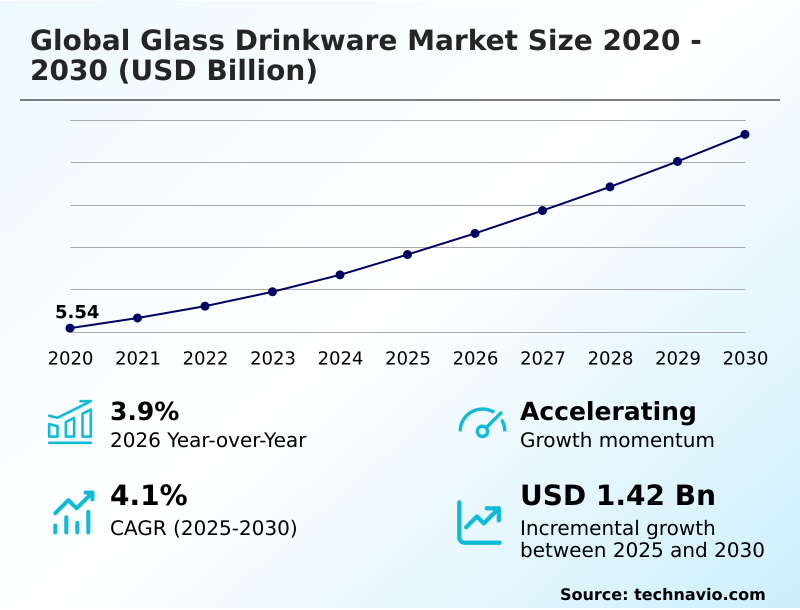
The Glass Drinkware Market size was valued at USD 6.41 billion in 2025 growing at a CAGR of 4.1% during the forecast period 2026-2030.
APAC accounts for 38% of incremental growth during the forecast period. The Water glasses segment by Product was valued at USD 1.85 billion in 2024, while the Residential segment holds the largest revenue share by End-user.
The market is projected to grow by USD 2.29 billion from 2020 to 2030, with USD 1.42 billion of the growth expected during the forecast period of 2025 to 2030.
Get Key Insights on Market Forecast (PDF) Request Free Sample
Glass Drinkware Market Overview
The glass drinkware market is evolving beyond simple container provision, shaped by consumer demands for health, sustainability, and premium aesthetics. A significant driver is the growing health consciousness that questions the chemical inertness of plastics, fueling a migration toward non-porous glass alternatives in the residential sector, which is the largest end-user segment. This trend is complemented by the premiumization of the HoReCa sector, particularly in high-growth regions like APAC, which is projected to account for 38% of incremental growth. Establishments now view high-quality, varietal-specific glassware as essential for enhancing the customer experience. For instance, a high-volume hospitality supplier adopting automated glass pressing for tempered glass tumblers can reduce breakage rates by over 15%, directly improving operational margins. This imperative for material durability, combined with innovations in borosilicate glass and double-wall insulation, allows manufacturers to meet diverse demands for everything from artisanal coffee mugs to resilient barware, positioning glass as a superior material choice.
Drivers, Trends, and Challenges in the Glass Drinkware Market
Navigating the global glass drinkware market requires balancing the pursuit of sustainability in glass packaging with the high melt energy consumption inherent in production, a tension magnified by regulatory frameworks like the EU Energy Efficiency Directive.
The consumer search for the best glass for everyday use is increasingly pointing toward durable materials that minimize replacement frequency, highlighting the benefits of using lead-free crystal for its clarity and resilience.
For example, a specialized manufacturer producing high-end crystal stemware may implement ion-toughening processes, which can more than double the shatter resistance of a thin-rimmed wine glass compared to untreated alternatives—a critical factor for vendor qualification by premium hotel chains. This focus on durability also governs the selection of durable tumbler glasses for restaurants.
The technical differences between soda-lime glass vs borosilicate temperature range dictate their suitability as glassware for hot and cold drinks, directly impacting consumer choice. Ultimately, as the glass vs plastic drinkware health debate intensifies, the eco-friendly glass water bottle benefits and the inherent purity of the material position it favorably.
The impact of glass clarity on beverage presentation remains a key differentiator, especially for premium wines and spirits, solidifying its place in high-value applications.
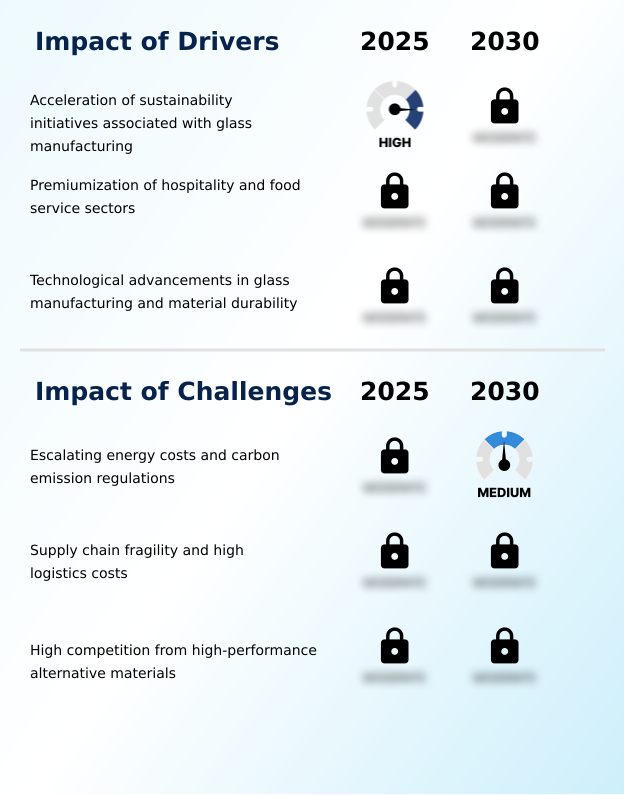
Primary Growth Driver: The acceleration of sustainability initiatives associated with glass manufacturing is a key driver for market growth.
A primary market driver is the global sustainability movement, compelling a shift from single-use plastics to glass, which is valued for its chemical inertness and infinite recyclability.
This is reinforced by the premiumization of the HoReCa sector, especially in high-growth regions like APAC, which is projected to contribute 38% of market growth. Hotels and restaurants are increasingly investing in premium hospitality glassware to enhance customer experience.
Furthermore, technological advancements in manufacturing are expanding market applications. Innovations in tempered glass and borosilicate glass enhance material durability and reduce consumer concerns about fragility, making aesthetic drinkware design more accessible.
Techniques like glass pressing and the craftsmanship of hand-blown glass cater to both mass-market and luxury segments, supporting overall market expansion.
Emerging Market Trend: The expansion of the circular economy within glass manufacturing is an influential market trend. This movement prioritizes sustainability through increased recycling and the adoption of eco-friendly production methods.
The market is shaped by a dual focus on sustainability and premiumization. A dominant trend is the rise of experiential home entertainment, which fuels demand for specialty cocktail glassware and varietal-specific glassware with features like ribbed textures. This is particularly evident in the residential sector, which constitutes the market's largest segment.
Simultaneously, health consciousness is accelerating the shift toward borosilicate glass, prized for its purity and superior thermal shock resistance. On the manufacturing front, the circular economy is driving process innovation, with an increased use of cullet in furnaces and a strategic move toward lightweighting in machine-formed glass to reduce carbon footprints in compliance with global ESG standards.
Key Industry Challenge: Escalating energy costs and stringent carbon emission regulations present a key challenge affecting industry growth.
The glass drinkware market confronts significant hurdles, led by high melt energy consumption and volatile energy pricing, which are intensified by carbon pricing frameworks like the EU ETS. These operational costs challenge profit margins. Additionally, the industry grapples with supply chain fragility and high logistics costs associated with transporting heavy, breakable products, which complicates e-commerce fulfillment.
A formidable challenge is the competition from alternative materials. High-performance stainless steel and advanced polymers offer superior durability and insulation for the on-the-go beverage market, compelling glass manufacturers to innovate in areas like shatter-resistant technology and lightweighting to defend their market share. This pressure necessitates a continuous focus on carbon footprint reduction to maintain a competitive advantage.
Explore Full Market Dynamics Analysis Request Free Sample
Glass Drinkware Market Segmentation
The glass drinkware industry research report provides comprehensive data including region-wise segment analysis, with forecasts and analysis for the period 2026-2030, as well as historical data from 2020-2024 for the following segments.
Product Segment Analysis
The water glasses segment is estimated to witness significant growth during the forecast period.
The water glasses segment is foundational to the glass drinkware market, driven by a definitive consumer shift away from single-use plastics toward sustainable hydration solutions.
In both the residential and commercial sectors, demand extends beyond utility to include aesthetic and ergonomic considerations. Manufacturers are responding with designs featuring reinforced rims and weighted bases to improve material durability, often using tempered soda-lime glass for mass-market applications.
Concurrently, the adoption of borosilicate glass is increasing due to its superior thermal shock resistance, allowing for versatile use with both hot and cold beverages.
In the hospitality sector, which represents a significant portion of commercial end-users, premium water glasses are now integral to the dining experience, influencing procurement decisions beyond mere cost.
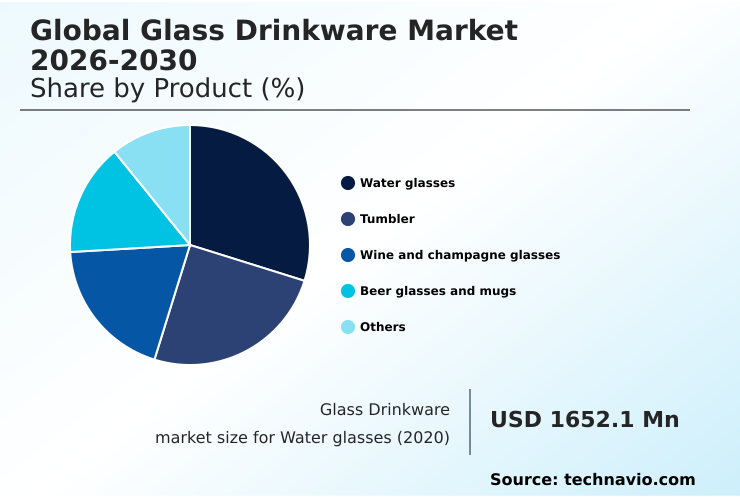
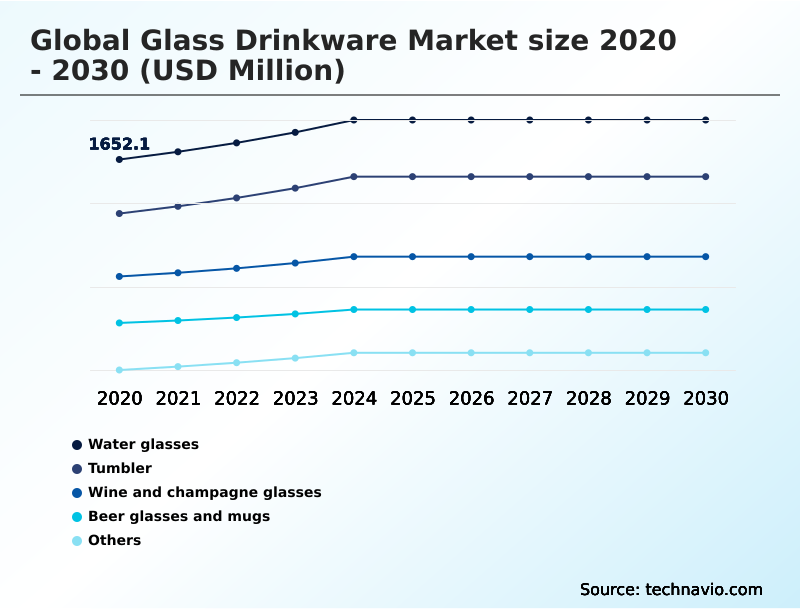
The Water glasses segment was valued at USD 1.85 billion in 2024 and showed a gradual increase during the forecast period.
Glass Drinkware Market by Region: APAC Leads with 38% Growth Share
APAC is estimated to contribute 38% to the growth of the global market during the forecast period.
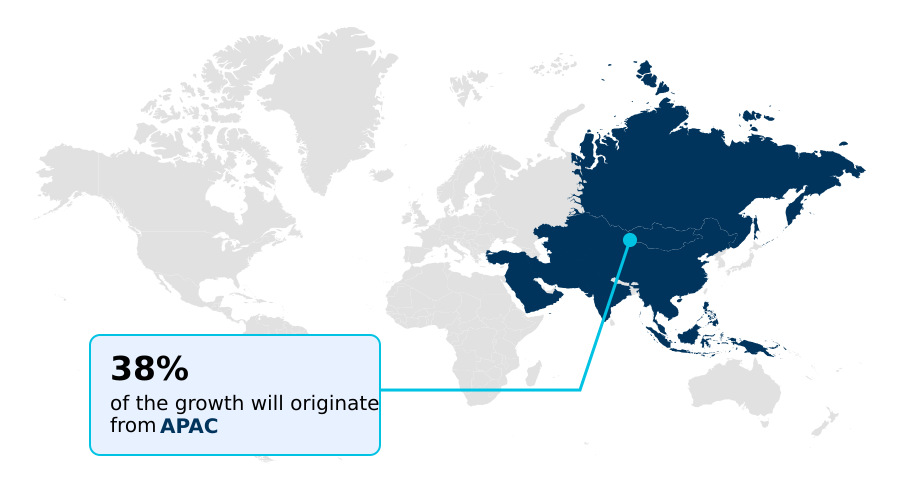
Geographically, the glass drinkware market's growth is led by APAC, which is poised to contribute approximately 38% of the incremental growth, driven by rising disposable incomes and rapid urbanization in countries like China and India.
This contrasts with the mature European market, which accounts for over 27% of the global landscape.
In Europe, growth is sustained by a strong HoReCa sector and stringent environmental regulations like the EU ETS, which promote a circular economy through the use of cullet and lightweighting in production.
North America, contributing around 21%, is characterized by a demand for premium, lead-free crystal and borosilicate glass products fueled by home entertainment and wellness trends.
Across these regions, the choice between mass-produced soda-lime glass and high-end specialty materials defines regional competitive dynamics and supply chain strategies.
Customer Landscape Analysis for the Glass Drinkware Market
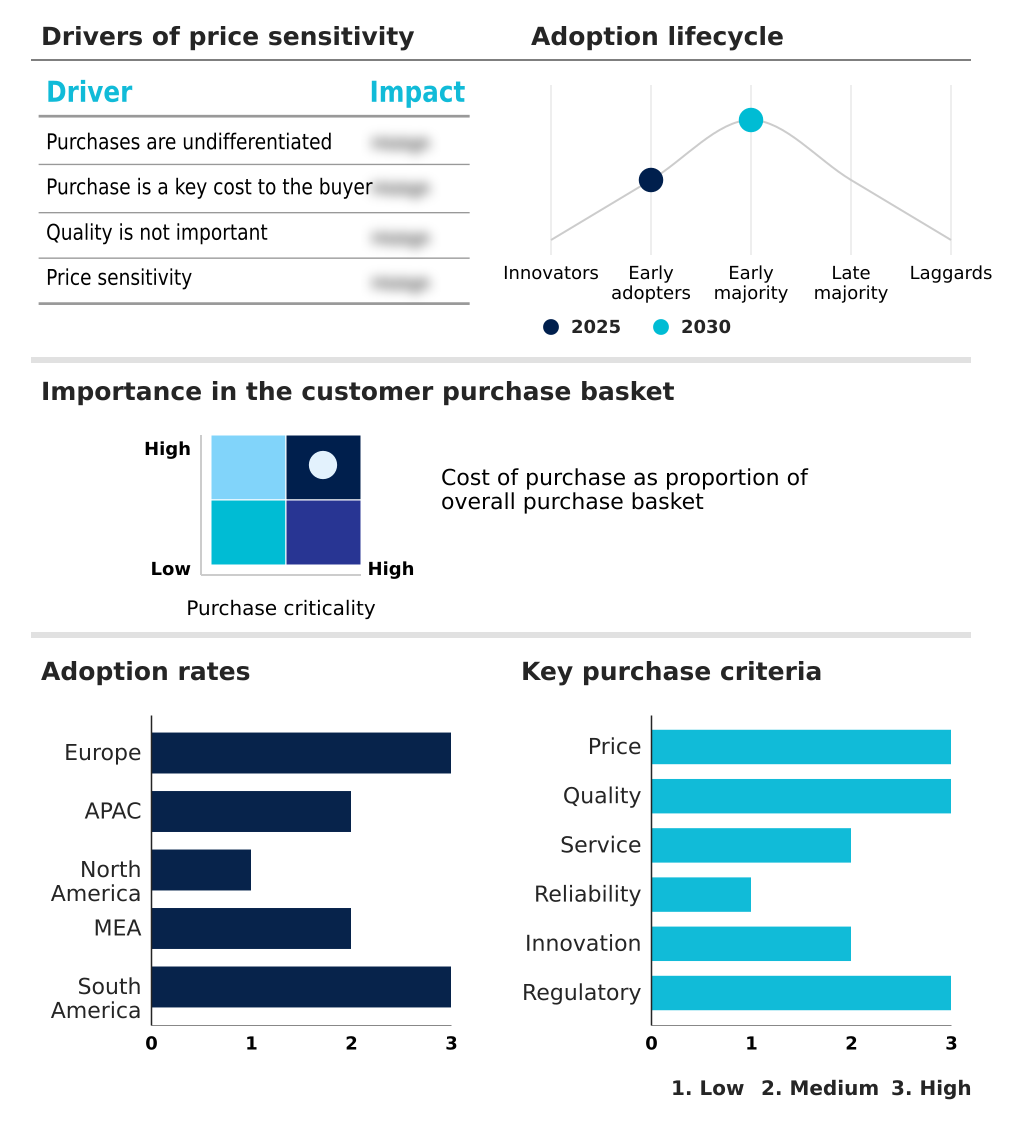
The glass drinkware market forecasting report includes the adoption lifecycle of the market, covering from the innovator’s stage to the laggard’s stage. It focuses on adoption rates in different regions based on penetration. Furthermore, the glass drinkware market report also includes key purchase criteria and drivers of price sensitivity to help companies evaluate and develop their market growth analysis strategies.
Competitive Landscape of the Glass Drinkware Market
Companies are implementing various strategies, such as strategic alliances, partnerships, mergers and acquisitions, geographical expansion, and product/service launches, to enhance their presence in the glass drinkware market industry.
Arc Holdings - Specializing in mass-market tempered glass tableware, the company provides durable drinkware solutions for both residential and professional food service applications, emphasizing functional design and accessibility.
The industry research and growth report includes detailed analyses of the competitive landscape of the market and information about key companies, including:
- Arc Holdings
- Baccarat
- Bayerische Glaswerke GmbH
- Bormioli Rocco Spa
- Borosil Ltd.
- Krosno Glass SA
- Luigi Bormioli
- Ocean Glass Public Company Limited
- Pasabahce
- Simon Pearce
- Spiegelau
- Steklarna Hrastnik
- Stoelzle Oberglas GmbH
- Tiroler Glashutte GmbH
- Waterford
- ZALTO Glas GMBH
- Zwiesel Kristallglas AG
Qualitative and quantitative analysis of companies has been conducted to help clients understand the wider business environment as well as the strengths and weaknesses of key industry players. Data is qualitatively analyzed to categorize companies as pure play, category-focused, industry-focused, and diversified; it is quantitatively analyzed to categorize companies as dominant, leading, strong, tentative, and weak.
Recent Developments in the Glass Drinkware Market
- In November 2024, Verallia initiated a strategic partnership to pilot and commercialize LionGlass, a novel aluminosilicophosphate material developed by researchers at Penn State University, aiming to reduce melt energy consumption by approximately 30%.
- In March 2025, Libbey Inc. announced a strategic optimization of its logistics network across the APAC region, designed to enhance service for emerging markets and address growing local demand more efficiently.
- In May 2025, New York-based supplier Starline entered into a strategic partnership with Symglass, a move intended to broaden its product portfolio with promotional drinkware and expand market access for both entities.
- In September 2024, INSCO completed its acquisition of India-based Hindustan National Glass and Industries Ltd. (HNGIL) through the Insolvency and Bankruptcy Code (IBC) process, significantly consolidating the regional glass manufacturing sector.
Research Analyst Overview: Glass Drinkware Market
High melt energy consumption in glass manufacturing is a primary operational reality, creating significant cost pressures and compliance challenges under regulations such as the EU Emissions Trading System (EU ETS). This forces boardroom-level decisions regarding the high CAPEX for technologies like hydrogen-powered furnaces or electric boosting systems versus the long-term risk of carbon-related financial penalties.
This strategic calculus directly influences material science investments, including the development of aluminosilicophosphate glass, which offers lower melting points. The choice of material dictates product portfolio capabilities, from mass-market soda-lime glass produced via glass pressing to premium hand-blown, lead-free crystal. Innovations such as nucleated glass technology for beer glasses and double-wall insulation for coffee mugs serve as critical differentiators.
In Europe, which accounts for over 27% of the global market, mastering these advanced manufacturing techniques, including glass blowing and ion-toughening, is essential for maintaining a competitive edge and meeting demand for varietal-specific glassware with high thermal shock resistance.
Dive into Technavio’s robust research methodology, blending expert interviews, extensive data synthesis, and validated models for unparalleled Glass Drinkware Market insights. See full methodology.
| Market Scope | |
|---|---|
| Page number | 287 |
| Base year | 2025 |
| Historic period | 2020-2024 |
| Forecast period | 2026-2030 |
| Growth momentum & CAGR | Accelerate at a CAGR of 4.1% |
| Market growth 2026-2030 | USD 1420.1 million |
| Market structure | Fragmented |
| YoY growth 2025-2026(%) | 3.9% |
| Key countries | UK, Germany, France, Italy, Spain, The Netherlands, China, India, Japan, South Korea, Australia, Indonesia, US, Canada, Mexico, Saudi Arabia, UAE, South Africa, Israel, Turkey, Brazil, Argentina and Colombia |
| Competitive landscape | Leading Companies, Market Positioning of Companies, Competitive Strategies, and Industry Risks |
Glass Drinkware Market: Key Questions Answered in This Report
-
What is the expected growth of the Glass Drinkware Market between 2026 and 2030?
-
The Glass Drinkware Market is expected to grow by USD 1.42 billion during 2026-2030, registering a CAGR of 4.1%. Year-over-year growth in 2026 is estimated at 3.9%%. This acceleration is shaped by acceleration of sustainability initiatives associated with glass manufacturing, which is intensifying demand across multiple end-use verticals covered in the report.
-
-
What segmentation does the market report cover?
-
The report is segmented by Product (Water glasses, Tumbler, Wine and champagne glasses, Beer glasses and mugs, and Others), End-user (Residential, and Commercial), Distribution Channel (Offline, and Online) and Geography (Europe, APAC, North America, Middle East and Africa, South America). Among these, the Water glasses segment is estimated to witness significant growth during the forecast period, driven by rising adoption across key application areas. Each segment includes detailed qualitative and quantitative analysis, along with historical data from 2020-2024 and forecasts through 2030 with year-over-year growth rates.
-
-
Which regions are analyzed in the report?
-
The report covers Europe, APAC, North America, Middle East and Africa and South America. APAC is estimated to contribute 38% to market growth during the forecast period. Country-level analysis includes UK, Germany, France, Italy, Spain, The Netherlands, China, India, Japan, South Korea, Australia, Indonesia, US, Canada, Mexico, Saudi Arabia, UAE, South Africa, Israel, Turkey, Brazil, Argentina and Colombia, with dedicated market size tables and year-over-year growth for each.
-
-
What are the key growth drivers and market challenges?
-
The primary driver is acceleration of sustainability initiatives associated with glass manufacturing, which is accelerating investment and industry demand. The main challenge is escalating energy costs and carbon emission regulations, creating operational barriers for key market participants. The report quantifies the impact of each driver and challenge across 2026 and 2030 with comparative analysis.
-
-
Who are the major players in the Glass Drinkware Market?
-
Key vendors include Arc Holdings, Baccarat, Bayerische Glaswerke GmbH, Bormioli Rocco Spa, Borosil Ltd., Krosno Glass SA, Luigi Bormioli, Ocean Glass Public Company Limited, Pasabahce, Simon Pearce, Spiegelau, Steklarna Hrastnik, Stoelzle Oberglas GmbH, Tiroler Glashutte GmbH, Waterford, ZALTO Glas GMBH and Zwiesel Kristallglas AG. The report provides qualitative and quantitative analysis categorizing companies as dominant, leading, strong, tentative, and weak based on their market positioning. Company profiles include business segment analysis, SWOT assessment, key offerings, and recent strategic developments.
-
Glass Drinkware Market Research Insights
The market dynamics of glass drinkware are defined by a crucial balance between aesthetic drinkware design and the operational need for commercial-grade glassware durability. This is particularly evident in the HoReCa sector, where procurement decisions are increasingly influenced by total cost of ownership rather than initial price.
For example, in high-traffic restaurants, the adoption of stackable, tempered glass tumblers is a key procurement decision, as their break resistance directly impacts replacement budgets. The commercial segment’s demand for resilience contrasts with the residential sector, which, despite being larger by value, has a slower replacement cycle. Strict ESG criteria are also compelling the industry to adopt more sustainable practices.
Innovations like borosilicate coffee and tea mugs and specialty cocktail glassware cater to niche consumer preferences, forcing manufacturers to diversify beyond standard soda-lime glass production.
We can help! Our analysts can customize this glass drinkware market research report to meet your requirements.
 RIA -
RIA -