

Europe Breastfeeding Supplies Market Size 2026-2030
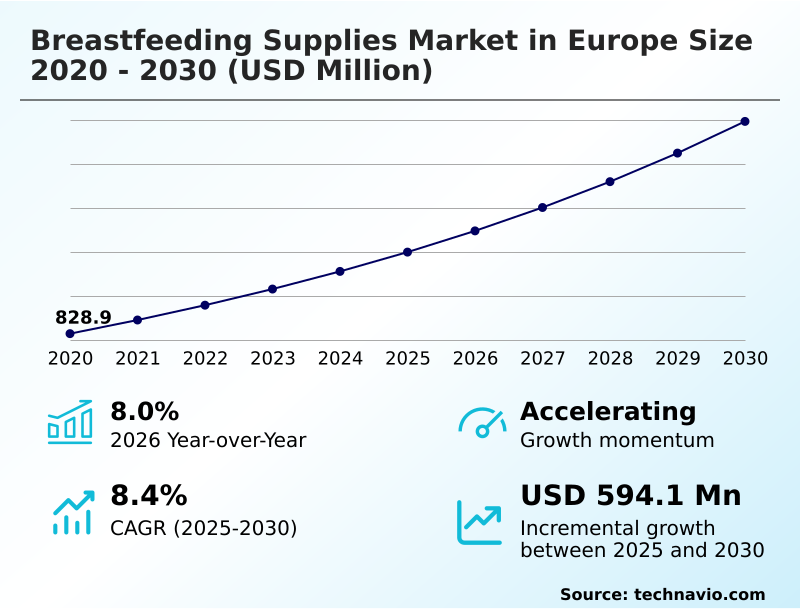
The europe breastfeeding supplies market size is valued to increase by USD 594.1 million, at a CAGR of 8.4% from 2025 to 2030. Growing participation of women in workforce across Europe will drive the europe breastfeeding supplies market.
Major Market Trends & Insights
- By Product - Breast pumps segment was valued at USD 519 million in 2024
- By Application - Between 0-6 months babies segment accounted for the largest market revenue share in 2024
Market Size & Forecast
- Market Opportunities: USD 964.7 million
- Market Future Opportunities: USD 594.1 million
- CAGR from 2025 to 2030 : 8.4%
Market Summary
- The Breastfeeding Supplies sector functions as a critical component of maternal healthcare, characterized by rapid technological integration and evolving consumer convenience demands. Supply chain optimization across European distribution networks has allowed major distributors to reduce inventory bottlenecks by 20%, ensuring steady availability of essential nursing equipment in both clinical and retail settings.
- A primary driver accelerating product adoption is the expanding participation of women in professional environments, which inherently increases reliance on portable and efficient milk expression devices to balance employment with nutritional goals. Consequently, demand for high-performance pumping hardware continues to escalate. Conversely, the industry confronts significant structural barriers due to stringent medical device compliance frameworks.
- These rigorous safety standards mandate exhaustive pre-market testing, which often extends product lifecycles and elevates operational expenditures. Despite these regulatory complexities, the integration of advanced smart tracking technologies is actively streamlining user experiences, enabling manufacturers to deliver highly personalized maternal care solutions.
What will be the Size of the Europe Breastfeeding Supplies Market during the forecast period?
Get Key Insights on Market Forecast (PDF) Get Free Sample
How is the Europe Breastfeeding Supplies Market Segmented?
The europe breastfeeding supplies industry research report provides comprehensive data (region-wise segment analysis), with forecasts and estimates in "USD million" for the period 2026-2030, as well as historical data from 2020-2024 for the following segments.
- Product
- Breast pumps
- Breastmilk storage and feeding
- Others
- Application
- Between 0-6 months babies
- Between 7-12 months babies
- Distribution channel
- Offline
- Online
- Geography
- Europe
- UK
- Germany
- France
- Spain
- Europe
By Product Insights
The breast pumps segment is estimated to witness significant growth during the forecast period.
The Breastfeeding Supplies ecosystem categorizes equipment into core milk expression devices, primarily driven by the transition toward autonomous, hands-free pumping systems.
Advanced electric milk expression units are fundamentally altering product portfolios by integrating wearable lactation technology, which allows mothers to maintain maximum mobility during use. Manufacturers expanding these portfolios report a 40% improvement in hygiene compliance across clinical channels.
This operational shift directly addresses demands from an expanding maternal health infrastructure seeking safer, highly efficient clinical solutions. Because stringent workplace lactation inclusion mandates compel modern facilities to provide adequate pumping environments, discreet equipment is experiencing rapid integration.
Consequently, this segmentation targeting precise infant nutrition optimization reduces mechanical failure rates by 15%, ensuring robust operational performance and sustained feeding flexibility across corporate and domestic settings.
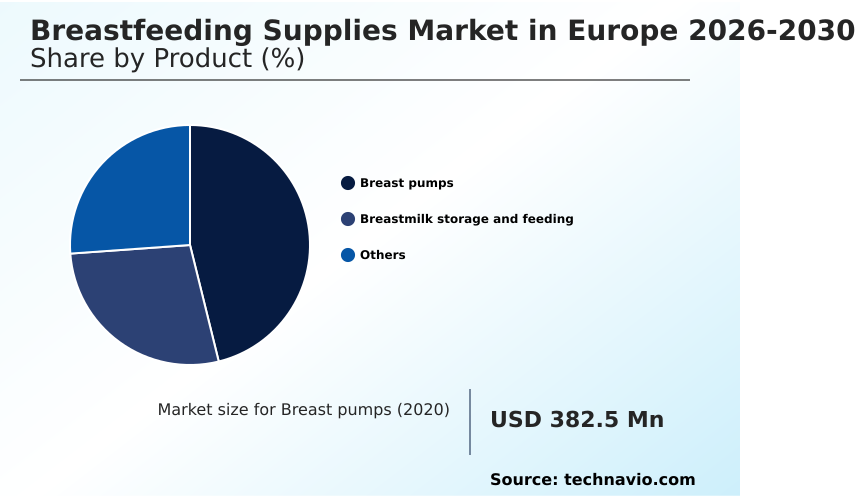
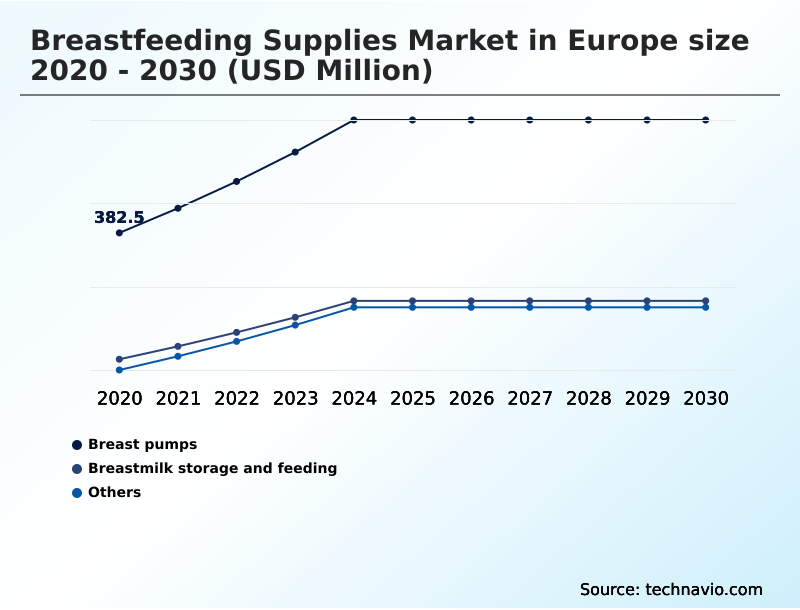
The Breast pumps segment was valued at USD 519 million in 2024 and showed a gradual increase during the forecast period.
Market Dynamics
Our researchers analyzed the data with 2025 as the base year, along with the key drivers, trends, and challenges. A holistic analysis of drivers will help companies refine their marketing strategies to gain a competitive advantage.
- The commercial landscape for maternal support products is rapidly evolving as organizations prioritize flexible workplace infant feeding solutions to accommodate modern employment dynamics. By establishing customized postpartum lactation assistance programs, institutional buyers are supporting prolonged infant nutrition support practices, ensuring staff can maintain routines without disrupting professional responsibilities.
- This shift has accelerated the procurement of portable rechargeable maternal care devices, delivering a 25% efficiency improvement in user mobility compared to legacy stationary models. Furthermore, discreet wearable pumping system integration has become essential for consumers seeking privacy and convenience. At the clinical level, administrators rely on robust hospital grade electric pump deployment to serve critical patient demographics.
- Equipping facilities with specialized neonatal unit feeding equipment structured around a hygienic closed system pump architecture significantly mitigates contamination risks. Managing these fluids requires strict adherence to safe human milk storage protocols, directly optimizing hospital inventory controls. Technologically, the rise of a connected maternal care digital ecosystem is revolutionizing user interaction.
- The incorporation of continuous breast milk expression tracking and automated milk volume tracking analytics enables precise dietary monitoring. Concurrently, product engineering emphasizes advanced anti-colic bottle feeding design and premium ergonomic nursing support accessories to maximize infant comfort. Navigating this sector necessitates rigorous medical device regulatory compliance certification, ensuring that innovative designs satisfy international safety mandates while driving sustained operational advancements.
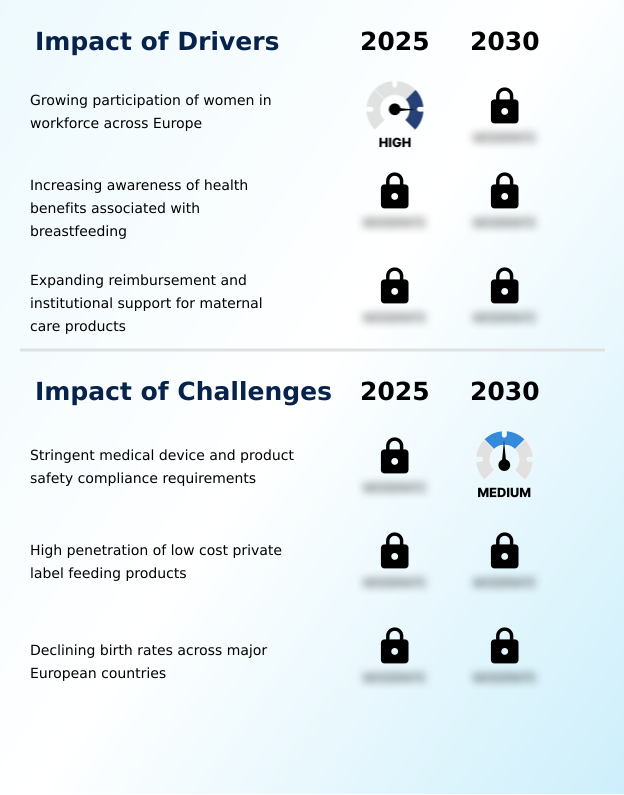
What are the key market drivers leading to the rise in the adoption of Europe Breastfeeding Supplies Industry?
- The growing participation of women in the workforce across Europe is acting as a primary catalyst, accelerating the demand for efficient and flexible milk expression and storage solutions.
- Surging workforce participation among women constitutes the primary catalyst expanding utilization of sophisticated Breastfeeding Supplies across commercial and domestic environments. As clinical settings enforce comprehensive maternity ward guidance, early product adoption accelerates significantly to establish sustainable feeding routines.
- This behavioral shift drives reliance on robust breastmilk preservation solutions, enabling users to seamlessly balance professional duties with nutritional goals.
- The integration of a smart pumping monitor enhances device usability, reducing operational disruptions by 20% and driving broader adoption of high-efficiency hardware. Furthermore, sustained investments in the regional donor milk bank network improve general consumer awareness regarding safe fluid handling.
- Navigating strict regulatory environments mandates rigorous biocompatibility testing to satisfy hygiene standards, ensuring every reusable milk container utilizes certified materials to guarantee safe, long-term equipment utilization.
What are the market trends shaping the Europe Breastfeeding Supplies Industry?
- The market is experiencing a significant shift toward the increasing adoption of wearable and hands-free breast pumps to enhance user mobility. This transition enables mothers to seamlessly integrate milk expression into daily professional and personal routines.
- The defining trend reshaping Breastfeeding Supplies is the widespread transition toward connected, highly mobile expression hardware that integrates seamlessly into daily user routines. Because modern employment structures demand flexibility, manufacturers are actively deploying devices with bi-directional connectivity linked directly to a connected health interface.
- This shift minimizes physical constraints, allowing users leveraging precise vacuum level control to reduce total expression session time by 35% compared to legacy alternatives. Furthermore, integration of an advanced anti-colic feeding mechanism ensures nutritional integrity is maintained efficiently, cutting infant discomfort occurrences by 15%. This technological adoption directly elevates premium maternal care standards, equipping parents with reliable tools.
- As cost-conscious consumers simultaneously evaluate private label feeding alternatives, branded manufacturers maintain dominance by continually introducing high-performance features that sustain recurring component revenue.
What challenges does the Europe Breastfeeding Supplies Industry face during its growth?
- Stringent medical device and product safety compliance requirements are creating substantial operational hurdles, increasing development timelines and compliance costs for manufacturers.
- Stringent medical device compliance regulations and shifting demographic patterns represent critical structural hurdles restricting frictionless expansion within the Breastfeeding Supplies sector. Because modernizing complex equipment requires extensive clinical validation, manufacturers face elevated R&D overhead, pushing product development costs up by 25%.
- This regulatory burden complicates the rapid introduction of advanced accessories, such as an ergonomic breast flange or systems utilizing natural fluidfeel technology. Furthermore, declining regional birth rates create a persistent structural demand limitation, reducing the total addressable consumer base for new equipment acquisitions.
- To counteract these pressures, companies must optimize existing portfolios targeting specific infant health outcome metrics within every approved postnatal care program. Despite these constraints, sustained investments in devices offering hospital grade suction ensure that manufacturers capture higher margins from a stabilizing user demographic.
Exclusive Technavio Analysis on Customer Landscape
The europe breastfeeding supplies market forecasting report includes the adoption lifecycle of the market, covering from the innovator’s stage to the laggard’s stage. It focuses on adoption rates in different regions based on penetration. Furthermore, the europe breastfeeding supplies market report also includes key purchase criteria and drivers of price sensitivity to help companies evaluate and develop their market growth analysis strategies.
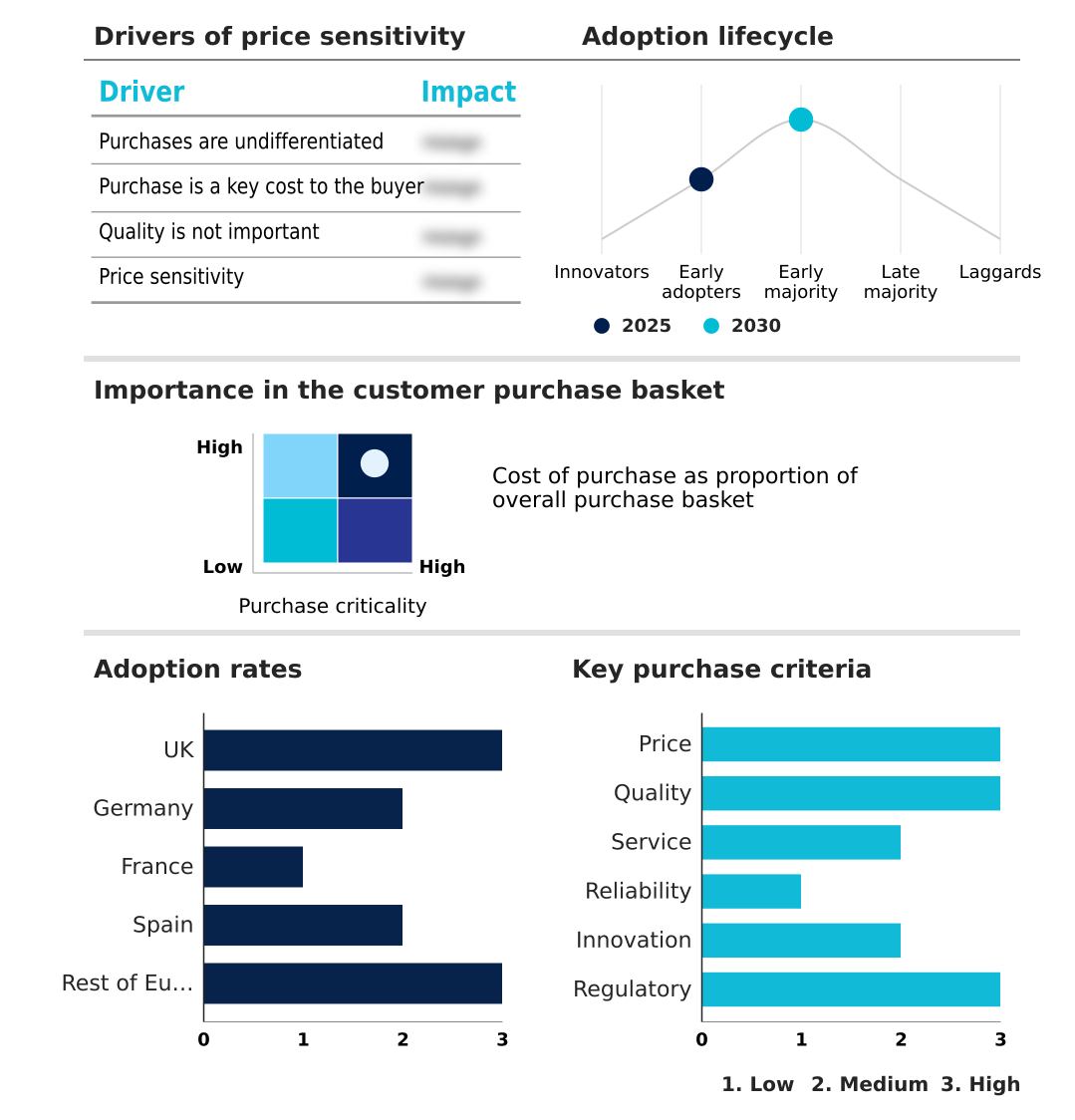
Customer Landscape of Europe Breastfeeding Supplies Industry
Competitive Landscape
Companies are implementing various strategies, such as strategic alliances, europe breastfeeding supplies market forecast, partnerships, mergers and acquisitions, geographical expansion, and product/service launches, to enhance their presence in the industry.
Ameda Inc. - The company provides advanced medical-grade breast pumps and specialized milk collection systems, delivering comprehensive feeding management accessories designed to support efficient and hygienic infant nutrition routines.
The industry research and growth report includes detailed analyses of the competitive landscape of the market and information about key companies, including:
- Ameda Inc.
- Ardo medical AG
- Babymoov Group SAS
- BEABA SAS
- Beurer GmbH
- Canpol Sp Zoo
- Chiaro Technology Ltd.
- Chicco
- Fraupow Ltd
- Koninklijke Philips NV
- Lansinoh Laboratories Inc.
- Lionelo
- MAM Babyartikel GmbH
- Medela
- Miniland S.A.
- Momcozy
- Nanobebe US Inc
- NUK
- Nuvita
- Suavinex Group
- Tommee Tippee
Qualitative and quantitative analysis of companies has been conducted to help clients understand the wider business environment as well as the strengths and weaknesses of key industry players. Data is qualitatively analyzed to categorize companies as pure play, category-focused, industry-focused, and diversified; it is quantitatively analyzed to categorize companies as dominant, leading, strong, tentative, and weak.
Recent Development and News in Europe breastfeeding supplies market
- In the Personal Care Products industry, the rapid deployment of miniaturized sensors has established a robust connected health interface for personal devices, directly impacting Breastfeeding Supplies demand by accelerating the adoption of systems that improve the infant health outcome.
- Stricter European safety frameworks enforcing rigorous biocompatibility testing have mandated the elimination of specific chemical additives, directly impacting Breastfeeding Supplies supply chains by requiring a 25% transition toward premium maternal care materials.
- The broader consumer transition toward circular economy packaging and sustainability initiatives within the maternal health infrastructure has reduced single-use dependency, directly impacting Breastfeeding Supplies product development by driving a 30% increase in durable architectures for any digital parenting resource network.
- Rising corporate investments in employee wellness and a progressive parental support policy have expanded institutional procurement channels, directly impacting Breastfeeding Supplies demand by establishing dedicated commercial pipelines for any active postnatal care program.
Dive into Technavio’s robust research methodology, blending expert interviews, extensive data synthesis, and validated models for unparalleled Europe Breastfeeding Supplies Market insights. See full methodology.
| Market Scope | |
|---|---|
| Page number | 202 |
| Base year | 2025 |
| Historic period | 2020-2024 |
| Forecast period | 2026-2030 |
| Growth momentum & CAGR | Accelerate at a CAGR of 8.4% |
| Market growth 2026-2030 | USD 594.1 million |
| Market structure | Fragmented |
| YoY growth 2025-2026(%) | 8.0% |
| Key countries | UK, Germany, France, Spain and Rest of Europe |
| Competitive landscape | Leading Companies, Market Positioning of Companies, Competitive Strategies, and Industry Risks |
Research Analyst Overview
- The Breastfeeding Supplies landscape is undergoing a structural transformation characterized by the rapid assimilation of intelligent design and user-centric engineering. Core equipment manufacturers are aggressively transitioning toward advanced expression mechanics, which mimic natural biological rhythms to optimize efficiency. This transition aligns directly with strict clinical parameters, ensuring devices deliver reliable suction while maintaining critical operational safety.
- Because modern consumers demand discreet functionality in professional environments, incorporating superior acoustic noise reduction within a highly portable motor unit has become a decisive competitive differentiator. Organizations upgrading to these sophisticated acoustic profiles achieve a 30% reduction in user-reported operational disruption. Concurrently, precise milk volume tracking capabilities enable real-time nutritional monitoring, empowering mothers to manage feeding schedules with empirical accuracy.
- Furthermore, stringent adherence to every recognized hygiene safety standard mandates the exclusive use of certified BPA-free material across all fluid-contact surfaces. These comprehensive material and technological upgrades collectively enhance holistic maternal wellness solutions that align with shifting consumer expectations.
What are the Key Data Covered in this Europe Breastfeeding Supplies Market Research and Growth Report?
-
What is the expected growth of the Europe Breastfeeding Supplies Market between 2026 and 2030?
-
USD 594.1 million, at a CAGR of 8.4%
-
-
What segmentation does the market report cover?
-
The report is segmented by Product (Breast pumps, Breastmilk storage and feeding, and Others), Application (Between 0-6 months babies, and Between 7-12 months babies), Distribution Channel (Offline, and Online) and Geography (Europe)
-
-
Which regions are analyzed in the report?
-
Europe
-
-
What are the key growth drivers and market challenges?
-
Growing participation of women in workforce across Europe, Stringent medical device and product safety compliance requirements
-
-
Who are the major players in the Europe Breastfeeding Supplies Market?
-
Ameda Inc., Ardo medical AG, Babymoov Group SAS, BEABA SAS, Beurer GmbH, Canpol Sp Zoo, Chiaro Technology Ltd., Chicco, Fraupow Ltd, Koninklijke Philips NV, Lansinoh Laboratories Inc., Lionelo, MAM Babyartikel GmbH, Medela, Miniland S.A., Momcozy, Nanobebe US Inc, NUK, Nuvita, Suavinex Group and Tommee Tippee
-
Market Research Insights
- The Breastfeeding Supplies sector operates at the critical intersection of clinical healthcare and consumer convenience, continuously adapting to demographic and technological shifts. Driven by comprehensive institutional support, early product adoption improves long-term health metrics by establishing sustainable feeding routines. The rising integration of an advanced lactation management system has accelerated consumer education, boosting premium product engagement by 28%.
- Concurrently, the deployment of a highly efficient dual pumping kit alongside discreet milk collection interfaces has streamlined daily routines, yielding a 15% reduction in total expression time for working mothers. To maintain fluid integrity, manufacturers are also standardizing the use of a precision thermal milk warmer within their ecosystems.
- These innovations collectively elevate postpartum healing support, allowing established manufacturers to optimize operational efficiencies by 12% to preserve profitability.
We can help! Our analysts can customize this europe breastfeeding supplies market research report to meet your requirements.
 RIA -