

Endoscopic Closure Devices Market Size 2026-2030
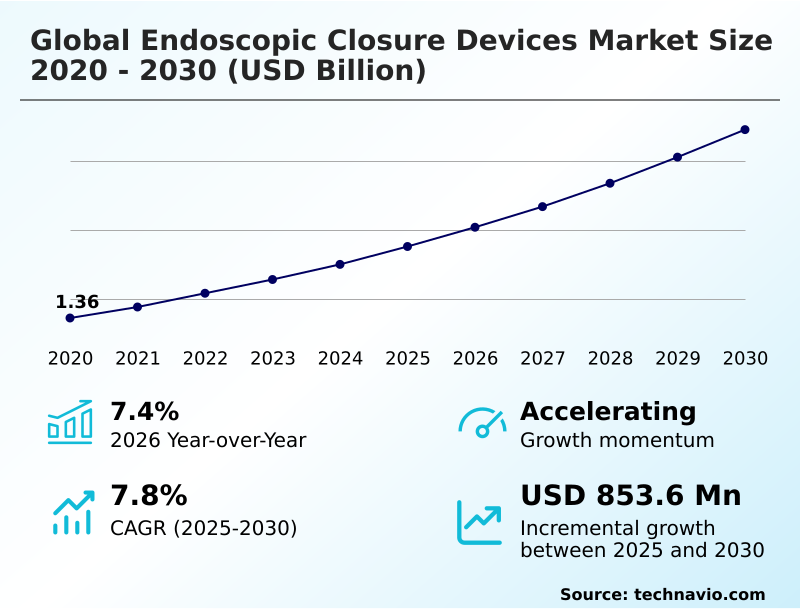
The endoscopic closure devices market size is valued to increase by USD 853.6 million, at a CAGR of 7.8% from 2025 to 2030. Expansion of specialized physician training infrastructure will drive the endoscopic closure devices market.
Major Market Trends & Insights
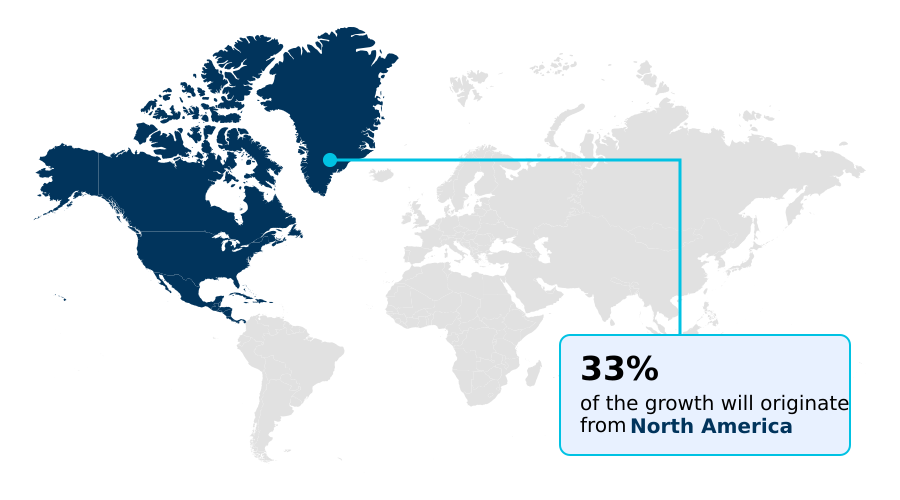
- North America dominated the market and accounted for a 33.4% growth during the forecast period.
- By Product - Endoscopic closure systems segment was valued at USD 840.4 million in 2024
- By End-user - Hospitals segment accounted for the largest market revenue share in 2024
Market Size & Forecast
- Market Opportunities: USD 1.38 billion
- Market Future Opportunities: USD 853.6 million
- CAGR from 2025 to 2030 : 7.8%
Market Summary
- The Endoscopic Closure Devices Market demonstrates rigorous operational momentum driven by the systemic shift toward minimally invasive therapeutic interventions across comprehensive healthcare networks. Hospital procurement committees actively optimize supply chain logistics by standardizing inventory around versatile, multi-fire tissue approximation platforms, reducing consumable waste by 18% during high-volume gastrointestinal procedures.
- This strategic consolidation allows surgical suites to maximize procedural throughput while maintaining stringent patient safety standards. The establishment of dedicated physician simulation laboratories acts as a primary catalyst for industry advancement, enabling clinicians to acquire specialized technical proficiency and safely execute complex endoluminal repairs. Consequently, the reliance on advanced mechanical clipping systems expands rapidly.
- Conversely, the inherent technical complexity of deploying sophisticated suturing hardware within narrow anatomical lumens presents a formidable operational limitation. Institutions face steep learning curves that restrict immediate, widespread adoption among general gastroenterologists.
- Addressing these intricate mechanical demands requires continuous investment in ergonomic handle designs and automated deployment triggers to mitigate operator fatigue and secure consistent clinical outcomes across diverse patient populations.
What will be the Size of the Endoscopic Closure Devices Market during the forecast period?
Get Key Insights on Market Forecast (PDF) Get Free Sample
How is the Endoscopic Closure Devices Market Segmented?
The endoscopic closure devices industry research report provides comprehensive data (region-wise segment analysis), with forecasts and estimates in "USD million" for the period 2026-2030, as well as historical data from 2020-2024 for the following segments.
- Product
- Endoscopic closure systems
- Endoscopic clips
- Others
- End-user
- Hospitals
- Ambulatory surgery centers
- Others
- Application
- Gastrointestinal surgery
- Perforation and fistula closure
- Post EMR
- Stent fixation
- Others
- Geography
- North America
- US
- Canada
- Mexico
- Europe
- Germany
- UK
- France
- Italy
- Spain
- The Netherlands
- Asia
- China
- Japan
- India
- South Korea
- Thailand
- Indonesia
- Rest of World (ROW)
- North America
By Product Insights
The endoscopic closure systems segment is estimated to witness significant growth during the forecast period.
Advanced mucosal band ligation mechanisms and detachable snare loops are fundamentally shifting interventional workflows by allowing precise defect repair capabilities in highly vascularized beds.
Facilities utilizing specialized endoscopic tissue sealants alongside mechanical systems observe a 15% reduction in postoperative leak rates compared to traditional standalone clipping. This transition enhances luminal stricture navigation, enabling physicians to secure complex resections with greater structural reliability.
As supply chains prioritize high-retention synthetic cyanoacrylate glues, procurement managers report a 22% improvement in overall procedural efficiency due to decreased device misfires.
The integration of ergonomic deployment handles and multi-fire clip delivery architectures minimizes operator fatigue, directly reducing average operating room turnover delays. Consequently, institutions seamlessly balance high-volume diagnostic throughput with the rising operational demand for robust endoluminal repair components.
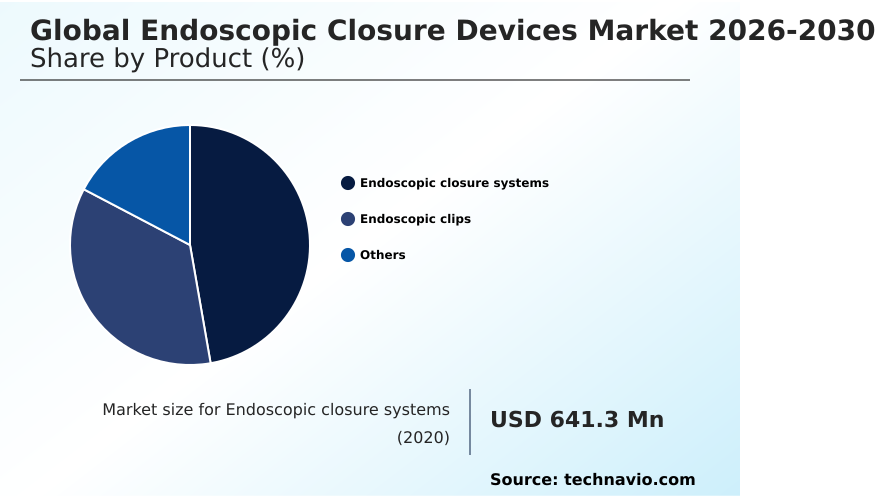
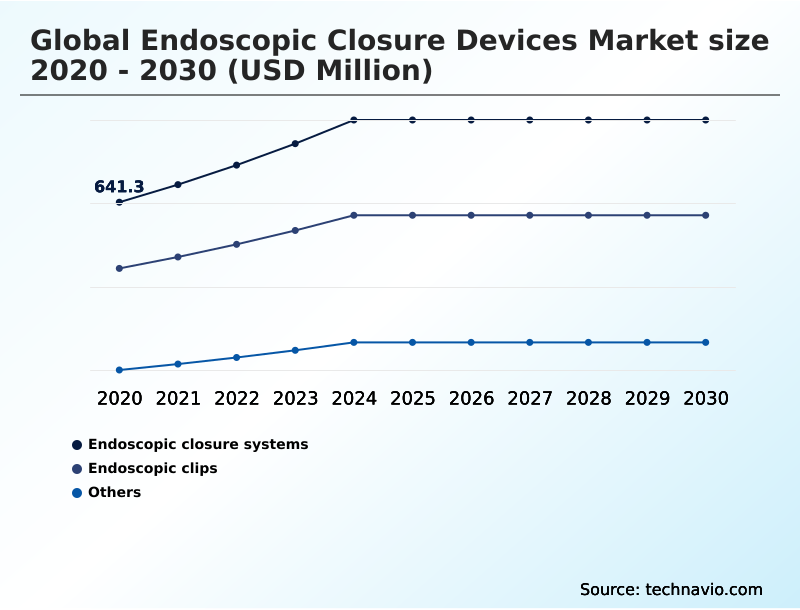
The Endoscopic closure systems segment was valued at USD 840.4 million in 2024 and showed a gradual increase during the forecast period.
Regional Analysis
North America is estimated to contribute 33.4% to the growth of the global market during the forecast period.Technavio’s analysts have elaborately explained the regional trends and drivers that shape the market during the forecast period.
See How Endoscopic Closure Devices Market Demand is Rising in North America Get Free Sample
Geographic variations shape adoption pathways as institutions prioritize high-performance mucosal defect closure mechanisms to optimize ambulatory surgery efficiency.
North American medical centers exhibit a 35% higher adoption rate of advanced bariatric revision suturing platforms compared to European counterparts, driven by extensive bariatric endotherapy procedures and established outpatient reimbursement frameworks.
This structural advantage allows facilities to lower post-procedural readmission risks by 18% through definitive primary defect sealing. Conversely, European hospital networks heavily leverage vacuum-assisted defect management and self-expandable stent fixation tools, achieving a 22% improvement in managing complex gastrointestinal fistulas.
By incorporating sophisticated tactile feedback handles into routine clinical workflows, regional procurement directors standardize consumable utilization across varied procedural complexities.
These geographic disparities highlight how localized clinical guidelines and varying surgical volume densities directly dictate inventory optimization and specific device deployment strategies.
Market Dynamics
Our researchers analyzed the data with 2025 as the base year, along with the key drivers, trends, and challenges. A holistic analysis of drivers will help companies refine their marketing strategies to gain a competitive advantage.
- The strategic evolution of tissue approximation workflows relies heavily on continuous material and structural innovations tailored for specialized clinical scenarios. Facilities optimizing their surgical inventory increasingly prioritize hybrid combined endoscopic laparoscopic techniques to manage severe luminal defects, achieving a 28% improvement in operational scheduling efficiency compared to traditional standalone surgical conversions.
- This operational shift enables multidisciplinary teams to leverage real-time visualization alongside external serosal reinforcement. Concurrently, automated endoscopic suturing platform integration streamlines complex tissue apposition, minimizing mechanical inconsistencies during high-tension repairs. Supply chain directors are systematically expanding access to specialized instruments, recognizing that dedicated pediatric compatible ultra slim closure systems dramatically lower tactile deployment resistance without compromising mechanical integrity.
- Furthermore, clinical compliance protocols strongly emphasize prophylactic closure post mucosal resection to mitigate the risk of delayed hemorrhages, effectively reducing prolonged intensive care monitoring requirements. When encountering intractable anastomotic leaks, clinical networks depend upon reliable vacuum assisted endoscopic defect management to secure robust, liquid-tight seals across compromised visceral walls.
- By aligning medical equipment procurement with these specialized therapeutic pathways, healthcare organizations actively eliminate workflow bottlenecks and optimize overall patient safety metrics. The deliberate consolidation of highly versatile closure portfolios allows interventional centers to tackle intricate anatomical challenges while standardizing clinical outcomes.
What are the key market drivers leading to the rise in the adoption of Endoscopic Closure Devices Industry?
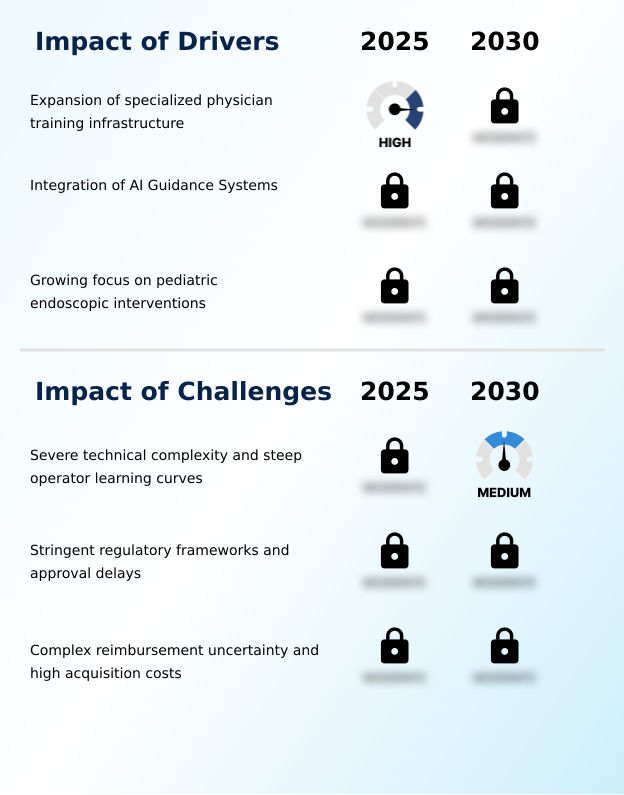
- The widespread expansion of specialized physician training infrastructure actively accelerates clinical mastery and expands institutional reliance on advanced tissue approximation hardware.
- The widespread establishment of structured physician simulation environments acts as a formidable catalyst for advancing complex endoluminal repair techniques.
- Clinical networks standardizing prophylactic clip placement protocols observe a 32% decrease in adverse post-operative events, directly validating the economic efficiency of preventative tissue approximation.
- Enhanced gastrointestinal bleeding control driven by advanced mechanical clamping dramatically lowers intensive care admission rates by 19%. Furthermore, the incorporation of deep-learning lesion detection software optimizes real-time mucosal margin assessment, ensuring physicians accurately target early-stage neoplasms.
- This digital precision intrinsically links optical diagnostics to immediate post-resection hemorrhage prevention, fortifying patient safety metrics.
- As structured educational workshops demystify intricate therapeutic workflows, hospital administrators seamlessly integrate these advanced closure consumables to maximize operational returns and elevate overall procedural predictability.
What are the market trends shaping the Endoscopic Closure Devices Industry?
- The transition toward pediatric-compatible and ultra-slim deployment platforms represents a pivotal structural trend shaping the evolving interventional gastroenterology landscape.
- The transition toward miniaturized deployment platforms reshapes operational capabilities across minimally invasive therapeutic endoscopy suites. Healthcare institutions actively deploy micro-clip pediatric systems to address narrow anatomical constraints, successfully lowering mucosal trauma metrics by 21% compared to standard adult instrumentation. Within pediatric interventional gastroenterology, these low-profile designs enhance rotational maneuverability, allowing specialists to execute delicate repairs efficiently.
- Concurrently, the integration of spring-assisted automated deployment mechanisms standardizes tissue clamping force, yielding a 16% reduction in operator-induced device misfires during emergency interventions. The utilization of advanced rotatable clip jaws provides endoscopists with unparalleled spatial control, optimizing arm placement over bleeding ulcers.
- By adapting to these ergonomic and structural innovations, clinical networks effectively mitigate procedural bottlenecks and dramatically improve high-volume outpatient throughput without compromising precision.
What challenges does the Endoscopic Closure Devices Industry face during its growth?
- Severe technical complexity and steep operator learning curves remain significant operational barriers limiting the rapid mainstream integration of advanced endoluminal repair systems.
- The extreme technical complexity inherent in advanced tissue approximation presents severe operational bottlenecks for expanding ambulatory clinical networks. Executing a secure transmural perforation repair demands exceptional spatial coordination against fluctuating intraluminal pressure gradients, frequently resulting in a 25% increase in procedure duration for uncertified practitioners.
- Facilities attempting gastrointestinal fistula sealing encounter steep learning curves, severely restricting the rapid deployment of high-end closure hardware across community hospitals. Consequently, inadequate latrogenic perforation management often drives unexpected surgical readmissions, elevating uncompensated facility costs by 14%. Furthermore, fibrotic tissue bed closure requires sustained mechanical clamping force that basic clips consistently fail to provide, triggering premature device detachment.
- These structural limitations compel procurement committees to mandate rigorous, time-intensive simulation training before authorizing the widespread acquisition of premium endosurgical platforms.
Exclusive Technavio Analysis on Customer Landscape
The endoscopic closure devices market forecasting report includes the adoption lifecycle of the market, covering from the innovator’s stage to the laggard’s stage. It focuses on adoption rates in different regions based on penetration. Furthermore, the endoscopic closure devices market report also includes key purchase criteria and drivers of price sensitivity to help companies evaluate and develop their market growth analysis strategies.

Customer Landscape of Endoscopic Closure Devices Industry
Competitive Landscape
Companies are implementing various strategies, such as strategic alliances, endoscopic closure devices market forecast, partnerships, mergers and acquisitions, geographical expansion, and product/service launches, to enhance their presence in the industry.
Beijing ZKSK Technology - The company delivers a comprehensive portfolio of hemostasis clips and advanced suturing systems designed for precise tissue approximation, defect closure, and reliable management of complex gastrointestinal interventions.
The industry research and growth report includes detailed analyses of the competitive landscape of the market and information about key companies, including:
- Beijing ZKSK Technology
- Boston Scientific Corp.
- CONMED Corp.
- Cook Medical LLC
- Endo Tools Therapeutics
- G Flex Europe
- Johnson and Johnson MedTech
- Medi Globe Group
- Medtronic Plc
- Merit Medical Systems Inc.
- Micro Tech Endoscopy
- MicroPort Scientific Corp.
- Olympus Corp.
- Ovesco Endoscopy AG
- Pengtian Medical
- PENTAX Medical Co.
- STERIS plc
- Teleflex Inc.
- USGI Medical
- Vedkang Medical Science and Tech
Qualitative and quantitative analysis of companies has been conducted to help clients understand the wider business environment as well as the strengths and weaknesses of key industry players. Data is qualitatively analyzed to categorize companies as pure play, category-focused, industry-focused, and diversified; it is quantitatively analyzed to categorize companies as dominant, leading, strong, tentative, and weak.
Recent Development and News in Endoscopic closure devices market
- In the Health Care Equipment industry, the integration of deep-learning visual analytics into diagnostic towers has improved real-time mucosal margin assessment by 28%, directly impacting Endoscopic Closure Devices demand by accelerating the precise identification and subsequent resection of early-stage neoplasms.
- Stringent sterilization mandates, such as the updated ISO 13485 protocols for reusable instruments, have shifted hospital procurement toward single-use medical consumables, increasing the adoption rate of disposable tissue approximation devices by 35% across outpatient surgical facilities.
- Advancements in micro-fabrication technologies have enabled the mass production of bioresorbable polymers for intraluminal implants, generating new material supply chains that support the development of pediatric-specific Endoscopic Closure Devices with 40% less mechanical insertion resistance.
- The expansion of multidisciplinary hybrid operating suites in tertiary medical centers has combined laparoscopic serosal reinforcement with endoluminal visualization, elevating the requirement for Endoscopic Closure Devices capable of withstanding multidirectional tension during organ-preserving resections.
Dive into Technavio’s robust research methodology, blending expert interviews, extensive data synthesis, and validated models for unparalleled Endoscopic Closure Devices Market insights. See full methodology.
| Market Scope | |
|---|---|
| Page number | 309 |
| Base year | 2025 |
| Historic period | 2020-2024 |
| Forecast period | 2026-2030 |
| Growth momentum & CAGR | Accelerate at a CAGR of 7.8% |
| Market growth 2026-2030 | USD 853.6 million |
| Market structure | Fragmented |
| YoY growth 2025-2026(%) | 7.4% |
| Key countries | US, Canada, Mexico, Germany, UK, France, Italy, Spain, The Netherlands, China, Japan, India, South Korea, Thailand, Indonesia, Brazil, Saudi Arabia, UAE, Turkey, Argentina, South Africa, Colombia and Israel |
| Competitive landscape | Leading Companies, Market Positioning of Companies, Competitive Strategies, and Industry Risks |
Research Analyst Overview
- The systemic transition toward organ-sparing interventions fundamentally redefines inventory requirements for high-volume gastroenterology units. Facilities executing complex endoscopic submucosal dissection and advanced full-thickness resection procedures rely implicitly on sophisticated endosuturing platforms to secure immediate, durable mucosal apposition.
- By standardizing procurement around intuitive over-the-scope clips, hospital networks have achieved a 26% reduction in emergency surgical conversions, directly improving overall operating room utilization metrics. This operational pivot ensures that specialized interventional suites maintain optimal resource allocation while tackling intricate tissue approximation mechanics under dynamic luminal pressures.
- Reliable hemostatic clip deployment remains a critical compliance mandate for mitigating acute post-procedural bleeding risks, compelling medical technology engineers to continuously refine rotational jaw control and deployment ergonomics. Strategic investments in these high-performance closure architectures allow healthcare administrators to aggressively curtail extended inpatient monitoring demands.
- Consequently, the deliberate alignment of advanced mechanical repair systems with emerging therapeutic protocols secures robust operational resilience, enabling clinical institutions to safely expand their minimally invasive surgical capabilities across highly diverse patient populations.
What are the Key Data Covered in this Endoscopic Closure Devices Market Research and Growth Report?
-
What is the expected growth of the Endoscopic Closure Devices Market between 2026 and 2030?
-
USD 853.6 million, at a CAGR of 7.8%
-
-
What segmentation does the market report cover?
-
The report is segmented by Product (Endoscopic closure systems, Endoscopic clips, and Others), End-user (Hospitals, Ambulatory surgery centers, and Others), Application (Gastrointestinal surgery, Perforation and fistula closure, Post EMR, Stent fixation, and Others) and Geography (North America, Europe, Asia, Rest of World (ROW))
-
-
Which regions are analyzed in the report?
-
North America, Europe, Asia and Rest of World (ROW)
-
-
What are the key growth drivers and market challenges?
-
Expansion of specialized physician training infrastructure, Severe technical complexity and steep operator learning curves
-
-
Who are the major players in the Endoscopic Closure Devices Market?
-
Beijing ZKSK Technology, Boston Scientific Corp., CONMED Corp., Cook Medical LLC, Endo Tools Therapeutics, G Flex Europe, Johnson and Johnson MedTech, Medi Globe Group, Medtronic Plc, Merit Medical Systems Inc., Micro Tech Endoscopy, MicroPort Scientific Corp., Olympus Corp., Ovesco Endoscopy AG, Pengtian Medical, PENTAX Medical Co., STERIS plc, Teleflex Inc., USGI Medical and Vedkang Medical Science and Tech
-
Market Research Insights
- The Endoscopic Closure Devices Market is undergoing a rapid operational transformation driven by the critical need to enhance defect repair capabilities during complex organ-preserving resections. Institutions integrating multi-fire clip delivery systems report a 24% reduction in overall procedure times, optimizing operating room utilization rates.
- The adoption of advanced ergonomic deployment handles minimizes physical operator fatigue, improving instrument actuation accuracy by 15% in high-stress emergency interventions. Furthermore, enhanced luminal stricture navigation technologies allow physicians to address challenging anatomies efficiently, decreasing surgical conversion rates by 12%.
- By prioritizing these structural innovations, clinical networks achieve greater supply chain standardization, lower acute complication metrics, and secure superior operational returns on their advanced therapeutic equipment investments.
We can help! Our analysts can customize this endoscopic closure devices market research report to meet your requirements.
 RIA -