


Early Childhood Education Market Analysis, Size, and Forecast 2026-2030: North America (US, Canada, and Mexico), Europe (France, Germany, and UK), APAC (China, India, and Japan), South America (Brazil, Argentina, and Colombia), Middle East and Africa (Saudi Arabia, UAE, and South Africa), and Rest of World (ROW)

Early Childhood Education Market Analysis, Size, and Forecast 2026-2030:
North America (US, Canada, and Mexico), Europe (France, Germany, and UK), APAC (China, India, and Japan), South America (Brazil, Argentina, and Colombia), Middle East and Africa (Saudi Arabia, UAE, and South Africa), and Rest of World (ROW)

Published: May 2026 296 Pages SKU: IRTNTR81395

Market Overview at a Glance

$218.95 B
Market Opportunity
11.5%
CAGR 2025 - 2030
36.6%
North America Growth
$116.03 B
Child care centers segment 2024

Early Childhood Education Market Size 2026-2030

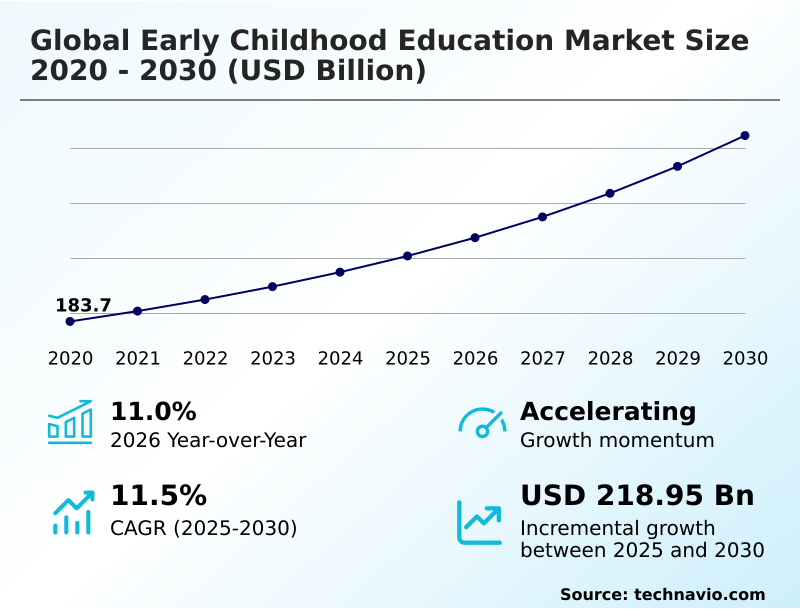
The Early Childhood Education Market size was valued at USD 302.76 billion in 2025, growing at a CAGR of 11.5% during the forecast period 2026-2030.

Major Market Trends & Insights

  • North America dominated the market and accounted for a 36.6% growth during the forecast period.
  • By Type - Child care centers segment was valued at USD 116.03 billion in 2024
  • By Age Group - Children aged 3 to 6 years segment accounted for the largest market revenue share in 2024

Market Size & Forecast

  • Historic Market Opportunities 2020-2024: USD 338.01 billion
  • Market Future Opportunities 2025-2030: USD 218.95 billion
  • CAGR from 2025 to 2030 : 11.5%

Market Summary

  • The early childhood education market is experiencing significant regional divergence, with North America contributing over 36% of the incremental growth, compared to Europe's 27%. This expansion is primarily driven by the rising female labor force participation, which transforms early education from an optional service into an economic necessity.
  • Operationally, providers are strategically placing new centers in urban areas with high concentrations of dual-income families, optimizing for accessibility and demand density, which can reduce customer acquisition costs by up to 10%. This addresses the needs of working parents seeking reliable, high-quality care. However, the sector faces a critical challenge from a persistent shortage of qualified educators.
  • This labor issue leads to high staff turnover, which can increase operational expenses by over 15% due to recruitment and continuous training, directly impacting the financial viability of providers and affordability for families.

What will be the Size of the Early Childhood Education Market during the forecast period?
Get Key Insights on Market Forecast (PDF) Request Free Sample

How is the Early Childhood Education Market Segmented?

The early childhood education industry research report provides comprehensive data (region-wise segment analysis), with forecasts and analysis for the period 2026-2030, as well as historical data from 2020-2024 for the following segments.

  • Type
    • Child care centers
    • Nursery schools
    • Home based programs
    • Head start programs
  • Age group
    • Children aged 3 to 6 years
    • Children below 3 years
    • Children aged 5 to 8 Years
  • Channel
    • Offline
    • Hybrid
    • Online
  • Geography
    • North America
      • US
      • Canada
      • Mexico
    • Europe
      • France
      • Germany
      • UK
    • APAC
      • China
      • India
      • Japan
    • South America
      • Brazil
      • Argentina
      • Colombia
    • Middle East and Africa
      • Saudi Arabia
      • UAE
      • South Africa
    • Rest of World (ROW)

How is the Early Childhood Education Market Segmented by Type?

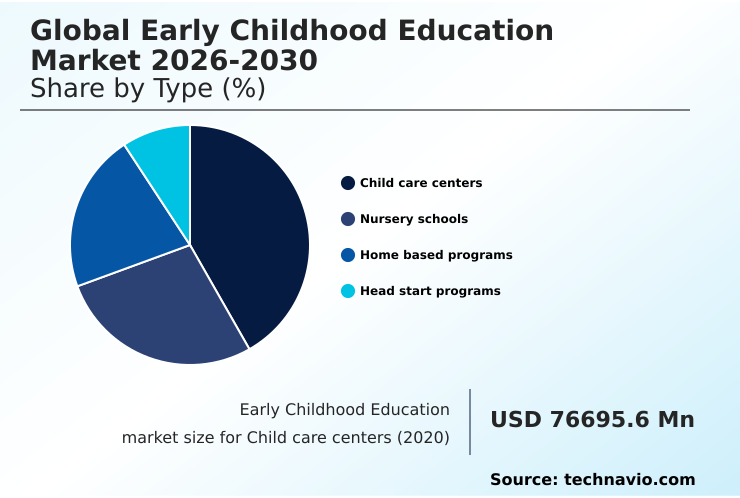
The child care centers segment is estimated to witness significant growth during the forecast period.

Child care centers represent the largest market segment, capturing over 42% of service delivery by evolving from custodial care to hubs focused on cognitive development.

This segment is increasingly adopting adaptive learning technology, with some providers reporting a 15% improvement in early engagement through gamified educational content and experiential learning.

The focus on curriculum integration and digital literacy is a direct response to parental demand for comprehensive school preparation.

Furthermore, the use of formative assessment tools provides data-driven insights into a child's progress, solidifying the role of these centers in the broader educational ecosystem.

This shift underscores a market moving toward a child-centered pedagogy and personalized educational pathways to promote positive outcomes.
Request Free Sample

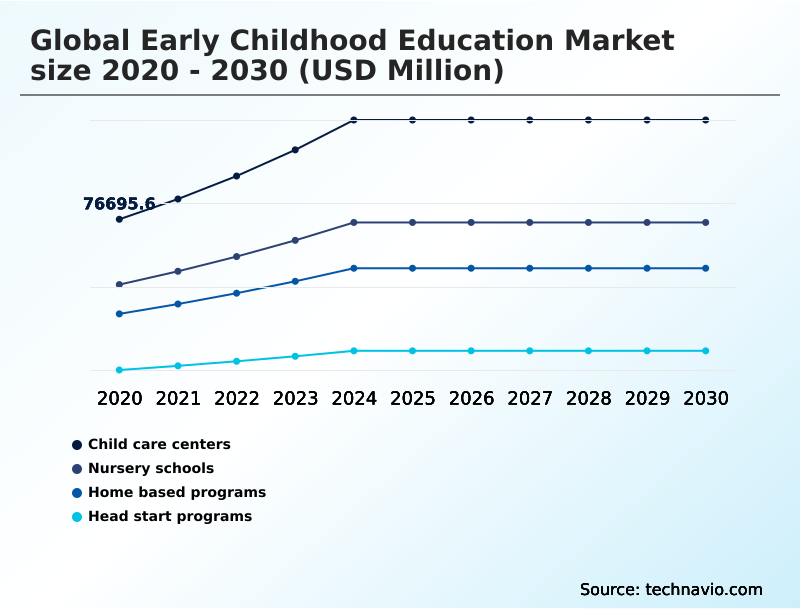
The Child care centers segment was valued at USD 116.03 billion in 2024 and showed a gradual increase during the forecast period.
Request Free Sample

How demand for the Early Childhood Education market is rising in the leading region?

North America is estimated to contribute 36.6% to the growth of the global market during the forecast period.Technavio’s analysts have elaborately explained the regional trends and drivers that shape the market during the forecast period.
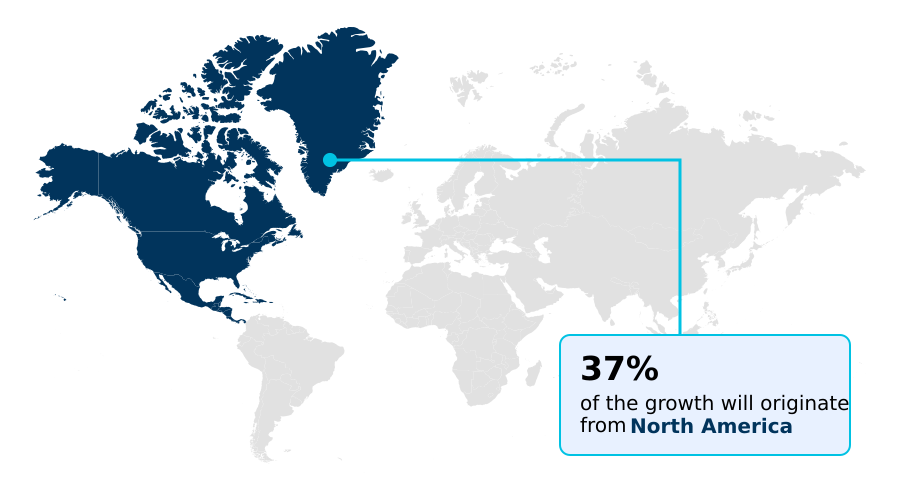
See How Early Childhood Education Market demand is rising in North America Request Free Sample

Regional market dynamics show significant variation, with APAC projected to grow at 12.2% annually, slightly outpacing North America's 11.7%. North America, however, commands the largest share of incremental growth at over 36%, driven primarily by the US market.

The adoption of a student-centric approach and AI-driven developmental tracking in North American preschools, where providers focus on student engagement metrics, contrasts with some APAC markets prioritizing academic rigor and character development.

Operational strategies differ accordingly; providers in the US invest heavily in technology to offer evidence-based instruction.

In contrast, some APAC providers focus on scaling physical locations, impacting curriculum design, which may emphasize fine motor skills via technology in one region versus gross motor skills through outdoor play in another.

What are the key Drivers, Trends, and Challenges in the Early Childhood Education Market?

Our researchers analyzed the data with 2025 as the base year, along with the key drivers, trends, and challenges. A holistic analysis of drivers will help companies refine their marketing strategies to gain a competitive advantage.

  • Understanding the current trends in early childhood education reveals a strong emphasis on promoting holistic development in children. A key focus is early childhood curriculum development that moves beyond academics to include social emotional learning activities, with schools that implement structured SEL programs reporting a 10-15% improvement in positive social behaviors.
  • Parents and educators frequently consult a kindergarten readiness checklist for parents to ensure a smooth transition, highlighting the value placed on early preparation. A central topic of discussion is the benefits of play based learning, which is proven to enhance creativity and problem-solving. This is complemented by the growing importance of digital literacy for kids.
  • Therefore, successfully integrating technology in preschool classrooms has become a priority. The role of AI in personalized education is transformative, allowing for customized learning paths that adapt to individual needs, which is a key part of effective classroom management techniques.
  • For educators, assessing developmental milestones in toddlers is now aided by digital tools that offer more accuracy than traditional observation alone. Concurrently, there is a push for creating inclusive learning environments where every child feels valued. Providers are exploring innovative strategies for improving student engagement, such as incorporating STEAM project ideas for preschoolers.
  • Finally, establishing best practices for parental engagement remains critical, as collaborative home-school partnerships are shown to boost student outcomes significantly more than isolated efforts.
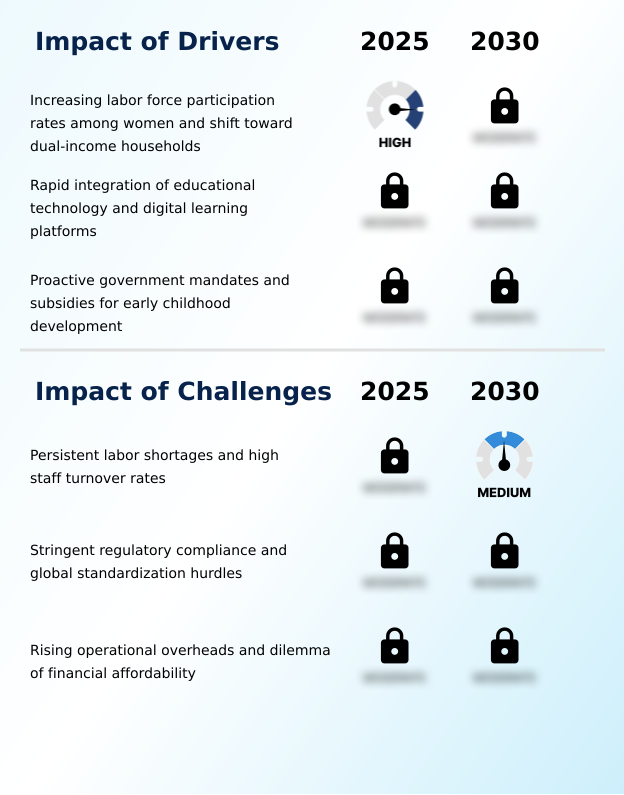
What are the key market drivers leading to the rise in the adoption of Early Childhood Education Industry?

  • Increasing labor force participation among women and a global shift toward dual-income households are key drivers fueling the demand for formal early childhood education services.

  • The market is significantly driven by the rising demand for measurable outcomes, leading to the widespread adoption of data-driven pedagogy.
  • This student-centric approach leverages interactive multimedia tools and personalized learning paths to enhance social-emotional learning, with some studies indicating a 25% increase in student engagement.
  • Government mandates for universal pre-kindergarten in several regions provide a steady stream of enrollment, compelling providers to focus on curriculum integration that meets national standards for holistic development.
  • The recognition of developmental milestones and the use of technology for tracking them are now central to program design.
  • This focus on structured, high-quality education is a direct result of a better understanding of child psychology principles and the long-term economic benefits of early intervention, solidifying the market's growth trajectory.

What are the market trends shaping the Early Childhood Education Industry?

  • The market is observing a significant trend toward the integration of adaptive AI and data analytics. This shift enables personalized developmental pathways for young learners.

  • A primary trend is the adoption of play-based learning frameworks which have shown to improve school readiness scores by up to 10% compared to rote memorization techniques. This shift toward inquiry-driven learning is transforming pedagogical frameworks globally.
  • The integration of virtual learning environments for supplemental activities is also gaining traction, with a focus on improving learning outcome assessment through digital tracking. Furthermore, there is a significant movement toward inclusive education practices and STEAM education, where curricula are designed to be accessible and engaging for all children.
  • Parental engagement platforms are becoming standard, providing transparency and strengthening the home-school connection. This focus on a more interactive and holistic educational experience reflects a deeper understanding of child development and the need for adaptable teaching methods in a digital age.

What challenges does the Early Childhood Education Industry face during its growth?

  • Persistent labor shortages and high staff turnover rates among qualified professionals present a key challenge affecting the market's growth and stability.

  • A critical challenge is the high rate of staff turnover, which can exceed 30% annually in some regions, severely impacting the consistency of care and increasing operational costs. This turnover is often linked to the need for more robust professional development for educators and competitive compensation.
  • The complexity of curriculum design for blended learning models further strains resources, requiring significant upfront investment in technology and training. Additionally, adhering to stringent child safety protocols and managing educational resource planning across multiple sites creates significant administrative overhead. This is exacerbated by the low teacher-to-student ratio required by regulations, which limits scalability.
  • Providers must innovate with tools like classroom management software to improve efficiency without compromising the quality of education.

Exclusive Technavio Analysis on Customer Landscape

The early childhood education market forecasting report includes the adoption lifecycle of the market, covering from the innovator’s stage to the laggard’s stage. It focuses on adoption rates in different regions based on penetration. Furthermore, the early childhood education market report also includes key purchase criteria and drivers of price sensitivity to help companies evaluate and develop their market growth analysis strategies.
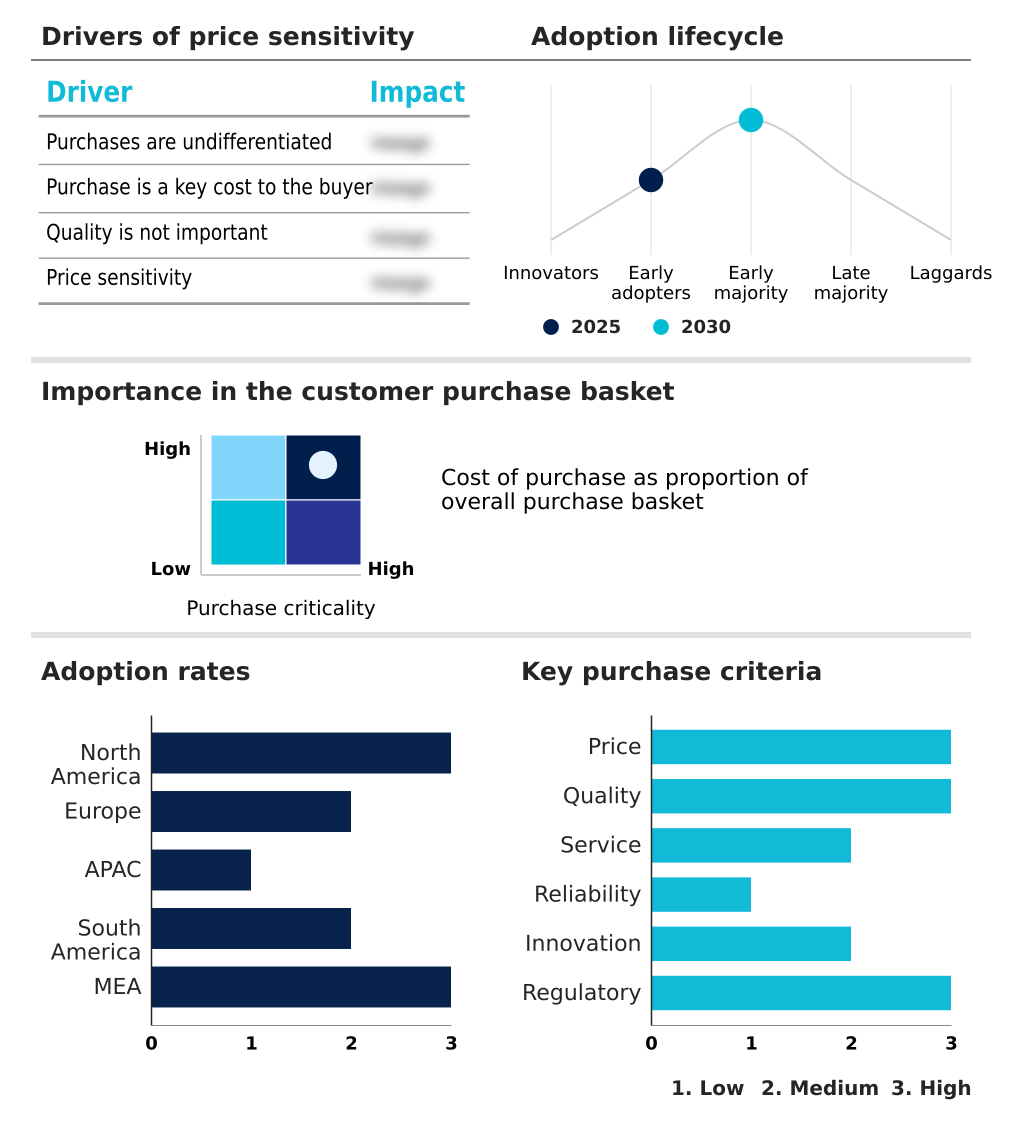
Customer Landscape of Early Childhood Education Industry

Competitive Landscape

Companies are implementing various strategies, such as strategic alliances, early childhood education market forecast, partnerships, mergers and acquisitions, geographical expansion, and product/service launches, to enhance their presence in the industry.

Age of Learning Inc. - Delivers early childhood education through digital platforms, providing a structured curriculum in reading, math, and science for children aged two to eight.

The industry research and growth report includes detailed analyses of the competitive landscape of the market and information about key companies, including:

  • Age of Learning Inc.
  • Bright Horizons Family Solutions
  • Busy Bees Holdings Ltd
  • Cognita Schools
  • Discovery Education Inc.
  • Frog Street Press LLC
  • GEMS Group Holdings Ltd.
  • Goddard Franchisor LLC
  • Houghton Mifflin Harcourt Co.
  • Kiddie Academy Educational Child
  • Kide Science
  • KiwiCo Inc.
  • Kumon North America Inc.
  • Learning Care Group Inc.
  • LEGO System AS
  • Nord Anglia Education Ltd.
  • Primrose School Franchising
  • Scholastic Corp.
  • Spring Education Group
  • Teaching Strategies LLC

Qualitative and quantitative analysis of companies has been conducted to help clients understand the wider business environment as well as the strengths and weaknesses of key industry players. Data is qualitatively analyzed to categorize companies as pure play, category-focused, industry-focused, and diversified; it is quantitatively analyzed to categorize companies as dominant, leading, strong, tentative, and weak.

Market Intelligence Radar: High-Impact Developments & Growth Signals

  • In the Education Services industry, the broad adoption of AI for personalized learning pathways in higher education is now influencing early childhood education, creating demand for adaptive learning technology and AI-driven developmental tracking tools to offer evidence-based instruction.
  • The widespread shift to hybrid and virtual learning environments across all education levels has accelerated the demand for high-quality digital content in early childhood settings, driving investment in gamified educational content and parental engagement platforms.
  • A growing emphasis on mental health and social-emotional learning throughout K-12 and university systems has increased its prioritization in early childhood education, leading to updated curriculum integration focusing on inclusive education practices and principles from child psychology.
  • Heightened data privacy regulations across the digital services landscape are imposing stricter compliance on early childhood education providers, necessitating robust child safety protocols and secure data management for platforms handling sensitive developmental data.

Dive into Technavio’s robust research methodology, blending expert interviews, extensive data synthesis, and validated models for unparalleled Early Childhood Education Market insights. See full methodology.

Market Scope
Page number 296
Base year 2025
Historic period 2020-2024
Forecast period 2026-2030
Growth momentum & CAGR Accelerate at a CAGR of 11.5%
Market growth 2026-2030 USD 218954.7 million
Market structure Fragmented
YoY growth 2025-2026(%) 11.0%
Key countries US, Canada, Mexico, France, Germany, UK, Italy, Spain, The Netherlands, China, India, Japan, Australia, South Korea, Indonesia, Brazil, Argentina, Colombia, Saudi Arabia, UAE, South Africa, Israel and Turkey
Competitive landscape Leading Companies, Market Positioning of Companies, Competitive Strategies, and Industry Risks

Request Free Sample

Research Analyst Overview

  • The early childhood education market ecosystem is a complex interplay of stakeholders, where child care centers represent the largest segment, accounting for over 42% of service delivery. The value chain begins with curriculum developers and EdTech suppliers providing materials and digital platforms.
  • Service providers—including private preschools and public programs—then deliver these services to end-users, with the 3-to-6-year-old group being the largest age cohort. Regulatory bodies exert significant influence, mandating licensing and teacher-to-child ratios that can increase operational costs by up to 20%. Distribution channels are increasingly hybrid, blending physical centers with online portals for communication and learning.
  • Supporting this structure are teacher training institutions and research organizations that drive pedagogical innovation and workforce development, ensuring the ecosystem's quality.

What are the Key Data Covered in this Early Childhood Education Market Research and Growth Report?

  • What is the expected growth of the Early Childhood Education Market between 2026 and 2030?

    • The Early Childhood Education Market is expected to grow by USD 218.95 billion during 2026-2030, registering a CAGR of 11.5%. Year-over-year growth in 2026 is estimated at 11.0%%. This acceleration is shaped by increasing labor force participation rates among women and shift toward dual-income households, which is intensifying demand across multiple end-use verticals covered in the report.

  • What segmentation does the market report cover?

    • The report is segmented by Type (Child care centers, Nursery schools, Home based programs, and Head start programs), Age Group (Children aged 3 to 6 years, Children below 3 years, and Children aged 5 to 8 Years), Channel (Offline, Hybrid, and Online) and Geography (North America, Europe, APAC, South America, Middle East and Africa). Among these, the Child care centers segment is estimated to witness significant growth during the forecast period, driven by rising adoption across key application areas. Each segment includes detailed qualitative and quantitative analysis, along with historical data from 2020-2024 and forecasts through 2030 with year-over-year growth rates.

  • Which regions are analyzed in the report?

    • The report covers North America, Europe, APAC, South America and Middle East and Africa. North America is estimated to contribute 36.6% to market growth during the forecast period. Country-level analysis includes US, Canada, Mexico, France, Germany, UK, Italy, Spain, The Netherlands, China, India, Japan, Australia, South Korea, Indonesia, Brazil, Argentina, Colombia, Saudi Arabia, UAE, South Africa, Israel and Turkey, with dedicated market size tables and year-over-year growth for each.

  • What are the key growth drivers and market challenges?

    • The primary driver is increasing labor force participation rates among women and shift toward dual-income households, which is accelerating investment and industry demand. The main challenge is persistent labor shortages and high staff turnover rates, creating operational barriers for key market participants. The report quantifies the impact of each driver and challenge across 2026 and 2030 with comparative analysis.

  • Who are the major players in the Early Childhood Education Market?

    • Key vendors include Age of Learning Inc., Bright Horizons Family Solutions, Busy Bees Holdings Ltd, Cognita Schools, Discovery Education Inc., Frog Street Press LLC, GEMS Group Holdings Ltd., Goddard Franchisor LLC, Houghton Mifflin Harcourt Co., Kiddie Academy Educational Child, Kide Science, KiwiCo Inc., Kumon North America Inc., Learning Care Group Inc., LEGO System AS, Nord Anglia Education Ltd., Primrose School Franchising, Scholastic Corp., Spring Education Group and Teaching Strategies LLC. The report provides qualitative and quantitative analysis categorizing companies as dominant, leading, strong, tentative, and weak based on their market positioning. Company profiles include business segment analysis, SWOT assessment, key offerings, and recent strategic developments.

Market Research Insights

  • The competitive landscape is fragmented, with the top 10 vendors accounting for less than 20% of total market share, indicating a highly localized provider base. Key players like Bright Horizons Family Solutions are expanding their global footprint through strategic acquisitions and the launch of digital platforms.
  • Some have introduced AI-driven portals providing parents with real-time updates on developmental milestones, improving parental engagement by over 30%. These innovations are a direct response to market demand for greater transparency and personalized learning. This technological push addresses the core driver of integrating advanced tools into curricula.
  • However, all providers face the universal challenge of rising operational costs for real estate and qualified labor, which puts pressure on profitability and affordability across the board.

We can help! Our analysts can customize this early childhood education market research report to meet your requirements.

Get in touch

1. Executive Summary

1.1 Market overview

Executive Summary - Chart on Market Overview
Executive Summary - Data Table on Market Overview
Executive Summary - Chart on Global Market Characteristics
Executive Summary - Chart on Market by Geography
Executive Summary - Chart on Market Segmentation by Type
Executive Summary - Chart on Market Segmentation by Age Group
Executive Summary - Chart on Market Segmentation by Channel
Executive Summary - Chart on Incremental Growth
Executive Summary - Data Table on Incremental Growth
Executive Summary - Chart on Company Market Positioning

2. Technavio Analysis

2.1 Analysis of price sensitivity, lifecycle, customer purchase basket, adoption rates, and purchase criteria

2.2 Criticality of inputs and Factors of differentiation

Chart on Overview on criticality of inputs and factors of differentiation

2.3 Factors of disruption

Chart on Overview on factors of disruption

2.4 Impact of drivers and challenges

Chart on Impact of drivers and challenges in 2025 and 2030

3. Market Landscape

3.1 Market ecosystem

Chart on Parent Market
Data Table on - Parent Market

3.2 Market characteristics

Chart on Market characteristics analysis

3.3 Value chain analysis

Chart on Value chain analysis

4. Market Sizing

4.1 Market definition

Data Table on Offerings of companies included in the market definition

4.2 Market segment analysis

Market segments

4.3 Market size 2025

4.4 Market outlook: Forecast for 2025-2030

Chart on Global - Market size and forecast 2025-2030 ($ million)
Data Table on Global - Market size and forecast 2025-2030 ($ million)
Chart on Global Market: Year-over-year growth 2025-2030 (%)
Data Table on Global Market: Year-over-year growth 2025-2030 (%)

5. Historic Market Size

5.1 Global Early Childhood Education Market 2020 - 2024

Historic Market Size - Data Table on Global Early Childhood Education Market 2020 - 2024 ($ million)

5.2 Type segment analysis 2020 - 2024

Historic Market Size - Type Segment 2020 - 2024 ($ million)

5.3 Age Group segment analysis 2020 - 2024

Historic Market Size - Age Group Segment 2020 - 2024 ($ million)

5.4 Channel segment analysis 2020 - 2024

Historic Market Size - Channel Segment 2020 - 2024 ($ million)

5.5 Geography segment analysis 2020 - 2024

Historic Market Size - Geography Segment 2020 - 2024 ($ million)

5.6 Country segment analysis 2020 - 2024

Historic Market Size - Country Segment 2020 - 2024 ($ million)

6. Qualitative Analysis

6.1 The AI impact on Global Early Childhood Education Market

6.2 Impact of geopolitical conflicts on Global Early Childhood Education Market

7. Five Forces Analysis

7.1 Five forces summary

Five forces analysis - Comparison between 2025 and 2030

7.2 Bargaining power of buyers

Bargaining power of buyers - Impact of key factors 2025 and 2030

7.3 Bargaining power of suppliers

Bargaining power of suppliers - Impact of key factors in 2025 and 2030

7.4 Threat of new entrants

Threat of new entrants - Impact of key factors in 2025 and 2030

7.5 Threat of substitutes

Threat of substitutes - Impact of key factors in 2025 and 2030

7.6 Threat of rivalry

Threat of rivalry - Impact of key factors in 2025 and 2030

7.7 Market condition

Chart on Market condition - Five forces 2025 and 2030

8. Market Segmentation by Type

8.1 Market segments

Chart on Type - Market share 2025-2030 (%)
Data Table on Type - Market share 2025-2030 (%)

8.2 Comparison by Type

Chart on Comparison by Type
Data Table on Comparison by Type

8.3 Child care centers - Market size and forecast 2025-2030

Chart on Child care centers - Market size and forecast 2025-2030 ($ million)
Data Table on Child care centers - Market size and forecast 2025-2030 ($ million)
Chart on Child care centers - Year-over-year growth 2025-2030 (%)
Data Table on Child care centers - Year-over-year growth 2025-2030 (%)

8.4 Nursery schools - Market size and forecast 2025-2030

Chart on Nursery schools - Market size and forecast 2025-2030 ($ million)
Data Table on Nursery schools - Market size and forecast 2025-2030 ($ million)
Chart on Nursery schools - Year-over-year growth 2025-2030 (%)
Data Table on Nursery schools - Year-over-year growth 2025-2030 (%)

8.5 Home based programs - Market size and forecast 2025-2030

Chart on Home based programs - Market size and forecast 2025-2030 ($ million)
Data Table on Home based programs - Market size and forecast 2025-2030 ($ million)
Chart on Home based programs - Year-over-year growth 2025-2030 (%)
Data Table on Home based programs - Year-over-year growth 2025-2030 (%)

8.6 Head start programs - Market size and forecast 2025-2030

Chart on Head start programs - Market size and forecast 2025-2030 ($ million)
Data Table on Head start programs - Market size and forecast 2025-2030 ($ million)
Chart on Head start programs - Year-over-year growth 2025-2030 (%)
Data Table on Head start programs - Year-over-year growth 2025-2030 (%)

8.7 Market opportunity by Type

Market opportunity by Type ($ million)
Data Table on Market opportunity by Type ($ million)

9. Market Segmentation by Age Group

9.1 Market segments

Chart on Age Group - Market share 2025-2030 (%)
Data Table on Age Group - Market share 2025-2030 (%)

9.2 Comparison by Age Group

Chart on Comparison by Age Group
Data Table on Comparison by Age Group

9.3 Children aged 3 to 6 years - Market size and forecast 2025-2030

Chart on Children aged 3 to 6 years - Market size and forecast 2025-2030 ($ million)
Data Table on Children aged 3 to 6 years - Market size and forecast 2025-2030 ($ million)
Chart on Children aged 3 to 6 years - Year-over-year growth 2025-2030 (%)
Data Table on Children aged 3 to 6 years - Year-over-year growth 2025-2030 (%)

9.4 Children below 3 years - Market size and forecast 2025-2030

Chart on Children below 3 years - Market size and forecast 2025-2030 ($ million)
Data Table on Children below 3 years - Market size and forecast 2025-2030 ($ million)
Chart on Children below 3 years - Year-over-year growth 2025-2030 (%)
Data Table on Children below 3 years - Year-over-year growth 2025-2030 (%)

9.5 Children aged 5 to 8 Years - Market size and forecast 2025-2030

Chart on Children aged 5 to 8 Years - Market size and forecast 2025-2030 ($ million)
Data Table on Children aged 5 to 8 Years - Market size and forecast 2025-2030 ($ million)
Chart on Children aged 5 to 8 Years - Year-over-year growth 2025-2030 (%)
Data Table on Children aged 5 to 8 Years - Year-over-year growth 2025-2030 (%)

9.6 Market opportunity by Age Group

Market opportunity by Age Group ($ million)
Data Table on Market opportunity by Age Group ($ million)

10. Market Segmentation by Channel

10.1 Market segments

Chart on Channel - Market share 2025-2030 (%)
Data Table on Channel - Market share 2025-2030 (%)

10.2 Comparison by Channel

Chart on Comparison by Channel
Data Table on Comparison by Channel

10.3 Offline - Market size and forecast 2025-2030

Chart on Offline - Market size and forecast 2025-2030 ($ million)
Data Table on Offline - Market size and forecast 2025-2030 ($ million)
Chart on Offline - Year-over-year growth 2025-2030 (%)
Data Table on Offline - Year-over-year growth 2025-2030 (%)

10.4 Hybrid - Market size and forecast 2025-2030

Chart on Hybrid - Market size and forecast 2025-2030 ($ million)
Data Table on Hybrid - Market size and forecast 2025-2030 ($ million)
Chart on Hybrid - Year-over-year growth 2025-2030 (%)
Data Table on Hybrid - Year-over-year growth 2025-2030 (%)

10.5 Online - Market size and forecast 2025-2030

Chart on Online - Market size and forecast 2025-2030 ($ million)
Data Table on Online - Market size and forecast 2025-2030 ($ million)
Chart on Online - Year-over-year growth 2025-2030 (%)
Data Table on Online - Year-over-year growth 2025-2030 (%)

10.6 Market opportunity by Channel

Market opportunity by Channel ($ million)
Data Table on Market opportunity by Channel ($ million)

11. Customer Landscape

11.1 Customer landscape overview

Analysis of price sensitivity, lifecycle, customer purchase basket, adoption rates, and purchase criteria

12. Geographic Landscape

12.1 Geographic segmentation

Chart on Market share by geography 2025-2030 (%)
Data Table on Market share by geography 2025-2030 (%)

12.2 Geographic comparison

Chart on Geographic comparison
Data Table on Geographic comparison

12.3 North America - Market size and forecast 2025-2030

Chart on North America - Market size and forecast 2025-2030 ($ million)
Data Table on North America - Market size and forecast 2025-2030 ($ million)
Chart on North America - Year-over-year growth 2025-2030 (%)
Data Table on North America - Year-over-year growth 2025-2030 (%)
Chart on Regional Comparison - North America
Data Table on Regional Comparison - North America

12.3.1 US - Market size and forecast 2025-2030

Chart on US - Market size and forecast 2025-2030 ($ million)
Data Table on US - Market size and forecast 2025-2030 ($ million)
Chart on US - Year-over-year growth 2025-2030 (%)
Data Table on US - Year-over-year growth 2025-2030 (%)

12.3.2 Canada - Market size and forecast 2025-2030

Chart on Canada - Market size and forecast 2025-2030 ($ million)
Data Table on Canada - Market size and forecast 2025-2030 ($ million)
Chart on Canada - Year-over-year growth 2025-2030 (%)
Data Table on Canada - Year-over-year growth 2025-2030 (%)

12.3.3 Mexico - Market size and forecast 2025-2030

Chart on Mexico - Market size and forecast 2025-2030 ($ million)
Data Table on Mexico - Market size and forecast 2025-2030 ($ million)
Chart on Mexico - Year-over-year growth 2025-2030 (%)
Data Table on Mexico - Year-over-year growth 2025-2030 (%)

12.4 Europe - Market size and forecast 2025-2030

Chart on Europe - Market size and forecast 2025-2030 ($ million)
Data Table on Europe - Market size and forecast 2025-2030 ($ million)
Chart on Europe - Year-over-year growth 2025-2030 (%)
Data Table on Europe - Year-over-year growth 2025-2030 (%)
Chart on Regional Comparison - Europe
Data Table on Regional Comparison - Europe

12.4.1 France - Market size and forecast 2025-2030

Chart on France - Market size and forecast 2025-2030 ($ million)
Data Table on France - Market size and forecast 2025-2030 ($ million)
Chart on France - Year-over-year growth 2025-2030 (%)
Data Table on France - Year-over-year growth 2025-2030 (%)

12.4.2 Germany - Market size and forecast 2025-2030

Chart on Germany - Market size and forecast 2025-2030 ($ million)
Data Table on Germany - Market size and forecast 2025-2030 ($ million)
Chart on Germany - Year-over-year growth 2025-2030 (%)
Data Table on Germany - Year-over-year growth 2025-2030 (%)

12.4.3 UK - Market size and forecast 2025-2030

Chart on UK - Market size and forecast 2025-2030 ($ million)
Data Table on UK - Market size and forecast 2025-2030 ($ million)
Chart on UK - Year-over-year growth 2025-2030 (%)
Data Table on UK - Year-over-year growth 2025-2030 (%)

12.4.4 Italy - Market size and forecast 2025-2030

Chart on Italy - Market size and forecast 2025-2030 ($ million)
Data Table on Italy - Market size and forecast 2025-2030 ($ million)
Chart on Italy - Year-over-year growth 2025-2030 (%)
Data Table on Italy - Year-over-year growth 2025-2030 (%)

12.4.5 Spain - Market size and forecast 2025-2030

Chart on Spain - Market size and forecast 2025-2030 ($ million)
Data Table on Spain - Market size and forecast 2025-2030 ($ million)
Chart on Spain - Year-over-year growth 2025-2030 (%)
Data Table on Spain - Year-over-year growth 2025-2030 (%)

12.4.6 The Netherlands - Market size and forecast 2025-2030

Chart on The Netherlands - Market size and forecast 2025-2030 ($ million)
Data Table on The Netherlands - Market size and forecast 2025-2030 ($ million)
Chart on The Netherlands - Year-over-year growth 2025-2030 (%)
Data Table on The Netherlands - Year-over-year growth 2025-2030 (%)

12.5 APAC - Market size and forecast 2025-2030

Chart on APAC - Market size and forecast 2025-2030 ($ million)
Data Table on APAC - Market size and forecast 2025-2030 ($ million)
Chart on APAC - Year-over-year growth 2025-2030 (%)
Data Table on APAC - Year-over-year growth 2025-2030 (%)
Chart on Regional Comparison - APAC
Data Table on Regional Comparison - APAC

12.5.1 China - Market size and forecast 2025-2030

Chart on China - Market size and forecast 2025-2030 ($ million)
Data Table on China - Market size and forecast 2025-2030 ($ million)
Chart on China - Year-over-year growth 2025-2030 (%)
Data Table on China - Year-over-year growth 2025-2030 (%)

12.5.2 India - Market size and forecast 2025-2030

Chart on India - Market size and forecast 2025-2030 ($ million)
Data Table on India - Market size and forecast 2025-2030 ($ million)
Chart on India - Year-over-year growth 2025-2030 (%)
Data Table on India - Year-over-year growth 2025-2030 (%)

12.5.3 Japan - Market size and forecast 2025-2030

Chart on Japan - Market size and forecast 2025-2030 ($ million)
Data Table on Japan - Market size and forecast 2025-2030 ($ million)
Chart on Japan - Year-over-year growth 2025-2030 (%)
Data Table on Japan - Year-over-year growth 2025-2030 (%)

12.5.4 Australia - Market size and forecast 2025-2030

Chart on Australia - Market size and forecast 2025-2030 ($ million)
Data Table on Australia - Market size and forecast 2025-2030 ($ million)
Chart on Australia - Year-over-year growth 2025-2030 (%)
Data Table on Australia - Year-over-year growth 2025-2030 (%)

12.5.5 South Korea - Market size and forecast 2025-2030

Chart on South Korea - Market size and forecast 2025-2030 ($ million)
Data Table on South Korea - Market size and forecast 2025-2030 ($ million)
Chart on South Korea - Year-over-year growth 2025-2030 (%)
Data Table on South Korea - Year-over-year growth 2025-2030 (%)

12.5.6 Indonesia - Market size and forecast 2025-2030

Chart on Indonesia - Market size and forecast 2025-2030 ($ million)
Data Table on Indonesia - Market size and forecast 2025-2030 ($ million)
Chart on Indonesia - Year-over-year growth 2025-2030 (%)
Data Table on Indonesia - Year-over-year growth 2025-2030 (%)

12.6 South America - Market size and forecast 2025-2030

Chart on South America - Market size and forecast 2025-2030 ($ million)
Data Table on South America - Market size and forecast 2025-2030 ($ million)
Chart on South America - Year-over-year growth 2025-2030 (%)
Data Table on South America - Year-over-year growth 2025-2030 (%)
Chart on Regional Comparison - South America
Data Table on Regional Comparison - South America

12.6.1 Brazil - Market size and forecast 2025-2030

Chart on Brazil - Market size and forecast 2025-2030 ($ million)
Data Table on Brazil - Market size and forecast 2025-2030 ($ million)
Chart on Brazil - Year-over-year growth 2025-2030 (%)
Data Table on Brazil - Year-over-year growth 2025-2030 (%)

12.6.2 Argentina - Market size and forecast 2025-2030

Chart on Argentina - Market size and forecast 2025-2030 ($ million)
Data Table on Argentina - Market size and forecast 2025-2030 ($ million)
Chart on Argentina - Year-over-year growth 2025-2030 (%)
Data Table on Argentina - Year-over-year growth 2025-2030 (%)

12.6.3 Colombia - Market size and forecast 2025-2030

Chart on Colombia - Market size and forecast 2025-2030 ($ million)
Data Table on Colombia - Market size and forecast 2025-2030 ($ million)
Chart on Colombia - Year-over-year growth 2025-2030 (%)
Data Table on Colombia - Year-over-year growth 2025-2030 (%)

12.7 Middle East and Africa - Market size and forecast 2025-2030

Chart on Middle East and Africa - Market size and forecast 2025-2030 ($ million)
Data Table on Middle East and Africa - Market size and forecast 2025-2030 ($ million)
Chart on Middle East and Africa - Year-over-year growth 2025-2030 (%)
Data Table on Middle East and Africa - Year-over-year growth 2025-2030 (%)
Chart on Regional Comparison - Middle East and Africa
Data Table on Regional Comparison - Middle East and Africa

12.7.1 Saudi Arabia - Market size and forecast 2025-2030

Chart on Saudi Arabia - Market size and forecast 2025-2030 ($ million)
Data Table on Saudi Arabia - Market size and forecast 2025-2030 ($ million)
Chart on Saudi Arabia - Year-over-year growth 2025-2030 (%)
Data Table on Saudi Arabia - Year-over-year growth 2025-2030 (%)

12.7.2 UAE - Market size and forecast 2025-2030

Chart on UAE - Market size and forecast 2025-2030 ($ million)
Data Table on UAE - Market size and forecast 2025-2030 ($ million)
Chart on UAE - Year-over-year growth 2025-2030 (%)
Data Table on UAE - Year-over-year growth 2025-2030 (%)

12.7.3 South Africa - Market size and forecast 2025-2030

Chart on South Africa - Market size and forecast 2025-2030 ($ million)
Data Table on South Africa - Market size and forecast 2025-2030 ($ million)
Chart on South Africa - Year-over-year growth 2025-2030 (%)
Data Table on South Africa - Year-over-year growth 2025-2030 (%)

12.7.4 Israel - Market size and forecast 2025-2030

Chart on Israel - Market size and forecast 2025-2030 ($ million)
Data Table on Israel - Market size and forecast 2025-2030 ($ million)
Chart on Israel - Year-over-year growth 2025-2030 (%)
Data Table on Israel - Year-over-year growth 2025-2030 (%)

12.7.5 Turkey - Market size and forecast 2025-2030

Chart on Turkey - Market size and forecast 2025-2030 ($ million)
Data Table on Turkey - Market size and forecast 2025-2030 ($ million)
Chart on Turkey - Year-over-year growth 2025-2030 (%)
Data Table on Turkey - Year-over-year growth 2025-2030 (%)

12.8 Market opportunity by geography

Market opportunity by geography ($ million)
Data Tables on Market opportunity by geography ($ million)

13. Drivers, Challenges, and Opportunity

13.1 Market drivers

Increasing labor force participation rates among women and shift toward dual-income households
Rapid integration of educational technology and digital learning platforms
Proactive government mandates and subsidies for early childhood development

13.2 Market challenges

Persistent labor shortages and high staff turnover rates
Stringent regulatory compliance and global standardization hurdles
Rising operational overheads and dilemma of financial affordability

13.3 Impact of drivers and challenges

Impact of drivers and challenges in 2025 and 2030

13.4 Market opportunities

Integration of adaptive AI and data analytics for personalized development
Emergence of nature-based learning and sustainability-focused curricula
Prioritization of social-emotional learning and holistic well-being

14. Competitive Landscape

14.1 Overview

14.2

Overview on criticality of inputs and factors of differentiation

14.3 Landscape disruption

Overview on factors of disruption

14.4 Industry risks

Impact of key risks on business

15. Competitive Analysis

15.1 Companies profiled

Companies covered

15.2 Company ranking index

15.3 Market positioning of companies

Matrix on companies position and classification

15.4 Age of Learning Inc.

Age of Learning Inc. - Overview
Age of Learning Inc. - Product / Service
Age of Learning Inc. - Key offerings
SWOT

15.5 Bright Horizons Family Solutions

Bright Horizons Family Solutions - Overview
Bright Horizons Family Solutions - Product / Service
Bright Horizons Family Solutions - Key offerings
SWOT

15.6 Busy Bees Holdings Ltd

Busy Bees Holdings Ltd - Overview
Busy Bees Holdings Ltd - Product / Service
Busy Bees Holdings Ltd - Key offerings
SWOT

15.7 Cognita Schools

Cognita Schools - Overview
Cognita Schools - Product / Service
Cognita Schools - Key offerings
SWOT

15.8 Discovery Education Inc.

Discovery Education Inc. - Overview
Discovery Education Inc. - Product / Service
Discovery Education Inc. - Key offerings
SWOT

15.9 Frog Street Press LLC

Frog Street Press LLC - Overview
Frog Street Press LLC - Product / Service
Frog Street Press LLC - Key offerings
SWOT

15.10 GEMS Group Holdings Ltd.

GEMS Group Holdings Ltd. - Overview
GEMS Group Holdings Ltd. - Product / Service
GEMS Group Holdings Ltd. - Key offerings
SWOT

15.11 Goddard Franchisor LLC

Goddard Franchisor LLC - Overview
Goddard Franchisor LLC - Product / Service
Goddard Franchisor LLC - Key offerings
SWOT

15.12 Houghton Mifflin Harcourt Co.

Houghton Mifflin Harcourt Co. - Overview
Houghton Mifflin Harcourt Co. - Product / Service
Houghton Mifflin Harcourt Co. - Key offerings
SWOT

15.13 Kiddie Academy Educational Child

Kiddie Academy Educational Child - Overview
Kiddie Academy Educational Child - Product / Service
Kiddie Academy Educational Child - Key offerings
SWOT

15.14 Kide Science

Kide Science - Overview
Kide Science - Product / Service
Kide Science - Key offerings
SWOT

15.15 KiwiCo Inc.

KiwiCo Inc. - Overview
KiwiCo Inc. - Product / Service
KiwiCo Inc. - Key offerings
SWOT

15.16 Kumon North America Inc.

Kumon North America Inc. - Overview
Kumon North America Inc. - Product / Service
Kumon North America Inc. - Key offerings
SWOT

15.17 Learning Care Group Inc.

Learning Care Group Inc. - Overview
Learning Care Group Inc. - Product / Service
Learning Care Group Inc. - Key offerings
SWOT

15.18 LEGO System AS

LEGO System AS - Overview
LEGO System AS - Product / Service
LEGO System AS - Key offerings
SWOT

16. Appendix

16.1 Scope of the report

Market definition
Objectives
Notes and caveats

16.2 Inclusions and exclusions checklist

Inclusions checklist
Exclusions checklist

16.3 Currency conversion rates for US$

16.4 Research methodology

16.5 Data procurement

Information sources

16.6 Data validation

16.7 Validation techniques employed for market sizing

16.8 Data synthesis

16.9 360 degree market analysis

16.10 List of abbreviations

Research Methodology

Technavio presents a detailed picture of the market by way of study, synthesis, and summation of data from multiple sources. The analysts have presented the various facets of the market with a particular focus on identifying the key industry influencers. The data thus presented is comprehensive, reliable, and the result of extensive research, both primary and secondary.

INFORMATION SOURCES

Primary sources

  • Manufacturers and suppliers
  • Channel partners
  • Industry experts
  • Strategic decision makers

Secondary sources

  • Industry journals and periodicals
  • Government data
  • Financial reports of key industry players
  • Historical data
  • Press releases

DATA ANALYSIS

Data Synthesis

  • Collation of data
  • Estimation of key figures
  • Analysis of derived insights

Data Validation

  • Triangulation with data models
  • Reference against proprietary databases
  • Corroboration with industry experts

REPORT WRITING

Qualitative

  • Market drivers
  • Market challenges
  • Market trends
  • Five forces analysis

Quantitative

  • Market size and forecast
  • Market segmentation
  • Geographical insights
  • Competitive landscape

Interested in this report?

Get your sample now to see our research methodology and insights!

Download Now

Frequently Asked Questions

Early Childhood Education market growth will increase by USD 218954.7 million during 2026-2030.

The Early Childhood Education market is expected to grow at a CAGR of 11.5% during 2026-2030.

Early Childhood Education market is segmented by Type (Child care centers, Nursery schools, Home based programs, Head start programs) Age group (Children aged 3 to 6 years, Children below 3 years, Children aged 5 to 8 Years) Channel (Offline, Hybrid, Online)

Age of Learning Inc., Bright Horizons Family Solutions, Busy Bees Holdings Ltd, Cognita Schools, Discovery Education Inc., Frog Street Press LLC, GEMS Group Holdings Ltd., Goddard Franchisor LLC, Houghton Mifflin Harcourt Co., Kiddie Academy Educational Child, Kide Science, KiwiCo Inc., Kumon North America Inc., Learning Care Group Inc., LEGO System AS, Nord Anglia Education Ltd., Primrose School Franchising, Scholastic Corp., Spring Education Group, Teaching Strategies LLC are a few of the key vendors in the Early Childhood Education market.

North America will register the highest growth rate of 36.6% among the other regions. Therefore, the Early Childhood Education market in North America is expected to garner significant business opportunities for the vendors during the forecast period.

US, Canada, Mexico, France, Germany, UK, Italy, Spain, The Netherlands, China, India, Japan, Australia, South Korea, Indonesia, Brazil, Argentina, Colombia, Saudi Arabia, UAE, South Africa, Israel, Turkey

  • Increasing labor force participation rates among women and shift toward dual-income households is the driving factor this market.

The Early Childhood Education market vendors should focus on grabbing business opportunities from the Type segment as it accounted for the largest market share in the base year.
RIA - Research AI Assistant
Ask RIA