


Europe DIY Home Improvement Market Size 2026-2030
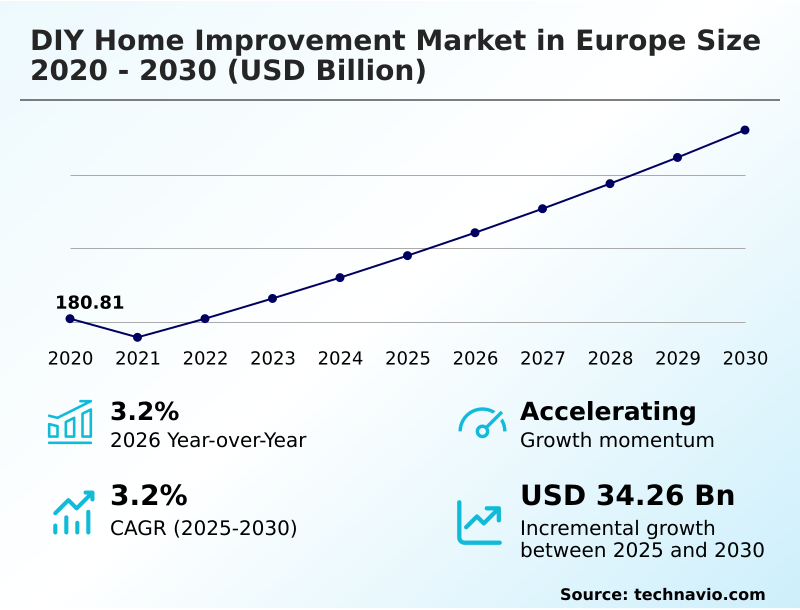
The europe diy home improvement market size is valued to increase by USD 34.26 billion, at a CAGR of 3.2% from 2025 to 2030. Energy efficiency and sustainable renovation incentives will drive the europe diy home improvement market.
Major Market Trends & Insights
- By Product - Lumber and landscape management segment was valued at USD 43.46 billion in 2024
- By Distribution Channel - Offline segment accounted for the largest market revenue share in 2024
Market Size & Forecast
- Market Opportunities: USD 51.46 billion
- Market Future Opportunities: USD 34.26 billion
- CAGR from 2025 to 2030 : 3.2%
Market Summary
- The DIY home improvement market in Europe is undergoing a significant transformation, driven by a convergence of economic, environmental, and technological factors. Homeowners are increasingly prioritizing residential asset enhancement and the creation of personalized living environments, leading to a surge in home renovation projects.
- This trend is amplified by the high cost of moving and a renewed focus on domestic self-reliance. Key market dynamics include a strong push towards energy-efficient renovation and the adoption of sustainable building materials, prompted by stringent regulations and a desire for lower utility costs.
- The integration of smart home technology and the expansion of digital marketplace platforms are empowering consumers with advanced tools for DIY project planning and execution. For instance, a retailer might leverage predictive analytics for inventory to manage stock levels of high-demand low-VOC paints and eco-friendly materials, ensuring availability for consumers undertaking modernization projects.
- This strategic alignment of inventory with emerging consumer values illustrates how data-driven decisions are becoming crucial for operational efficiency and market leadership, especially as the sector navigates supply chain volatility and the complexities of omnichannel retail integration.
What will be the Size of the Europe DIY Home Improvement Market during the forecast period?
Get Key Insights on Market Forecast (PDF) Get Free Sample
How is the Europe DIY Home Improvement Market Segmented?
The europe diy home improvement industry research report provides comprehensive data (region-wise segment analysis), with forecasts and estimates in "USD million" for the period 2026-2030, as well as historical data from 2020-2024 for the following segments.
- Product
- Lumber and landscape management
- Decor and indoor garden
- Kitchen
- Painting and wallpaper
- Others
- Distribution channel
- Offline
- Online
- Application
- Remodeling
- Repair
- Maintenance
- New construction
- Geography
- Europe
- Germany
- France
- UK
- Europe
By Product Insights
The lumber and landscape management segment is estimated to witness significant growth during the forecast period.
The lumber and landscape management segment is shifting toward climate-resilient outdoor living solutions and sustainable building materials. Homeowners increasingly view gardens as extensions of living spaces, sustaining demand for high-quality timber and prefabricated components for decking and fencing.
The integration of technology, like smart irrigation systems, is empowering DIY enthusiasts to tackle more complex projects. This trade-focused segment, influenced by a new customer journey model, leverages digital tutorials to enhance skills.
As consumers seek to increase residential property value with eco-friendly materials, retailers using cordless power tools in demonstrations have noted that demand for certain budget-friendly solutions drove a nearly 3% sales rebound in key regional markets, underscoring a pivot towards accessible sustainability and home surface protection.
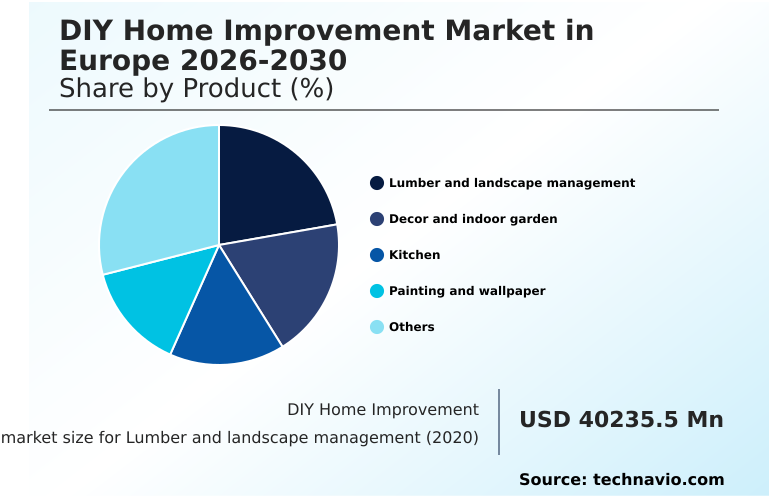
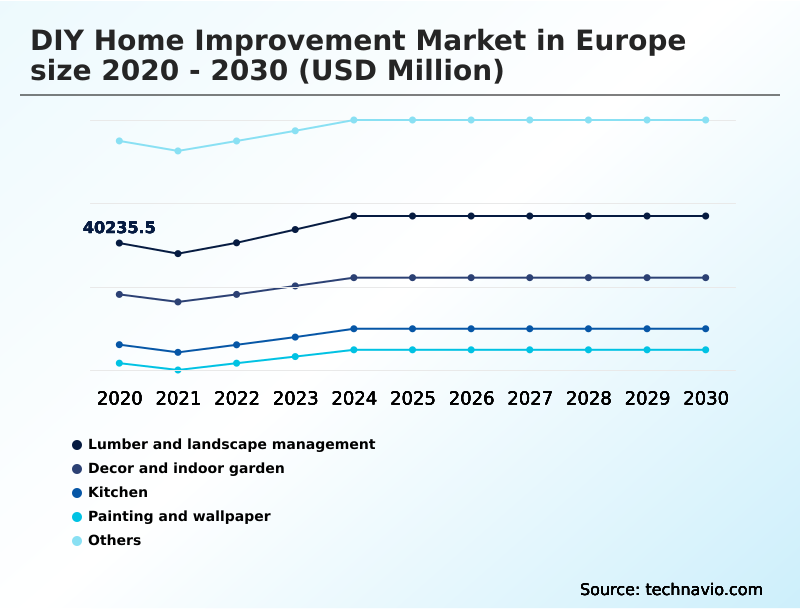
The Lumber and landscape management segment was valued at USD 43.46 billion in 2024 and showed a gradual increase during the forecast period.
Market Dynamics
Our researchers analyzed the data with 2025 as the base year, along with the key drivers, trends, and challenges. A holistic analysis of drivers will help companies refine their marketing strategies to gain a competitive advantage.
- A comprehensive analysis of the DIY home improvement market in Europe 2026-2030 reveals several interconnected themes shaping its trajectory. The focus on DIY home improvement market in Europe 2026-2030 energy efficiency incentives is paramount, directly influencing the DIY home improvement market in Europe 2026-2030 sustainable building material trends.
- This is complemented by the rapid advancement of DIY home improvement market in Europe 2026-2030 smart home technology integration, which is becoming a standard expectation. To meet this demand, retailers are adopting sophisticated DIY home improvement market in Europe 2026-2030 omnichannel retail strategies, where the DIY home improvement market in Europe 2026-2030 click-and-collect service importance cannot be overstated.
- The growth of the DIY home improvement market in Europe 2026-2030 professional trade segment focus reflects a shift in customer base, influencing DIY home improvement market in Europe 2026-2030 pro-sumer purchasing behavior.
- Key technologies like DIY home improvement market in Europe 2026-2030 augmented reality in project planning and the growing DIY home improvement market in Europe 2026-2030 role of digital tutorials are lowering entry barriers. Product-wise, the DIY home improvement market in Europe 2026-2030 cordless power tool adoption and DIY home improvement market in Europe 2026-2030 modular kitchen system popularity are notable.
- Inside the home, DIY home improvement market in Europe 2026-2030 biophilic interior design trends are driving sales of specific products like those within the DIY home improvement market in Europe 2026-2030 luxury vinyl tile market share and the rising DIY home improvement market in Europe 2026-2030 demand for low-VOC paints.
- Behind the scenes, the principles of DIY home improvement market in Europe 2026-2030 circular economy in home renovation are guiding product development.
- However, companies must address DIY home improvement market in Europe 2026-2030 supply chain challenges and the DIY home improvement market in Europe 2026-2030 regulatory compliance impact, which are influenced by the DIY home improvement market in Europe 2026-2030 impact of high energy costs.
- Success hinges on a holistic strategy, where effective DIY home improvement market in Europe 2026-2030 real-time inventory management benefits are realized; for some retailers, this has already reduced stock-outs for critical items by over 15%. This all points toward the significant DIY home improvement market in Europe 2026-2030 digital marketplace growth impact.
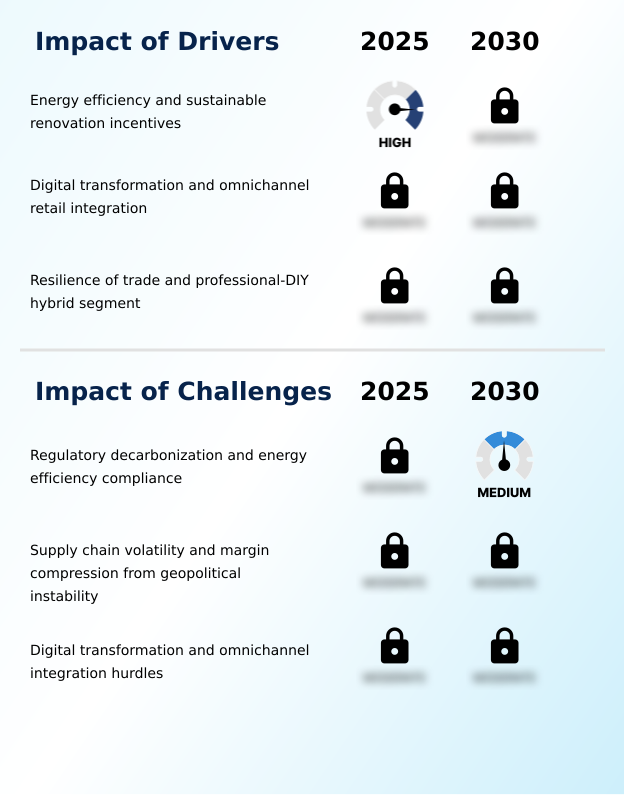
What are the key market drivers leading to the rise in the adoption of Europe DIY Home Improvement Industry?
- Incentives for energy-efficient and sustainable renovations are a primary driver stimulating market activity and investment in home improvement projects.
- Market growth is significantly driven by the pursuit of energy-efficient renovation, compelling homeowners toward residential asset enhancement. This is enabled by a sophisticated omnichannel retail integration, where augmented reality visualization tools and digital project planning software empower consumers.
- The Pro-sumer model is a critical factor, blending professional and DIY activities and fostering domestic self-reliance. Retailers are optimizing this trend with robust click-and-collect services, which are essential for delivering heavy home improvement materials.
- E-commerce sales now represent over 21% of total revenue for leading companies, marking substantial year-over-year growth.
- This digital maturity is crucial for capturing demand for modernization projects, from functional landscaping to comprehensive outdoor living solutions, reinforcing the importance of a seamless online-to-offline customer experience and supporting the market's overall momentum toward greater residential energy efficiency.
What are the market trends shaping the Europe DIY Home Improvement Industry?
- The market is increasingly shaped by regulatory mandates compelling greater energy efficiency. This is coupled with a strong consumer and legislative push toward sustainable building materials.
- Key trends reshaping the market include a pronounced shift toward unified smart home ecosystems, where cross-brand interoperability is paramount for consumers undertaking home renovation projects. The expansion of digital marketplace platforms is accelerating, creating a trade-centric retail environment that enhances DIY project planning and execution. This digital transformation supports the growing interest in aesthetic home upgrades and personalized living environments.
- Furthermore, the integration of circular economy standards is becoming a competitive differentiator, influencing product design and material choice, particularly the adoption of low-VOC paints. For retailers, successfully navigating this landscape has resulted in trade-specific revenues accounting for up to 30% of total sales, validating the strategic focus on professional and semi-professional customers.
- The release of updated connectivity standards like Matter 1.5 further empowers consumers, driving property maintenance innovation.
What challenges does the Europe DIY Home Improvement Industry face during its growth?
- Navigating complex regulatory requirements for decarbonization and ensuring compliance with evolving energy efficiency standards presents a significant challenge to industry growth.
- A primary challenge is navigating regulatory decarbonization mandates, which pressure supply chains and necessitate a pivot to high-performance insulation and other compliant building material supplies. Persistent supply chain volatility, coupled with the need for localized sourcing strategies, complicates inventory management and erodes margins.
- To counteract this, companies are implementing predictive analytics for inventory and automated logistics, with some achieving gross margin expansion to nearly 38% through aggressive cost discipline. The high cost of digital transformation, including the implementation of real-time inventory tracking, presents another hurdle.
- As consumers increasingly engage in self-driven assembly for modular extensions and garden offices, retailers must invest in technologies that support these complex home maintenance and repair projects while ensuring a resilient and efficient operational backbone.
Exclusive Technavio Analysis on Customer Landscape
The europe diy home improvement market forecasting report includes the adoption lifecycle of the market, covering from the innovator’s stage to the laggard’s stage. It focuses on adoption rates in different regions based on penetration. Furthermore, the europe diy home improvement market report also includes key purchase criteria and drivers of price sensitivity to help companies evaluate and develop their market growth analysis strategies.
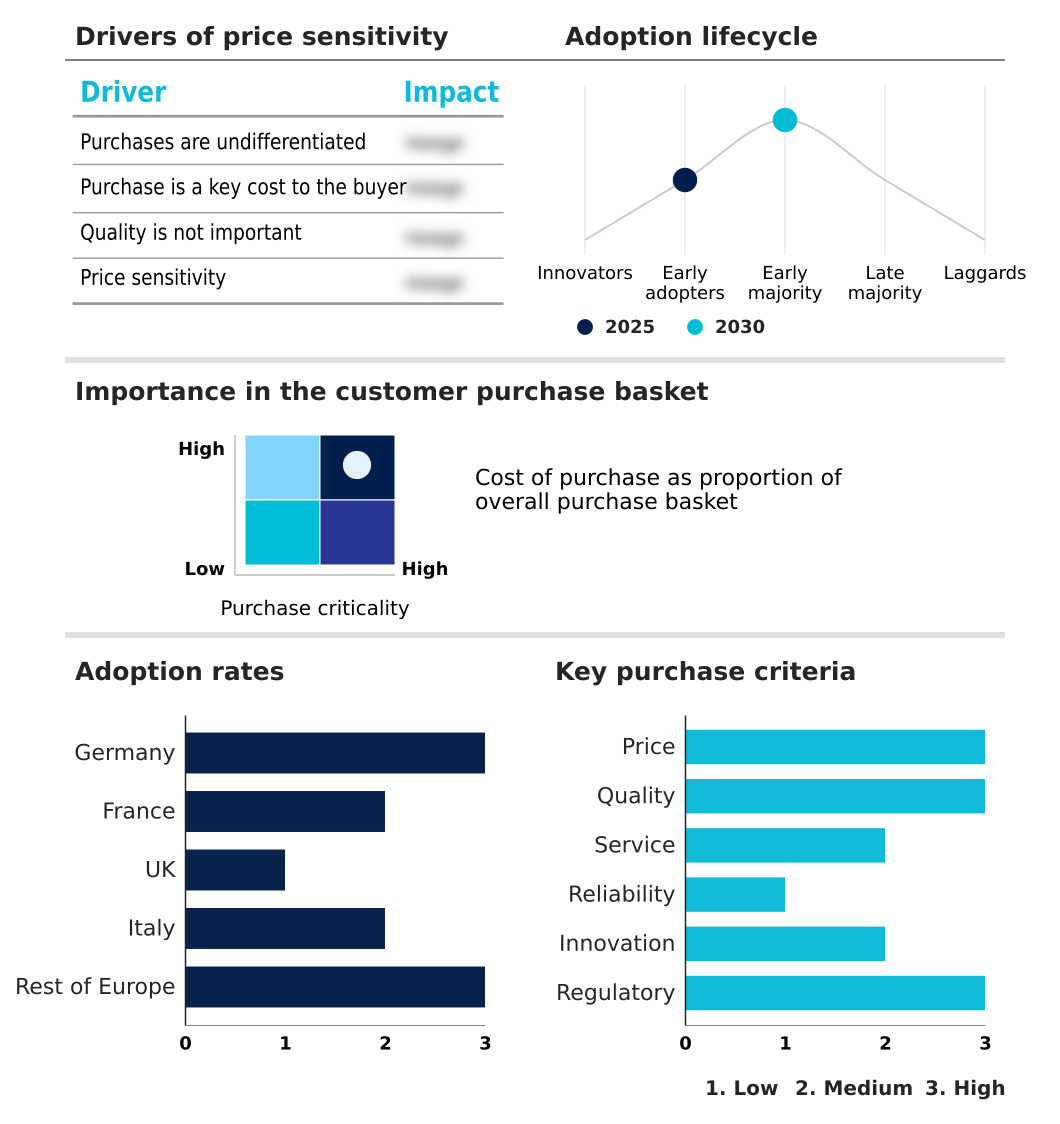
Customer Landscape of Europe DIY Home Improvement Industry
Competitive Landscape
Companies are implementing various strategies, such as strategic alliances, europe diy home improvement market forecast, partnerships, mergers and acquisitions, geographical expansion, and product/service launches, to enhance their presence in the industry.
Akzo Nobel NV - Expertise centers on advanced decorative paints and coatings, providing innovative materials for comprehensive home surface protection and wood finishing projects.
The industry research and growth report includes detailed analyses of the competitive landscape of the market and information about key companies, including:
- Akzo Nobel NV
- BAUHAUS AG
- Bricofer Italia SpA
- Byggmax Group AB
- Compagnie de Saint Gobain SA
- Einhell Germany AG
- Fiskars Group
- Grafton Group plc
- Groupe Adeo
- hagebau Handelsgesellschaft
- HELLWEG Die Profi Baumarkte
- HORNBACH Holding AG
- Kesko Corp.
- Kingfisher Plc
- Maxeda DIY Group
- Mr. Bricolage Group
- OBI GmbH and Co.
- Robert Bosch GmbH
- Wickes Group Plc
Qualitative and quantitative analysis of companies has been conducted to help clients understand the wider business environment as well as the strengths and weaknesses of key industry players. Data is qualitatively analyzed to categorize companies as pure play, category-focused, industry-focused, and diversified; it is quantitatively analyzed to categorize companies as dominant, leading, strong, tentative, and weak.
Recent Development and News in Europe diy home improvement market
- In May, 2025, The European Commission issued a new standardized template and technical guidelines to facilitate the preparation of National Building Renovation Plans, compelling DIY market participants to align commercial offerings with specific national energy-saving targets mandated across all member states.
- In April, 2025, Akzo Nobel NV initiated a multi-year industrial transformation program to streamline its European manufacturing footprint. The strategy includes consolidating production sites to lower operating costs and enhance innovation capacity in its coatings and paints divisions.
- In January, 2025, Kingfisher PLC reported that its e-commerce sales reached 21% penetration of total group sales. The growth was driven by the expansion of its digital marketplace, which is now active in France and Poland, supporting its omnichannel strategy.
- In November, 2024, HORNBACH Holding AG announced the opening of several new large-format DIY and garden centers. This expansion supported an increase in its market share across Germany, Austria, and Romania, demonstrating resilience in the physical retail channel.
Dive into Technavio’s robust research methodology, blending expert interviews, extensive data synthesis, and validated models for unparalleled Europe DIY Home Improvement Market insights. See full methodology.
| Market Scope | |
|---|---|
| Page number | 218 |
| Base year | 2025 |
| Historic period | 2020-2024 |
| Forecast period | 2026-2030 |
| Growth momentum & CAGR | Accelerate at a CAGR of 3.2% |
| Market growth 2026-2030 | USD 34257.5 million |
| Market structure | Fragmented |
| YoY growth 2025-2026(%) | 3.2% |
| Key countries | Germany, France, UK, Italy and Rest of Europe |
| Competitive landscape | Leading Companies, Market Positioning of Companies, Competitive Strategies, and Industry Risks |
Research Analyst Overview
- The DIY home improvement market in Europe is evolving through a focus on residential energy efficiency and thermal efficiency, driven by both consumer demand and regulatory pressures. Key strategies for market participants now revolve around omnichannel retail integration and catering to a blended Pro-sumer model, where the lines between professional and personal projects blur.
- This requires a sophisticated approach to the customer journey model, supported by digital tutorials and project planning software. From a product perspective, the emphasis is on sustainable building materials, eco-friendly materials, and high-performance insulation, alongside innovations in peel-and-stick wallpapers and prefabricated components. In the boardroom, aligning product development with circular economy standards is now a critical long-term decision.
- Success in this landscape is measured by the ability to manage supply chain volatility and navigate regulatory decarbonization. Firms that effectively implement predictive analytics for inventory and real-time inventory tracking are achieving gross margin improvements of several basis points, even amidst inflationary pressures, demonstrating a clear link between operational agility and financial performance in this dynamic sector.
What are the Key Data Covered in this Europe DIY Home Improvement Market Research and Growth Report?
-
What is the expected growth of the Europe DIY Home Improvement Market between 2026 and 2030?
-
USD 34.26 billion, at a CAGR of 3.2%
-
-
What segmentation does the market report cover?
-
The report is segmented by Product (Lumber and landscape management, Decor and indoor garden, Kitchen, Painting and wallpaper, and Others), Distribution Channel (Offline, and Online), Application (Remodeling, Repair, Maintenance, and New construction) and Geography (Europe)
-
-
Which regions are analyzed in the report?
-
Europe
-
-
What are the key growth drivers and market challenges?
-
Energy efficiency and sustainable renovation incentives, Regulatory decarbonization and energy efficiency compliance
-
-
Who are the major players in the Europe DIY Home Improvement Market?
-
Akzo Nobel NV, BAUHAUS AG, Bricofer Italia SpA, Byggmax Group AB, Compagnie de Saint Gobain SA, Einhell Germany AG, Fiskars Group, Grafton Group plc, Groupe Adeo, hagebau Handelsgesellschaft, HELLWEG Die Profi Baumarkte, HORNBACH Holding AG, Kesko Corp., Kingfisher Plc, Maxeda DIY Group, Mr. Bricolage Group, OBI GmbH and Co., Robert Bosch GmbH and Wickes Group Plc
-
Market Research Insights
- The market's momentum is increasingly defined by the integration of digital and physical retail, creating a seamless experience for consumers undertaking decorative projects and major interior redesigns. The strategic pivot to an omnichannel retail integration model is proving effective, with e-commerce penetration at leading retailers now exceeding 20%, a significant increase from previous years.
- This digital shift supports a variety of home improvement materials and residential property value enhancement goals. Simultaneously, the cultivation of the trade-focused segment has yielded substantial returns; this pro-sumer model now accounts for up to 30% of total group sales for some major players.
- This highlights a successful diversification strategy that captures both domestic self-reliance and small-scale professional business, ensuring a more resilient revenue stream across different economic conditions.
We can help! Our analysts can customize this europe diy home improvement market research report to meet your requirements.
 RIA -
RIA -