



Digitaling Courses Market Size 2026-2030
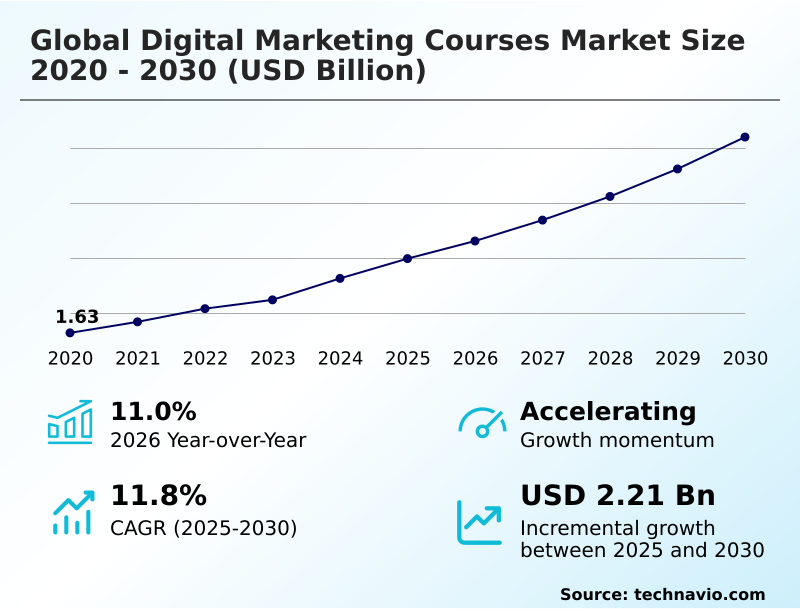
The Digitaling Courses Market size was valued at USD 2.98 billion in 2025, growing at a CAGR of 11.8% during the forecast period 2026-2030.
Major Market Trends & Insights
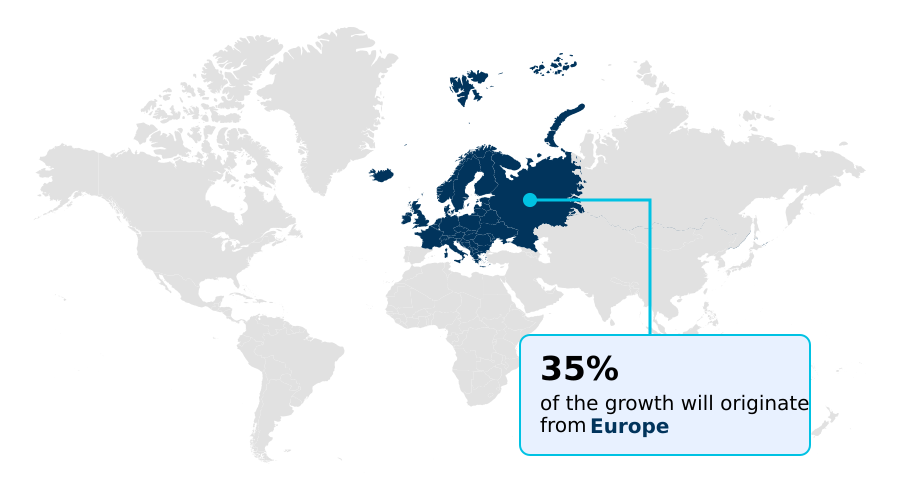
- Europe dominated the market and accounted for a 35.1% growth during the forecast period.
- By Courses - Academic courses segment was valued at USD 1.54 billion in 2024
- By Channel - Online segment accounted for the largest market revenue share in 2024
Market Size & Forecast
- Historic Market Opportunities 2020-2024: USD 3.56 billion
- Market Future Opportunities 2025-2030: USD 2.21 billion
- CAGR from 2025 to 2030 : 11.8%
Market Summary
- The digital marketing courses market is defined by a continuous demand for upskilling, with online certification courses exhibiting a 15% higher enrollment growth rate than traditional academic programs. The shift to a digital-first economy compels organizations to invest in training, with a real-world business scenario being the re-platforming of entire marketing departments around automated workflows, requiring proficiency in new toolsets.
- This need for advanced skills, particularly in AI and data analytics, is a primary market driver, as evidenced by a 25% increase in demand for data science-related marketing roles. However, the market faces the significant challenge of rapid skill obsolescence; curricula struggle to keep pace with platform algorithm updates, creating a gap between learned knowledge and practical application.
- Consequently, providers are focusing on modular, just-in-time certifications to ensure workforce relevance in a highly competitive landscape.
What will be the Size of the Digitaling Courses Market during the forecast period?
Get Key Insights on Market Forecast (PDF) Request Free Sample
How is the Digitaling Courses Market Segmented?
The digitaling courses industry research report provides comprehensive data (region-wise segment analysis), with forecasts and analysis for the period 2026-2030, as well as historical data from 2020-2024 for the following segments.
- Courses
- Academic courses
- Certification courses
- Channel
- Online
- Offline
- End-user
- Working professionals
- Students
- Entrepreneurs
- Self-employed
- Others
- Geography
- Europe
- UK
- Germany
- France
- North America
- US
- Canada
- Mexico
- APAC
- India
- China
- Japan
- South America
- Brazil
- Argentina
- Middle East and Africa
- UAE
- Saudi Arabia
- South Africa
- Rest of World (ROW)
- Europe
How is the Digitaling Courses Market Segmented by Courses?
The academic courses segment is estimated to witness significant growth during the forecast period.
Academic courses, representing over 55% of the market, are formal degree programs that integrate comprehensive business frameworks with advanced digital skill sets, showing a 15% higher proficiency in long-term strategic planning compared to vocational training.
These programs emphasize critical thinking over rote tool operation, with curricula covering complex topics like marketing mix modeling and incrementality testing within simulated advertising environments.
The value proposition lies in their institutional prestige and the development of a holistic understanding of consumer behavior, enabling graduates to master omnichannel proficiency.
By integrating digital public relations and strategies for zero-party data collection using cloud-based learning management systems, these courses prepare professionals for senior leadership, addressing the need for nuanced, semantic intent modeling in a data-centric economy.
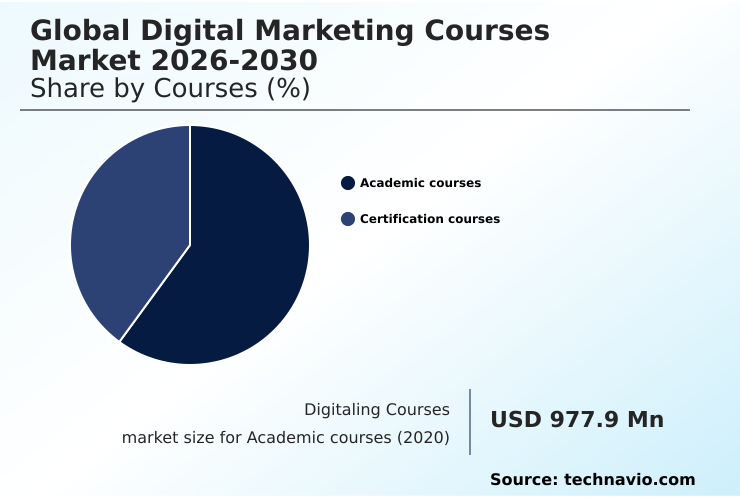
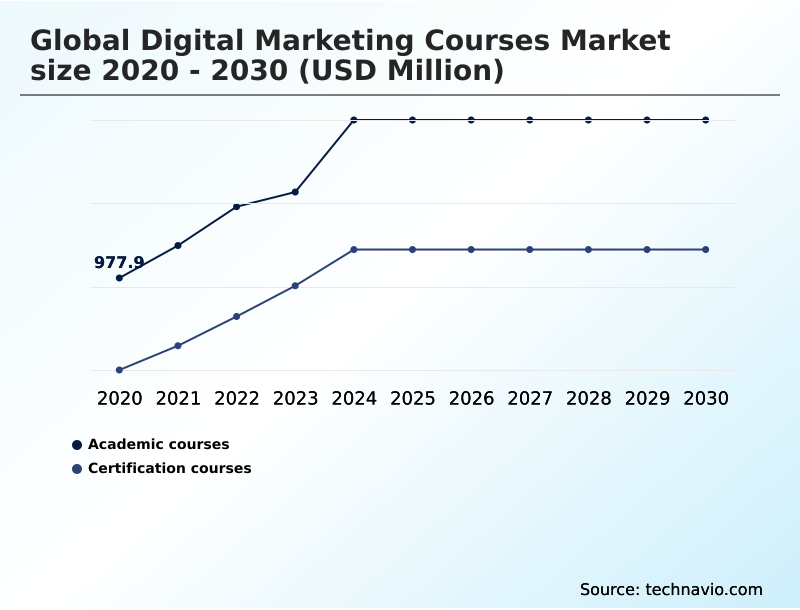
The Academic courses segment was valued at USD 1.54 billion in 2024 and showed a gradual increase during the forecast period.
How demand for the Digitaling Courses market is rising in the leading region?
Europe is estimated to contribute 35.1% to the growth of the global market during the forecast period.Technavio’s analysts have elaborately explained the regional trends and drivers that shape the market during the forecast period.
See How Digitaling Courses Market demand is rising in Europe Request Free Sample
The geographic landscape shows significant regional divergence, with APAC poised to grow 12.6% faster than North America due to explosive mobile-first adoption.
Dominant countries like India and China are prioritizing vocational training to serve a massive e-commerce ecosystem, focusing on localized content strategy and mobile-centric skills.
In contrast, North America and Europe emphasize high-level strategic competencies such as predictive attribution models and AI-assisted campaign optimization. Europe, contributing 35.1% of the incremental growth, is distinct for its focus on regulatory compliance, mandating training in cyber-secure marketing automation.
Meanwhile, MEA is emerging as a hub for sovereign artificial intelligence, aligning digital education with national economic goals.
This regional variation requires providers to adapt, from teaching user-generated content (UGC) strategy in mature markets to focusing on decentralized platforms in emerging ones.
What are the key Drivers, Trends, and Challenges in the Digitaling Courses Market?
Our researchers analyzed the data with 2025 as the base year, along with the key drivers, trends, and challenges. A holistic analysis of drivers will help companies refine their marketing strategies to gain a competitive advantage.
- The strategic importance of continuous education in digital marketing is intensifying as businesses seek to master complex, technology-driven strategies. Understanding the nuances of generative engine optimization vs traditional seo is now fundamental, as conversational AI reshapes search discovery, requiring marketers to create content for both algorithms and users.
- This shift has driven a 30% increase in demand for courses that cover advanced technical SEO. Simultaneously, the deprecation of third-party cookies has made proficiency in privacy-centric first-party data strategies a critical competency, with organizations that master it reporting a 15% higher customer retention rate.
- For smaller businesses, learning how to develop a short-form video content strategy for smbs is essential for competing on high-engagement platforms like TikTok and Reels, where authentic content drives discovery. Furthermore, exploring methods for integrating augmented reality in retail marketing allows brands to create immersive, try-before-you-buy experiences that bridge the gap between digital engagement and physical sales.
- The application of AI for automated search campaign optimization has become a standard practice, moving the professional's role from manual execution to strategic oversight of intelligent systems. This comprehensive skill set is vital for navigating a digital landscape where technology and consumer privacy are paramount.
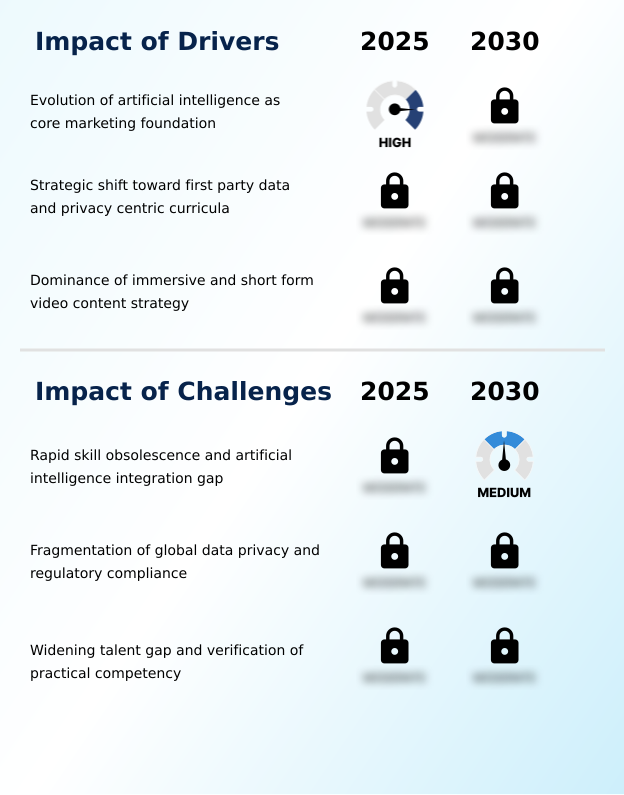
What are the key market drivers leading to the rise in the adoption of Digitaling Courses Industry?
- The evolution of artificial intelligence into a core marketing foundation is the key driver propelling market growth.
- A core driver is the evolution of AI into the foundation of marketing strategy, with autonomous marketing workflows now handling over 60% of tactical campaign execution.
- This shift demands new pedagogical frameworks focused on strategic oversight and algorithmic auditing rather than manual operation. The demand for these skills is amplified by the global move toward ethical data governance and first-party data modeling, driven by privacy regulations.
- Course providers focusing on these areas report a 20% higher enrollment.
- Additionally, the dominance of short-form video storytelling and creator-led content has fundamentally altered creative requirements, necessitating training in high-velocity content production and omnichannel strategy execution to maintain consumer engagement in a visually saturated landscape.
What are the market trends shaping the Digitaling Courses Industry?
- Hyper-personalization, enabled by AI-driven adaptive learning ecosystems, is an emerging trend. This approach moves beyond static curricula to create dynamic, learner-centric educational experiences.
- A primary market trend is the move toward hyper-personalization through AI-driven adaptive learning, which improves learner engagement by 40% compared to static course formats. These learner-centric ecosystems create a bespoke instructional model, adjusting content difficulty in real time. This shift is driven by the need for deeper comprehension of complex topics like predictive consumer analytics.
- Another transformative trend is the pivot from traditional SEO to generative engine optimization (GEO), a necessary response to AI-integrated search interfaces. This requires mastery of structured data markup to influence AI-synthesized results.
- Finally, the integration of immersive social commerce, particularly through shoppable short-form video, is reshaping curricula to focus on direct conversion, a strategy that has proven to increase add-to-cart rates by over 25%.
What challenges does the Digitaling Courses Industry face during its growth?
- Rapid skill obsolescence, compounded by an integration gap in artificial intelligence, presents a key challenge to industry growth.
- The foremost challenge is rapid skill obsolescence, with over 50% of tactical marketing skills becoming outdated within three years due to AI integration. Educational providers struggle to synchronize curricula with fast-evolving technologies like generative AI prompt engineering and conversational ad optimization. This creates a talent gap, where graduates lack verifiable vocational proficiency in crucial areas like cross-channel attribution modeling.
- Furthermore, employers report that only 30% of certified candidates possess the practical competency to translate theory into business outcomes. To remain relevant in the post-automation economy, providers must shift toward career-connected learning models that emphasize strategic skills and practical application over simple platform familiarity, backed by engagement-based performance metrics.
Exclusive Technavio Analysis on Customer Landscape
The digitaling courses market forecasting report includes the adoption lifecycle of the market, covering from the innovator’s stage to the laggard’s stage. It focuses on adoption rates in different regions based on penetration. Furthermore, the digitaling courses market report also includes key purchase criteria and drivers of price sensitivity to help companies evaluate and develop their market growth analysis strategies.
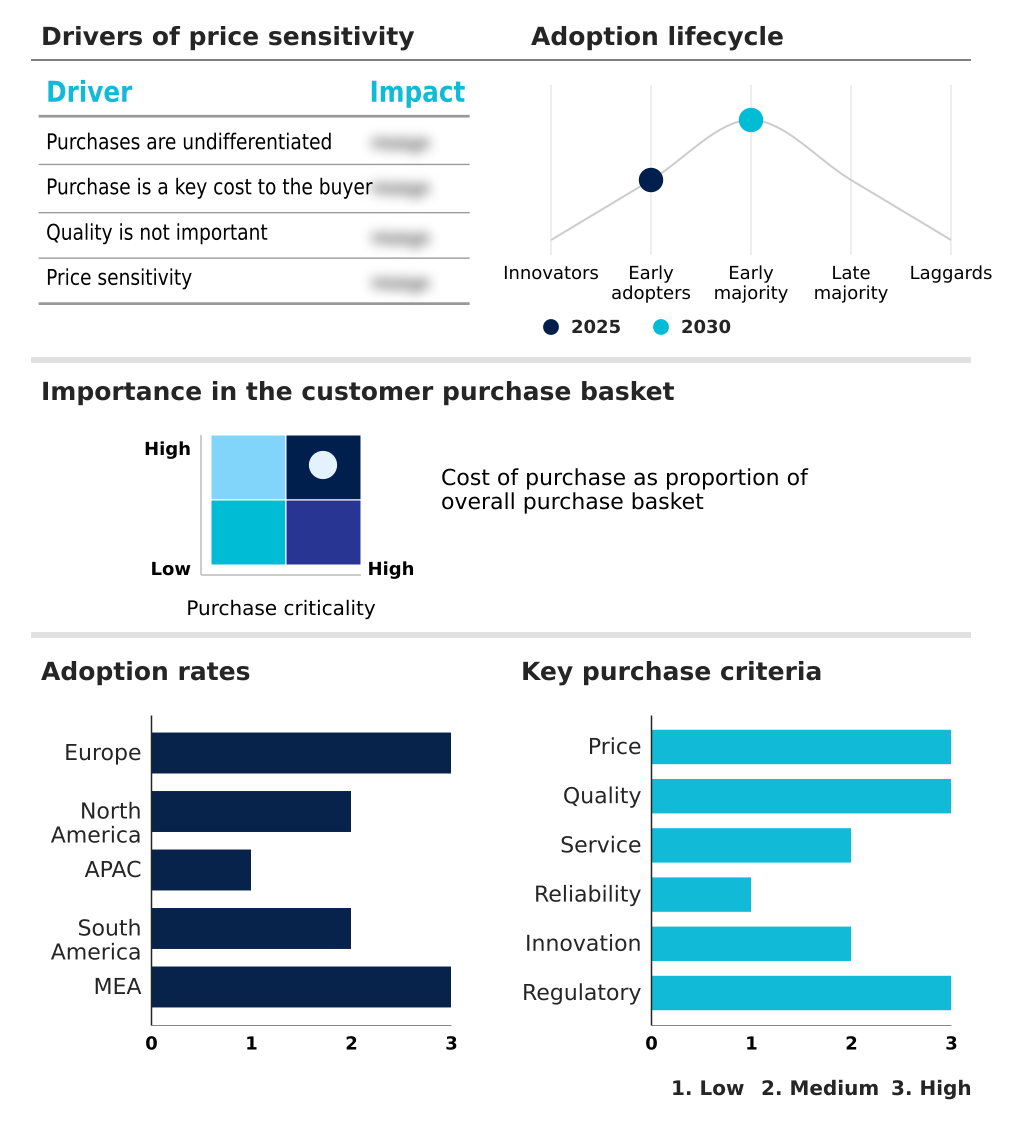
Customer Landscape of Digitaling Courses Industry
Competitive Landscape
Companies are implementing various strategies, such as strategic alliances, digitaling courses market forecast, partnerships, mergers and acquisitions, geographical expansion, and product/service launches, to enhance their presence in the industry.
Amazon.com Inc. - Offers specialized digital marketing and e-commerce courses, including SEO and SEM specializations, with certifications focused on proprietary advertising and strategic platform use.
The industry research and growth report includes detailed analyses of the competitive landscape of the market and information about key companies, including:
- Amazon.com Inc.
- Brainstation Inc.
- Chegg Inc.
- ClickMinded LLC
- Coursera Inc.
- Digital Marketing Institute Ltd
- Google LLC
- HubSpot Inc.
- JobPrepped
- Manipal Academy of Higher Edu
- Meta Platforms Inc.
- Microsoft Corp.
- NIIT Ltd.
- Reliablesoft.Net
- Semrush Holdings Inc.
- Simplilearn Solutions Pvt. Ltd
- Think and Learn Pvt. Ltd.
- Udacity Inc.
- Udemy Inc.
Qualitative and quantitative analysis of companies has been conducted to help clients understand the wider business environment as well as the strengths and weaknesses of key industry players. Data is qualitatively analyzed to categorize companies as pure play, category-focused, industry-focused, and diversified; it is quantitatively analyzed to categorize companies as dominant, leading, strong, tentative, and weak.
Market Intelligence Radar: High-Impact Developments & Growth Signals
- In the Education Services industry, the implementation of stringent data privacy mandates, such as GDPR and AI governance frameworks, has compelled a curriculum shift toward ethical data governance and regulatory compliance training.
- The widespread adoption of AI-driven adaptive learning technologies has created a demand for learner-centric ecosystems that offer hyper-personalization, fundamentally altering pedagogical frameworks for professional upskilling.
- A systemic shift within enterprises toward in-house digital capabilities has accelerated demand for career-connected learning programs and verifiable micro-credentials, directly impacting the structure of vocational proficiency certifications.
- The commercial pivot toward modular, subscription-based micro-learning and just-in-time upskilling has intensified competition, forcing providers to refine their bespoke instructional models to offer immediate, tangible skills for the post-automation economy.
Dive into Technavio’s robust research methodology, blending expert interviews, extensive data synthesis, and validated models for unparalleled Digitaling Courses Market insights. See full methodology.
| Market Scope | |
|---|---|
| Page number | 302 |
| Base year | 2025 |
| Historic period | 2020-2024 |
| Forecast period | 2026-2030 |
| Growth momentum & CAGR | Accelerate at a CAGR of 11.8% |
| Market growth 2026-2030 | USD 2213.5 million |
| Market structure | Fragmented |
| YoY growth 2025-2026(%) | 11.0% |
| Key countries | UK, Germany, France, Italy, Spain, The Netherlands, US, Canada, Mexico, India, China, Japan, South Korea, Australia, Indonesia, Brazil, Argentina, Chile, UAE, Saudi Arabia, South Africa, Egypt and Kenya |
| Competitive landscape | Leading Companies, Market Positioning of Companies, Competitive Strategies, and Industry Risks |
Research Analyst Overview
- The digital marketing courses ecosystem functions through a multi-layered value chain, with technology suppliers like cloud service providers and analytics software firms forming the foundational layer, enabling over 70% of online course delivery. Solution providers, including specialized bootcamps and university programs, develop curricula that integrate inputs from industry experts and regulatory bodies.
- These programs are distributed through online learning aggregators and direct-to-consumer channels, targeting end-users like working professionals and students. This B2C segment shows a 10% higher demand for micro-credentials over traditional degrees.
- Supporting entities, such as certification bodies and industry associations, validate the quality and relevance of the training, influencing hiring decisions and ensuring the curriculum remains aligned with evolving professional standards. This interconnected network facilitates the continuous upskilling required in a rapidly changing digital environment.
What are the Key Data Covered in this Digitaling Courses Market Research and Growth Report?
-
What is the expected growth of the Digitaling Courses Market between 2026 and 2030?
-
The Digitaling Courses Market is expected to grow by USD 2.21 billion during 2026-2030, registering a CAGR of 11.8%. Year-over-year growth in 2026 is estimated at 11.0%%. This acceleration is shaped by evolution of artificial intelligence as core marketing foundation, which is intensifying demand across multiple end-use verticals covered in the report.
-
-
What segmentation does the market report cover?
-
The report is segmented by Courses (Academic courses, and Certification courses), Channel (Online, and Offline), End-user (Working professionals, Students, Entrepreneurs, Self-employed, and Others) and Geography (Europe, North America, APAC, South America, Middle East and Africa). Among these, the Academic courses segment is estimated to witness significant growth during the forecast period, driven by rising adoption across key application areas. Each segment includes detailed qualitative and quantitative analysis, along with historical data from 2020-2024 and forecasts through 2030 with year-over-year growth rates.
-
-
Which regions are analyzed in the report?
-
The report covers Europe, North America, APAC, South America and Middle East and Africa. Europe is estimated to contribute 35.1% to market growth during the forecast period. Country-level analysis includes UK, Germany, France, Italy, Spain, The Netherlands, US, Canada, Mexico, India, China, Japan, South Korea, Australia, Indonesia, Brazil, Argentina, Chile, UAE, Saudi Arabia, South Africa, Egypt and Kenya, with dedicated market size tables and year-over-year growth for each.
-
-
What are the key growth drivers and market challenges?
-
The primary driver is evolution of artificial intelligence as core marketing foundation, which is accelerating investment and industry demand. The main challenge is rapid skill obsolescence and artificial intelligence integration gap, creating operational barriers for key market participants. The report quantifies the impact of each driver and challenge across 2026 and 2030 with comparative analysis.
-
-
Who are the major players in the Digitaling Courses Market?
-
Key vendors include Amazon.com Inc., Brainstation Inc., Chegg Inc., ClickMinded LLC, Coursera Inc., Digital Marketing Institute Ltd, Google LLC, HubSpot Inc., JobPrepped, Manipal Academy of Higher Edu, Meta Platforms Inc., Microsoft Corp., NIIT Ltd., Reliablesoft.Net, Semrush Holdings Inc., Simplilearn Solutions Pvt. Ltd, Think and Learn Pvt. Ltd., Udacity Inc. and Udemy Inc.. The report provides qualitative and quantitative analysis categorizing companies as dominant, leading, strong, tentative, and weak based on their market positioning. Company profiles include business segment analysis, SWOT assessment, key offerings, and recent strategic developments.
-
Market Research Insights
- The competitive landscape is characterized by a convergence of tech giants and specialized e-learning platforms, with platform-native certifications from companies like Google LLC and Meta Platforms Inc. capturing over 40% of the certification market share. These vendors continuously update their offerings to align with their evolving ad-tech ecosystems, such as integrating generative AI modules into their core certification paths.
- For instance, recent program updates focus on automated campaign management and AI-driven creative optimization, reflecting an industry-wide demand shift. This strategic alignment ensures a steady pipeline of proficient users for their tools, which has led to a 15% increase in adoption for their advanced advertising suites.
- The primary challenge for independent providers is keeping pace with these proprietary platform updates, forcing them to focus on foundational, platform-agnostic strategic skills to maintain a competitive edge.
We can help! Our analysts can customize this digitaling courses market research report to meet your requirements.
 RIA -
RIA -