


Cosmetic Products Market Size 2026-2030
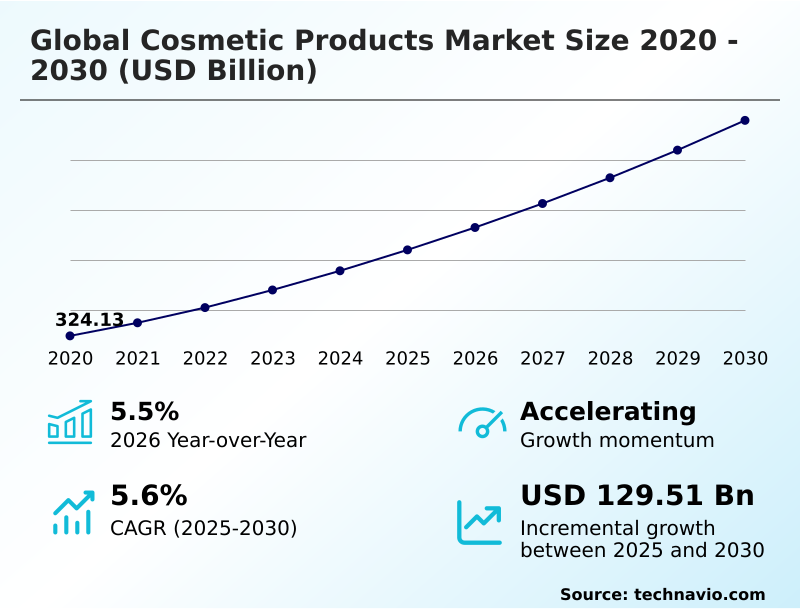
The cosmetic products market size is valued to increase by USD 129.51 billion, at a CAGR of 5.6% from 2025 to 2030. Rise in aging population is increasing market demand will drive the cosmetic products market.
Major Market Trends & Insights
- APAC dominated the market and accounted for a 49.3% growth during the forecast period.
- By Product - Skincare products segment was valued at USD 148.63 billion in 2024
- By Distribution Channel - Offline segment accounted for the largest market revenue share in 2024
Market Size & Forecast
- Market Opportunities: USD 215.50 billion
- Market Future Opportunities: USD 129.51 billion
- CAGR from 2025 to 2030 : 5.6%
Market Summary
- The cosmetic products market is undergoing a significant transformation, driven by a confluence of technological innovation, heightened consumer consciousness, and demographic shifts. A key driver is the increasing demand for preventive skincare and specialized solutions that address age-related skin concerns, which has spurred the development of anti-aging skincare featuring collagen-boosting compounds and bioactive ingredients.
- Concurrently, the clean beauty movement champions ingredient transparency, pushing brands toward plant-based formulations and sustainable packaging. This aligns with the growing preference for organic cosmetics and cosmeceuticals that blend aesthetic benefits with therapeutic effects. Digitalization further reshapes the landscape, with AI-based product recommendations and virtual try-on tools creating personalized consumer journeys.
- For instance, a business can leverage data from these tools to optimize its supply chain, ensuring that inventory for high-demand shades or formulations, like those for skin barrier repair, is allocated efficiently across regional warehouses. This reduces stockouts and improves fulfillment times.
- Challenges persist, including navigating complex global regulations and combating the proliferation of counterfeit goods, which undermine brand value and consumer trust in products like dermatologically tested formulations.
What will be the Size of the Cosmetic Products Market during the forecast period?
Get Key Insights on Market Forecast (PDF) Get Free Sample
How is the Cosmetic Products Market Segmented?
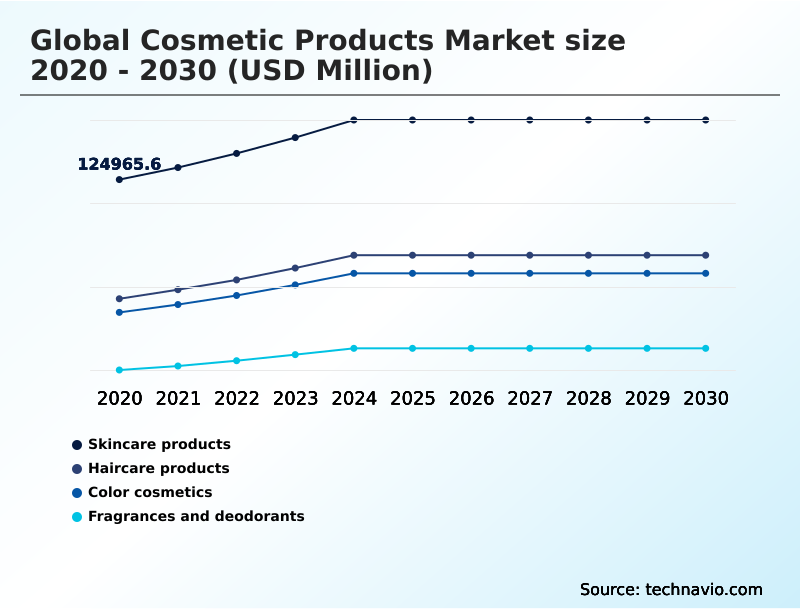
The cosmetic products industry research report provides comprehensive data (region-wise segment analysis), with forecasts and estimates in "USD million" for the period 2026-2030, as well as historical data from 2020-2024 for the following segments.
- Product
- Skincare products
- Haircare products
- Color cosmetics
- Fragrances and deodorants
- Distribution channel
- Offline
- Online
- Type
- Organic
- Conventional
- Geography
- APAC
- China
- Japan
- India
- North America
- US
- Canada
- Mexico
- Europe
- Germany
- France
- UK
- South America
- Brazil
- Argentina
- Colombia
- Middle East and Africa
- Saudi Arabia
- UAE
- South Africa
- Rest of World (ROW)
- APAC
By Product Insights
The skincare products segment is estimated to witness significant growth during the forecast period.
The skincare products segment stands as the largest category, driven by a consumer shift toward prioritizing skin health and preventive care.
This has fueled demand for advanced formulations addressing concerns from pigmentation to aging, with products such as anti-aging creams and antioxidant-rich serums becoming staples.
Consumers are increasingly seeking personalized beauty solutions tailored to specific skin types and lifestyles, with a notable preference for plant-based formulations. This evolution is supported by a focus on overall wellness, where skincare is integrated into a holistic health regimen.
Adoption of routines featuring dermatologically tested formulations has increased, with data showing that products addressing specific age-related skin concerns now account for over 60% of new product launches in the premium skincare sub-segment.
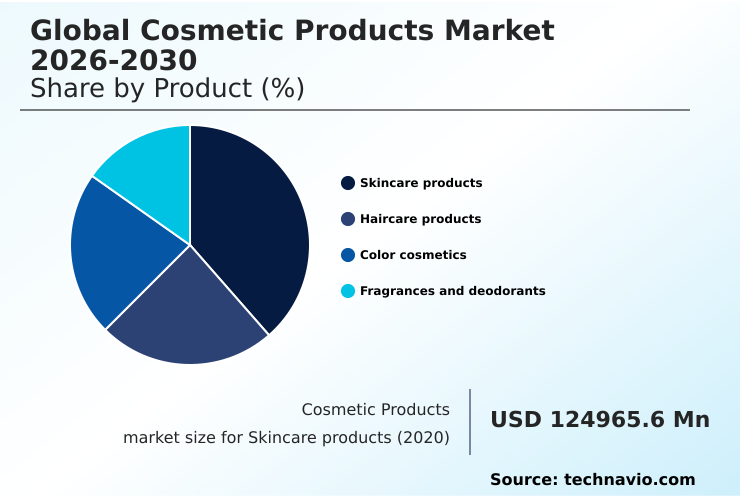
The Skincare products segment was valued at USD 148.63 billion in 2024 and showed a gradual increase during the forecast period.
Regional Analysis
APAC is estimated to contribute 49.3% to the growth of the global market during the forecast period.Technavio’s analysts have elaborately explained the regional trends and drivers that shape the market during the forecast period.
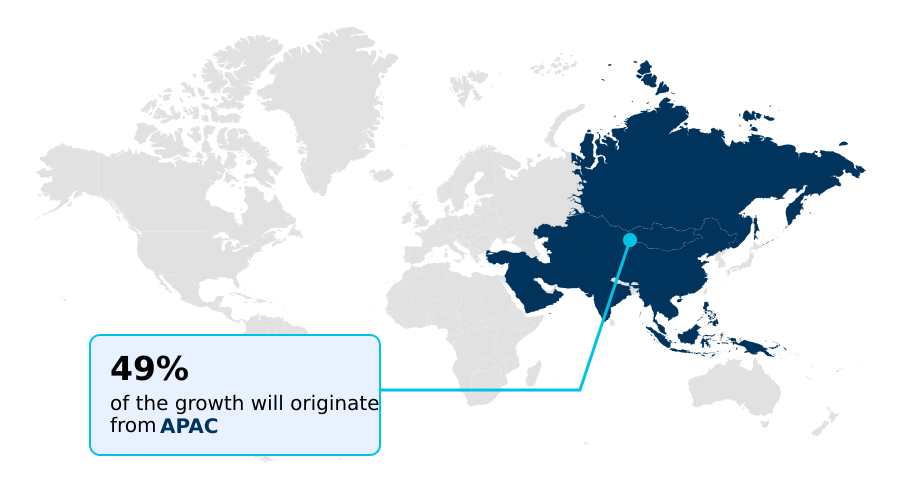
See How Cosmetic Products Market Demand is Rising in APAC Get Free Sample
The market's geographic dynamics are increasingly fragmented, with regional preferences driving innovation. In APAC, which accounts for nearly 50% of incremental growth, demand for products with a high sun protection factor and those featuring herbal extracts is paramount.
The Middle East shows a strong preference for halal-certified beauty and luxurious essential oils. Meanwhile, North American and European consumers are driving trends in microbiome skincare and organic cosmetics, with a focus on locally sourced ingredients and traditional botanical ingredients.
This regional differentiation extends to product categories, with markets like Brazil leading in hair thinning solutions, while Europe pioneers cryotherapy-inspired skincare.
The diverse needs create opportunities for niche products like on-the-go beauty sticks and waterless beauty formulas tailored to specific climates and lifestyles, featuring unique botanical extracts.
Market Dynamics
Our researchers analyzed the data with 2025 as the base year, along with the key drivers, trends, and challenges. A holistic analysis of drivers will help companies refine their marketing strategies to gain a competitive advantage.
- Strategic analysis of the Global Cosmetic Products Market 2026-2030 requires a deep dive into its multifaceted dynamics. Understanding the nuances of Global Cosmetic Products Market 2026-2030 organic versus conventional growth reveals a clear consumer pivot toward natural formulations, influencing R&D pipelines.
- This is directly linked to Global Cosmetic Products Market 2026-2030 skincare product innovation, where advancements in cosmeceuticals redefine category boundaries. The Global Cosmetic Products Market 2026-2030 impact of online retail channels cannot be overstated, as digital platforms have fundamentally altered brand-consumer interactions, a trend amplified by the future of virtual try-on technology.
- The Global Cosmetic Products Market 2026-2030 role of multifunctional cosmetics addresses the modern consumer's need for efficiency, while the Global Cosmetic Products Market 2026-2030 challenges from counterfeit products remain a critical risk to brand equity and revenue. Key drivers for premium brand sales include perceived quality and the Global Cosmetic Products Market 2026-2030 demand for anti-aging solutions.
- The industry's response is seen in Global Cosmetic Products Market 2026-2030 innovation in haircare formulations and the widespread adoption of Global Cosmetic Products Market 2026-2030 trends in sustainable packaging.
- The rise of Global Cosmetic Products Market 2026-2030 cosmeceuticals market share analysis, the Global Cosmetic Products Market 2026-2030 influence of AI on personalization, and the growing male grooming segment expansion are all reshaping the competitive landscape.
- As the Global Cosmetic Products Market 2026-2030 rise of clean beauty standards becomes mainstream, the effectiveness of direct-to-consumer brand strategies and influencer marketing is scrutinized. This is particularly relevant in the Global Cosmetic Products Market 2026-2030 APAC market growth opportunities, where digital-first approaches show an engagement uplift nearly double that of traditional retail.
- Ultimately, navigating Global Cosmetic Products Market 2026-2030 regulatory compliance hurdles and differentiating between premium vs mass product segmentation while managing the consumer shift to waterless products will define market leadership.
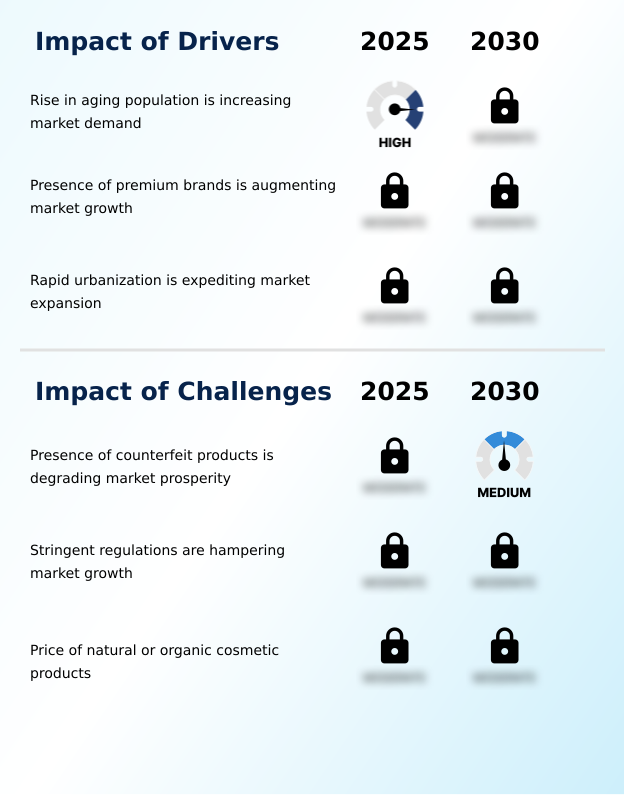
What are the key market drivers leading to the rise in the adoption of Cosmetic Products Industry?
- A key driver propelling market growth is the rise in the global aging population, which is significantly increasing demand for cosmetic products.
- Demographic shifts and rising disposable incomes are key drivers accelerating market expansion. The growing focus on preventive skincare and a pro-aging philosophy has broadened the appeal of anti-aging skincare, with consumers actively seeking collagen-boosting compounds and skin elasticity enhancers.
- This has fueled demand for premium skincare products, where personalized beauty solutions for age-related skin concerns are a primary value proposition.
- The rise of direct-to-consumer cosmetic brands has improved access to such products, with these channels showing a 25% higher engagement rate on new launches. Consumers increasingly favor dermatologically tested formulations and effective peptide-infused creams.
- This is complemented by the growth of beauty-from-within supplements and the industry-wide push for inclusive shade ranges to cater to a diverse global audience.
What are the market trends shaping the Cosmetic Products Industry?
- A significant trend influencing the market is the growing consumer preference for organic cosmetics and cosmeceuticals. This shift is driven by increased awareness regarding health, ingredient safety, and transparency.
- The market is witnessing a convergence of technology and sustainability, shaping new consumer expectations. The skinimalism trend is driving demand for multifunctional cosmetics that simplify routines, while a focus on wellness-infused beauty elevates products beyond aesthetics.
- Digital tools are central to this shift; virtual try-on tools and augmented reality makeup filters now reduce purchase friction, with some platforms reporting a 30% decrease in returns. AI-based product recommendations are also creating hyper-personalized experiences, boosting conversion rates by up to 15%.
- Concurrently, clean beauty standards are becoming stricter, promoting plant-based formulations, water-free formulas, and the use of innovative upcycled ingredients, aligning with the principles of farm-to-face skincare and gender-neutral beauty offerings. Subscription-based beauty boxes further accelerate the discovery of these new product types.
What challenges does the Cosmetic Products Industry face during its growth?
- A primary challenge affecting industry growth is the presence of counterfeit products, which degrades market prosperity and erodes consumer trust.
- Navigating regulatory complexities and consumer expectations around ingredient transparency presents a significant challenge. The demand for ethical production methods and cruelty-free testing requires substantial investment in supply chain verification, increasing operational costs by an average of 10%.
- Furthermore, the transition to sustainable packaging and biodegradable packaging is hampered by material science limitations and cost barriers, though brands using refillable cosmetic packaging report a 15% improvement in customer loyalty. Formulating products with novel bioactive ingredients, retinoid alternatives, or adaptogenic ingredients while ensuring stability and efficacy is another hurdle.
- Advanced encapsulation technologies are being explored to protect sensitive compounds used in anti-pollution skincare and neurocosmetics, but scaling eco-friendly manufacturing for these complex formulations remains a persistent industry-wide issue.
Exclusive Technavio Analysis on Customer Landscape
The cosmetic products market forecasting report includes the adoption lifecycle of the market, covering from the innovator’s stage to the laggard’s stage. It focuses on adoption rates in different regions based on penetration. Furthermore, the cosmetic products market report also includes key purchase criteria and drivers of price sensitivity to help companies evaluate and develop their market growth analysis strategies.
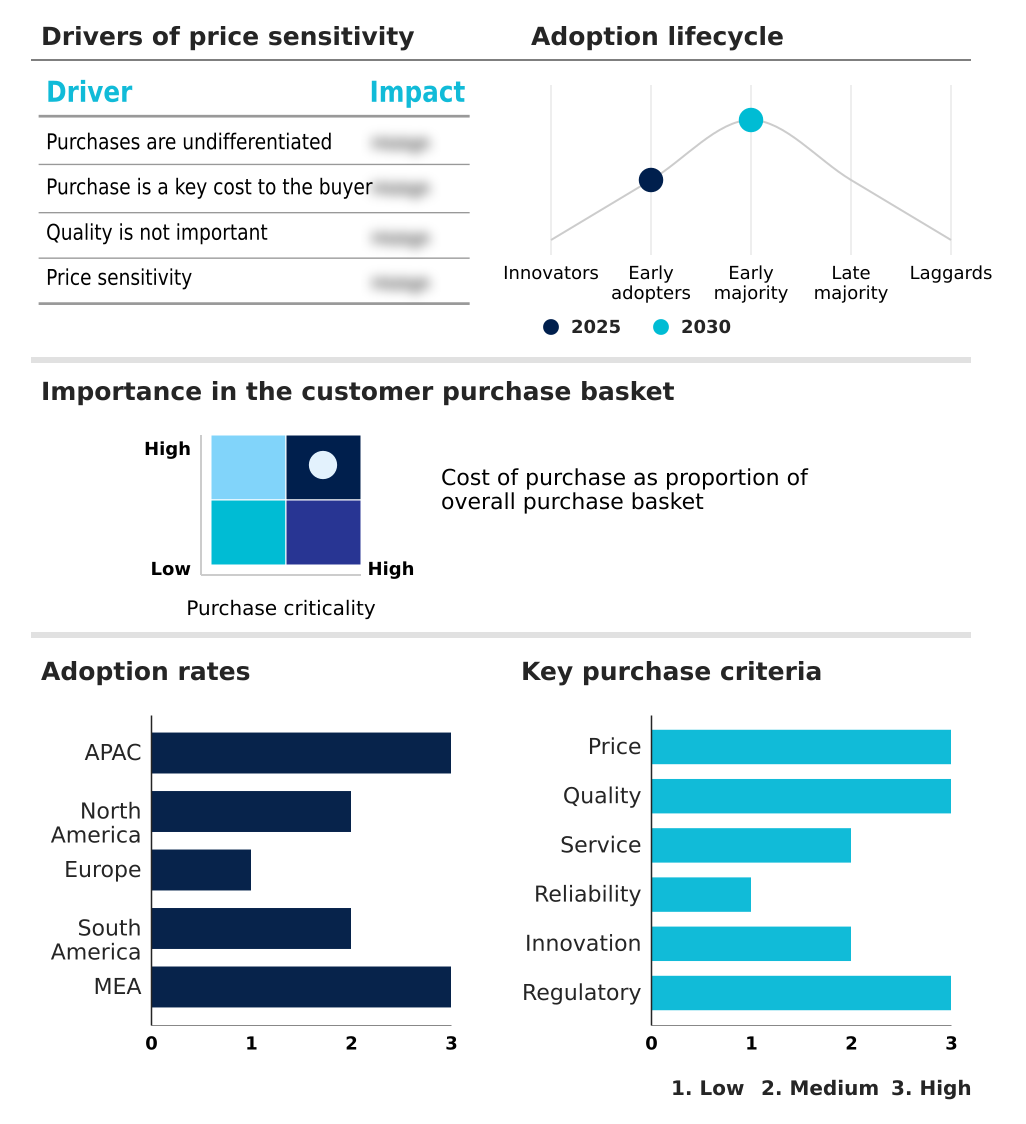
Customer Landscape of Cosmetic Products Industry
Competitive Landscape
Companies are implementing various strategies, such as strategic alliances, cosmetic products market forecast, partnerships, mergers and acquisitions, geographical expansion, and product/service launches, to enhance their presence in the industry.
AMOREPACIFIC Group Inc. - Specializes in developing and marketing a diverse portfolio of skincare formulations and premium beauty products to a global consumer base.
The industry research and growth report includes detailed analyses of the competitive landscape of the market and information about key companies, including:
- AMOREPACIFIC Group Inc.
- Avon Products Inc.
- Beiersdorf AG
- Christian Dior SE
- Coty Inc.
- e.l.f. Beauty Inc.
- Huda Beauty Ltd.
- Kao Corp.
- LG Household and Health Care Ltd.
- Loreal SA
- Mary Kay Inc.
- Natura and Co. Holding SA
- Oriflame Cosmetics SA
- Pat McGrath
- Procter and Gamble Co.
- Revlon Inc.
- Shiseido Co. Ltd.
- The Body Shop International
- The Estee Lauder Co. Inc.
- Unilever PLC
Qualitative and quantitative analysis of companies has been conducted to help clients understand the wider business environment as well as the strengths and weaknesses of key industry players. Data is qualitatively analyzed to categorize companies as pure play, category-focused, industry-focused, and diversified; it is quantitatively analyzed to categorize companies as dominant, leading, strong, tentative, and weak.
Recent Development and News in Cosmetic products market
- In March 2025, Loreal SA launched a new line of waterless, solid-format cosmetics, including shampoo bars and cleansers, under its Garnier brand to advance its sustainability goals and cater to eco-conscious consumers.
- In January 2025, The Estee Lauder Co. Inc. acquired 'SkinTech AI,' a leading AI-powered skin analysis startup, for an undisclosed sum to integrate personalized recommendation technology across its digital platforms and enhance customer engagement.
- In November 2024, Beiersdorf AG announced a strategic partnership with biotech firm 'BioSynthetics Ltd.' to develop and scale up production of novel, lab-grown botanical extracts for its NIVEA and Eucerin brands, focusing on sustainable ingredient sourcing.
- In September 2024, Shiseido Co. Ltd. announced a $50 million investment to expand its direct-to-consumer operations in India, launching dedicated e-commerce sites for its key prestige brands to capture growing demand in the region.
Dive into Technavio’s robust research methodology, blending expert interviews, extensive data synthesis, and validated models for unparalleled Cosmetic Products Market insights. See full methodology.
| Market Scope | |
|---|---|
| Page number | 298 |
| Base year | 2025 |
| Historic period | 2020-2024 |
| Forecast period | 2026-2030 |
| Growth momentum & CAGR | Accelerate at a CAGR of 5.6% |
| Market growth 2026-2030 | USD 129509.8 million |
| Market structure | Fragmented |
| YoY growth 2025-2026(%) | 5.5% |
| Key countries | China, Japan, India, South Korea, Indonesia, Australia, US, Canada, Mexico, Germany, France, UK, Italy, Spain, Russia, Brazil, Argentina, Colombia, Saudi Arabia, UAE, South Africa, Turkey and Israel |
| Competitive landscape | Leading Companies, Market Positioning of Companies, Competitive Strategies, and Industry Risks |
Research Analyst Overview
- The market is defined by a sophisticated interplay between scientific advancement and ethical consumerism. Boardroom decisions are now heavily influenced by the need to integrate clean beauty standards and ensure ingredient transparency across all product lines. This requires investment in advanced formulations featuring bioactive ingredients, bioactive compounds, and botanical extracts.
- The demand for anti-aging skincare and preventive skincare is met with collagen-boosting compounds, peptide-infused creams, and skin elasticity enhancers, often found in premium skincare and cosmeceuticals. The push for sustainability is evident in the adoption of sustainable packaging, biodegradable packaging, water-free formulas, and solid format cosmetics made from upcycled ingredients.
- Innovation continues with encapsulation technologies for delivering herbal extracts and essential oils in dermatologically tested formulations for skin barrier repair and microbiome skincare. Plant-based formulations and natural ingredients are standard, while research into retinoid alternatives is accelerating. For instance, firms adopting full-scale cruelty-free testing protocols have reported a 25% reduction in compliance-related delays for entry into key markets.
- The market also addresses specific needs with hair thinning solutions, products with high sun protection factor, and the rise of organic cosmetics, including antioxidant-rich serums.
What are the Key Data Covered in this Cosmetic Products Market Research and Growth Report?
-
What is the expected growth of the Cosmetic Products Market between 2026 and 2030?
-
USD 129.51 billion, at a CAGR of 5.6%
-
-
What segmentation does the market report cover?
-
The report is segmented by Product (Skincare products, Haircare products, Color cosmetics, and Fragrances and deodorants), Distribution Channel (Offline, and Online), Type (Organic, and Conventional) and Geography (APAC, North America, Europe, South America, Middle East and Africa)
-
-
Which regions are analyzed in the report?
-
APAC, North America, Europe, South America and Middle East and Africa
-
-
What are the key growth drivers and market challenges?
-
Rise in aging population is increasing market demand, Presence of counterfeit products is degrading market prosperity
-
-
Who are the major players in the Cosmetic Products Market?
-
AMOREPACIFIC Group Inc., Avon Products Inc., Beiersdorf AG, Christian Dior SE, Coty Inc., e.l.f. Beauty Inc., Huda Beauty Ltd., Kao Corp., LG Household and Health Care Ltd., Loreal SA, Mary Kay Inc., Natura and Co. Holding SA, Oriflame Cosmetics SA, Pat McGrath, Procter and Gamble Co., Revlon Inc., Shiseido Co. Ltd., The Body Shop International, The Estee Lauder Co. Inc. and Unilever PLC
-
Market Research Insights
- The market's dynamism is fueled by a shift towards highly personalized beauty solutions and inclusive shade ranges, addressing a more diverse consumer base than ever before. Direct-to-consumer cosmetic brands are leveraging digital platforms to cater to niche preferences, achieving a 20% higher customer retention rate compared to traditional retail.
- The skinimalism trend, favoring fewer, more effective products, has led to a 15% increase in the development of multifunctional items. Innovations like waterless beauty formulas and refillable cosmetic packaging are not just trends but are becoming core to ethical production methods, satisfying consumer demand for sustainability.
- This is complemented by the growth of wellness-infused beauty and farm-to-face skincare, blurring the lines between personal care and holistic health.
We can help! Our analysts can customize this cosmetic products market research report to meet your requirements.
 RIA -
RIA -