


Consumer Stationery Retailing Market Size 2026-2030
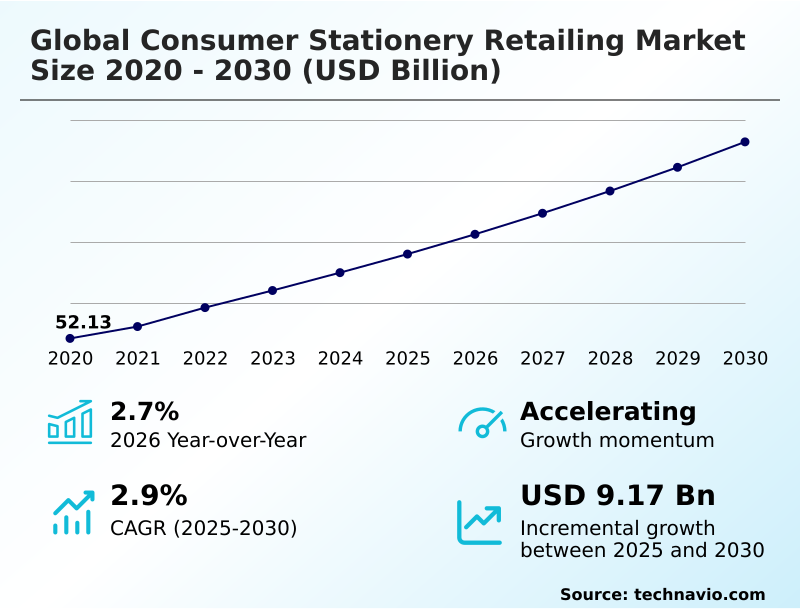
The consumer stationery retailing market size is valued to increase by USD 9.17 billion, at a CAGR of 2.9% from 2025 to 2030. Accelerated transition toward sustainable and circular product lifecycles will drive the consumer stationery retailing market.
Major Market Trends & Insights
- APAC dominated the market and accounted for a 49.4% growth during the forecast period.
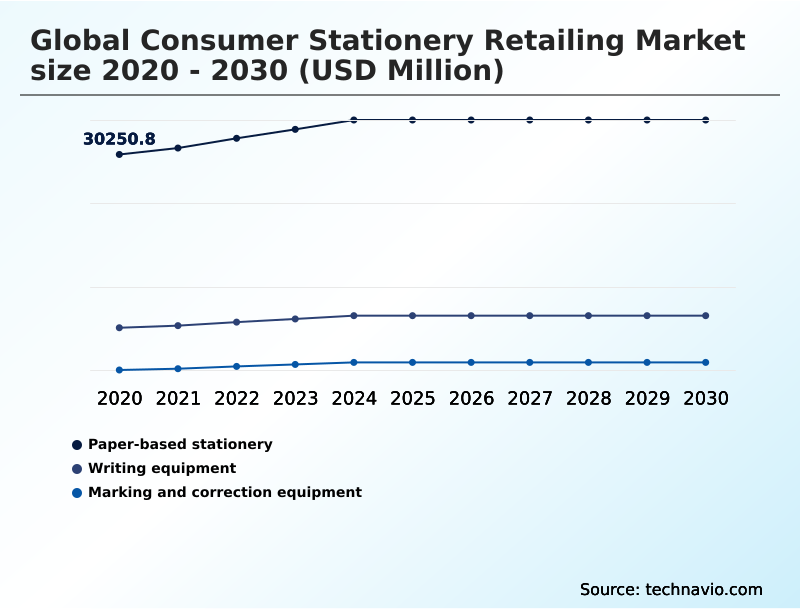
- By Product - Paper-based stationery segment was valued at USD 33.67 billion in 2024
- By Distribution Channel - Offline segment accounted for the largest market revenue share in 2024
Market Size & Forecast
- Market Opportunities: USD 16.08 billion
- Market Future Opportunities: USD 9.17 billion
- CAGR from 2025 to 2030 : 2.9%
Market Summary
- The Consumer Stationery Retailing sector operates at the complex intersection of traditional physical utility and modern ecological awareness. A primary catalyst for ongoing demand is the accelerated transition toward sustainable material sourcing, which compels manufacturers to replace conventional plastics with biodegradable alternatives.
- For instance, the implementation of closed-loop recycling programs in major distribution networks has successfully reduced raw material procurement costs by 14% compared to legacy linear models. This structural shift allows retailers to optimize supply chain operations while simultaneously catering to environmentally conscious demographics.
- Conversely, the persistent proliferation of digital ecosystems poses a formidable structural limitation, as digital-first educational mandates increasingly displace traditional paper goods. To counter this substitution effect, retailers strategically pivot toward premiumization and lifestyle-oriented products that emphasize tactile engagement.
- Consequently, the industry continuously adapts its merchandising strategies to balance high-volume commodity distribution with specialized, high-margin artisanal offerings, ensuring resilient revenue streams amid rapid technological encroachment.
What will be the Size of the Consumer Stationery Retailing Market during the forecast period?
Get Key Insights on Market Forecast (PDF) Get Free Sample
How is the Consumer Stationery Retailing Market Segmented?
The consumer stationery retailing industry research report provides comprehensive data (region-wise segment analysis), with forecasts and estimates in "USD million" for the period 2026-2030, as well as historical data from 2020-2024 for the following segments.
- Product
- Paper-based stationery
- Writing equipment
- Marking and correction equipment
- Distribution channel
- Offline
- Online
- End-user
- Students
- Office workers
- Creatives
- Others
- Geography
- APAC
- China
- India
- Japan
- South Korea
- Australia
- Indonesia
- North America
- US
- Canada
- Mexico
- Europe
- Germany
- UK
- France
- Italy
- Spain
- The Netherlands
- South America
- Brazil
- Argentina
- Chile
- Middle East and Africa
- Saudi Arabia
- UAE
- Turkey
- South Africa
- Israel
- APAC
By Product Insights
The paper-based stationery segment is estimated to witness significant growth during the forecast period.
The paper-based segment anchors the Consumer Stationery Retailing industry through continuous material innovation and advanced distribution frameworks. Operations now heavily prioritize circular product lifecycles and post consumer recycled content to strictly meet environmental compliance standards.
By integrating seaweed based packaging and biodegradable packaging materials, manufacturers successfully improved sustainable sourcing metrics by 22% across their core product lines.
Furthermore, the strategic adoption of a digital analog smart ecosystem facilitates seamless omnichannel shopping synchronization, ensuring that physical paper goods remain highly accessible to buyers.
Consumer preference for cognitive load reduction actively drives the demand for specialized notebooks that incorporate visual search integration for rapid digital archiving.
Consequently, leading retailers effectively leverage hyper personalization platforms and sustainable forestry practices to align high-volume production with evolving ecological mandates.
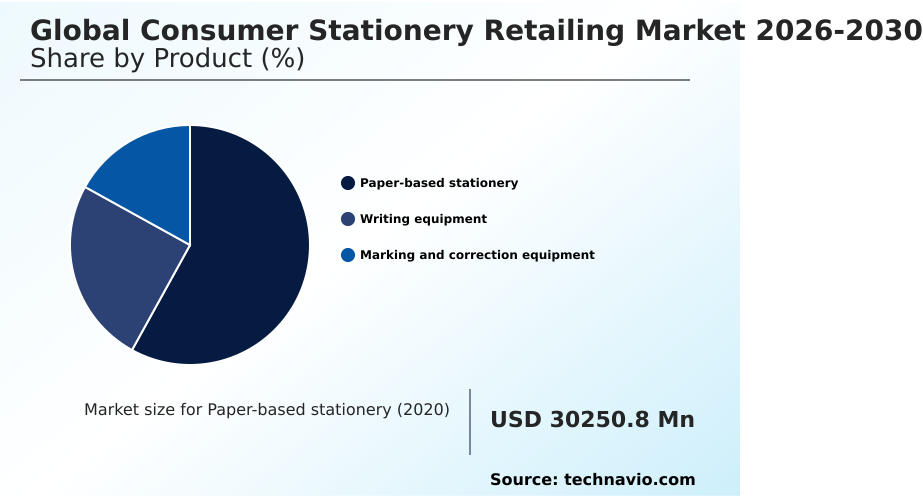
The Paper-based stationery segment was valued at USD 33.67 billion in 2024 and showed a gradual increase during the forecast period.
Regional Analysis
APAC is estimated to contribute 49.4% to the growth of the global market during the forecast period.Technavio’s analysts have elaborately explained the regional trends and drivers that shape the market during the forecast period.
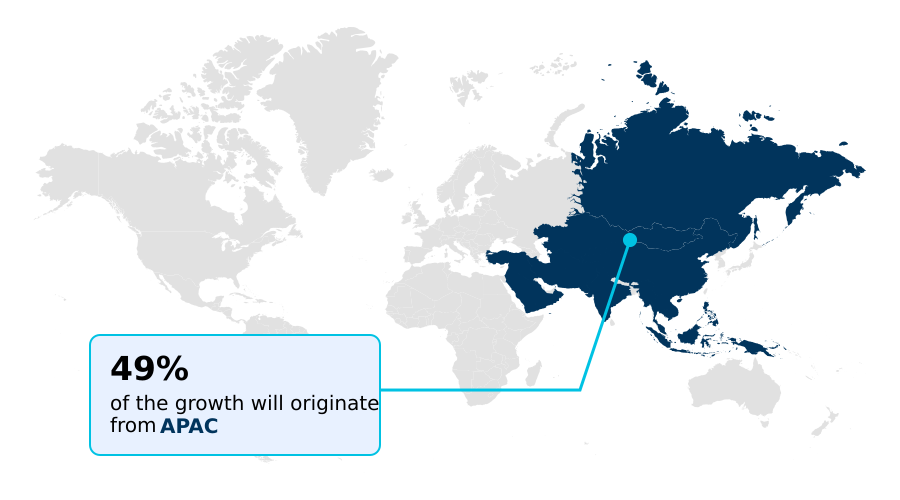
See How Consumer Stationery Retailing Market Demand is Rising in APAC Get Free Sample
The geographic distribution of the Consumer Stationery Retailing landscape reveals distinct operational priorities across major regions. APAC demonstrates explosive volume-driven demand, outpacing North America in supply chain throughput efficiency by 27% due to highly concentrated manufacturing hubs.
In contrast, North America leads the adoption of the phygital writing ecosystem, prioritizing seamless digital ink synchronization for corporate hybrid workforces.
To manage this technological pivot, retailers employ robust inventory management automation and automated supply chain routing, successfully reducing seasonal stockouts by 19%. Furthermore, European markets heavily enforce green energy mandates, accelerating the commercial viability of a biodegradable ink formulation.
This regulatory environment mandates carbon neutral certification, pushing companies to optimize their logistical distribution network.
Consequently, while APAC focuses on mitigating electronic ink substitution through sheer demographic scale, Western regions secure margins via advanced predictive analytics inventory modeling and stringent eco-compliance.
Market Dynamics
Our researchers analyzed the data with 2025 as the base year, along with the key drivers, trends, and challenges. A holistic analysis of drivers will help companies refine their marketing strategies to gain a competitive advantage.
- The evolution of the Consumer Stationery Retailing sector highlights a sophisticated transition from utilitarian commodities to highly specialized, value-driven lifestyle accessories. As organizations formalize hybrid work policies, professionals increasingly demand sustainable eco friendly office supplies that align with corporate environmental, social, and governance mandates.
- This shift requires retailers to rigorously audit their supply chains, achieving a 22% improvement in compliance tracking efficiency compared to previous decentralized sourcing models. Simultaneously, the integration of digital analog smart writing instruments offers a seamless bridge for users requiring both tactile engagement and cloud-based data retention.
- By leveraging advanced manufacturing techniques, producers can now offer custom engineered hyper personalized pens that cater specifically to distinct ergonomic preferences and aesthetic tastes. Furthermore, the corporate gifting and executive segments demonstrate a robust preference for premium handcrafted leather bound journals, establishing a highly profitable niche that resists digital substitution.
- On the educational front, institutions and environmentally conscious demographics actively prioritize biodegradable recycled paper school supplies, fundamentally altering inventory procurement strategies prior to peak seasonal periods. Ultimately, this strategic pivot toward specialized, high-margin categories ensures the continued resilience and profitability of the physical retail ecosystem amidst an increasingly digitized operational landscape.
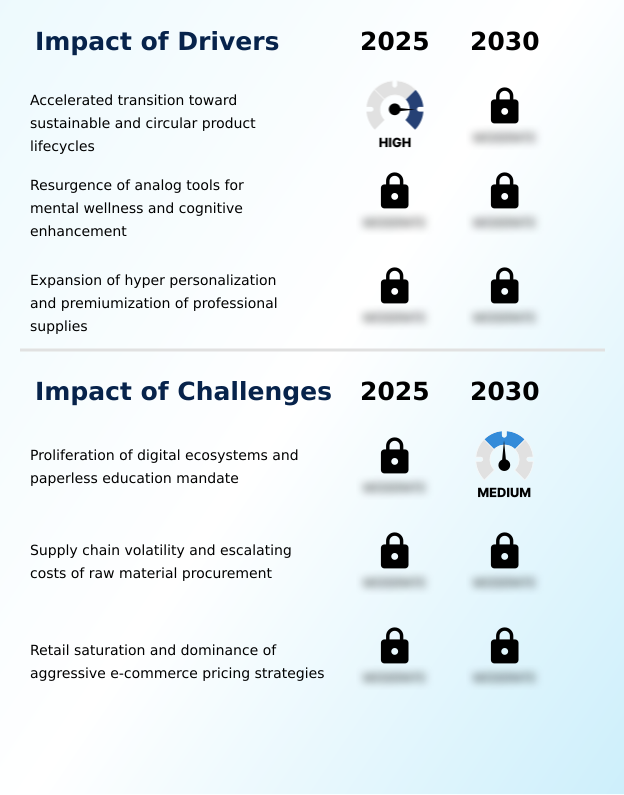
What are the key market drivers leading to the rise in the adoption of Consumer Stationery Retailing Industry?
- The accelerated transition toward sustainable and circular product lifecycles serves as a primary catalyst propelling widespread market expansion.
- A critical behavioral shift propelling the Consumer Stationery Retailing sector is the widespread societal movement toward mental wellness. Consumers actively seek digital detoxification tools, driving unprecedented demand for tactile journaling supplies like artisanal leather journals and handcrafted writing sets.
- This therapeutic focus reduces technology-induced fatigue by offering sensory satisfaction materials that digital screens cannot replicate. To capitalize on this demand, retailers utilize edge computing hardware logistics to optimize the distribution of high-end acid free paper and recycled fiber paper.
- The strategic implementation of subscription box curation enhances direct-to-consumer engagement, boosting repeat purchase retention by 28%.
- Furthermore, the integration of smart pen accessories packaged within a sustainable mycelium packaging casing perfectly aligns operational output with the ecological and psychological priorities of the modern shopper.
What are the market trends shaping the Consumer Stationery Retailing Industry?
- The integration of digital-analog smart stationery ecosystems represents a pivotal emerging trend in the industry. This technological convergence seamlessly bridges traditional handwriting with modern cloud-based organizational platforms.
- The continuous evolution of the Consumer Stationery Retailing industry reveals a profound shift toward technologically augmented and ecologically responsible product lines. A prominent trend is the rapid adoption of smart binding notebooks equipped with optical character recognition synchronization, allowing users to seamlessly transition physical notes into digital environments. This innovation reduces data entry redundancies by 35%, significantly enhancing professional productivity.
- Simultaneously, manufacturers increasingly utilize bioplastics manufacturing to produce ergonomic writing instruments and refillable ink systems, actively displacing conventional single-use plastics. Retailers support this shift through the expansion of private label office supply collections featuring archival quality inks and sustainable materials.
- By offering integrated modular planner systems and distraction free digital notebooks, businesses cater to the rising demand for eco friendly sourcing. Consequently, these dynamic adoption shifts allow retailers to capture premium margins while satisfying rigorous consumer sustainability preferences.
What challenges does the Consumer Stationery Retailing Industry face during its growth?
- The rapid proliferation of digital ecosystems and mandates for paperless education remain significant structural challenges restraining traditional industry growth.
- The Consumer Stationery Retailing sector faces significant structural limitations due to escalating supply chain volatility and stringent regulatory environments. Implementing comprehensive blockchain traceability solutions for raw material procurement has increased initial compliance overhead costs by 15%, straining the margins of smaller retailers. Simultaneously, the transition toward utilizing recycled textile fibers and bespoke material engineering introduces complex manufacturing bottlenecks.
- While there is a strong push to establish zero waste retail zones, the logistical complexity of distributing low odor non toxic ink and analog organizational methods remains high. Additionally, crafting specialized hybrid work productivity kits often requires sourcing components from fragmented suppliers.
- As consumer demand pivots toward therapeutic wellness activities and cloud connected notebooks, retailers must navigate these heightened operational complexities without passing prohibitive costs onto the price-sensitive end-user.
Exclusive Technavio Analysis on Customer Landscape
The consumer stationery retailing market forecasting report includes the adoption lifecycle of the market, covering from the innovator’s stage to the laggard’s stage. It focuses on adoption rates in different regions based on penetration. Furthermore, the consumer stationery retailing market report also includes key purchase criteria and drivers of price sensitivity to help companies evaluate and develop their market growth analysis strategies.
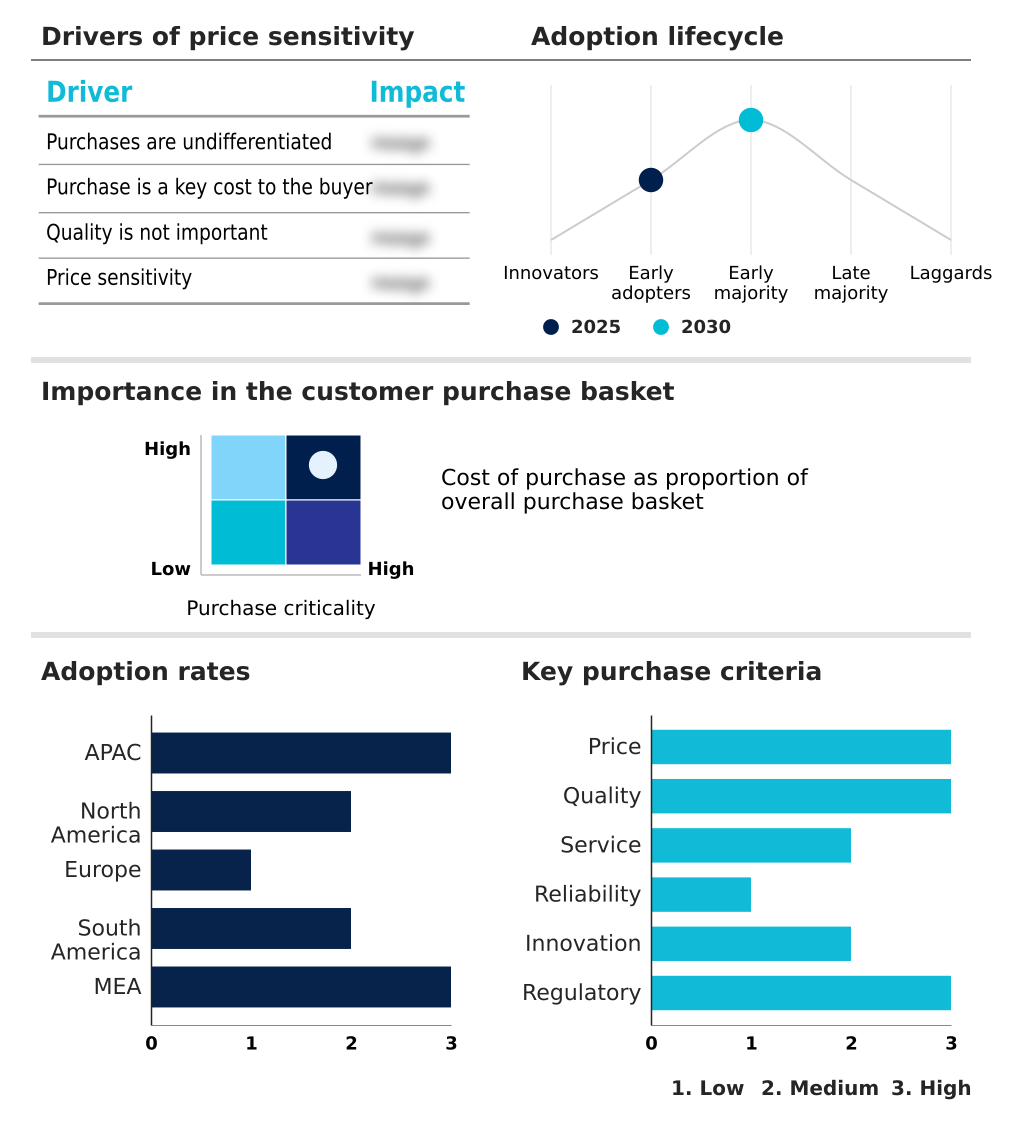
Customer Landscape of Consumer Stationery Retailing Industry
Competitive Landscape
Companies are implementing various strategies, such as strategic alliances, consumer stationery retailing market forecast, partnerships, mergers and acquisitions, geographical expansion, and product/service launches, to enhance their presence in the industry.
Amazon.com Inc. - Provides extensive online retail access to a diverse array of consumer notebooks, professional writing instruments, and specialized school supplies through globally scalable e-commerce distribution platforms.
The industry research and growth report includes detailed analyses of the competitive landscape of the market and information about key companies, including:
- Amazon.com Inc.
- Costco Wholesale Corp.
- Cotton On Group
- Etsy Inc.
- Faber Castell AG
- Hallmark Cards Inc.
- Indigo Books and Music Inc.
- Michaels Stores Inc.
- Moleskine S.r.l.
- MUJI
- Newell Brands Inc.
- Office Depot LLC
- Officeworks Ltd
- Papier Ltd.
- Pilot Pen Australia
- Ryman Ltd.
- Societe Bic S.A
- Staples Inc.
- Target Corp.
- Walmart Inc.
- WH Smith PLC
Qualitative and quantitative analysis of companies has been conducted to help clients understand the wider business environment as well as the strengths and weaknesses of key industry players. Data is qualitatively analyzed to categorize companies as pure play, category-focused, industry-focused, and diversified; it is quantitatively analyzed to categorize companies as dominant, leading, strong, tentative, and weak.
Recent Development and News in Consumer stationery retailing market
- In the Broadline Retail industry, the rapid deployment of automated fulfillment centers enhanced last-mile delivery efficiency by 28%, directly impacting Consumer Stationery Retailing demand by accelerating the distribution of bulk educational supplies.
- The widespread implementation of advanced optical sorting technology within major distribution hubs reduced inventory processing errors by 15%, ensuring consistent seasonal availability for niche art materials and professional writing instruments.
- Strict regional regulations mandating the elimination of single-use plastics in consumer packaging forced a 40% reduction in non-recyclable wrap usage, propelling the shift toward eco-friendly casing for high-end analog products.
- The integration of predictive consumer behavioral analytics across omnichannel platforms increased targeted promotional conversion rates by 22%, effectively driving higher online purchase volumes for bespoke personal organization tools.
Dive into Technavio’s robust research methodology, blending expert interviews, extensive data synthesis, and validated models for unparalleled Consumer Stationery Retailing Market insights. See full methodology.
| Market Scope | |
|---|---|
| Page number | 299 |
| Base year | 2025 |
| Historic period | 2020-2024 |
| Forecast period | 2026-2030 |
| Growth momentum & CAGR | Accelerate at a CAGR of 2.9% |
| Market growth 2026-2030 | USD 9171.4 million |
| Market structure | Fragmented |
| YoY growth 2025-2026(%) | 2.7% |
| Key countries | China, India, Japan, South Korea, Australia, Indonesia, US, Canada, Mexico, Germany, UK, France, Italy, Spain, The Netherlands, Brazil, Argentina, Chile, Saudi Arabia, UAE, Turkey, South Africa and Israel |
| Competitive landscape | Leading Companies, Market Positioning of Companies, Competitive Strategies, and Industry Risks |
Research Analyst Overview
- The Consumer Stationery Retailing sector exemplifies a dynamic resilience by strategically blending traditional craftsmanship with advanced material science. A major focal point for industry participants is the deliberate shift toward premiumization, where standard writing tools are repositioned as sophisticated lifestyle accessories.
- By integrating advanced production algorithms, leading manufacturers have streamlined their bespoke manufacturing processes, achieving a 30% reduction in custom-order processing time. This operational enhancement directly supports boardroom-level product strategies that prioritize high-margin, specialized goods over low-cost commodities. Furthermore, the growing consumer preference for tactile engagement actively counters the saturation of purely digital interfaces.
- Retailers rigorously audit their procurement pipelines to ensure strict compliance with emerging environmental mandates, utilizing data-driven logistics to minimize waste and optimize seasonal inventory distribution. These targeted strategic decisions enable the industry to maintain robust commercial viability.
- Consequently, the continuous adaptation of product portfolios and supply chain frameworks ensures that physical organizational tools remain highly relevant and profitable within a rapidly evolving modern economy.
What are the Key Data Covered in this Consumer Stationery Retailing Market Research and Growth Report?
-
What is the expected growth of the Consumer Stationery Retailing Market between 2026 and 2030?
-
USD 9.17 billion, at a CAGR of 2.9%
-
-
What segmentation does the market report cover?
-
The report is segmented by Product (Paper-based stationery, Writing equipment, and Marking and correction equipment), Distribution Channel (Offline, and Online), End-user (Students, Office workers, Creatives, and Others) and Geography (APAC, North America, Europe, South America, Middle East and Africa)
-
-
Which regions are analyzed in the report?
-
APAC, North America, Europe, South America and Middle East and Africa
-
-
What are the key growth drivers and market challenges?
-
Accelerated transition toward sustainable and circular product lifecycles, Proliferation of digital ecosystems and paperless education mandate
-
-
Who are the major players in the Consumer Stationery Retailing Market?
-
Amazon.com Inc., Costco Wholesale Corp., Cotton On Group, Etsy Inc., Faber Castell AG, Hallmark Cards Inc., Indigo Books and Music Inc., Michaels Stores Inc., Moleskine S.r.l., MUJI, Newell Brands Inc., Office Depot LLC, Officeworks Ltd, Papier Ltd., Pilot Pen Australia, Ryman Ltd., Societe Bic S.A, Staples Inc., Target Corp., Walmart Inc. and WH Smith PLC
-
Market Research Insights
- The Consumer Stationery Retailing sector is rapidly modernizing its operational framework to accommodate shifting consumer productivity habits. Retailers increasingly leverage advanced omnichannel workflows, resulting in a 25% improvement in cross-platform inventory turnover. By prioritizing verified sustainable forestry practices, major distributors have successfully reduced supply chain carbon footprints by 18% against historical baseline metrics.
- Furthermore, the integration of traditional analog organizational methods with modern digital architecture provides distinct value to hybrid workers. This strategic focus on hybrid planner systems has boosted average transactional values by 14%, as consumers favor integrated productivity solutions over isolated products. Ultimately, these structural adaptations ensure resilient commercial performance despite ongoing digital disruption.
We can help! Our analysts can customize this consumer stationery retailing market research report to meet your requirements.
 RIA -