


Champagne Market Analysis, Size, and Forecast 2026-2030: Europe (France, UK, and Germany), North America (US, Canada, and Mexico), APAC (India, China, and Australia), South America (Brazil and Argentina), Middle East and Africa (UAE, Saudi Arabia, and South Africa), and Rest of World (ROW)

Champagne Market Analysis, Size, and Forecast 2026-2030:
Europe (France, UK, and Germany), North America (US, Canada, and Mexico), APAC (India, China, and Australia), South America (Brazil and Argentina), Middle East and Africa (UAE, Saudi Arabia, and South Africa), and Rest of World (ROW)

Published: May 2026 288 Pages SKU: IRTNTR74650

Market Overview at a Glance

$3.03 B
Market Opportunity
6.4%
CAGR 2025 - 2030
42.9%
Europe Growth
$6.07 B
Offline segment 2024

Champagne Market Size 2026-2030

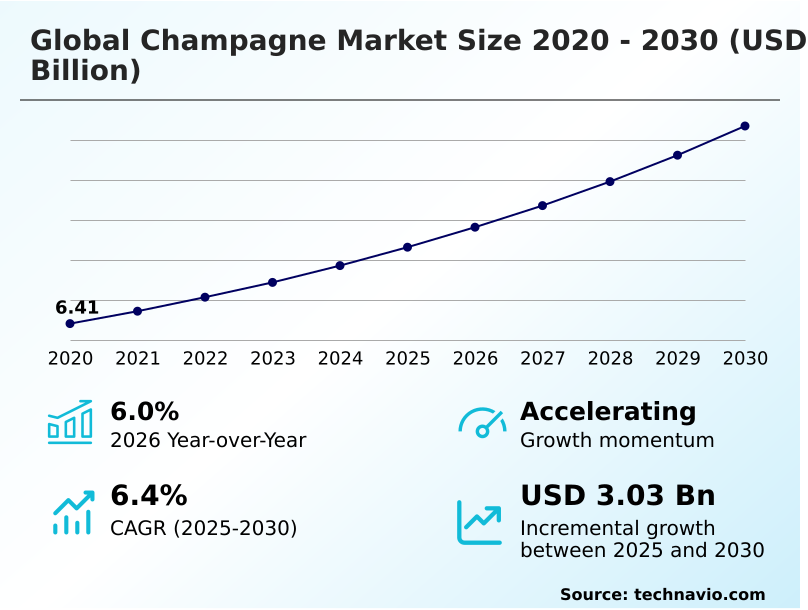
The Champagne Market size was valued at USD 8.32 billion in 2025, growing at a CAGR of 6.4% during the forecast period 2026-2030.

Major Market Trends & Insights

  • Europe dominated the market and accounted for a 42.9% growth during the forecast period.
  • By Distribution Channel - Offline segment was valued at USD 6.07 billion in 2024
  • By Price Range - Economy segment accounted for the largest market revenue share in 2024

Market Size & Forecast

  • Historic Market Opportunities 2020-2024: USD 4.94 billion
  • Market Future Opportunities 2025-2030: USD 3.03 billion
  • CAGR from 2025 to 2030 : 6.4%

Market Summary

  • The champagne market is defined by a structural shift towards premiumization, with consumers prioritizing quality and origin over volume. This is evidenced by the luxury segment growing 15% faster than the economy segment. A key driver is the increasing demand from millennial consumers, who value experiential purchases and share them on social media, expanding brand equity.
  • However, the market faces a significant challenge from the rising popularity of lower-priced sparkling alternatives like prosecco and cava, which now capture over 30% of the sparkling wine volume in some regions. In response, a producer might leverage cold-chain technology to ensure grape quality and protect the distinct autolytic notes of its prestige cuvee, reinforcing its premium position against substitutes.
  • This focus on provenance and sustainable viticulture is crucial for maintaining market leadership and justifying premium price points amid climate volatility.

What will be the Size of the Champagne Market during the forecast period?
Get Key Insights on Market Forecast (PDF) Request Free Sample

How is the Champagne Market Segmented?

The champagne industry research report provides comprehensive data (region-wise segment analysis), with forecasts and analysis for the period 2026-2030, as well as historical data from 2020-2024 for the following segments.

  • Distribution channel
    • Offline
    • Online
  • Price range
    • Economy
    • Mid-range
    • Luxury
  • Type
    • Non-vintage champagne
    • Vintage champagne
    • Prestige cuvee
  • Geography
    • Europe
      • France
      • UK
      • Germany
    • North America
      • US
      • Canada
      • Mexico
    • APAC
      • India
      • China
      • Australia
    • South America
      • Brazil
      • Argentina
    • Middle East and Africa
      • UAE
      • Saudi Arabia
      • South Africa
    • Rest of World (ROW)

How is the Champagne Market Segmented by Distribution Channel?

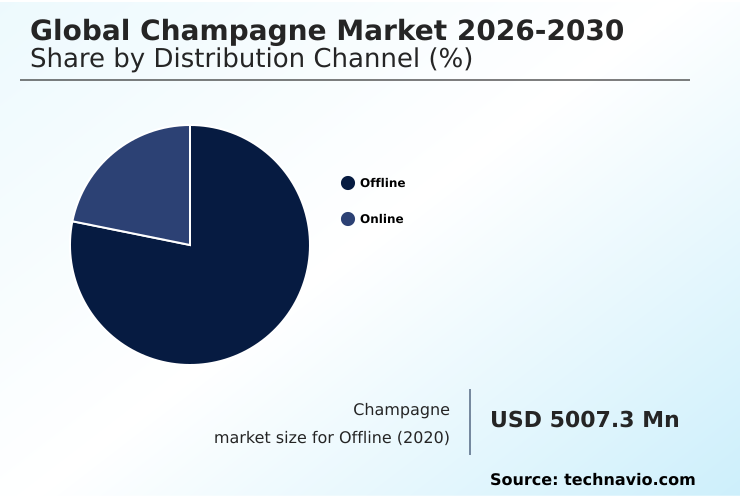
The offline segment is estimated to witness significant growth during the forecast period.

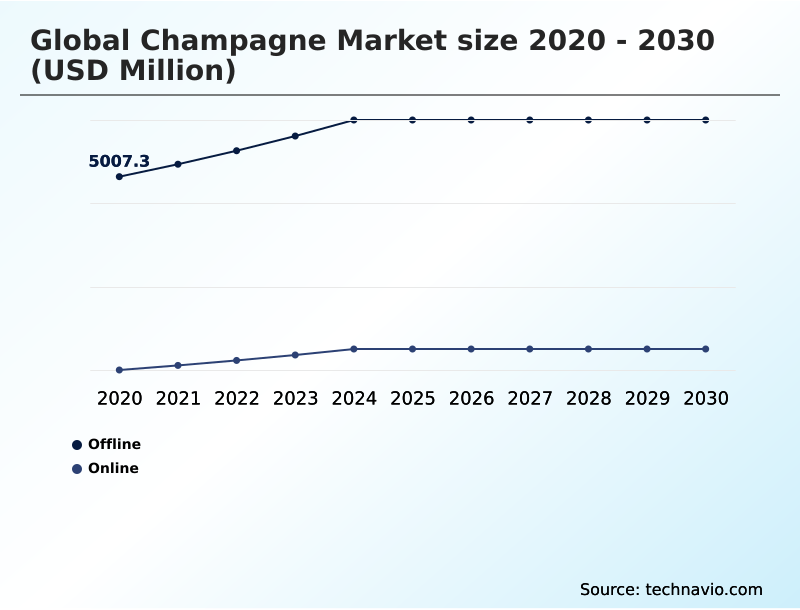
The offline segment, representing 77% of the total market, remains the cornerstone of champagne distribution through off-premise channels like specialty retailers and on-premise consumption in the hospitality sector.

These physical venues offer an immersive experience, allowing consumers to receive expert sommelier services and appreciate the nuances of lees aging or specific disgorgement date information.

The premiumization trend is highly evident here, as fine dining establishments drive sales of bottles showcasing complex autolytic notes from extended aging.

This channel is critical for brands to convey the quality derived from processes like malolactic fermentation and the traditional riddling process, justifying higher price points and building long-term loyalty.
Request Free Sample

The Offline segment was valued at USD 6.07 billion in 2024 and showed a gradual increase during the forecast period.
Request Free Sample

How demand for the Champagne market is rising in the leading region?

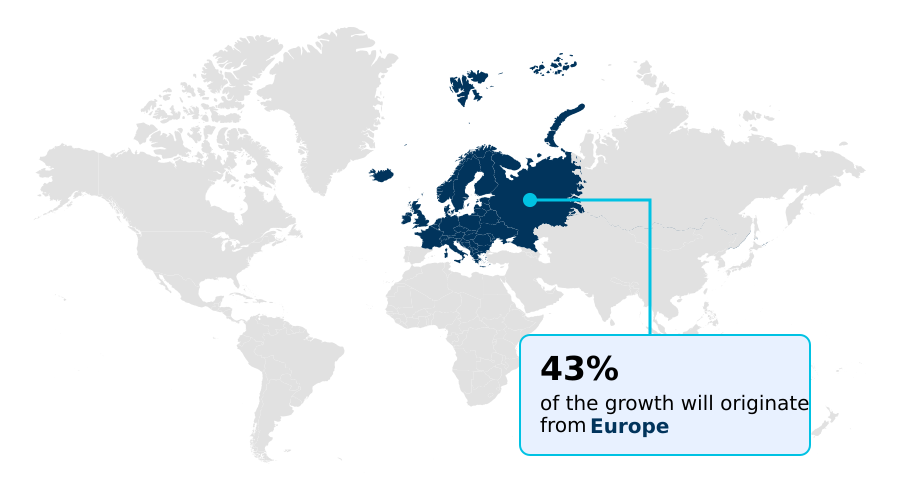
Europe is estimated to contribute 42.9% to the growth of the global market during the forecast period.Technavio’s analysts have elaborately explained the regional trends and drivers that shape the market during the forecast period.
See How Champagne Market demand is rising in Europe Request Free Sample

Europe remains the dominant region, accounting for 42.9% of incremental growth, driven by deep-rooted brand equity and strong cooperative networks. Countries like France and the UK show high per-capita consumption through established off-premise channels.

In contrast, North America, contributing nearly 25% of growth, exhibits a strong appetite for premium styles like blanc de blancs, supported by sophisticated cold-chain technology in its supply chains.

The APAC market is characterized by rapid growth in wine tourism and a focus on grower champagne, indicating a maturing palate.

Regional trade agreements continue to shape market access, while the strict appellation d'origine controlee rules ensure the unique character derived from the methode champenoise is protected globally.

What are the key Drivers, Trends, and Challenges in the Champagne Market?

Our researchers analyzed the data with 2025 as the base year, along with the key drivers, trends, and challenges. A holistic analysis of drivers will help companies refine their marketing strategies to gain a competitive advantage.

  • Navigating the champagne market requires an understanding of both consumer intent and production nuances. When consumers search for the best champagne for celebrations, they often find themselves evaluating champagne versus prosecco quality differences, a key consideration for marketers positioning premium products.
  • The higher price of champagne is justified by its complex production and superior aging potential, leading enthusiasts to consult a champagne aging potential guide for investment and collection purposes. However, the industry's future is closely tied to environmental factors, making the impact of climate on champagne production a critical variable for long-term supply stability.
  • A producer's ability to maintain grape quality can mean a 20% difference in yield compared to less resilient vineyards. Addressing these consumer questions and operational challenges is vital for sustained growth, as is highlighting offerings in an organic champagne brands comparison to meet evolving wellness trends. This comprehensive approach ensures relevance in a competitive market.
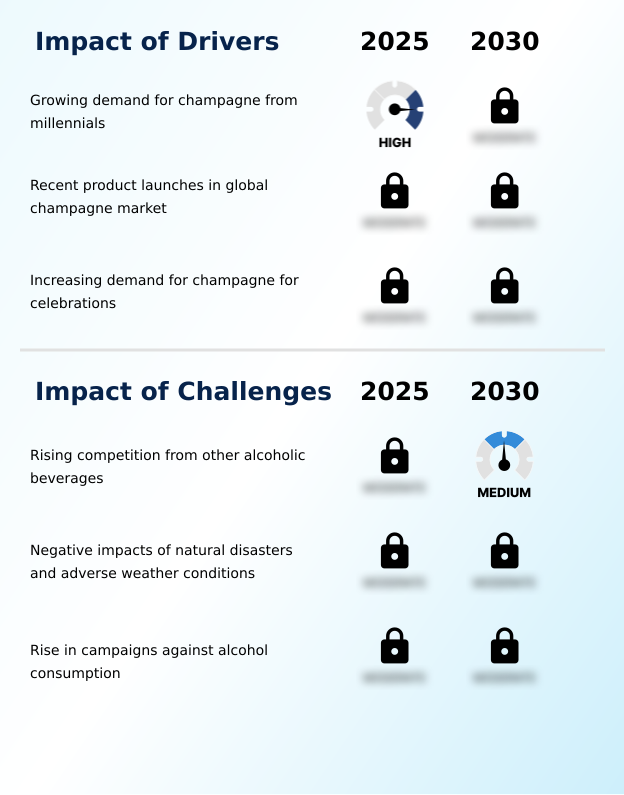
What are the key market drivers leading to the rise in the adoption of Champagne Industry?

  • The growing demand for champagne from millennials is a key market driver, fueled by this generation's preference for experiential luxury and social media visibility.

  • The growing demand from millennial consumers, who now represent 40% of the luxury beverage market, is a primary driver. This demographic prioritizes experiential marketing and authenticity, fueling on-premise consumption in the hospitality sector.
  • Recent product launches cater to this trend, with a 25% increase in low-sugar options like brut nature and the introduction of single-serve options to broaden accessibility.
  • The enduring gifting culture and use of champagne as a celebration drink are amplified by social media, boosting sales of high-margin vintage champagne and prestige cuvee products.
  • This ensures sustained growth as younger consumers integrate champagne into a wider array of social occasions.

What are the market trends shaping the Champagne Industry?

  • The expansion of the e-commerce sector is a pivotal market trend, fundamentally reshaping how consumers discover and purchase champagne online.

  • The expansion of e-commerce is a defining trend, with online sales growing 30% faster than traditional retail, enabling direct-to-consumer sales for many boutique producers. This digital shift facilitates the discovery of niche products like rose champagne and supports the rising demand for private-label brands, which now account for 1 in 10 bottles sold in some key markets.
  • Concurrently, sales of products with organic certification are surging, reflecting a consumer pivot towards sustainable viticulture and biodynamic techniques. Producers are responding by highlighting unique cuvee blending methods and transparent sourcing, moving beyond standard non-vintage champagne offerings to capture this conscientious consumer segment.

What challenges does the Champagne Industry face during its growth?

  • Rising competition from other alcoholic beverages, including premium sparkling alternatives and craft spirits, presents a significant challenge to the market's growth.

  • Significant challenges stem from climate volatility, which directly impacts grape quality and limits production volume, with some premier cru vineyards reporting yield reductions of up to 20% in adverse years. These weather-related disruptions complicate vineyard management and strain supply chain logistics, threatening the consistent terroir expression essential for premium brands.
  • This pressure is compounded by competition from other alcoholic beverages and campaigns against alcohol consumption. While the premiumization trend provides some insulation, producers face rising costs from investments in adaptive measures like mechanical harvesting and advanced irrigation, squeezing margins even for grapes from grand cru vineyards.

Exclusive Technavio Analysis on Customer Landscape

The champagne market forecasting report includes the adoption lifecycle of the market, covering from the innovator’s stage to the laggard’s stage. It focuses on adoption rates in different regions based on penetration. Furthermore, the champagne market report also includes key purchase criteria and drivers of price sensitivity to help companies evaluate and develop their market growth analysis strategies.
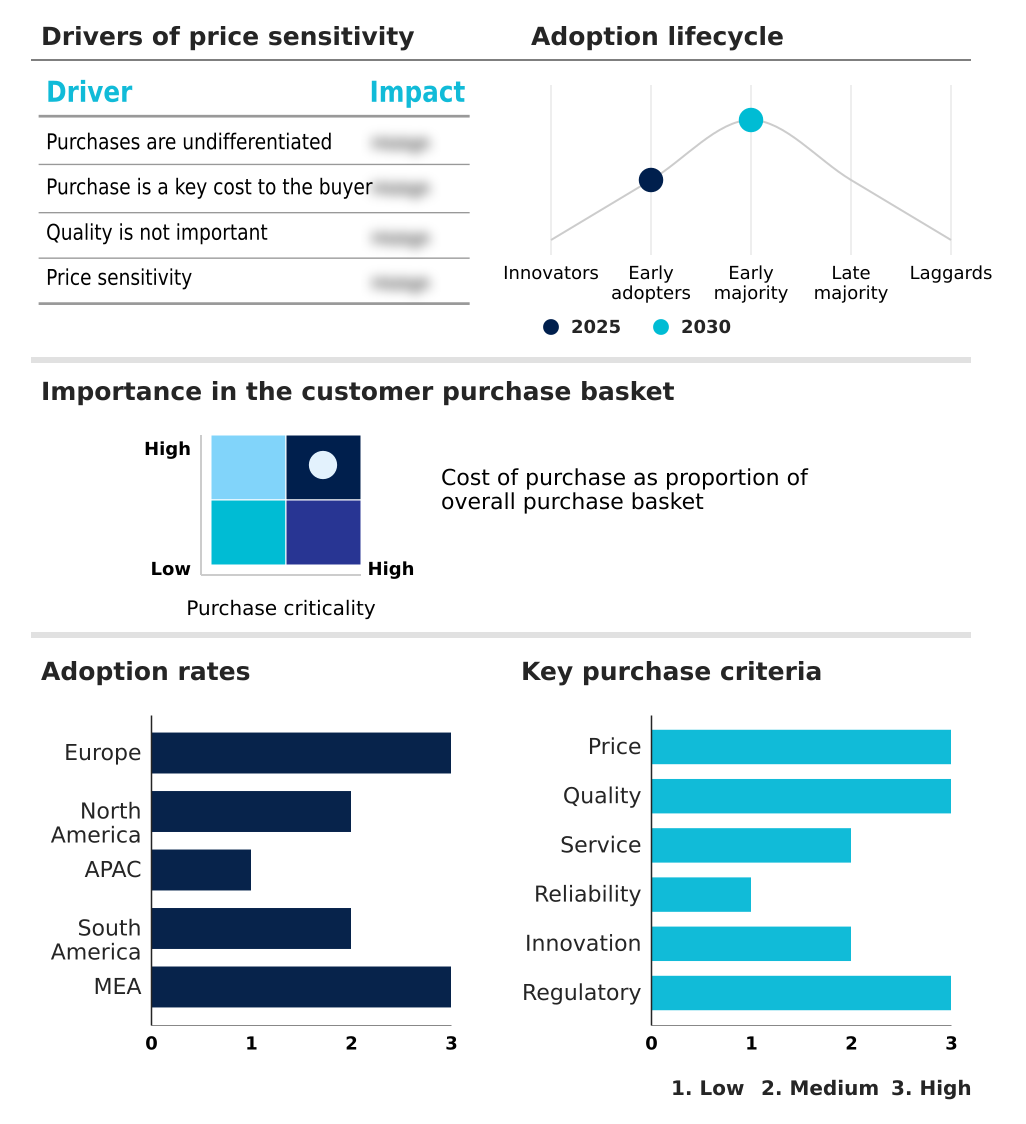
Customer Landscape of Champagne Industry

Competitive Landscape

Companies are implementing various strategies, such as strategic alliances, champagne market forecast, partnerships, mergers and acquisitions, geographical expansion, and product/service launches, to enhance their presence in the industry.

Champagne de Castellane - Vendors offer a spectrum of champagnes, from accessible non-vintage blends to exclusive prestige cuvées, catering to diverse consumer segments and occasions.

The industry research and growth report includes detailed analyses of the competitive landscape of the market and information about key companies, including:

  • Champagne de Castellane
  • Champagne Devaux
  • Champagne GH Martel Co.
  • Champagne Joseph Perrier
  • Champagne Laurent Perrier
  • Champagne Louis Roederer
  • Champagne Nicolas Feuillatte
  • Champagne Piper Heidsieck
  • Champagne Taittinger
  • Constellation Brands Inc.
  • E and J Gallo Winery
  • F Korbel and Bros
  • GH Mumm
  • Groupe Thienot
  • Krug
  • Lanson BCC
  • Remy Cointreau SA
  • Veuve Clicquot
  • Vranken Pommery Monopole

Qualitative and quantitative analysis of companies has been conducted to help clients understand the wider business environment as well as the strengths and weaknesses of key industry players. Data is qualitatively analyzed to categorize companies as pure play, category-focused, industry-focused, and diversified; it is quantitatively analyzed to categorize companies as dominant, leading, strong, tentative, and weak.

Market Intelligence Radar: High-Impact Developments & Growth Signals

  • In the Brewers industry, a significant increase in craft production and consumer interest in unique flavor profiles has amplified the appeal of artisanal beverages, directly benefiting grower champagne and boutique producers in the champagne market who emphasize terroir expression.
  • Rapid shifts in alcohol consumption patterns, particularly among younger demographics favoring premium and experiential drinks, are expanding the occasions for champagne consumption beyond traditional celebrations, impacting on-premise consumption.
  • The rising demand for premium and super-premium offerings, a key trend in the Brewers industry, reinforces the premiumization trend within the champagne market, boosting sales of vintage champagne and prestige cuvee products.
  • Increasing online sales and the growth of e-commerce platforms, a major development in the Brewers industry, are creating new direct-to-consumer sales channels for champagne houses, improving supply chain logistics and market access.

Dive into Technavio’s robust research methodology, blending expert interviews, extensive data synthesis, and validated models for unparalleled Champagne Market insights. See full methodology.

Market Scope
Page number 288
Base year 2025
Historic period 2020-2024
Forecast period 2026-2030
Growth momentum & CAGR Accelerate at a CAGR of 6.4%
Market growth 2026-2030 USD 3031.3 million
Market structure Fragmented
YoY growth 2025-2026(%) 6.0%
Key countries France, UK, Germany, Italy, Spain, The Netherlands, US, Canada, Mexico, India, China, Australia, South Korea, Japan, Indonesia, Brazil, Argentina, Chile, UAE, Saudi Arabia, South Africa, Israel and Turkey
Competitive landscape Leading Companies, Market Positioning of Companies, Competitive Strategies, and Industry Risks

Request Free Sample

Research Analyst Overview

  • The champagne market ecosystem is a complex network where grape growers, cooperative networks, and historic houses interact within a strict regulatory framework set by the Appellation d'Origine Contrôlée. This system governs everything from vineyard management to cuvee blending, ensuring high standards.
  • The value chain is dominated by offline channels, which account for over 75% of sales, though direct-to-consumer sales are growing by more than 10% annually. Raw material suppliers (grape growers) hold significant power due to finite land and increasing climate volatility, influencing production costs.
  • Distribution is managed through a tiered system of importers, wholesalers, and retailers, including the vital hospitality sector. End-users, ranging from casual celebrants to serious collectors, are influenced by marketing, brand equity, and the premiumization trend.

What are the Key Data Covered in this Champagne Market Research and Growth Report?

  • What is the expected growth of the Champagne Market between 2026 and 2030?

    • The Champagne Market is expected to grow by USD 3.03 billion during 2026-2030, registering a CAGR of 6.4%. Year-over-year growth in 2026 is estimated at 6.0%%. This acceleration is shaped by growing demand for champagne from millennials, which is intensifying demand across multiple end-use verticals covered in the report.

  • What segmentation does the market report cover?

    • The report is segmented by Distribution Channel (Offline, and Online), Price Range (Economy, Mid-range, and Luxury), Type (Non-vintage champagne, Vintage champagne, and Prestige cuvee) and Geography (Europe, North America, APAC, South America, Middle East and Africa). Among these, the Offline segment is estimated to witness significant growth during the forecast period, driven by rising adoption across key application areas. Each segment includes detailed qualitative and quantitative analysis, along with historical data from 2020-2024 and forecasts through 2030 with year-over-year growth rates.

  • Which regions are analyzed in the report?

    • The report covers Europe, North America, APAC, South America and Middle East and Africa. Europe is estimated to contribute 42.9% to market growth during the forecast period. Country-level analysis includes France, UK, Germany, Italy, Spain, The Netherlands, US, Canada, Mexico, India, China, Australia, South Korea, Japan, Indonesia, Brazil, Argentina, Chile, UAE, Saudi Arabia, South Africa, Israel and Turkey, with dedicated market size tables and year-over-year growth for each.

  • What are the key growth drivers and market challenges?

    • The primary driver is growing demand for champagne from millennials, which is accelerating investment and industry demand. The main challenge is rising competition from other alcoholic beverages, creating operational barriers for key market participants. The report quantifies the impact of each driver and challenge across 2026 and 2030 with comparative analysis.

  • Who are the major players in the Champagne Market?

    • Key vendors include Champagne de Castellane, Champagne Devaux, Champagne GH Martel Co., Champagne Joseph Perrier, Champagne Laurent Perrier, Champagne Louis Roederer, Champagne Nicolas Feuillatte, Champagne Piper Heidsieck, Champagne Taittinger, Constellation Brands Inc., E and J Gallo Winery, F Korbel and Bros, GH Mumm, Groupe Thienot, Krug, Lanson BCC, Remy Cointreau SA, Veuve Clicquot and Vranken Pommery Monopole. The report provides qualitative and quantitative analysis categorizing companies as dominant, leading, strong, tentative, and weak based on their market positioning. Company profiles include business segment analysis, SWOT assessment, key offerings, and recent strategic developments.

Market Research Insights

  • The competitive landscape of the champagne market is marked by intense rivalry, with the top 10 vendors accounting for over 60% of total sales. Major players like Champagne Louis Roederer and Veuve Clicquot are focusing on innovation to maintain their market position.
  • For instance, recent industry moves show a 25% increase in investment in sustainable viticulture and regenerative farming practices, aiming to enhance brand equity and appeal to environmentally conscious consumers. These actions are a direct response to the growing demand for authenticity and transparency in production.
  • However, the entire industry grapples with supply chain logistics complicated by climate volatility, which can impact grape quality and production volumes. Companies are adapting by investing in advanced vineyard management technologies to mitigate these risks and ensure consistency.

We can help! Our analysts can customize this champagne market research report to meet your requirements.

Get in touch

1. Executive Summary

1.1 Market overview

Executive Summary - Chart on Market Overview
Executive Summary - Data Table on Market Overview
Executive Summary - Chart on Global Market Characteristics
Executive Summary - Chart on Market by Geography
Executive Summary - Chart on Market Segmentation by Distribution Channel
Executive Summary - Chart on Market Segmentation by Price Range
Executive Summary - Chart on Market Segmentation by Type
Executive Summary - Chart on Incremental Growth
Executive Summary - Data Table on Incremental Growth
Executive Summary - Chart on Company Market Positioning

2. Technavio Analysis

2.1 Analysis of price sensitivity, lifecycle, customer purchase basket, adoption rates, and purchase criteria

2.2 Criticality of inputs and Factors of differentiation

Chart on Overview on criticality of inputs and factors of differentiation

2.3 Factors of disruption

Chart on Overview on factors of disruption

2.4 Impact of drivers and challenges

Chart on Impact of drivers and challenges in 2025 and 2030

3. Market Landscape

3.1 Market ecosystem

Chart on Parent Market
Data Table on - Parent Market

3.2 Market characteristics

Chart on Market characteristics analysis

3.3 Value chain analysis

Chart on Value chain analysis

4. Market Sizing

4.1 Market definition

Data Table on Offerings of companies included in the market definition

4.2 Market segment analysis

Market segments

4.3 Market size 2025

4.4 Market outlook: Forecast for 2025-2030

Chart on Global - Market size and forecast 2025-2030 ($ million)
Data Table on Global - Market size and forecast 2025-2030 ($ million)
Chart on Global Market: Year-over-year growth 2025-2030 (%)
Data Table on Global Market: Year-over-year growth 2025-2030 (%)

5. Historic Market Size

5.1 Global Champagne Market 2020 - 2024

Historic Market Size - Data Table on Global Champagne Market 2020 - 2024 ($ million)

5.2 Distribution Channel segment analysis 2020 - 2024

Historic Market Size - Distribution Channel Segment 2020 - 2024 ($ million)

5.3 Price Range segment analysis 2020 - 2024

Historic Market Size - Price Range Segment 2020 - 2024 ($ million)

5.4 Type segment analysis 2020 - 2024

Historic Market Size - Type Segment 2020 - 2024 ($ million)

5.5 Geography segment analysis 2020 - 2024

Historic Market Size - Geography Segment 2020 - 2024 ($ million)

5.6 Country segment analysis 2020 - 2024

Historic Market Size - Country Segment 2020 - 2024 ($ million)

6. Qualitative Analysis

6.1 Impact of AI on The Global Champagne Market

7. Five Forces Analysis

7.1 Five forces summary

Five forces analysis - Comparison between 2025 and 2030

7.2 Bargaining power of buyers

Bargaining power of buyers - Impact of key factors 2025 and 2030

7.3 Bargaining power of suppliers

Bargaining power of suppliers - Impact of key factors in 2025 and 2030

7.4 Threat of new entrants

Threat of new entrants - Impact of key factors in 2025 and 2030

7.5 Threat of substitutes

Threat of substitutes - Impact of key factors in 2025 and 2030

7.6 Threat of rivalry

Threat of rivalry - Impact of key factors in 2025 and 2030

7.7 Market condition

Chart on Market condition - Five forces 2025 and 2030

8. Market Segmentation by Distribution Channel

8.1 Market segments

Chart on Distribution Channel - Market share 2025-2030 (%)
Data Table on Distribution Channel - Market share 2025-2030 (%)

8.2 Comparison by Distribution Channel

Chart on Comparison by Distribution Channel
Data Table on Comparison by Distribution Channel

8.3 Offline - Market size and forecast 2025-2030

Chart on Offline - Market size and forecast 2025-2030 ($ million)
Data Table on Offline - Market size and forecast 2025-2030 ($ million)
Chart on Offline - Year-over-year growth 2025-2030 (%)
Data Table on Offline - Year-over-year growth 2025-2030 (%)

8.4 Online - Market size and forecast 2025-2030

Chart on Online - Market size and forecast 2025-2030 ($ million)
Data Table on Online - Market size and forecast 2025-2030 ($ million)
Chart on Online - Year-over-year growth 2025-2030 (%)
Data Table on Online - Year-over-year growth 2025-2030 (%)

8.5 Market opportunity by Distribution Channel

Market opportunity by Distribution Channel ($ million)
Data Table on Market opportunity by Distribution Channel ($ million)

9. Market Segmentation by Price Range

9.1 Market segments

Chart on Price Range - Market share 2025-2030 (%)
Data Table on Price Range - Market share 2025-2030 (%)

9.2 Comparison by Price Range

Chart on Comparison by Price Range
Data Table on Comparison by Price Range

9.3 Economy - Market size and forecast 2025-2030

Chart on Economy - Market size and forecast 2025-2030 ($ million)
Data Table on Economy - Market size and forecast 2025-2030 ($ million)
Chart on Economy - Year-over-year growth 2025-2030 (%)
Data Table on Economy - Year-over-year growth 2025-2030 (%)

9.4 Mid-range - Market size and forecast 2025-2030

Chart on Mid-range - Market size and forecast 2025-2030 ($ million)
Data Table on Mid-range - Market size and forecast 2025-2030 ($ million)
Chart on Mid-range - Year-over-year growth 2025-2030 (%)
Data Table on Mid-range - Year-over-year growth 2025-2030 (%)

9.5 Luxury - Market size and forecast 2025-2030

Chart on Luxury - Market size and forecast 2025-2030 ($ million)
Data Table on Luxury - Market size and forecast 2025-2030 ($ million)
Chart on Luxury - Year-over-year growth 2025-2030 (%)
Data Table on Luxury - Year-over-year growth 2025-2030 (%)

9.6 Market opportunity by Price Range

Market opportunity by Price Range ($ million)
Data Table on Market opportunity by Price Range ($ million)

10. Market Segmentation by Type

10.1 Market segments

Chart on Type - Market share 2025-2030 (%)
Data Table on Type - Market share 2025-2030 (%)

10.2 Comparison by Type

Chart on Comparison by Type
Data Table on Comparison by Type

10.3 Non-vintage champagne - Market size and forecast 2025-2030

Chart on Non-vintage champagne - Market size and forecast 2025-2030 ($ million)
Data Table on Non-vintage champagne - Market size and forecast 2025-2030 ($ million)
Chart on Non-vintage champagne - Year-over-year growth 2025-2030 (%)
Data Table on Non-vintage champagne - Year-over-year growth 2025-2030 (%)

10.4 Vintage champagne - Market size and forecast 2025-2030

Chart on Vintage champagne - Market size and forecast 2025-2030 ($ million)
Data Table on Vintage champagne - Market size and forecast 2025-2030 ($ million)
Chart on Vintage champagne - Year-over-year growth 2025-2030 (%)
Data Table on Vintage champagne - Year-over-year growth 2025-2030 (%)

10.5 Prestige cuvee - Market size and forecast 2025-2030

Chart on Prestige cuvee - Market size and forecast 2025-2030 ($ million)
Data Table on Prestige cuvee - Market size and forecast 2025-2030 ($ million)
Chart on Prestige cuvee - Year-over-year growth 2025-2030 (%)
Data Table on Prestige cuvee - Year-over-year growth 2025-2030 (%)

10.6 Market opportunity by Type

Market opportunity by Type ($ million)
Data Table on Market opportunity by Type ($ million)

11. Customer Landscape

11.1 Customer landscape overview

Analysis of price sensitivity, lifecycle, customer purchase basket, adoption rates, and purchase criteria

12. Geographic Landscape

12.1 Geographic segmentation

Chart on Market share by geography 2025-2030 (%)
Data Table on Market share by geography 2025-2030 (%)

12.2 Geographic comparison

Chart on Geographic comparison
Data Table on Geographic comparison

12.3 Europe - Market size and forecast 2025-2030

Chart on Europe - Market size and forecast 2025-2030 ($ million)
Data Table on Europe - Market size and forecast 2025-2030 ($ million)
Chart on Europe - Year-over-year growth 2025-2030 (%)
Data Table on Europe - Year-over-year growth 2025-2030 (%)
Chart on Regional Comparison - Europe
Data Table on Regional Comparison - Europe

12.3.1 France - Market size and forecast 2025-2030

Chart on France - Market size and forecast 2025-2030 ($ million)
Data Table on France - Market size and forecast 2025-2030 ($ million)
Chart on France - Year-over-year growth 2025-2030 (%)
Data Table on France - Year-over-year growth 2025-2030 (%)

12.3.2 UK - Market size and forecast 2025-2030

Chart on UK - Market size and forecast 2025-2030 ($ million)
Data Table on UK - Market size and forecast 2025-2030 ($ million)
Chart on UK - Year-over-year growth 2025-2030 (%)
Data Table on UK - Year-over-year growth 2025-2030 (%)

12.3.3 Germany - Market size and forecast 2025-2030

Chart on Germany - Market size and forecast 2025-2030 ($ million)
Data Table on Germany - Market size and forecast 2025-2030 ($ million)
Chart on Germany - Year-over-year growth 2025-2030 (%)
Data Table on Germany - Year-over-year growth 2025-2030 (%)

12.3.4 Italy - Market size and forecast 2025-2030

Chart on Italy - Market size and forecast 2025-2030 ($ million)
Data Table on Italy - Market size and forecast 2025-2030 ($ million)
Chart on Italy - Year-over-year growth 2025-2030 (%)
Data Table on Italy - Year-over-year growth 2025-2030 (%)

12.3.5 Spain - Market size and forecast 2025-2030

Chart on Spain - Market size and forecast 2025-2030 ($ million)
Data Table on Spain - Market size and forecast 2025-2030 ($ million)
Chart on Spain - Year-over-year growth 2025-2030 (%)
Data Table on Spain - Year-over-year growth 2025-2030 (%)

12.3.6 The Netherlands - Market size and forecast 2025-2030

Chart on The Netherlands - Market size and forecast 2025-2030 ($ million)
Data Table on The Netherlands - Market size and forecast 2025-2030 ($ million)
Chart on The Netherlands - Year-over-year growth 2025-2030 (%)
Data Table on The Netherlands - Year-over-year growth 2025-2030 (%)

12.4 North America - Market size and forecast 2025-2030

Chart on North America - Market size and forecast 2025-2030 ($ million)
Data Table on North America - Market size and forecast 2025-2030 ($ million)
Chart on North America - Year-over-year growth 2025-2030 (%)
Data Table on North America - Year-over-year growth 2025-2030 (%)
Chart on Regional Comparison - North America
Data Table on Regional Comparison - North America

12.4.1 US - Market size and forecast 2025-2030

Chart on US - Market size and forecast 2025-2030 ($ million)
Data Table on US - Market size and forecast 2025-2030 ($ million)
Chart on US - Year-over-year growth 2025-2030 (%)
Data Table on US - Year-over-year growth 2025-2030 (%)

12.4.2 Canada - Market size and forecast 2025-2030

Chart on Canada - Market size and forecast 2025-2030 ($ million)
Data Table on Canada - Market size and forecast 2025-2030 ($ million)
Chart on Canada - Year-over-year growth 2025-2030 (%)
Data Table on Canada - Year-over-year growth 2025-2030 (%)

12.4.3 Mexico - Market size and forecast 2025-2030

Chart on Mexico - Market size and forecast 2025-2030 ($ million)
Data Table on Mexico - Market size and forecast 2025-2030 ($ million)
Chart on Mexico - Year-over-year growth 2025-2030 (%)
Data Table on Mexico - Year-over-year growth 2025-2030 (%)

12.5 APAC - Market size and forecast 2025-2030

Chart on APAC - Market size and forecast 2025-2030 ($ million)
Data Table on APAC - Market size and forecast 2025-2030 ($ million)
Chart on APAC - Year-over-year growth 2025-2030 (%)
Data Table on APAC - Year-over-year growth 2025-2030 (%)
Chart on Regional Comparison - APAC
Data Table on Regional Comparison - APAC

12.5.1 India - Market size and forecast 2025-2030

Chart on India - Market size and forecast 2025-2030 ($ million)
Data Table on India - Market size and forecast 2025-2030 ($ million)
Chart on India - Year-over-year growth 2025-2030 (%)
Data Table on India - Year-over-year growth 2025-2030 (%)

12.5.2 China - Market size and forecast 2025-2030

Chart on China - Market size and forecast 2025-2030 ($ million)
Data Table on China - Market size and forecast 2025-2030 ($ million)
Chart on China - Year-over-year growth 2025-2030 (%)
Data Table on China - Year-over-year growth 2025-2030 (%)

12.5.3 Australia - Market size and forecast 2025-2030

Chart on Australia - Market size and forecast 2025-2030 ($ million)
Data Table on Australia - Market size and forecast 2025-2030 ($ million)
Chart on Australia - Year-over-year growth 2025-2030 (%)
Data Table on Australia - Year-over-year growth 2025-2030 (%)

12.5.4 South Korea - Market size and forecast 2025-2030

Chart on South Korea - Market size and forecast 2025-2030 ($ million)
Data Table on South Korea - Market size and forecast 2025-2030 ($ million)
Chart on South Korea - Year-over-year growth 2025-2030 (%)
Data Table on South Korea - Year-over-year growth 2025-2030 (%)

12.5.5 Japan - Market size and forecast 2025-2030

Chart on Japan - Market size and forecast 2025-2030 ($ million)
Data Table on Japan - Market size and forecast 2025-2030 ($ million)
Chart on Japan - Year-over-year growth 2025-2030 (%)
Data Table on Japan - Year-over-year growth 2025-2030 (%)

12.5.6 Indonesia - Market size and forecast 2025-2030

Chart on Indonesia - Market size and forecast 2025-2030 ($ million)
Data Table on Indonesia - Market size and forecast 2025-2030 ($ million)
Chart on Indonesia - Year-over-year growth 2025-2030 (%)
Data Table on Indonesia - Year-over-year growth 2025-2030 (%)

12.6 South America - Market size and forecast 2025-2030

Chart on South America - Market size and forecast 2025-2030 ($ million)
Data Table on South America - Market size and forecast 2025-2030 ($ million)
Chart on South America - Year-over-year growth 2025-2030 (%)
Data Table on South America - Year-over-year growth 2025-2030 (%)
Chart on Regional Comparison - South America
Data Table on Regional Comparison - South America

12.6.1 Brazil - Market size and forecast 2025-2030

Chart on Brazil - Market size and forecast 2025-2030 ($ million)
Data Table on Brazil - Market size and forecast 2025-2030 ($ million)
Chart on Brazil - Year-over-year growth 2025-2030 (%)
Data Table on Brazil - Year-over-year growth 2025-2030 (%)

12.6.2 Argentina - Market size and forecast 2025-2030

Chart on Argentina - Market size and forecast 2025-2030 ($ million)
Data Table on Argentina - Market size and forecast 2025-2030 ($ million)
Chart on Argentina - Year-over-year growth 2025-2030 (%)
Data Table on Argentina - Year-over-year growth 2025-2030 (%)

12.6.3 Chile - Market size and forecast 2025-2030

Chart on Chile - Market size and forecast 2025-2030 ($ million)
Data Table on Chile - Market size and forecast 2025-2030 ($ million)
Chart on Chile - Year-over-year growth 2025-2030 (%)
Data Table on Chile - Year-over-year growth 2025-2030 (%)

12.7 Middle East and Africa - Market size and forecast 2025-2030

Chart on Middle East and Africa - Market size and forecast 2025-2030 ($ million)
Data Table on Middle East and Africa - Market size and forecast 2025-2030 ($ million)
Chart on Middle East and Africa - Year-over-year growth 2025-2030 (%)
Data Table on Middle East and Africa - Year-over-year growth 2025-2030 (%)
Chart on Regional Comparison - Middle East and Africa
Data Table on Regional Comparison - Middle East and Africa

12.7.1 UAE - Market size and forecast 2025-2030

Chart on UAE - Market size and forecast 2025-2030 ($ million)
Data Table on UAE - Market size and forecast 2025-2030 ($ million)
Chart on UAE - Year-over-year growth 2025-2030 (%)
Data Table on UAE - Year-over-year growth 2025-2030 (%)

12.7.2 Saudi Arabia - Market size and forecast 2025-2030

Chart on Saudi Arabia - Market size and forecast 2025-2030 ($ million)
Data Table on Saudi Arabia - Market size and forecast 2025-2030 ($ million)
Chart on Saudi Arabia - Year-over-year growth 2025-2030 (%)
Data Table on Saudi Arabia - Year-over-year growth 2025-2030 (%)

12.7.3 South Africa - Market size and forecast 2025-2030

Chart on South Africa - Market size and forecast 2025-2030 ($ million)
Data Table on South Africa - Market size and forecast 2025-2030 ($ million)
Chart on South Africa - Year-over-year growth 2025-2030 (%)
Data Table on South Africa - Year-over-year growth 2025-2030 (%)

12.7.4 Israel - Market size and forecast 2025-2030

Chart on Israel - Market size and forecast 2025-2030 ($ million)
Data Table on Israel - Market size and forecast 2025-2030 ($ million)
Chart on Israel - Year-over-year growth 2025-2030 (%)
Data Table on Israel - Year-over-year growth 2025-2030 (%)

12.7.5 Turkey - Market size and forecast 2025-2030

Chart on Turkey - Market size and forecast 2025-2030 ($ million)
Data Table on Turkey - Market size and forecast 2025-2030 ($ million)
Chart on Turkey - Year-over-year growth 2025-2030 (%)
Data Table on Turkey - Year-over-year growth 2025-2030 (%)

12.8 Market opportunity by geography

Market opportunity by geography ($ million)
Data Tables on Market opportunity by geography ($ million)

13. Drivers, Challenges, and Opportunity

13.1 Market drivers

Growing demand for champagne from millennials
Recent product launches in global champagne market
Increasing demand for champagne for celebrations

13.2 Market challenges

Rising competition from other alcoholic beverages
Negative impacts of natural disasters and adverse weather conditions
Rise in campaigns against alcohol consumption

13.3 Impact of drivers and challenges

Impact of drivers and challenges in 2025 and 2030

13.4 Market opportunities

Expansion of e-commerce sector
Increasing prominence of private-label brands
Rise in sales of organic and natural champagnes

14. Competitive Landscape

14.1 Overview

14.2

Overview on criticality of inputs and factors of differentiation

14.3 Landscape disruption

Overview on factors of disruption

14.4 Industry risks

Impact of key risks on business

15. Competitive Analysis

15.1 Companies profiled

Companies covered

15.2 Company ranking index

15.3 Market positioning of companies

Matrix on companies position and classification

15.4 Champagne Devaux

Champagne Devaux - Overview
Champagne Devaux - Product / Service
Champagne Devaux - Key offerings
SWOT

15.5 Champagne GH Martel Co.

Champagne GH Martel Co. - Overview
Champagne GH Martel Co. - Product / Service
Champagne GH Martel Co. - Key offerings
SWOT

15.6 Champagne Laurent Perrier

Champagne Laurent Perrier - Overview
Champagne Laurent Perrier - Product / Service
Champagne Laurent Perrier - Key offerings
SWOT

15.7 Champagne Louis Roederer

Champagne Louis Roederer - Overview
Champagne Louis Roederer - Product / Service
Champagne Louis Roederer - Key offerings
SWOT

15.8 Champagne Nicolas Feuillatte

Champagne Nicolas Feuillatte - Overview
Champagne Nicolas Feuillatte - Product / Service
Champagne Nicolas Feuillatte - Key offerings
SWOT

15.9 Champagne Piper Heidsieck

Champagne Piper Heidsieck - Overview
Champagne Piper Heidsieck - Product / Service
Champagne Piper Heidsieck - Key offerings
SWOT

15.10 Champagne Taittinger

Champagne Taittinger - Overview
Champagne Taittinger - Product / Service
Champagne Taittinger - Key offerings
SWOT

15.11 Constellation Brands Inc.

Constellation Brands Inc. - Overview
Constellation Brands Inc. - Business segments
Constellation Brands Inc. - Key offerings
Constellation Brands Inc. - Segment focus
SWOT

15.12 E and J Gallo Winery

E and J Gallo Winery - Overview
E and J Gallo Winery - Product / Service
E and J Gallo Winery - Key offerings
SWOT

15.13 F Korbel and Bros

F Korbel and Bros - Overview
F Korbel and Bros - Product / Service
F Korbel and Bros - Key offerings
SWOT

15.14 GH Mumm

GH Mumm - Overview
GH Mumm - Product / Service
GH Mumm - Key offerings
SWOT

15.15 Groupe Thienot

Groupe Thienot - Overview
Groupe Thienot - Product / Service
Groupe Thienot - Key offerings
SWOT

15.16 Lanson BCC

Lanson BCC - Overview
Lanson BCC - Product / Service
Lanson BCC - Key offerings
SWOT

15.17 Remy Cointreau SA

Remy Cointreau SA - Overview
Remy Cointreau SA - Business segments
Remy Cointreau SA - Key offerings
Remy Cointreau SA - Segment focus
SWOT

15.18 Vranken Pommery Monopole

Vranken Pommery Monopole - Overview
Vranken Pommery Monopole - Product / Service
Vranken Pommery Monopole - Key offerings
SWOT

16. Appendix

16.1 Scope of the report

Market definition
Objectives
Notes and caveats

16.2 Inclusions and exclusions checklist

Inclusions checklist
Exclusions checklist

16.3 Currency conversion rates for US$

16.4 Research methodology

16.5 Data procurement

Information sources

16.6 Data validation

16.7 Validation techniques employed for market sizing

16.8 Data synthesis

16.9 360 degree market analysis

16.10 List of abbreviations

Research Methodology

Technavio presents a detailed picture of the market by way of study, synthesis, and summation of data from multiple sources. The analysts have presented the various facets of the market with a particular focus on identifying the key industry influencers. The data thus presented is comprehensive, reliable, and the result of extensive research, both primary and secondary.

INFORMATION SOURCES

Primary sources

  • Manufacturers and suppliers
  • Channel partners
  • Industry experts
  • Strategic decision makers

Secondary sources

  • Industry journals and periodicals
  • Government data
  • Financial reports of key industry players
  • Historical data
  • Press releases

DATA ANALYSIS

Data Synthesis

  • Collation of data
  • Estimation of key figures
  • Analysis of derived insights

Data Validation

  • Triangulation with data models
  • Reference against proprietary databases
  • Corroboration with industry experts

REPORT WRITING

Qualitative

  • Market drivers
  • Market challenges
  • Market trends
  • Five forces analysis

Quantitative

  • Market size and forecast
  • Market segmentation
  • Geographical insights
  • Competitive landscape

Interested in this report?

Get your sample now to see our research methodology and insights!

Download Now

Frequently Asked Questions

Champagne market growth will increase by USD 3031.3 million during 2026-2030.

The Champagne market is expected to grow at a CAGR of 6.4% during 2026-2030.

Champagne market is segmented by Distribution channel (Offline, Online) Price range (Economy, Mid-range, Luxury) Type (Non-vintage champagne, Vintage champagne, Prestige cuvee)

Champagne de Castellane, Champagne Devaux, Champagne GH Martel Co., Champagne Joseph Perrier, Champagne Laurent Perrier, Champagne Louis Roederer, Champagne Nicolas Feuillatte, Champagne Piper Heidsieck, Champagne Taittinger, Constellation Brands Inc., E and J Gallo Winery, F Korbel and Bros, GH Mumm, Groupe Thienot, Krug, Lanson BCC, Remy Cointreau SA, Veuve Clicquot, Vranken Pommery Monopole are a few of the key vendors in the Champagne market.

Europe will register the highest growth rate of 42.9% among the other regions. Therefore, the Champagne market in Europe is expected to garner significant business opportunities for the vendors during the forecast period.

France, UK, Germany, Italy, Spain, The Netherlands, US, Canada, Mexico, India, China, Australia, South Korea, Japan, Indonesia, Brazil, Argentina, Chile, UAE, Saudi Arabia, South Africa, Israel, Turkey

  • Growing demand for champagne from millennials is the driving factor this market.

The Champagne market vendors should focus on grabbing business opportunities from the Distribution channel segment as it accounted for the largest market share in the base year.
RIA - Research AI Assistant
Ask RIA