



Ambient Clinical Intelligence Market Size 2026-2030
The ambient clinical intelligence market size is valued to increase by USD 4.05 billion, at a CAGR of 21.8% from 2025 to 2030. Escalating burden of administrative documentation on medical practitioners will drive the ambient clinical intelligence market.
Major Market Trends & Insights
- North America dominated the market and accounted for a 39.7% growth during the forecast period.
- By Component - Software platforms segment was valued at USD 1.21 billion in 2024
- By End-user - Hospitals segment accounted for the largest market revenue share in 2024
Market Size & Forecast
- Market Opportunities: USD 5.27 billion
- Market Future Opportunities: USD 4.05 billion
- CAGR from 2025 to 2030 : 21.8%
Market Summary
- The ambient clinical intelligence market is driven by the imperative to reduce administrative burdens and combat physician burnout. These systems utilize advanced technologies such as natural language processing and speech recognition technology to enable clinical documentation automation. By seamlessly capturing and structuring patient encounters, this technology facilitates real-time clinical documentation and automated medical transcription.
- A key application is the automatic SOAP note generation, which optimizes clinical workflow and allows practitioners to focus on patient care rather than manual data entry. For example, a large hospital system can deploy these solutions to standardize note quality across departments, improving both the accuracy of EHR integration and the metrics tied to value-based care reimbursements.
- This shift toward hands-free documentation not only enhances physician satisfaction but also improves the quality of patient-physician interactions. The market's evolution is further shaped by the increasing demand for HIPAA compliant AI and robust patient consent management protocols to address critical data privacy concerns.
What will be the Size of the Ambient Clinical Intelligence Market during the forecast period?
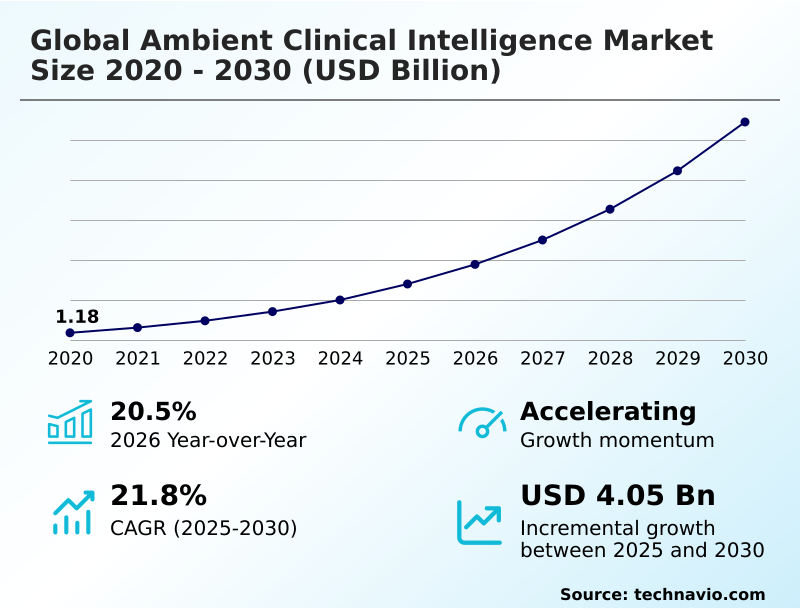
Get Key Insights on Market Forecast (PDF) Get Free Sample
How is the Ambient Clinical Intelligence Market Segmented?
The ambient clinical intelligence industry research report provides comprehensive data (region-wise segment analysis), with forecasts and estimates in "USD million" for the period 2026-2030, as well as historical data from 2020-2024 for the following segments.
- Component
- Software platforms
- Services
- Hardware and sensors
- End-user
- Hospitals
- Ambulatory and specialty clinics
- Telehealth providers
- Technology
- NLP
- Speech recognition
- ML and DL
- Geography
- North America
- US
- Canada
- Mexico
- Europe
- Germany
- UK
- France
- APAC
- China
- Japan
- India
- South America
- Brazil
- Argentina
- Colombia
- Middle East and Africa
- Saudi Arabia
- UAE
- South Africa
- Rest of World (ROW)
- North America
By Component Insights
The software platforms segment is estimated to witness significant growth during the forecast period.
The software platforms segment forms the core of the market, enabling sophisticated clinical workflow optimization through digital ecosystems that synthesize raw audio into structured medical insights.
These platforms are central to achieving ambient clinical intelligence, utilizing AI medical scribe capabilities and advanced speaker diarization to ensure high-fidelity data capture. As healthcare systems seek to improve efficiency, the adoption of automated clinical workflow tools is accelerating.
Leading solutions demonstrate over 99% accuracy in medical terminology recognition.
The market is shifting toward platforms that offer deep integration and use AI-powered medical dictation and clinical documentation improvement AI to reduce administrative tasks, allowing clinicians to focus more on patient care.
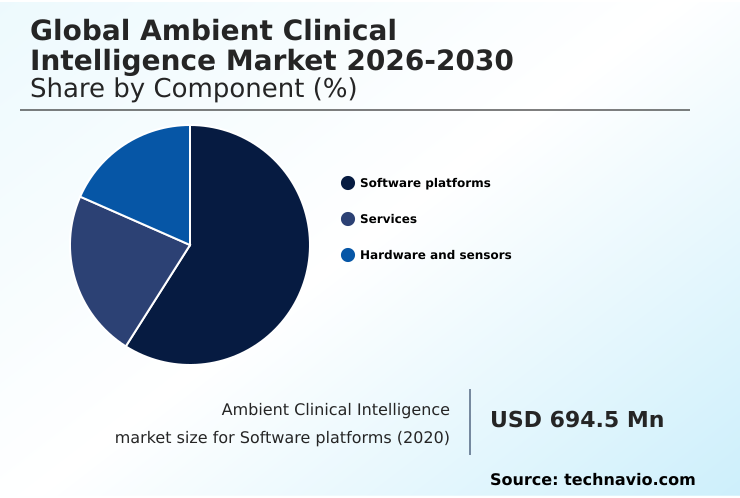
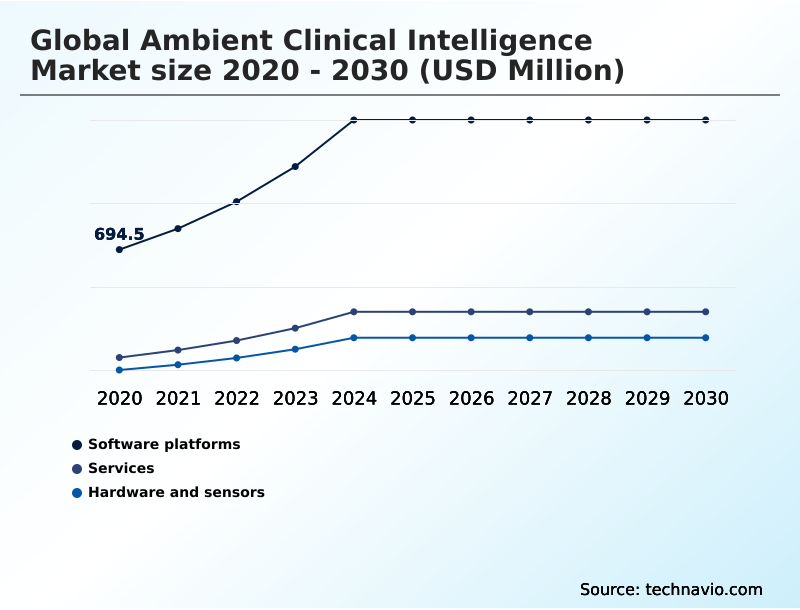
The Software platforms segment was valued at USD 1.21 billion in 2024 and showed a gradual increase during the forecast period.
Regional Analysis
North America is estimated to contribute 39.7% to the growth of the global market during the forecast period.Technavio’s analysts have elaborately explained the regional trends and drivers that shape the market during the forecast period.
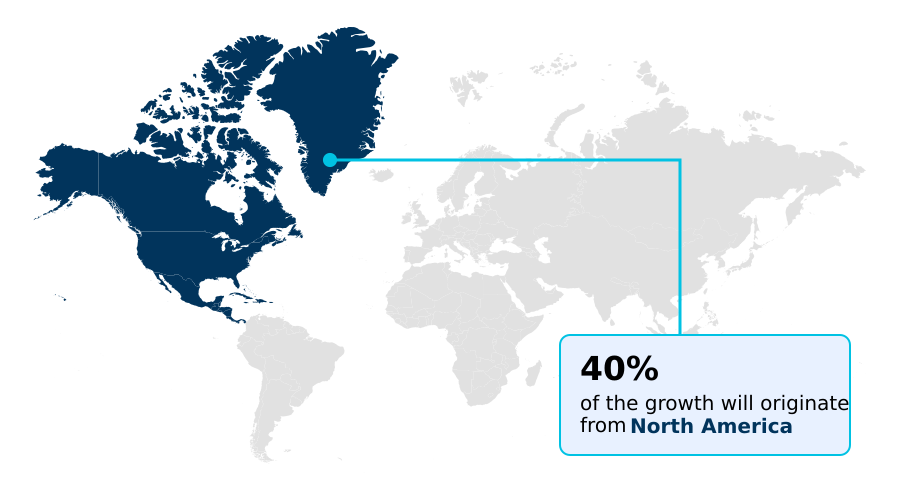
See How Ambient Clinical Intelligence Market Demand is Rising in North America Get Free Sample
The ambient clinical intelligence market exhibits distinct regional dynamics, with North America leading in adoption due to advanced healthcare infrastructure and high EHR integration rates. This region accounts for nearly 39.7% of the market's incremental growth.
In contrast, the APAC region is projected to have the highest growth rate, with a CAGR of 23.0%, driven by government-led digital health initiatives and the rapid expansion of private healthcare.
In Europe, adoption is steady, with a strong focus on data sovereignty. Across all regions, the demand for an AI medical scribe and automated care summaries is universal.
Solutions that facilitate hands-free documentation and automated referral letters are gaining traction globally, enabling automated SOAP note creation and improving workflows.
The use of medical dictation software and hands-free clinical notes is becoming a standard, supported by AI medical scribe technology that integrates seamlessly with existing systems.
Market Dynamics
Our researchers analyzed the data with 2025 as the base year, along with the key drivers, trends, and challenges. A holistic analysis of drivers will help companies refine their marketing strategies to gain a competitive advantage.
- The strategic implementation of ambient clinical intelligence is expanding, with a notable focus on delivering measurable value across various healthcare settings. The demand for ambient clinical intelligence for specialty clinics is growing as these practices seek to optimize workflows without the extensive IT resources of large hospitals.
- For these organizations, demonstrating the ROI of automated clinical documentation is crucial, often hinging on the technology's ability to reduce administrative time and increase patient throughput. A key enabler for adoption is the availability of HIPAA compliant ambient listening solutions, which address the stringent requirements of patient data privacy in ambient intelligence.
- Systems that focus on improving patient engagement with AI scribes are particularly successful, as they restore the natural flow of conversation between patient and provider. Success is also tied to the technology's ability for integrating AI scribes with legacy EHR systems, a critical factor for ensuring seamless data flow.
- Solutions designed for AI scribe solutions for telehealth platforms are also becoming essential, providing consistent documentation quality in virtual care environments. A cost-benefit analysis of AI medical scribes often reveals that facilities using them see a 50% greater improvement in physician satisfaction scores compared to those using traditional scribes.
- Furthermore, achieving high real-time medical transcription accuracy benchmarks is non-negotiable for clinical acceptance, while reducing physician burnout through AI scribing remains a primary objective for healthcare leaders.
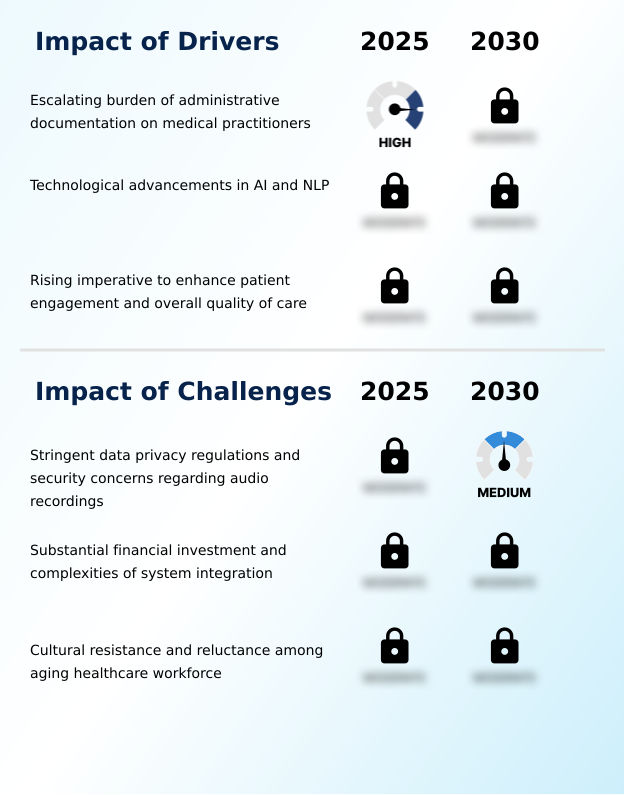
What are the key market drivers leading to the rise in the adoption of Ambient Clinical Intelligence Industry?
- The escalating burden of administrative documentation on medical practitioners is a primary driver for the adoption of ambient clinical intelligence.
- The primary driver for the market is the urgent need for reducing administrative burden in healthcare, which is directly addressed by clinical documentation automation.
- Technologies enabling automated medical transcription are critical in combating physician burnout, a condition affecting nearly 50% of practitioners.
- By automating patient encounter capture and facilitating real-time clinical documentation, these systems can return up to two hours per day to a physician's schedule.
- This focus on physician productivity tools allows for improving patient-physician interaction, as clinicians can engage more directly with patients. The seamlessness of AI for EHR data entry ensures that the benefits of automation are realized without creating new workflow frictions.
- As healthcare models shift toward patient-centric documentation solutions, the adoption of these intelligent systems is accelerating, fundamentally changing how care is documented and delivered.
What are the market trends shaping the Ambient Clinical Intelligence Industry?
- The market is experiencing a significant trend toward expansion beyond general practice. Solutions are increasingly being adopted in specialized medical disciplines and surgical settings.
- Key trends are reshaping the ambient clinical intelligence market, driven by advancements in generative AI in healthcare and a push toward greater specialization. Solutions are moving beyond general practice into high-acuity environments, leading to the development of sophisticated operating room documentation AI and emergency department scribing AI. This expansion is supported by the growing capabilities of clinical intelligence platforms.
- The integration of AI-driven coding suggestions automates revenue cycle management, with some systems improving coding accuracy by over 15%. A heightened focus on data privacy is compelling vendors to offer secure ambient listening technology through sovereign and secure cloud infrastructure. This ensures that the use of conversational AI for healthcare complies with regional data mandates.
- The ability to provide intelligent clinical data capture in real-time is now a competitive differentiator, improving clinical decision-making and reducing diagnostic errors by up to 10%.
What challenges does the Ambient Clinical Intelligence Industry face during its growth?
- Stringent data privacy regulations and security concerns surrounding audio recordings present a key challenge to the market's growth.
- Significant challenges constrain the market, primarily centered on data privacy, cost, and user adoption. Ensuring systems are HIPAA compliant AI is a major undertaking, as patient consent management and secure data handling are non-negotiable.
- The complexity of medical terminology recognition and speech recognition technology in noisy clinical environments can lead to accuracy issues, with error rates in some early-generation systems reaching up to 15%. The initial investment for implementation can be substantial, with some facilities reporting a 20% increase in their first-year IT budget.
- Moreover, achieving effective clinical data structuring for telehealth documentation automation adds another layer of complexity. There is also cultural resistance, as surveys indicate up to 30% of senior physicians express skepticism toward AI, particularly concerning the nuances of AI for chronic disease management notes and the reliability of contextual clinical conversation analysis and structured clinical note generation.
Exclusive Technavio Analysis on Customer Landscape
The ambient clinical intelligence market forecasting report includes the adoption lifecycle of the market, covering from the innovator’s stage to the laggard’s stage. It focuses on adoption rates in different regions based on penetration. Furthermore, the ambient clinical intelligence market report also includes key purchase criteria and drivers of price sensitivity to help companies evaluate and develop their market growth analysis strategies.
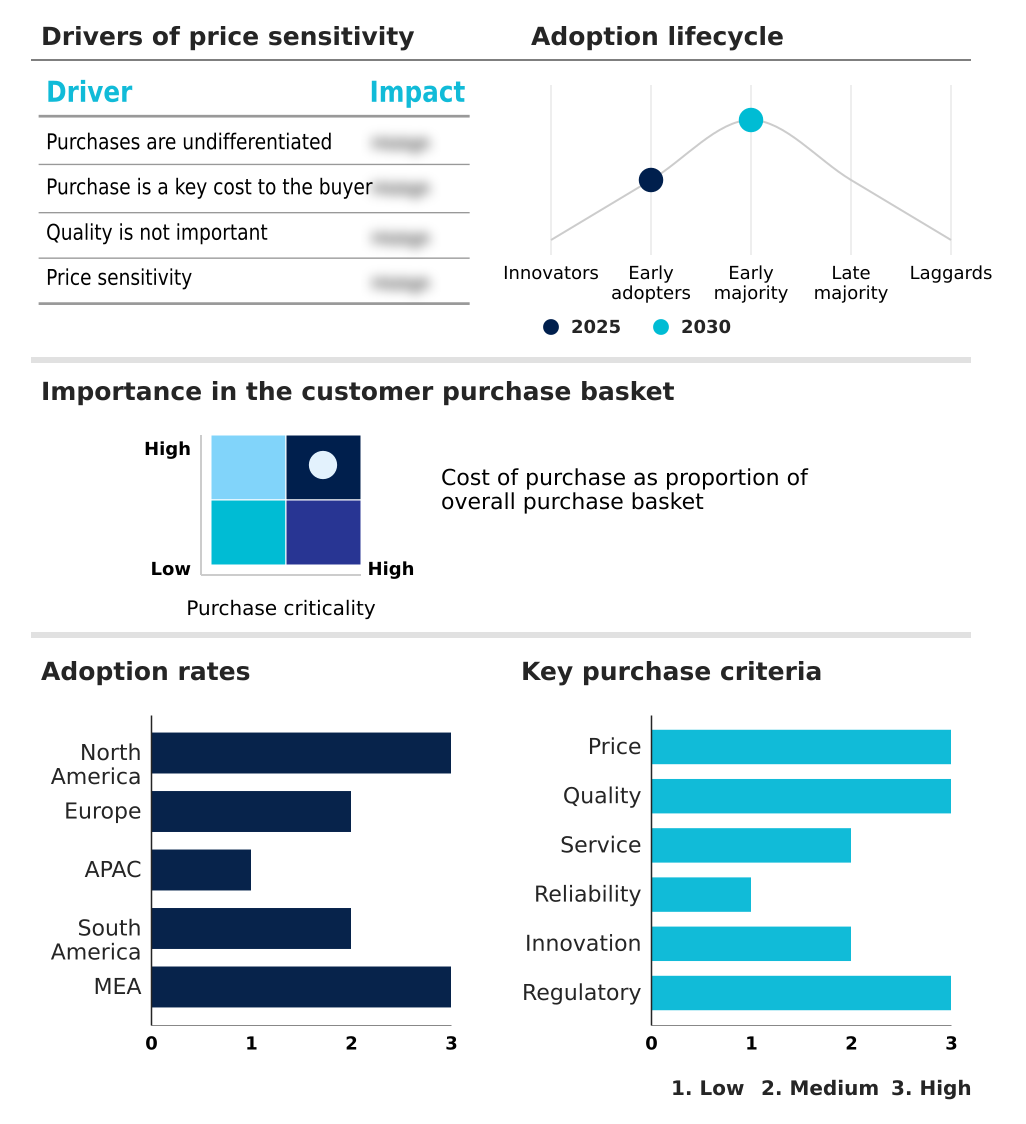
Customer Landscape of Ambient Clinical Intelligence Industry
Competitive Landscape
Companies are implementing various strategies, such as strategic alliances, ambient clinical intelligence market forecast, partnerships, mergers and acquisitions, geographical expansion, and product/service launches, to enhance their presence in the industry.
3M Co. - Delivers solutions that automatically and securely document patient encounters, integrating them directly into the electronic health record to enhance clinical efficiency.
The industry research and growth report includes detailed analyses of the competitive landscape of the market and information about key companies, including:
- 3M Co.
- Abridge Al Inc.
- Amazon.com Inc.
- Ambience Healthcare
- ATHELAS Incorporated.
- Augmedix Inc
- care.ai
- Corti
- DeepScribe
- Heidi
- Microsoft Corp.
- Mutuo Health Solutions
- Nabla Technologies
- NextGen Healthcare
- Oracle Corp.
- Scribeberry
- Suki AI Inc.
- Sully AI
- Sunoh.ai
- Tali AI
Qualitative and quantitative analysis of companies has been conducted to help clients understand the wider business environment as well as the strengths and weaknesses of key industry players. Data is qualitatively analyzed to categorize companies as pure play, category-focused, industry-focused, and diversified; it is quantitatively analyzed to categorize companies as dominant, leading, strong, tentative, and weak.
Recent Development and News in Ambient clinical intelligence market
- In September 2024, Commure announced the integration of its Ambient technology directly into MEDITECH Expanse Now, embedding ambient clinical intelligence capabilities natively into mobile EHR workflows.
- In October 2024, Nabla and Navina announced a strategic partnership to enhance clinician workflows by combining Nabla's ambient AI documentation with Navina's clinical data intelligence platform.
- In January 2025, Corti introduced FactsR, a clinical reasoning layer for ambient AI systems designed to extend beyond transcription to provide structured clinical interpretation and decision support.
- In April 2025, HEALWELL announced a major integration milestone with the launch of AmadeusAI, a platform deeply integrated with DARWEN AI to enable comprehensive analysis of clinical data.
Dive into Technavio’s robust research methodology, blending expert interviews, extensive data synthesis, and validated models for unparalleled Ambient Clinical Intelligence Market insights. See full methodology.
| Market Scope | |
|---|---|
| Page number | 303 |
| Base year | 2025 |
| Historic period | 2020-2024 |
| Forecast period | 2026-2030 |
| Growth momentum & CAGR | Accelerate at a CAGR of 21.8% |
| Market growth 2026-2030 | USD 4045.1 million |
| Market structure | Fragmented |
| YoY growth 2025-2026(%) | 20.5% |
| Key countries | US, Canada, Mexico, Germany, UK, France, Italy, Spain, The Netherlands, China, Japan, India, South Korea, Australia, Indonesia, Brazil, Argentina, Colombia, Saudi Arabia, UAE, South Africa, Israel and Turkey |
| Competitive landscape | Leading Companies, Market Positioning of Companies, Competitive Strategies, and Industry Risks |
Research Analyst Overview
- The ambient clinical intelligence market is fundamentally reshaping clinical workflows by addressing physician burnout through advanced automation. The core technology leverages natural language processing and sophisticated speech recognition technology for automated medical transcription, facilitating the real-time clinical documentation of a patient encounter capture.
- The automated generation of SOAP note generation and other structured notes is a key feature driving clinical workflow optimization. A critical boardroom consideration is the selection of platforms that ensure long-term compliance and scalability. Systems incorporating advanced speaker diarization have demonstrated an ability to reduce documentation error rates by over 25% compared to basic dictation tools.
- The evolution toward generative AI in healthcare enables AI-driven coding suggestions and automated care summaries. As a result, solutions that offer seamless EHR integration, robust patient consent management, and HIPAA compliant AI within a secure cloud infrastructure are becoming the industry standard.
- This shift toward intelligent, hands-free documentation and conversational AI for healthcare is transitioning AI medical scribe technology from a niche tool to a foundational component of modern clinical practice.
What are the Key Data Covered in this Ambient Clinical Intelligence Market Research and Growth Report?
-
What is the expected growth of the Ambient Clinical Intelligence Market between 2026 and 2030?
-
USD 4.05 billion, at a CAGR of 21.8%
-
-
What segmentation does the market report cover?
-
The report is segmented by Component (Software platforms, Services, and Hardware and sensors), End-user (Hospitals, Ambulatory and specialty clinics, and Telehealth providers), Technology (NLP, Speech recognition, and ML and DL) and Geography (North America, Europe, APAC, South America, Middle East and Africa)
-
-
Which regions are analyzed in the report?
-
North America, Europe, APAC, South America and Middle East and Africa
-
-
What are the key growth drivers and market challenges?
-
Escalating burden of administrative documentation on medical practitioners, Stringent data privacy regulations and security concerns regarding audio recordings
-
-
Who are the major players in the Ambient Clinical Intelligence Market?
-
3M Co., Abridge Al Inc., Amazon.com Inc., Ambience Healthcare, ATHELAS Incorporated., Augmedix Inc, care.ai, Corti, DeepScribe, Heidi, Microsoft Corp., Mutuo Health Solutions, Nabla Technologies, NextGen Healthcare, Oracle Corp., Scribeberry, Suki AI Inc., Sully AI, Sunoh.ai and Tali AI
-
Market Research Insights
- Market dynamics are increasingly influenced by technologies that optimize clinical efficiency and enhance patient care. The adoption of automated clinical workflow tools is a direct response to data indicating clinicians can spend up to 40% of their day on administrative tasks.
- Implementations of hands-free clinical notes and other voice-enabled clinical assistant technologies have been shown to reduce this burden by more than half. Furthermore, healthcare facilities that prioritize improving patient-physician interaction through these systems report patient satisfaction scores up to 15% higher than those relying on traditional documentation methods.
- This focus on AI for EHR data entry is not just about efficiency but also about creating a more patient-centric experience, where contextual clinical conversation analysis leads to better outcomes and more accurate records.
We can help! Our analysts can customize this ambient clinical intelligence market research report to meet your requirements.
 RIA -
RIA -